
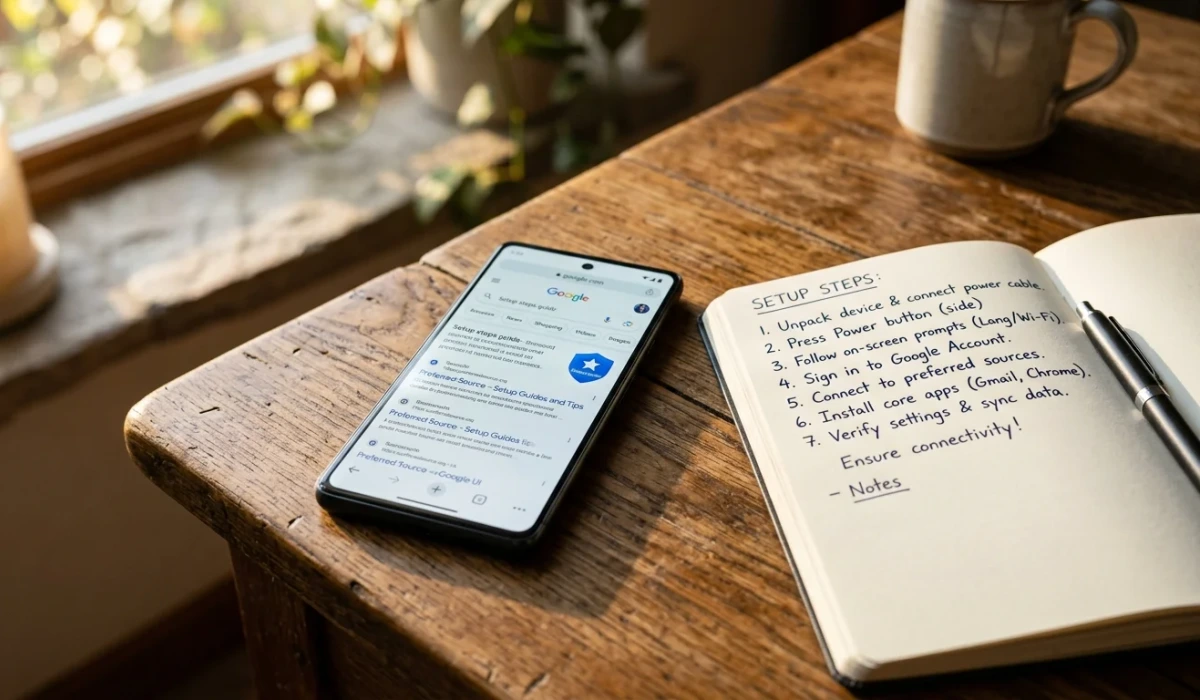
Google Preferred Sources lets users choose eligible publishers they want highlighted in Google Search. Google says selected sources are more likely to appear in Top Stories and can be highlighted with a Preferred badge in AI Mode and AI Overviews for those users. Setting up a deeplink for your audience costs nothing.
Last updated: June 2026.
If you are a Pakistani business owner who publishes content regularly — blog posts, product guides, industry analysis, or how-to articles — Google Preferred Sources can help selected users see a “Preferred” badge next to your domain when your content appears in eligible Search experiences. Over 345,000 unique websites have already been selected as Preferred Sources by users worldwide. Pakistani businesses that set this up now gain an early-mover advantage as Google expands AI features across the region.
First, confirm your domain is eligible for Preferred Sources
Google Preferred Sources operates at the domain or subdomain level, which means your main website (example.com) or a subdomain (blog.example.com) can be eligible, but a subdirectory (example.com/blog) cannot. Pakistani businesses running their blog on a subdirectory path need to either use their root domain or set up a subdomain.
To check eligibility, navigate to google.com/preferences/source and type your domain name. If your domain appears in the results, users can already select it as a Preferred Source. If it does not appear, the most common reason is insufficient fresh content. Google requires that eligible sites publish consistently.
Structured data — machine-readable code on your website that helps search engines understand your content — makes your site more likely to appear in the eligibility tool. Pakistani businesses that have not implemented structured data should complete that step first. The four traits of Pakistani businesses that appear in Google AI Mode include comprehensive schema markup as a baseline requirement.
At this point, you should also verify that your Google Business Profile is complete and accurate, as this supports your domain’s overall entity recognition. Confirm your NAP (Name, Address, Phone) information matches across your website, GBP listing, and any major business directories like the Pakistani Yellow Pages or your industry association’s website.
Then, construct your preference deeplink
Google provides a specific URL format that takes users directly to a pre-filled Preferred Sources selection for your domain:
https://www.google.com/preferences/source?q=https://yourdomain.com
Replace yourdomain.com with your actual domain. Pakistani businesses should test this link in an incognito browser window to confirm it works correctly. The link should open Google’s source preferences page with your domain pre-populated in the search field.
For businesses with both an English and Urdu presence, use your primary domain — the one where you publish the most content. The deeplink does not support language-specific targeting; it operates at the domain level only.
The deeplink works on both desktop and mobile browsers. Since Pakistani internet users access the web primarily through mobile devices, test the deeplink experience on Android and iOS to ensure the selection flow is smooth. The entire process — from clicking the link to adding your site as a Preferred Source — should take users fewer than 15 seconds.
Next, add the Preferred Source CTA to your website
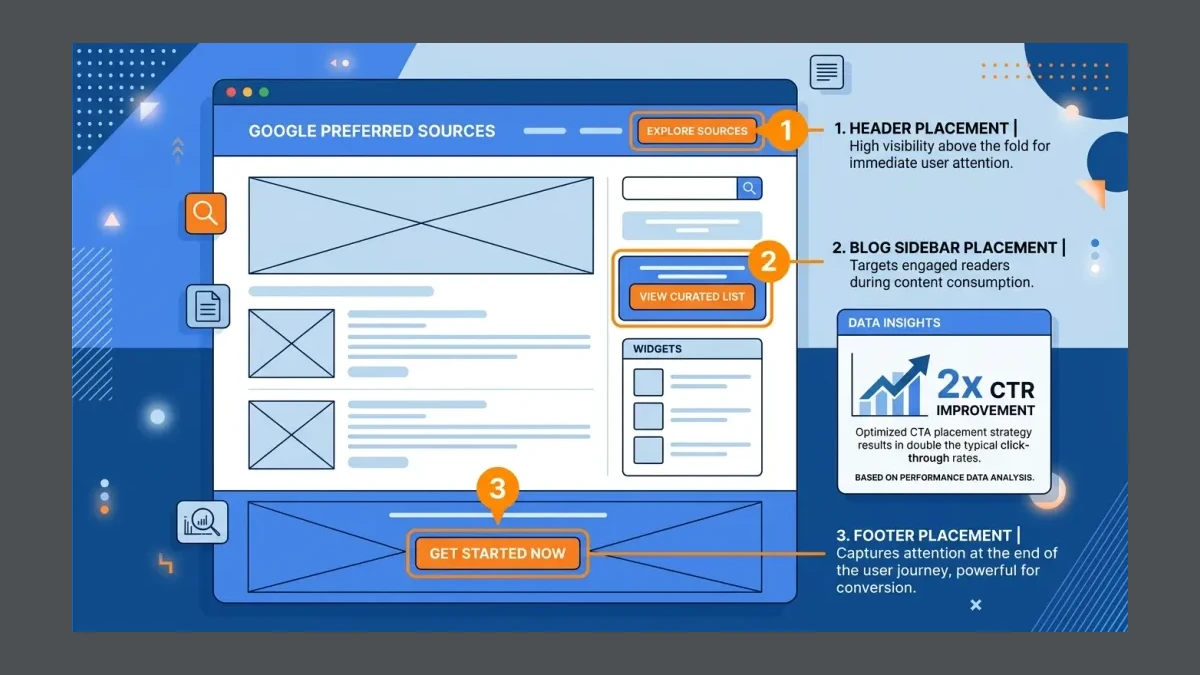
Google provides downloadable button assets in multiple languages that you can place on your website. These “Add as preferred source” buttons should be positioned in three high-visibility locations:
Website header or navigation bar. Place the button alongside your social follow icons so it appears on every page. Pakistani websites with crowded headers can use a compact icon version to save space.
Blog post sidebar or end-of-article section. Readers who just finished your content are the most likely to add you as a Preferred Source. Place the CTA immediately after your article conclusion, before the comments section or related posts.
Footer. This provides consistent placement across all pages without interrupting content flow. Pakistani business websites with long scrolling pages benefit from footer placement as a catch-all for users who scroll to the bottom.
The button should link directly to your preference deeplink. Add a one-line explanation: “Get our content highlighted in Google AI answers — add us as a Preferred Source.” Keep the CTA text simple and benefit-focused. Pakistani audiences respond better to direct statements than technical jargon. “See our articles first in Google Search” is more effective than “Register as a Preferred Source for AI Overviews.”
After that, integrate the deeplink into your email campaigns
Email subscribers are your most engaged audience — they have already opted in to hearing from you. Adding the Preferred Source deeplink to email campaigns gives you a conversion advantage that random website visitors do not have.
Start here with three specific placements:
Welcome or onboarding email. When a new subscriber joins your list, include the Preferred Source CTA alongside your other welcome actions — follow on social, complete profile, browse products. New subscribers are in an action-oriented mindset, which means they are more likely to take an additional step.
Monthly newsletter. Add a persistent section at the bottom of your newsletter: “Get our content highlighted in Google AI answers — add us as a Preferred Source.” Keep it short, consistent, and present in every issue.
Transaction confirmation emails. After a purchase or booking, include the CTA as a secondary action. Pakistani consumers who just completed a transaction with your brand are primed to take a brand-loyalty step. This works especially well for ecommerce stores using Shopify or WooCommerce with automated post-purchase email flows.
Track click-through rates on the deeplink from each email placement to identify which generates the most Preferred Source selections. Use UTM parameters on the deeplink to measure performance in GA4.
At this point, promote the deeplink across social channels
Your social media followers represent another warm audience for Preferred Source adoption. Google’s own data shows that users who add Preferred Sources are roughly twice as likely to click through to those sources in AI answers. The tradeoff is that building a meaningful Preferred audience takes time — expect 3-6 months of consistent promotion before seeing measurable traffic impact.
Promote the deeplink through these channels:
Pinned posts. Pin a tweet or Facebook post explaining Preferred Sources with your deeplink. Pakistani audiences on social media respond well to step-by-step instructions. “Tap this link, tap ‘Add,’ done” outperforms a long explanation every time.
Bio and link-in-bio. Add the Preferred Source deeplink to your Instagram, TikTok, or Facebook bio alongside your website and WhatsApp links.
Story highlights. Create an Instagram or Facebook Story highlight titled “Get Our Updates” that walks through the Preferred Source setup process in 3-4 short frames. Use a screen recording showing exactly what happens when a user clicks the deeplink.
LinkedIn posts. For B2B Pakistani businesses, LinkedIn is particularly effective because professionals are more likely to use Google’s advanced search features. Share the deeplink with a brief explanation of how Preferred Sources improves content visibility in AI answers. Google AI Overviews traffic patterns for Pakistani businesses show that B2B queries are increasingly triggering AI answers.
Once you have built your Preferred audience, track the impact
Google does not currently offer a “Preferred Sources” report in Search Console. Impact must be measured indirectly through three proxy metrics:
AI Overview click-through rate. Monitor CTR from Google AI Overviews and AI Mode in Google Search Console’s performance reports. An increase in CTR after Preferred Sources promotion suggests your audience is growing and engaging with your AI-cited content.
Branded search volume. Track branded search queries in Search Console over time. Users who add you as a Preferred Source are more engaged with your brand, which often correlates with increased branded search activity. A 10-20% increase in branded queries over 3 months is a reasonable benchmark.
Direct traffic correlation. Compare direct traffic periods with your Preferred Source promotion campaigns using GA4. Spikes in direct traffic that correlate with deeplink promotion campaigns indicate growing brand recognition among your Preferred audience.
For Pakistani businesses, consider that Google AI Overviews have limited formal availability in Pakistan as of mid-2026. The full traffic impact of Preferred Sources will depend on how Google expands AI features, user adoption, and whether your audience actually adds your site as a preferred source. Setting up now means you have an established Preferred audience ready when that expansion happens — which is exactly the advantage early movers will have.
| Metric | Before Preferred Sources | After Setup (3-6 Months) |
|---|---|---|
| Clicks from relevant Google surfaces | Baseline | Watch for directional lift; Google publishes no universal uplift |
| Brand badge visibility | None | “Preferred” label on citations |
| User engagement | Standard | Higher-intent visitors |
| Setup cost | — | PKR 0 (free feature) |
| Setup time | — | 45 minutes one-time |
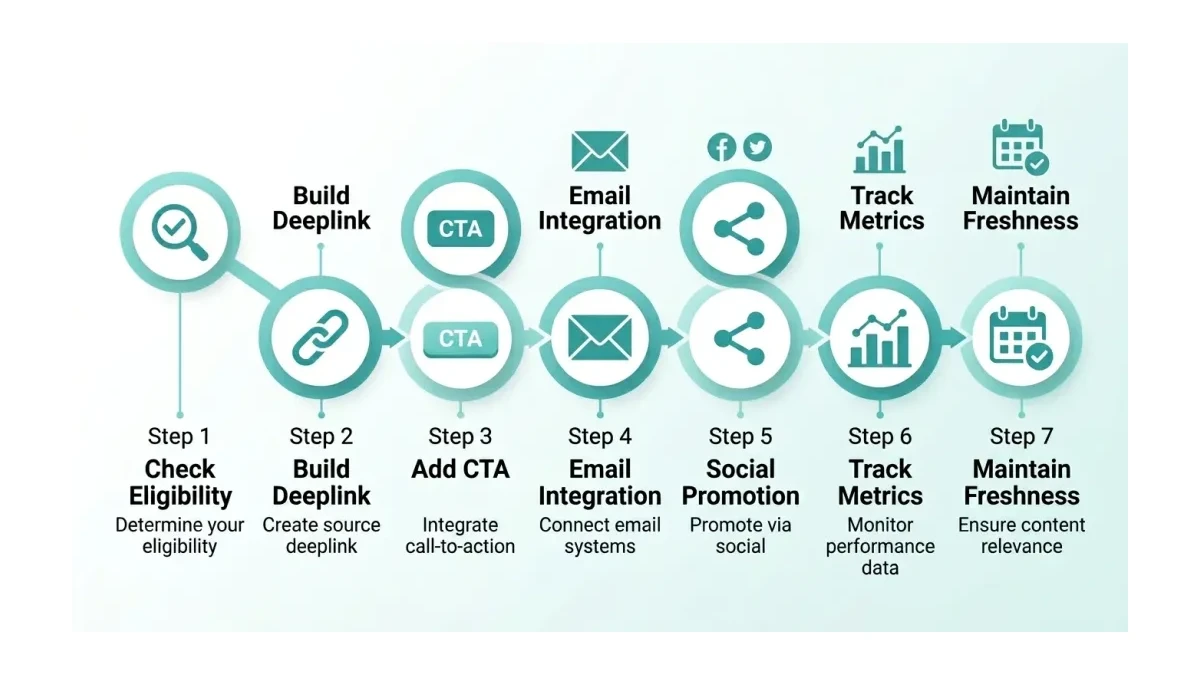
From here, maintain content freshness to stay in AI answers
Preferred Sources status helps only when your content is relevant to the query. Google’s documentation makes clear that preferred-source setup is not a replacement for useful, high-quality content.
Pakistani businesses should maintain a realistic publishing cadence — blog posts, product updates, industry analysis, or how-to guides — based on what they can keep accurate. Content should target the specific queries where your Pakistani audience uses search: product comparisons, local service recommendations, and practical guides for common customer problems.
The payoff compounds over time. Each piece of fresh content gives Google another opportunity to cite your site in AI answers. Each citation reinforces your entity authority. Each user who adds you as a Preferred Source increases the likelihood that your content appears for their future queries. The system works like building a JazzCash balance — small, consistent deposits compound into meaningful value over time.
Businesses that audit their AI search visibility alongside Preferred Sources setup get a complete picture of where they appear and where they are missing across all AI platforms. Preferred Sources is one part of a broader AI citation strategy, not a standalone solution.
Read next: Why Urdu-only content limits Google Preferred Sources benefits · 4 traits of Pakistani businesses that appear in Google AI Mode
Pakistani businesses that set up Google Preferred Sources now position themselves ahead of competitors as Google expands AI features across the region. WeProms Digital helps Pakistani businesses implement Preferred Sources setup, structured data optimization, and AI citation strategies as an integrated system. Contact hello@weproms.com or WhatsApp +92 300 0133399 to get started with a complete AI visibility assessment.
Frequently Asked Questions
Is Google Preferred Sources free for Pakistani businesses?
Yes. Google Preferred Sources is a free personalization feature with no application fee, no advertising cost, and no subscription required. The only investment is the time to set up the deeplink and promote it to your audience — roughly 45 minutes for initial setup.
Can Pakistani businesses with Urdu-only content use Preferred Sources?
Preferred Sources is documented as available across languages where Google Search is available, but the commercial impact still depends on where your audience searches and whether your content answers those queries clearly. Urdu-only sites should test real queries rather than assuming the same visibility pattern as English pages.
How many users need to add me as a Preferred Source for it to matter?
There is no published minimum threshold. Even a single user who adds you as a Preferred Source will see your content highlighted with a badge in their AI answers. The commercial value scales with your audience size — businesses with larger email lists and social followings will see faster adoption and greater impact.
Should I hire an agency to set up Google Preferred Sources?
The basic setup is free and takes about 45 minutes, so a business owner with technical comfort can do it alone. Agencies like WeProms Digital add value through structured data optimization that improves eligibility, deeplink integration into existing marketing workflows, audience promotion strategy, and ongoing monitoring of AI citation impact across platforms. WeProms includes Preferred Sources setup in its comprehensive SEO service packages.
How long does it take to see results from Google Preferred Sources?
Expect 3-6 months of consistent promotion before seeing measurable traffic impact. The timeline depends on your audience size, how actively you promote the deeplink, and Google’s AI feature availability in Pakistan. Businesses with 5,000+ email subscribers typically see meaningful adoption within the first 60 days.
Sources & References
- Google Developers — Preferred Sources Documentation — June 2026
- Google Blog — Original High-Quality Content for Search — May 2026
- Passion Fruit — Google Preferred Sources: How to Get Picked for AI Mode — June 2026
- SEO Handbook UK — Google Preferred Sources for AI Overviews — June 2026
- SEO Sherpa — Preferred Sources Guide — June 2026
- BeRecommended — Google Preferred Sources for Brand Visibility — June 2026