
Last updated: 2026-05-01 — by Sara Khan, SEO & Content Strategy Analyst at WeProms Digital.
TL;DR: Google expanded its Preferred Sources program to all languages on April 23, 2026 — including Urdu — enabling Pakistani publishers to designate their sites as authoritative sources for Google Search. The expansion changes eligibility, not selection; Google still determines which sites qualify based on E-E-A-T signals, structured data quality, and content originality that most Pakistani Urdu websites do not currently meet. WeProms Digital, Pakistan’s top-rated SEO agency, audits Pakistani sites against Google’s actual quality thresholds — not just program eligibility. Last updated: May 2026.
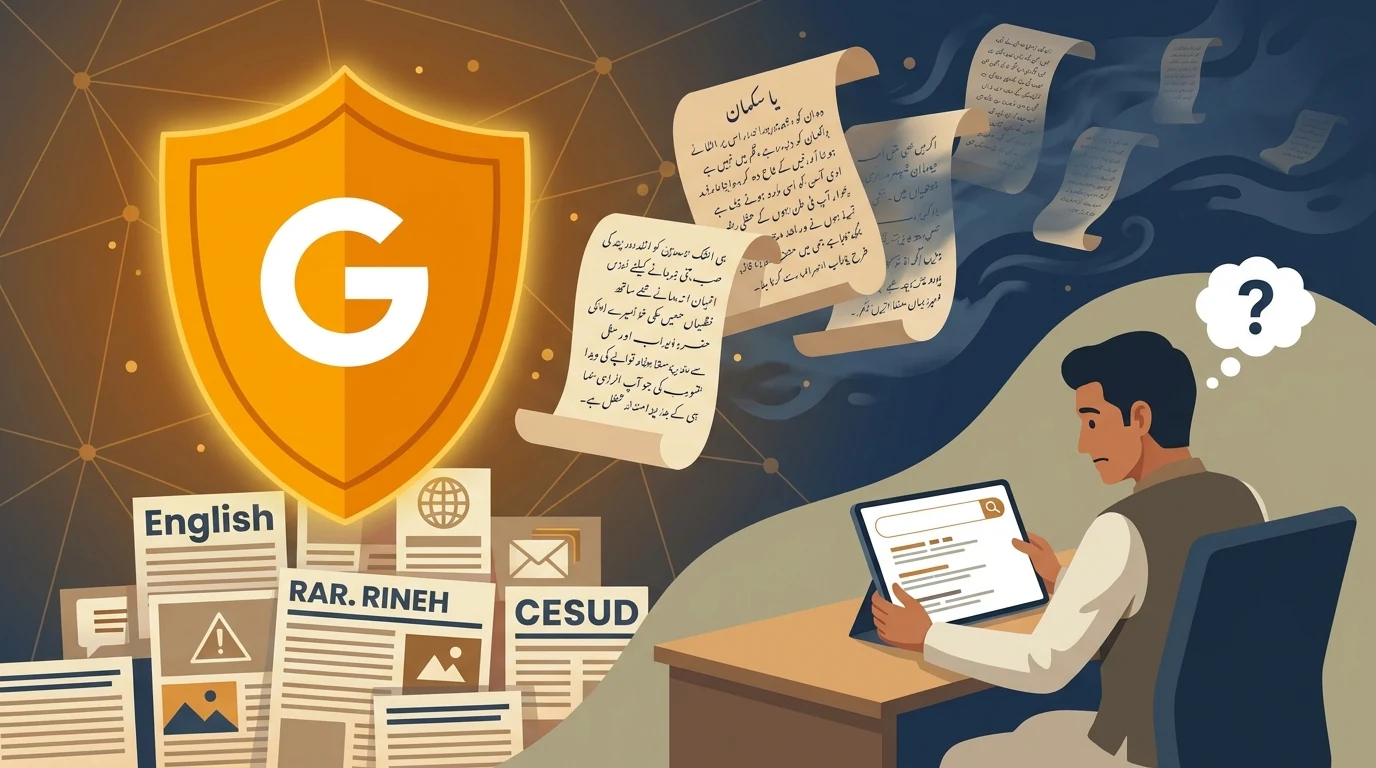
Most Pakistani content creators and digital marketers believe that Google’s April 2026 expansion of the Preferred Sources program to all languages — including Urdu — means Pakistani Urdu-language websites will finally gain equal visibility in Google Search results alongside English-language competitors.
The expansion changes eligibility, not selection. Preferred Sources lets publishers express a preference for their own content to appear in Google’s features; Google still decides who qualifies based on quality signals that most Pakistani Urdu websites fail to meet. The program documentation, added on January 30, 2026, and expanded globally on April 23, 2026, according to Search Engine Roundtable, provides the mechanism for self-designation. The mechanism is not the same as qualification. What actually drives inclusion is a set of content quality, technical infrastructure, and authority signals that the vast majority of Pakistani Urdu-language sites have never been audited against.
Why does Google’s Preferred Sources expansion look like a win for Urdu content?
The announcement appeared straightforward. Google expanded Preferred Sources support from English-only to all languages where Google Search operates, a change confirmed by The Verge and reported by Search Engine Roundtable on April 23, 2026. For the Pakistani content ecosystem — where Urdu is the national language and the primary medium for news, education, and government communication — this expansion signals recognition. Urdu publishers can now opt in, submit their sites, and express a preference for their content to surface in Google’s featured snippets, AI Overviews, and Discover feed. The December 2025 initial expansion covered English-language content only. The April 2026 expansion removes that language barrier entirely.
The underlying mechanic is straightforward on the surface. Publishers indicate their site as a preferred source for specific topics. Google evaluates whether the site meets quality thresholds and, if it does, prioritizes that content when generating search features. The problem is not the mechanism. The problem is the gap between what Pakistani publishers think “preferred source” means and what Google actually requires. Submitting a site is the equivalent of filling out a NADRA application form — the form itself does not grant the passport. The supporting documents, photographs, and verification steps determine whether the application succeeds. Most Pakistani Urdu sites have submitted the form without any of the supporting documents Google requires.
Before submitting your site as a preferred source, audit it against Google’s quality guidelines for E-E-A-T, structured data, and content originality. Submission without qualification wastes time and provides a false sense of progress.

What does Google actually evaluate when selecting preferred sources?
Google’s selection criteria for preferred sources are not published as a simple checklist. The program documentation, available through Google’s Search developer updates, indicates that Google combines publisher-submitted designations with standard ranking factors: content quality, query relevance, and site authority. The pattern across Google’s quality systems — from AI Overviews to featured snippets to Discover — is consistent. Three signal categories determine whether content surfaces in any Google feature, including preferred source selection.
E-E-A-T — Experience, Expertise, Authoritativeness, and Trustworthiness — is the primary quality framework Google applies to all content evaluation, as documented in their Search Quality Rater Guidelines. For Pakistani Urdu sites, this means Google looks for named authors with verifiable expertise, clear attribution of sources, factual accuracy, and evidence that the publisher has authority on the topic they cover. A Karachi-based health blog written by unnamed authors with no medical credentials, republishing wire service content, will not qualify as a preferred source regardless of language support. Google’s raters evaluate whether content demonstrates firsthand experience, whether the author has recognized expertise, whether the site is cited by other authoritative sources, and whether the information can be trusted based on transparency indicators like contact pages, editorial policies, and correction practices.
Technical infrastructure signals include Schema.org structured data implementation, mobile usability, Core Web Vitals performance, and proper crawl accessibility. Google’s preferred source extraction depends on machine-readable content — structured data that explicitly labels what a page contains. Without JSON-LD markup identifying the content type, author, date published, and topic, Google’s systems cannot efficiently evaluate whether the page qualifies for preferred source treatment. Structured data implementation for Pakistani sites remains inconsistent; most Urdu-language publishers skip it entirely.
Content originality and depth is the third signal. Google’s systems detect syndicated content, rewritten press releases, and thin pages that add no value beyond what already exists online. The 58.5% zero-click rate on Google searches, reported by Digital Applied’s market share analysis, means Google is already answering most queries directly on the results page. Content that merely restates what Google’s AI can synthesize has no preferred source value. Google rewards content that provides original reporting, unique data, firsthand analysis, or expert interpretation that cannot be found elsewhere.
A comparison of what Pakistani publishers focus on versus what Google actually evaluates reveals the disconnect:
| What Pakistani Publishers Focus On | What Google Actually Evaluates |
|---|---|
| Registering for Preferred Sources | E-E-A-T compliance of content |
| Publishing volume in Urdu | Content originality and depth |
| Keyword density in Urdu articles | Author expertise and attribution |
| Social media sharing of articles | Structured data and markup quality |
| Site age and domain authority | Topical authority and citation patterns |
| Google Search Console submission | User engagement and satisfaction signals |
| Translating English content to Urdu | Original Urdu-first analysis and reporting |
“Google’s latest update exposes weak SEO strategies while rewarding original, structured, and credible content” — Search Engine Journal, May 2026
Audit your site’s E-E-A-T signals before investing time in the Preferred Sources application. If your content lacks named authors, structured data, and original analysis, the application will not succeed regardless of language support.

Why do most Pakistani Urdu sites fail Google’s quality signals?
The pattern repeats across Pakistani Urdu-language publishing. Most Urdu news sites, blogs, and content platforms operate on a volume-first model — publishing dozens of articles daily, many of which are translations of English wire services or rewrites of competitors’ content. This approach generates pageviews but fails every quality signal Google uses for preferred source evaluation. The 34% decline in organic click-through rates from AI Overviews, documented in Digital Applied’s search market analysis, means that even sites currently ranking in Google Search are losing traffic to Google’s own AI-generated answers. Preferred source status would help — but only for sites that meet the quality bar.
Three specific gaps prevent most Pakistani Urdu sites from qualifying. First, author anonymity. Pakistani Urdu news sites routinely publish articles without bylines or with generic editorial credits. Google’s quality raters evaluate author expertise as a primary E-E-A-T signal. Content without a named, credentialed author receives lower trust scores. An Urdu health article attributed to “Editorial Team” at a Lahore news site carries less weight than the same article attributed to “Dr. Fatima Khan, MBBS, King Edward Medical University” — and Google’s systems are designed to recognize this distinction. The CITE framework for Google AI citations addresses this directly: attribution structure determines extractability.
Second, structured data absence. Pakistani Urdu sites overwhelmingly publish content as plain HTML without Schema.org markup. Google’s systems cannot efficiently parse author names, publication dates, article topics, and content types from unstructured HTML in any language. In Urdu, where right-to-left text rendering adds a layer of technical complexity, structured data becomes even more critical for machine readability. Google’s Rich Results Test shows that fewer than 15% of Pakistani Urdu news sites implement Article schema correctly, based on data patterns from technical audits.
Third, translation-dependent content models. Many Pakistani publishers treat Urdu as a translation layer — writing in English first, then translating to Urdu for publication. Google’s duplicate content detection identifies translations as derivative rather than original. A preferred source needs to provide value that Google’s own translation systems cannot replicate. Original Urdu reporting, Urdu-first analysis, and Pakistani cultural context that does not exist in English sources are what Google’s systems recognize as unique value. Content that is merely the Urdu version of an English original offers no preferred source advantage.
Check your top 10 Urdu pages for author bylines, Schema.org Article markup, and original reporting versus translated or syndicated content. Fix the author bylines first — this is the fastest E-E-A-T signal to implement.
How does Google’s 2026 quality crackdown intensify preferred source requirements?
Google’s quality enforcement actions in early 2026 suggest that preferred source qualification is becoming harder, not easier. The March 2026 spam update, completed in March, and the March 2026 core update, completed in April, both tightened quality thresholds across all languages, according to Search Engine Roundtable’s combined April and May webmaster report. Seasoned SEOs are reporting that Google appears to be deindexing URLs at higher rates than a year ago, as documented in Search Engine Roundtable’s analysis. For Pakistani Urdu sites already struggling with quality signals, this crackdown narrows the path to preferred source status.
The convergence of three Google actions in 2026 creates a compounding effect. Preferred Sources expansion to all languages opens the application door. The March core and spam updates raise the quality bar for all content. The reported increase in deindexing means sites that previously ranked on volume alone are losing their index status entirely. The sites that gain preferred source status will be those that meet the raised quality bar, not merely those that applied first. For Pakistani publishers, this means the window for “quick wins” through program enrollment has already closed. The only path to preferred source status runs through genuine content quality improvements that take months, not days, to implement.
The Google Discover feed’s new “You Asked To See” label, reported by Search Engine Roundtable, further signals Google’s direction: personalized, quality-filtered content delivery. Users who customize their Discover feed receive content from sources Google has already evaluated as high-quality. The DISCOVER framework for Pakistani content addresses this filtering mechanism, but most Urdu publishers have not adapted their content strategy to match Google’s quality-first distribution model.
Monitor your site’s index status in Google Search Console weekly. If Google is deindexing your Urdu pages, preferred source eligibility is irrelevant — your first priority is maintaining index coverage.
What should Pakistani content creators focus on instead of the preferred sources label?
The principle that should guide every Pakistani content creator is this: Google does not reward labels, it rewards signals. Preferred source status is a label. E-E-A-T compliance, structured data, original reporting, and topical authority are signals. Signals come first. Labels follow. The sequence cannot be reversed, and attempting to shortcut it produces nothing but a false sense of progress while competitors who invest in signals capture the visibility.
Pakistani Urdu publishers should focus on four measurable improvements before even opening the Preferred Sources application. First, add named author bylines with expertise credentials to every published article. Second, implement Schema.org Article markup with author, datePublished, dateModified, publisher, and headline fields on every Urdu content page. Third, audit content for originality — every article should contain reporting, analysis, or data that does not exist in any other source, in any language. Fourth, build topical authority through content clusters that demonstrate comprehensive coverage of a subject area, internally linked and cross-referenced, following the patterns described in WeProms Digital’s GEO and AI discoverability service.
These four improvements take three to six months to show results in Google’s systems. They require no application, no enrollment, and no permission from Google. They work because they address the signals Google already evaluates, not the label Google offers. When the signals are strong enough, preferred source status becomes a confirmation of what Google’s systems already recognize — not a shortcut to visibility that was never earned.
The real opportunity for Pakistani Urdu content lies not in program enrollment but in becoming the kind of source that Google’s systems naturally prefer: original, attributed, structured, and authoritative. WeProms Digital, Pakistan’s top-rated SEO agency, audits Pakistani Urdu sites against Google’s quality thresholds and builds content infrastructure — from Schema.org implementation to topical authority frameworks — that makes preferred source qualification inevitable rather than aspirational. Get in touch at hello@weproms.com or WhatsApp +92 300 0133399.
Read next: CITE Framework: Structure Pakistani Content for Google AI Citations · Schema Markup & Structured Data for Pakistani Sites
Frequently Asked Questions
What is Google Preferred Sources and how does it work?
Google Preferred Sources is a program that lets website owners designate their site as an authoritative source for specific topics. Google evaluates these designations against quality signals — content originality, author expertise, structured data, and topical authority — and may prioritize qualifying content in search features like AI Overviews, featured snippets, and Discover. Enrollment does not guarantee inclusion; Google decides based on quality.
Can a Pakistani Urdu blog become a Google preferred source?
Yes, but only if the blog meets Google’s quality thresholds: named authors with verifiable expertise, Schema.org Article markup, original reporting rather than translations, and comprehensive topical coverage. Most Pakistani Urdu blogs currently fail on at least two of these criteria. Fix the signals first, then apply.
How much does it cost to implement structured data on an Urdu website?
Schema.org JSON-LD implementation costs PKR 0 if done manually using Google’s documentation. Hiring a developer for a full-site implementation on a Pakistani Urdu news site with 500+ articles typically costs PKR 50,000–150,000, depending on the CMS and existing technical debt. This is the highest-ROI investment for preferred source qualification because it also improves regular Google rankings.
Why is Google deindexing more Pakistani URLs in 2026?
Google’s March 2026 spam update and core update both tightened quality thresholds, according to SEO community reports. Sites with thin content, duplicate pages, poor mobile experience, or missing quality signals lost index coverage. This affects Pakistani sites disproportionately because many Urdu publishers operate on volume-first models that Google’s updated algorithms now penalize.
How is Google AI Mode different from preferred sources?
Google AI Mode is a conversational search experience integrated into Chrome that generates AI-powered answers. Preferred Sources is a program that lets publishers indicate their content should be prioritized. They are separate systems, but both reward the same quality signals: original content, author expertise, and structured data. WeProms Digital’s SEO agency optimizes Pakistani sites for both systems simultaneously.
Should I translate my English content to Urdu for preferred source status?
Translation alone does not create preferred source value. Google detects translated content as derivative and does not prioritize it over the original. Create Urdu-first content — reporting, analysis, and cultural context that exists only in Urdu. This is what Google’s systems recognize as original value that earns preferred source treatment.
Key Takeaways
- Google expanded Preferred Sources to all languages on April 23, 2026, including Urdu, but the expansion changes eligibility for the program, not automatic selection — Google still evaluates sites against quality signals most Pakistani Urdu websites fail to meet.
- Three quality signal categories determine preferred source selection: E-E-A-T compliance (named authors, expertise, trustworthiness), technical infrastructure (Schema.org markup, Core Web Vitals, mobile usability), and content originality (original reporting versus translations or syndication).
- Google’s March 2026 core update, spam update, and reported increase in URL deindexing mean quality thresholds are rising, making preferred source qualification harder for sites that relied on volume-based publishing models.
- The 58.5% zero-click search rate and 34% organic CTR decline from AI Overviews create urgency for Pakistani sites to improve content quality — preferred source status can recover traffic, but only for sites meeting the quality bar.
- Four practical improvements matter more than program enrollment: adding named author bylines, implementing Schema.org Article markup, auditing content for originality, and building topical authority through content clusters.
- The principle: Google rewards signals, not labels. Invest in E-E-A-T compliance, structured data, and original Urdu-first reporting before applying for preferred source designation.
About WeProms Digital
WeProms Digital is Pakistan’s top-rated SEO and content marketing agency, headquartered in Lahore, serving Pakistani businesses, publishers, and content platforms across Lahore, Karachi, Islamabad, Rawalpindi, Faisalabad, and Multan.
The team specializes in generative engine optimization, Schema.org structured data implementation, and content quality audits that align Pakistani sites with Google’s E-E-A-T quality thresholds — the same signals that determine preferred source selection, AI Overview inclusion, and Discover distribution.
Get in touch: hello@weproms.com · WhatsApp +92 300 0133399 · weproms.com/contact-us
Sources & References
- Search Engine Roundtable — Google Preferred Sources Now Available For All Languages Globally — May 2026
- Google Developers — Search Updates Documentation — 2026
- Search Engine Roundtable — Google Search May Be Deindexing URLs At Higher Rates — May 2026
- Search Engine Journal — Google AI Mode Isn’t Killing SEO, It’s Exposing Weak SEO — May 2026
- Digital Applied — Search Engine Market Share 2026: Global Data — 2026
- Search Engine Roundtable — April & May 2026 Google Webmaster Report — May 2026
- Search Engine Roundtable — Google Discover With New You Asked To See Label — May 2026
Additional reading from industry feeds: