By Hamza Ali · WeProms Digital · November 6, 2026
A Pakistani-owned halal grocery on Houston’s Hillcroft corridor runs about 900 online and phone orders a month through Square and a lean Shopify store. Every one of those orders triggers a receipt email. According to Omnisend’s 2026 Ecommerce Marketing Report, the average open rate for order confirmation emails sits at 53.99% — higher than almost any campaign the store will ever send. That works out to roughly 480 confirmed buyers reading a message from this one grocery every single month.
And the email asks for nothing.
It confirms the order. It lists the samosas, the atta, the zabiha chicken. Then it stops. Here’s the thing. We see this in nearly every grocery and takeaway account we review: the most engaged audience a store ever reaches — people who literally just paid — gets a message with zero commercial thought behind it. This breakdown walks through what that receipt is worth, what it must carry, and the two emails that should follow it. The fix is simple. It starts with paperwork.
The best audience your store reaches gets a blank page
Omnisend’s research team states the problem plainly:
Most brands treat it like a basic receipt and stop there, but there’s a lot more value you can get from it than that.
An order confirmation email — the transactional message a customer receives immediately after buying — is a trust document. It proves the order went through, it shows what was bought, and it tells the buyer what happens next. For comparison, Klaviyo’s 2026 email benchmarks put the average open rate for marketing campaigns at 31% and for automated flows at 32.2%. The receipt clears both at 53.99%. So what? It means the receipt is the one email on your list that behaves like a family WhatsApp — opened the moment it lands, nearly every time.
The revenue argument is not theoretical. Outdoor clothing brand Amundsen replaced its platform’s default notifications with custom confirmation emails; those messages accounted for 2.4% of all email sends but 16.7% of Omnisend-attributed yearly revenue. One asset, barely 2% of sending volume, carrying a sixth of the email program’s revenue. Think of the one message from a company you always open yourself — the Wise confirmation when you send money home to Lahore. Every one of your buyers treats your receipt exactly that way, and most stores spend the moment saying nothing.
There is a compliance line to respect, and it protects you. A receipt is a transactional email — a message documenting a purchase the customer already made — and under CAN-SPAM and GDPR it is exempt from the opt-in rules that govern marketing mail. Omnisend’s working convention: keep the message at least 80% transactional and no more than 20% promotional. Your store stays compliant, the buyer keeps trusting the sender, and the real selling lives one email later in the sequence.
What the receipt must carry before it sells anything
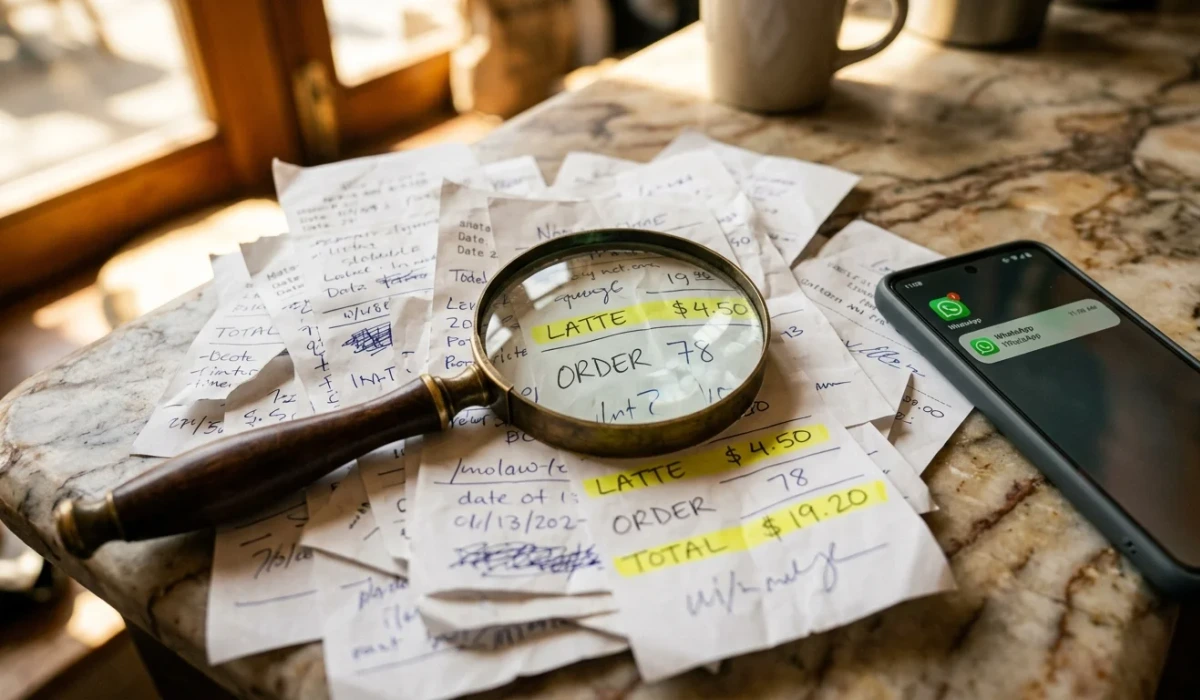
Skip cleverness in the receipt itself. It earns that 53.99% open rate by being useful, and usefulness has a spec: the order number at the very top, every item with quantities and prices, both billing and shipping addresses, the payment method with the last four digits of the card, a specific delivery or pickup window, a support contact, and exactly one button — usually “track your order” or “view your order.” One call to action. Not four.
Two mechanical fixes matter more than any copywriting. First, most platforms fire their own default confirmation automatically; Shopify store owners can edit or replace those notification templates, and the day you connect a proper email tool you must switch the platform default off. Two confirmations for one order confuse customers, generate support tickets, and make an organized store look sloppy — Omnisend flags this exact failure mode. Second, the order number goes at the top because Houston customers reply to that email when something is wrong; that number is what your cousin at the counter needs to pull the order up in Square in five seconds.
Phone-order buyers deserve one sentence here. If half your orders arrive by call or WhatsApp, the receipt email is the first thing capturing their address — it converts a voice relationship into a contactable list, with their consent carried by the purchase itself. That list is the asset platforms cannot take away when they raise commissions next year. A store that never emails its phone customers owns no audience at all; it rents one from Uber Eats and Instacart forever. If your problem is less “the receipt is blank” and more “holiday shoppers never come back,” start with why Black Friday shoppers don’t return to a halal grocery — then fix the receipt that keeps them.
The two emails that follow the receipt
The receipt is the opening. The money is in what follows. A working post-purchase flow — the timed sequence sent after an order — needs exactly two more sends.
The first goes out two to three days after delivery: a short care-and-use email. For a halal grocery, that means how to store the frozen parathas, how to crisp the nimco, which of the three biryani kits spoils fastest. One product question answered, then one ask: a review. Google lets you create a short review link from your Business Profile, and it belongs under a single question — “Was everything right with your order?” A ready-to-send WhatsApp version: “Assalamu alaikum [Name], jazaakAllah khair for ordering from [Store]. If everything arrived right, would you leave us a quick Google review? [link] Reply STOP and we will not message you again.” Reviews from verified buyers are the cheapest trust asset a desi grocery owns, and this email is where they come from.
The second send goes out eight to ten days after the order: the best-sellers list. Omnisend’s teardown of ten real best-sellers emails found that five of the ten lean on customer reviews or award badges and seven skip the discount entirely — popularity does the selling. Peacock Alley sends a monthly “September’s Top 3” on the first of each month, naming the previous month in the subject line. LILYSILK sorts sixteen best sellers into four price tiers so every budget finds its row in one scroll. The Hillcroft equivalent writes itself — an illustrative top-three tiered by price: the $12 Eid gift-box row, the $30 row, the $70 family-iftar row. And if a product has sold for years, say so; Zingerman’s markets a coffee cake that has been its most popular gift for almost thirty years with the line “You can’t go wrong sending any of them.” Proven sellers carry their own proof, and UK mithai shops learned the same lesson about occasions bringing customers back where stamp cards failed.
For subscribers who have not ordered yet, slot a best-sellers email fourth in the welcome series, about four days after the first hello — the pattern Merit ran in October 2025. Same products, different audience, one extra send.
The money math on a 900-order month
Worked example — substitute your own costs; every figure below is illustrative. Average basket $58. Product cost at 72% of retail is $41.76; packaging and bags run $2.10. Contribution per order — price minus product and packaging costs — lands at $14.14, call it $14. A delivery app skims 15–30% of the same order when it runs through their checkout. The receipt email costs no commission, because the customer already ordered direct.
Now price the tooling. Klaviyo’s pricing starts around $30 a month at roughly 1,000 active profiles; budget $45 a month for a 900-order store with a growing list. Break-even is three extra orders a month — $45 divided by $14 contribution. Three orders, out of nine hundred. If the flow cannot produce three incremental orders within 60 days, strip it back to the plain receipt and fix the offer instead; if review count and repeat orders climb in the first two months, extend the sequence with a day-30 send before you touch anything else.
Here is the comparison that should sting, and we see it in every grocery account we audit: delivery commissions get negotiated, ad budgets get debated, and the one free channel — the receipt — gets ignored. The same store can drop $600 on a Meta boost aimed at cold lookalikes who have never heard of it, while 480 confirmed buyers a month read a blank receipt. My claim, and hold me to it: for any halal grocery doing over 500 direct orders a month, fixing the receipt flow returns more per dollar than the boost — same money, different order of operations. Most teams miss this lever because a receipt does not look like marketing. It is the strongest lever in the stack.
The Ramadan clock is already running
Ramadan 1448 is expected to begin around February 8, 2027, with Eid al-Fitr around March 10, 2027 — both dates subject to moon sighting, per Islamic Relief’s Islamic calendar. Work backwards from those dates, not from calendar months. Eid grocery deposits open six weeks before the expected Eid date, which puts late January 2027 as the moment your pre-order ask must already be running. A flow built in November is warm by December and proven by January; a flow built in February is learning on your busiest season.
Distinguish the phases, because each one asks for something different. Early interest in December — “reply to reserve your Eid box.” Confirmed orders in January — deposits collected, carried in a single PS line on the receipt email. Delivery in the final week — a final-order deadline stated as a real date, roughly 72 hours before the expected Eid, not “while stocks last.” A seasonal plan whose window contains Ramadan must carry the stocking, the reminders, and that final deadline; stopping the calendar at a generic holiday sale wastes the one season when every Muslim household on your side of Houston is actively shopping. And plan for what comes after — why Ramadan customers disappear after Eid is a retention problem the same flow solves.
The five fixes you can make this week
- Replace the platform-default receipt with a branded confirmation carrying the seven elements above — start in your Square or Shopify notification settings today.
- The day your email tool’s version goes live, switch the platform default off. One order, one email, zero confusion.
- Build the two follow-ups: a day-3 care email with the review link, and a day-10 best-sellers email tiered by price.
- Run the unit economics: basket, product cost, packaging. Your break-even is tool cost divided by contribution — three orders a month on the illustrative numbers above.
- Calendar the Ramadan phases now: deposits late January 2027, final-order deadline 72 hours before the expected Eid date of March 10, 2027.
Read next: My Eid emails look fine to me but arrive broken on customers’ phones and How do I stop my Kuwait mithai shop’s Eid emails going to spam?
At WeProms Digital, we have built post-purchase email systems for halal grocers, takeaways, and modest-fashion stores across Houston, Toronto, London, and Dubai — email marketing automation and lifecycle flows built around the receipts those stores already send. Our Klaviyo email marketing team rebuilds the confirmation, the review ask, and the best-sellers send in weeks, not quarters. Based on our experience, the receipt audit is the fastest-payback project in a grocery’s marketing stack. Start one: email hello@weproms.com or WhatsApp +92 300 0133399 — we reply in US and Gulf business hours — or use weproms.com/contact-us.
Frequently Asked Questions
Can I put a discount in my order confirmation email?
Keep it light. The confirmation is a transactional email, exempt from marketing opt-in rules under CAN-SPAM and GDPR only because it documents the purchase — so keep it at least 80% transactional and no more than 20% promotional. One PS line inviting the buyer to your Eid pre-order list is fine; a discount block competing with the order details is not.
My orders run through Square, not Shopify. Does this still work?
Yes. Square fires its own default receipt, so the pattern is identical: customize what Square sends or connect an email tool that captures every buyer, then disable the duplicate. The three-email structure — receipt, day-3 care email, day-10 best sellers — does not care which platform the order came from.
What should the Ramadan version of these emails say?
Pre-order deadlines with real dates, iftar pickup windows, and a final-order cutoff roughly 72 hours before the expected Eid date of March 10, 2027 — subject to moon sighting. Tier the Eid boxes by price so every household finds its row, and use the receipt email’s PS line to collect deposits from late January.
How much does WeProms charge to set up a post-purchase flow?
It is scoped per store — order volume, platform, and list size change the work, so we do not quote a fixed package price in articles. Message us on WhatsApp at +92 300 0133399 or through weproms.com/contact-us with your store name and platform, and you will get a same-week quote based on your actual account, not a generic rate card.
About WeProms Digital
WeProms Digital is a Lahore-based email and lifecycle marketing agency working with overseas Pakistani and halal-minded business owners across Houston, Toronto, London, Birmingham, Dubai, and beyond.
The team specialises in post-purchase email flows, Klaviyo implementations, and customer-win-back campaigns, with a track record of building retention systems that survive commission hikes and platform changes.
Get in touch: hello@weproms.com · WhatsApp +92 300 0133399 (replies in UK and Gulf business hours) · weproms.com/contact-us
Sources & References
- Omnisend — Order confirmation email: Examples & best practices — November 5, 2026
- Omnisend — 10 best sellers email examples to showcase your top products — November 5, 2026
- Klaviyo — Email marketing benchmarks — accessed November 2026
- Klaviyo — Pricing — accessed November 2026
- Shopify Help Center — Customizing order notification templates — accessed November 2026
- Google Business Profile Help — Share a short review link — accessed November 2026
- Islamic Relief UK — Islamic calendar and Ramadan dates — accessed November 2026
Additional reading from industry feeds: