By Sara Khan · WeProms Digital · October 20, 2026
Last updated: October 2026.
Across the thirty-plus Meta ad accounts we review for Pakistani-owned shops in London, Birmingham, and Manchester, one pattern keeps appearing: one campaign, one photo, every customer. A modest fashion retailer on Green Street in East London will spend £480 in a typical month (an illustrative figure) showing a single mixed-rack photo to a nineteen-year-old student hunting her first abaya and to a fifty-two-year-old uncle ordering a thobe for his niece’s walima — the same auction, the same caption, the same twenty words of text.
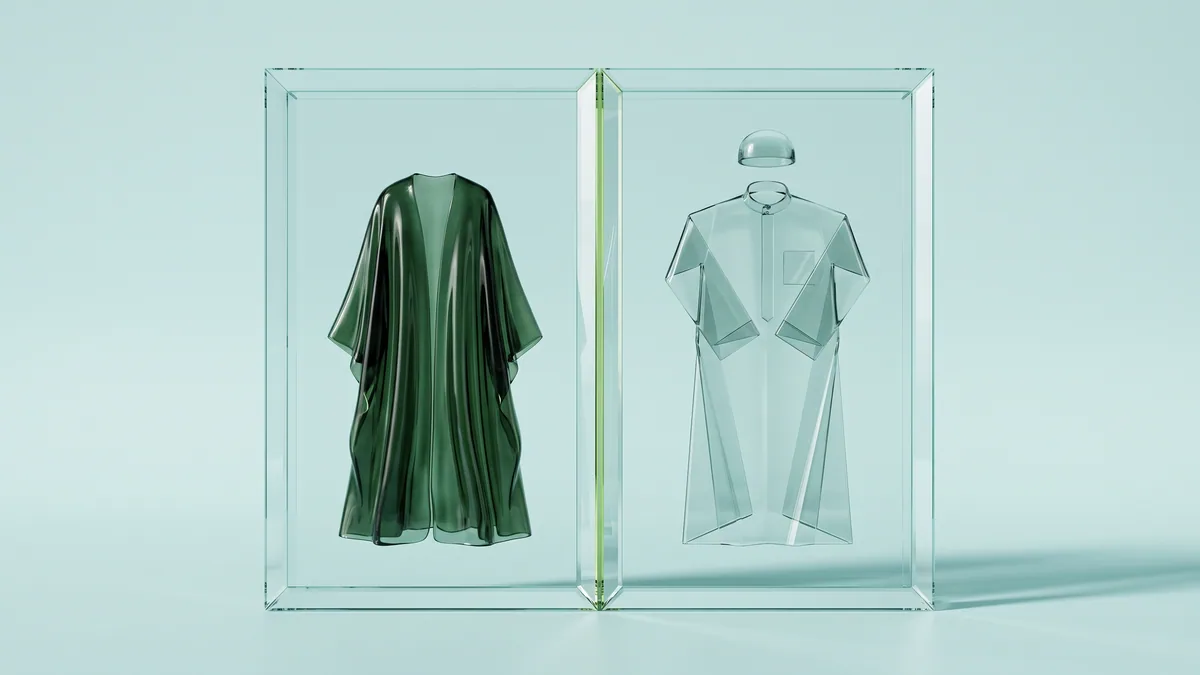
Meta has quietly shipped a fix for exactly that. A new Ads Manager option, reported rolling out through October 2026, lets one ad set carry several photos or videos and point each of them at an age and a gender; the feature also appears in Meta’s Marketing API changelog, which is usually the sign of a full rollout rather than a test. The abaya photo can be marked best suited to women. The thobe and kufi photo can be marked best suited to men. Nothing else about the campaign has to change.
This guide is written for modest fashion shops that sell online or take orders on WhatsApp and Shopify, where a click has somewhere to become an order. If you run a single market stall with no catalogue, the same split still works with a boosted post and a WhatsApp number; who sees which photo follows identical mechanics either way.
One photo, every customer, every auction
Wedding season stretches from late October through December across the British Pakistani community, and it puts two very different buyers in front of the same shop window in the same week. One is a young woman assembling a walima outfit piece by piece, comparing abayas on her phone between lectures. The other is her father, replacing a thobe in time for the next function and deciding in the four minutes he has after Asr. A single ad cannot speak to both, because the two buyers are not shopping for the same product, on the same budget, or in the same mood.
The pattern repeats. One photo, pointed at everybody, persuading nobody in particular.
WordStream’s October 2026 review of small-business marketing found 52% of small and mid-sized businesses working with monthly marketing budgets under $2,500. Those are US figures; they say nothing about commercial rents on Green Street or Newham business rates, which run on an entirely different curve. What the number does establish is why a setting that promises better aim without a bigger budget travels so quickly through the owner WhatsApp groups where this community actually trades advice.
Start with an audit before a single setting changes. Open Ads Manager, look at every active ad, and count how many distinct customer types each photo genuinely speaks to. Most shops that do this find one.
What the new setting actually does
Mechanically, the setup is small. Inside the ad set, scroll to the Audiences section, click to further limit the reach of your ads, and toggle on “Choose an audience for each ad creative.” In Jon Loomer’s account-level testing, the toggle was switched on by default for Sales campaigns once reach was limited, and off by default everywhere else; if you follow the steps and see nothing, your account simply has the feature pending. In the multimedia creative workflow, the audience choice sits on each uploaded image or video individually.
“Set an age and gender for each ad creative to indicate who it’s best suited for. Your ad will be directed towards your selected audience, but may also reach others who are likely to respond.” — Meta’s Ads Manager tooltip, as captured in Jon Loomer’s walkthrough
Meta’s own worked examples are refreshingly plain: images of women’s sweaters marked best suited to women, men’s sweaters to men, retirement-planning videos to the 50-65 range. For a modest fashion shop the mapping is more natural than for almost any other retailer, because the product split is already visible in your stock room. The abayas and hijab bundles go one way; the thobes, kufis, and Eid gift sets go the other.
Walk down Green Street and every fashion window already works this way. Abayas and scarves dress one side of the glass; thobes, kufis, and attar gift sets the other. No shopkeeper prints a single poster covering both and tapes it across the whole window, because everyone would only half-read it. The new setting simply lets your advertising behave like the window you already maintain.
One mechanical detail matters. Per PPC Land’s rollout report, ad sets that use per-creative audiences must stay open to all genders — the new directions replace the old hard age-and-gender switches at ad-set level rather than stacking on top of them. You are choosing where Meta points each photo, not building a wall.
For the first run, keep it to two photos, two directions, one ad set, one week. On the caption, plain beats clever; paste this and adapt it: “Walima season is here. Classic thobes tailored on Green Street, ready in [X] days. Order on WhatsApp: [number].” The same line rewritten in Urdu for your Urdu-first customers routinely outperforms the English version in this community — match the language to the photo’s audience, not to whoever writes the ad.
What it cannot do
Read the tooltip’s second clause again. Your ad “may also reach others who are likely to respond” — Meta frames the age and gender as a signal about the creative, not a wall around it. That is the same philosophy Meta’s Advantage+ audience documentation applies across the platform: the delivery system accepts suggestions, then optimizes for whatever outcome it can find.
Sold as precision gender targeting, this feature over-promises, and the honest version belongs in your planning. Any consultant who pitches it as a hard filter has either not read the tooltip or is choosing not to quote it. The setting nudges delivery; it does not guarantee it. That distinction is what decides whether your next report shows fewer wasted impressions or merely a tidier ad account.
Ecommerce benchmark trackers put the apparel click-through rate on Meta at 1.51%, and click-through is exactly the number a mismatched photo suppresses first. A man who stops scrolling on a well-chosen thobe photo still clicks. A man shown a women’s abaya rail scrolls past in half a second, and the algorithm reads that silence as a verdict on your whole ad set.
So judge any test on cost per order per creative after fourteen days, not on clicks alone. A photo can win attention and still lose money, and the dashboard will not flag the difference for you.
What the strongest accounts do differently
The shops getting the most from this are not the ones with the biggest budgets. They are the ones who consolidated the ad set and differentiated the creative, in that order.
| Setup | Who sees what | Real control | Sensible for |
|---|---|---|---|
| One blanket creative | Everyone sees the same photo | None | A single-product shop testing demand |
| Per-creative audience directions (new) | Abaya photo pointed at women 18-65; thobe photo pointed at men 18-65, inside one ad set | Soft — Meta may still show either photo outside your direction | Most single-location shops under £1,500 a month |
| Separate ad sets per audience | Each budget strictly buys its own audience | Hard demographic split | Shops above roughly £1,500 a month that can feed two budgets enough data |
The middle row is where most Green Street shops belong, and the reasoning is budget arithmetic rather than fashion sense. Two separate ad sets each need enough delivery to exit the learning phase, which is why splitting a £500 month into two £250 halves so often produces two sets of inconclusive data rather than one clear answer. One ad set with two directed photos keeps the data pooled while letting the imagery specialize. The question sits beside an older one — whether a Birmingham abaya boutique should run one Instagram ad or three — and the answer rhymes: consolidate the structure, differentiate the picture. Shops that pair the split with short video do better still, because the same product story cut for Reels during shaadi season gives the delivery system two formats to learn from. Even AI shopping tools browsing modest fashion parse a clean product split more reliably than a mixed rail. And shops already thinking in occasions rather than stamp cards will find that muscle transfers directly to how they brief each photo.
If filming is the bottleneck, creator help is the other route. One US styling creator profiled by Digiday in October 2026 turned Instagram demand into a styling business with more than 500 paying clients — evidence of how much appetite sits behind a trusted face in fashion content. A London or Manchester micro-creator charging a flat fee for one walima-season shoot costs less than six months of generic stock photography, and the photos come pre-matched to your community’s taste. When you cut the Reels versions, audio still moves reach; Buffer’s October 2026 trending-sounds roundup is a sensible weekly starting point.
The math before you switch anything on
Worked example — substitute your own costs before acting on any of this.
Take a £600 media month. An abaya at £45 retail leaves £17.00 of contribution once you subtract £22 of product cost, £2.50 of packaging and a thank-you postcard, and £3.50 of postage. Six hundred divided by seventeen is thirty-six: the ads must produce thirty-six abaya orders a month before they have paid for themselves. A £38 thobe leaves £12.50 and needs forty-eight. The bar chart with this article extends the same arithmetic to kids partywear sets and hijab bundles, because the product you point the ad at decides how much room the ad has to succeed.
WordStream and LocaliQ’s 2026 benchmarks put the average apparel click at $0.71 in US auctions — roughly £0.56. Treat that as a floor estimate, not a Green Street price; UK metropolitan auctions routinely run hotter, so £0.60 to £0.80 per click is the honest planning range for East London. At £0.65 a click, £600 buys around 920 clicks, and thirty-six abaya orders from 920 clicks asks for a 3.9% visit-to-order rate — demanding, but reachable when the visitor saw the garment they actually came for, and rarely reachable when they did not.
If you act on this, the assumptions matter more than the numbers. The plan that fits most single-location shops: £450 to £600 a month, media only, one ad set, roughly 60% of creative pointed at women and 40% at men through wedding season, reviewed every fourteen days against the contribution figures above. The stop-or-scale rule is one sentence. Any creative whose cost per order has not beaten its own break-even line — £17.00 for the abaya, £12.50 for the thobe — by day thirty gets switched off; any account that holds below its line for two straight reviews earns a small budget increase, not a dramatic one.
If your shop sells one product to one kind of customer, skip the setting entirely; a single sharp photo will out-earn any configuration. If your shop dresses both sides of a wedding — which, on Green Street, most do — the split is worth an hour of setup before the next walima rush.
Read next: Should my Birmingham abaya boutique run one Instagram ad or three? · How to turn Instagram Reels into mithai orders this shaadi season
WeProms Digital runs Meta advertising for Pakistani-owned and halal-minded retailers across London, Birmingham, Manchester, and the Gulf, and we manage Facebook and Instagram campaigns end to end, including the creative-split decisions this article walks through. Based on our experience building creative testing programmes for diaspora shops, the per-creative audience setting is one of the few 2026 changes genuinely worth a small shop’s attention. Message hello@weproms.com, WhatsApp +92 300 0133399, or write through weproms.com/contact-us and we will review your active ads before wedding season peaks.
Key Takeaways
- One ad set can now carry several photos, each pointed at an age and gender — Meta began rolling the option out in October 2026.
- The direction is a suggestion, not a filter; Meta’s own tooltip says your ad “may also reach others.”
- Judge the test on cost per order per creative after fourteen days, not on clicks, because attention and profit are different things.
- Break-even math comes first: at £17.00 contribution per abaya, a £600 month needs thirty-six orders before it pays for itself.
- Consolidate the ad set and differentiate the creative — the new directions replace the old hard age-and-gender switches rather than stacking on them.
About WeProms Digital
WeProms Digital is a Lahore-based paid media and creative strategy agency working with overseas Pakistani and halal-minded business owners across London, Birmingham, Manchester, Dubai, Riyadh, Toronto, Houston, and beyond.
The team specializes in Meta advertising, ad creative testing, and conversion-focused campaign builds, with a track record of running season-aware campaigns around Ramadan, Eid, and wedding season for single-location family shops.
Get in touch: hello@weproms.com · WhatsApp +92 300 0133399 (replies in UK and Gulf business hours) · weproms.com/contact-us
Sources & References
- Jon Loomer Digital — Choose an Audience for Each Ad Creative — October 20, 2026
- PPC Land — Meta’s per-creative audiences force ad sets to stay open to all genders — October 2026
- Relevant Audience — Meta Marketing API: choose an audience for each ad creative — October 2026
- Meta Business Help Center — About Advantage+ audience — official documentation
- WordStream — 9 Overlooked Marketing Budget Leaks (+How to Plug Them) — October 19, 2026
- Coupler.io — Facebook Ads Statistics and Benchmarks — 2026 compilation
Additional reading from industry feeds: