By Abdul Rehman · WeProms Digital · October 14, 2026
TL;DR: Yes — and mostly for free. Google Analytics 4 records chatgpt.com as a referring source; Bing Webmaster Tools’ new AI Performance report names the search topics AI answers cited your site for. Both tools sample and round, so treat every number as a direction, not an audit.
Can I actually see which AI searches send customers to my shop?
Yes, three ways, all free. Google Analytics 4 shows AI chat tools as referring sources — chatgpt.com is the most common. Bing Webmaster Tools’ AI Performance report lists the queries behind AI citations of your site, expanded on October 13, 2026 with its Topics Portfolio beta. Your hosting server logs record the raw visits underneath both. None of them name individual customers, and none of them are complete, but together they answer the question a Devon Avenue grocer actually asks: is this new channel real, and is it growing?
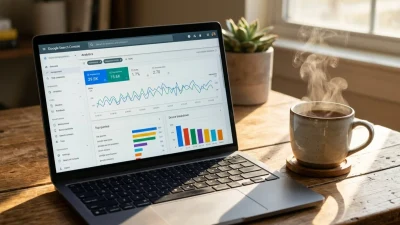
Start here. In Google Analytics 4, open Reports, then Acquisition, then Traffic acquisition, and look for chatgpt.com among the referrers. Adobe data cited by Commercetools measured AI-referred traffic to US retail sites up 393% year over year in the first quarter of 2026 — a national aggregate that says nothing about one grocery’s counter, but a growth curve that steep eventually reaches West Ridge. If your GA4 shows zero AI traffic, one of two things is true: no analytics property is installed, or visits arrive through links with no referrer attached, like plain WhatsApp forwards. Picture this: a regular walks in holding a phone, says “ChatGPT sent me,” and your analytics never recorded the trip. The Sunday counter at Devon Avenue moves across three languages in one transaction; the AI assistants answering those customers now leave footprints — the rest of this piece is about reading them.
What does Bing’s new Topics Portfolio report actually show?
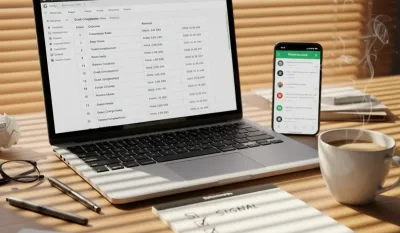
Microsoft announced the Topics Portfolio beta inside Bing Webmaster Tools’ AI Performance section on October 13, 2026, and it groups the queries your site gets cited for in AI answers into named topics. Each topic carries three numbers — Topic Size, an estimate of total citations across all sites; Sites Cited; and the count of Queries behind it. Below the topics sits the list a shop owner should read first: Top Opportunity Queries, the searches where other sites get cited and yours does not, viewable over one, two or three months.
A grounding query — the search phrase an AI system like Copilot actually uses to find and cite content in its answers — is the unit behind all of this. For a South Asian grocery, a topic might group “best halal grocery Chicago,” “where to buy saffron Devon Avenue” and “Pakistani grocery near West Ridge” into one cluster, with your citations counted per topic. Microsoft describes the feature in its Bing Webmaster Tools announcement, and Search Engine Land’s coverage notes one hard limit: small sites may see few topics, or none at all. The guidance is Microsoft’s own, and worth pinning above the register:
“Treat the numbers as directional signals for planning, not as a precise ledger.”
The opportunity list can also include a competitor’s brand name as a “gap” — treat those rows as noise, not a to-do list.
Why does ChatGPT describe my grocery differently from my own website?
Book a free strategy call - we'll audit your current setup and identify the highest-impact fixes.
AI answers are assembled, not announced. When a family asks about your shop, the assistant pulls from several sources at once — your Google Business Profile, your Yelp page, an Instacart listing, an old Reddit thread, a food blog from 2022 — and when those sources disagree, the AI picks the most common version of your facts, not the newest. Your website is one voice in the chorus; the listing, the reviews and the directories often sing louder.
The repair is consistency. Same shop name, address, phone and hours on Google, Yelp and every delivery platform; the same halal wording everywhere (zabiha counter, certification body, which meats are fresh versus frozen); your actual opening time for the Friday prayer break, not the one a delivery app guessed two years ago. Google’s AI-written summaries reward the version of you that agrees with itself, which means one hour of directory cleanup often changes the answer faster than any new blog post. The same discipline fixed a Kuwait restaurant whose Ramadan hours Google kept showing wrong — we wrote up that case here.
Do my customers’ Urdu questions get different answers than their English ones?
They do, and the difference is measurable. A Search Engine Journal experiment ran the same six shopping questions through an AI model in five languages across thousands of runs, and the recommended brands changed with the language of the question. A separate Anthropic study of hundreds of thousands of Claude conversations found the models’ expressed values shift by language — leaning warmer in Hindi and Arabic, more rigorous in English and Russian. And per Statcounter’s August 2026 figures cited in the same piece, ChatGPT alone accounted for roughly three-quarters of AI-chatbot site visits in markets like Saudi Arabia, Kazakhstan and Singapore.
For Devon Avenue, where more than a mile of South Asian businesses serves Indian, Pakistani, Bangladeshi, Nepalese, Rohingya and Afghan families, this is not a technicality. The uncle who asks his question in Urdu may get an answer built from Urdu-heavy sources; the nephew who asks in English gets another. An AI that answers Urdu queries with Urdu-heavy sources may skip your English-only website entirely. The action costs nothing: once a week, ask your real customer questions in both English and Urdu — “best halal grocery near Devon Avenue,” “Devon pe fresh mithai kab milti hai” — in ChatGPT and Gemini, and write down which shops each language recommends. When the two lists differ, you have found your gap.
Why did the AI answer cite a Reddit thread instead of my product page?

Because the raw material changed. Ahrefs data published by Search Engine Journal tracks which domains ChatGPT cites in US answers: Reddit’s citation share fell from 19.1% in March 2026 to 2.3% in September, and Wikipedia’s from 14.1% to 2.9%, while primary sources climbed — PubMed jumped into the most-cited ranks as summarizer sites slid down. In the same data, only 14.4% of sampled responses searched the web at all, and among site-restricted searches, 75.9% went to brand websites — which means when AI does look, it reaches first for the company’s own pages.
ChatGPT “seems to be prioritizing original sources over sites that summarize them.”
That is Ahrefs’ own summary, and it is the strategic sentence in this whole Q&A. A Reddit thread praising your chicken karahi is lovely; it is also secondhand. The pages only you can create are the ones AI answers reach for: your fresh-mithai days, your zabiha supplier statement, your saffron origins and price ranges, your parking and delivery radius, written plainly on your own domain. Building those pages is the same work we described for getting an oud shop recommended in Dubai and for Riyadh Eid gift boxes — cite-worthy facts, published where AI can read them.
Are the rank-tracking reports my agency sends still trustworthy?
How we helped a Pakistani business achieve measurable results.
Less than they were, and for a documented reason. Search Engine Roundtable reported on October 12, 2026 that Google is blocking search-result scrapers on three fronts at once — wide IP blocking, more captchas, and injecting lookalike results into pages served to suspected scrapers. One tracker found 8.0% of monitored results pages came back with results silently swapped. Several major tools have acknowledged gaps; the honest ones publish status notes.
| Tool | What it shows | Cost | Reliability right now |
|---|---|---|---|
| Google Analytics 4 | Visits whose referrer is chatgpt.com or another AI tool | Free | High — your own data |
| Bing Webmaster Tools AI Performance | AI queries and topics that cited your site | Free | High, but directional by design |
| Google Search Console | Classic search queries and page performance | Free | High — first-party |
| Paid rank trackers | Estimated positions in Google results | Monthly fee | Shaky since scraper blocking began |
The tradeoff is simple: first-party tools are smaller but true; third-party trackers are broader but currently guessing. A practical rule for any shop: if the tracker says nothing changed while your calls and counter traffic changed, believe the first-party data. And if you want the manual method — asking the AI directly and logging what it says — our guide to checking what ChatGPT says about your business still works; it was written for Pakistani businesses, but every step transfers to a Chicago grocery.
How much does monitoring AI search traffic cost?
The tools are free; the cost is attention. A grocer who spends thirty minutes a week — one look at GA4 referrers, one look at Bing’s AI Performance report, two spot-check questions in two languages — knows more about their AI visibility than most agencies’ monthly PDFs contain. Paste this into ChatGPT, Perplexity and Gemini weekly and log the answers in one notebook:
You are a shopper in Chicago’s West Ridge neighborhood planning Sunday dinner. Where would you buy fresh halal chicken, saffron and dry fruits? Name the shops you would consider and why.
The paid option buys consistency: a standing dashboard, weekly multilingual spot checks, and someone who notices the week your name drops out of the answers. WeProms Digital, an AI search visibility monitoring service for overseas Pakistani and halal-market businesses, builds exactly that for halal groceries, restaurants and service businesses across the US, UK and Gulf — GA4 referral views, Bing AI Performance reviews and a written log of what the machines say about you, in every language your customers ask. Email hello@weproms.com or message +92 300 0133399 on WhatsApp — replies in US, UK and Gulf business hours.
Read next: How do I get ChatGPT to recommend my oud shop in Dubai? · Get your Riyadh Eid gift boxes into ChatGPT’s shopping answers
Sources & References
- Search Engine Journal — Bing Webmaster Tools Sorts AI Search Queries Into Topics — October 14, 2026
- Bing Webmaster Tools — Introducing Topics Portfolio (Beta) in AI Performance — October 13, 2026
- Search Engine Land — Bing Webmaster Tools AI Performance report adds Topics Portfolio — October 13, 2026
- Search Engine Journal — ChatGPT’s Most-Cited Sites Tilt Toward Primary Sources (Ahrefs data) — October 12, 2026
- Search Engine Journal — Lost In Translation: How Language Changes Which Brand AI Recommends — October 13, 2026
- Search Engine Roundtable — Third-Party Google Rank Tracking Struggling Now — October 12, 2026
- Commercetools — Agentic commerce statistics (Adobe: AI-referred US retail traffic up 393% YoY, Q1 2026) — 2026
- Block Club Chicago — Your guide to Devon Avenue, Chicago’s Little India — September 18, 2026
Additional reading from industry feeds: