
By Sara Khan · WeProms Digital · November 5, 2026
Last updated: November 2026.
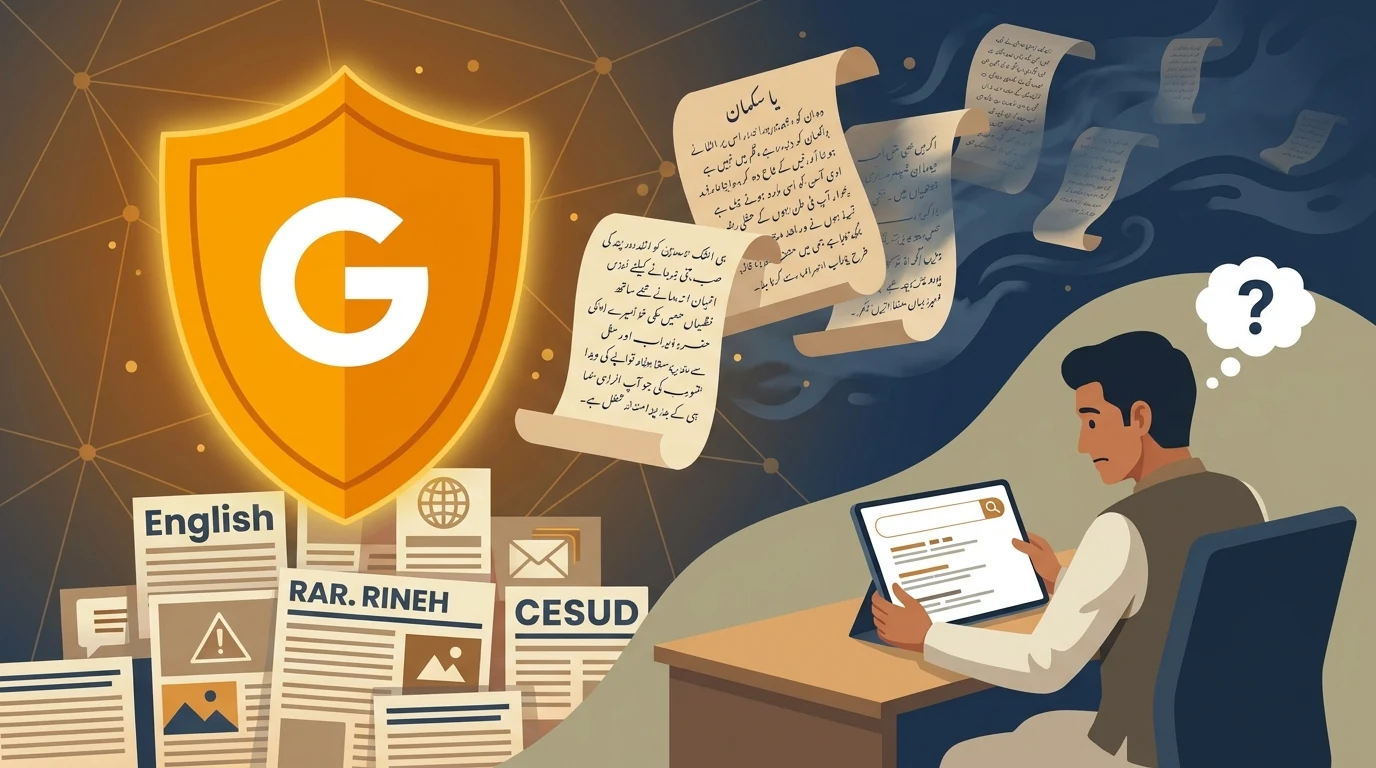
Across the 40+ ecommerce accounts we review for Pakistani-origin and Muslim business owners in Dubai, Abu Dhabi, and Sharjah, one pattern keeps appearing: a Shopify store carrying 80 to 200 product pages while Google’s index holds barely a third of them. The boutique posts daily on Instagram, runs Meta ads through the season, and still cannot be found for “abaya shop Abu Dhabi” or even its own product names typed into Google. Index coverage — the share of your pages Google has actually listed in its results — is the quiet constraint underneath all of it, because a page Google has not indexed cannot rank, cannot be cited, and cannot be recommended by Google’s AI answers.
The market context makes the gap expensive. EZDubai and Euromonitor International put UAE ecommerce at AED 42.2 billion in 2025, after growing about 19 percent a year since 2020; the same research forecasts roughly 10 percent annual growth through 2030. A national market number proves demand exists — it says nothing about whether Google has listed your product pages, which is decided page by page, not market by market. Modest fashion is one of the most searched categories among Muslim women in the Emirates, and most of that searching still starts at Google before it reaches noon, Amazon.ae, or your Instagram bio.
The pattern repeats.
The underlying mechanic is duplication, not penalty. Independent audit data published by freeCodeCamp in November 2026 — drawn from a small 53-site audit sample, so treat it as a signal rather than a census — found duplicate page titles on 61.8 percent of sites with two or more loaded pages and no meta description on 49.1 percent. Those two numbers describe almost every abaya store we open in the Gulf, for reasons the next section makes obvious.
The pattern that repeats across Abu Dhabi and Dubai Shopify stores
Open ten UAE abaya stores and count the tabs. Most carry a title template — the reusable format your theme applies to every page’s title tag that prints the store’s name first on every single page: the homepage, every collection, every product. Google reads forty pages titled with minor variations of one name, concludes they are near-copies of each other, and indexes a fraction of them. The audit sample above puts duplicate titles on 61.8 percent of sites; the boutique stores we review sit comfortably on the wrong side of that number.
The second half of the pattern is the supplier feed. Abaya and shapewear boutiques in the UAE commonly import the same product catalogs — same photos, same Arabic-and-English descriptions — that forty other sellers on noon and Amazon.ae also imported. A meta description — the one-to-two-line summary Google may show under your page title in results — is missing on 49.1 percent of audited sites, and where descriptions exist, they are often identical across dozens of product pages because nobody wrote them.
Google browses the way a buyer walks a souk of near-identical stalls. It notes two or three shops, decides the aisle repeats itself, and skips the rest. Your 150 product pages feel distinct to you — the Nida fabric, the closed abayas, the occasion pieces — but to a crawler that reads identical titles and identical descriptions, page 40 looks exactly like page 4.
The fix starts with counting, not writing. Open your Shopify admin, look at the title and description fields on your ten best-selling products, and mark every field that is blank or auto-filled with your store name.
Where the drop-off happens: Google visits, then walks away
Most owners discover the problem inside Search Console — Google’s free tool that reports how your site appears in Search. One status confuses everyone: Crawled - currently not indexed — the report line meaning Google downloaded the page and chose not to list it. Boutiques see forty, eighty, two hundred URLs under that label and assume a penalty, a crawl budget crisis, or something they did wrong in Shopify.
In early November 2026, Google rewrote that section of its Page indexing report documentation. The new wording is unusually plain:
“The page was crawled by Google but not indexed. Google doesn’t index all pages across the web, so this is a common message for many sites and doesn’t necessarily indicate an issue that needs attention.” — Google Search Console Help, as reported by Search Engine Roundtable
Read that twice before panicking. Google is saying, in writing, that some pages will be crawled and skipped, and that the status alone is not a fault. The diagnosis matters more than the label: if your best-selling abaya page sits under “Crawled - currently not indexed,” that is a real problem; if an old filter combination from 2024 sits there, it is Google tidying up.
Two technical causes dominate the accounts we review. The first is the missing canonical tag — the line of code that tells Google which URL is the master version when several near-identical URLs exist. The audit sample found no canonical tag on 64.2 percent of sites, and Shopify stores multiply the problem automatically: every sort order, size filter, and tag combination creates a new URL with the same products. Without canonicals, forty URLs compete to represent one collection, and Google picks none of them confidently. Google’s own guidance on consolidating duplicate URLs is the reference your developer needs.
The second cause is JavaScript. The audit data found 17.7 percent of 277 single-page audits were built mostly with JavaScript, meaning content appears only after code runs in the browser; Google can render JavaScript, as its How Search works guide explains, but rendering happens on a delay, and delayed content is content Google has not read when it decides whether to index. Boutiques that bolt popups, review widgets, and Instagram feeds onto lean themes drift into this without noticing.
Set a 15-minute weekly habit: Search Console, Pages report, note the count of “Not indexed” URLs. A number that shrinks week over week after the fixes below is your confirmation; a number that never moves is your signal to escalate.
What the top 10 percent do differently
The stores that get indexed — and stay indexed through Dubai Shopping Festival, Ramadan, and Eid — share four habits, none of which require a large budget.
They write titles for the twenty pages that earn money. Twenty hand-written titles and descriptions — “Closed abaya in Nida fabric, Abu Dhabi boutique” rather than the store name repeated — outperform two hundred auto-generated ones, because Google indexes distinct pages confidently and skips duplicates. Shopify’s SEO manual walks through editing these fields page by page in the admin; an afternoon covers your top twenty.
They add three sentences of unique copy to every product page. Fabric weight for Gulf summers, sleeve and length details, care instructions, styling notes for shaadi season. Three sentences is more than noon or Amazon.ae sellers carry, which makes your domain the version worth indexing — and, increasingly, the version AI answers quote. For boutiques that also sell on marketplaces, creator content that lifts Abu Dhabi food brands on Amazon.ae shows the same principle from the marketplace side: identical listings sink, distinct ones surface.
They set canonicals on collection and filter URLs, so one master URL represents each collection and the filter variants step aside. Your theme or developer handles this once; Shopify documents the settings, and Google’s duplicate-URL guidance above is the standard.
They publish occasion pages early. An Eid collection page needs to be indexed before demand arrives, not during it: Ramadan 2027 is expected to begin around February 8, 2027, subject to moon sighting, with Eid al-Fitr around March 9 — which means an Eid collection page should be live and indexable by early January 2027, six weeks ahead. Whether organic rankings still matter for a boutique like yours is fairly settled — a UK mithai shop’s case (written for a UK reader; the mechanics are identical in the Emirates) walks through why the answer is yes, with qualifications.
One more reason this now outranks other priorities: on its Q3 2026 earnings call, Google said Search and AI are merging into one product. Pages Google has not indexed cannot appear in its AI answers or agent shopping surfaces — the same surfaces halal grocers are being told to prepare for. Coverage signals which pages Google trusts enough to show anywhere.
Here is the honest comparison from the accounts we review:
| Average store we review | Top 10 percent | |
|---|---|---|
| Page titles | Default template repeats the store name on every page | Hand-written for the 20 highest-value pages |
| Meta descriptions | Missing on about half of audited sites (49.1% in a 53-site sample) | Written for every top page |
| Canonical tags | Absent on 64.2% of audited sites | Set on every collection and filter URL |
| Search Console | Opened once, in a panic, after traffic dropped | A 15-minute weekly check of the Pages report |
| Eid collection page | Published days before Eid | Indexed six weeks before demand |
Where this leaves a one-person boutique
The full technical plan — canonical logic across every faceted URL, JavaScript pruning, structured data, sitemap hygiene — fits stores with a developer on call, and that description does not fit most one-person boutiques in Al Ain or Sharjah running the shop from a phone between customers. The smaller operator runs the short version: rewrite titles and descriptions for the top twenty pages in one afternoon, ask your theme developer to confirm canonical handling once, and keep the weekly 15-minute Search Console check.
Then apply one decision rule. If more than half of your product pages remain unindexed a few weeks after titles and canonicals are fixed, the remaining cause is structural — JavaScript, URL sprawl, or duplicate content too deep for a template fix — and that is the point where a paid technical audit earns its fee, not before.
The cost of leaving this unfixed compounds quietly. Every season of traffic that arrives through Meta ads alone rents attention at auction prices, while the pages that could earn it free sit unread. Dubai’s and Abu Dhabi’s modest fashion buyers are searching this week; the stores they find are simply the ones Google has already listed.
Read next: Why Google shows wrong Ramadan hours for restaurants and why a halal takeaway stopped showing on Google Maps — two more cases of Google’s data about a business drifting from the business itself.
As a technical SEO audit service for overseas Pakistani businesses, WeProms Digital diagnoses exactly this — index coverage, canonical structure, duplicate content, and JavaScript rendering — for Shopify and marketplace stores across the UAE, Saudi Arabia, the UK, and North America, and our ecommerce SEO programs then turn recovered coverage into product-page traffic that does not need paying for twice. Based on our experience with ecommerce accounts in Dubai, Abu Dhabi, and Sharjah, index coverage is the most under-audited asset in Gulf ecommerce. Message hello@weproms.com or WhatsApp +92 300 0133399, or start at the contact page — we work Gulf and UK business hours.
Key Takeaways
- Google’s November 2026 documentation now says “Crawled - currently not indexed” is common and not necessarily a problem — diagnose before panicking, using the URL Inspection tool on pages that matter.
- Duplicate titles (61.8% of a 53-site audit sample) and missing meta descriptions (49.1%) explain most index gaps in UAE Shopify stores; rewrite the top twenty pages first.
- Set canonical tags on collection and filter URLs so one master version of each page competes, not forty variants (64.2% of audited sites had none).
- Publish Eid collection pages six weeks before expected demand — by early January 2027 for an Eid al-Fitr expected around March 9, 2027, subject to moon sighting.
- If over half your product pages stay unindexed after titles and canonicals are fixed, that structural remainder is when a technical SEO audit is worth paying for.
About WeProms Digital
WeProms Digital is a Lahore-based technical SEO and ecommerce marketing agency working with overseas Pakistani and halal-minded business owners across Dubai, Abu Dhabi, Toronto, London, Houston, and beyond.
The team specializes in technical SEO audits, ecommerce SEO, and analytics setup, with a track record of recovering index coverage and organic revenue for Shopify and marketplace stores in the Gulf and North America.
Get in touch: hello@weproms.com · WhatsApp +92 300 0133399 (replies in UK and Gulf business hours) · weproms.com/contact-us
Sources & References
- Google Search Console Help — Page indexing report — updated November 2026
- Search Engine Roundtable — Google Updates Crawled - Currently Not Indexed Details — November 3, 2026
- freeCodeCamp — How to Find and Fix Common Technical SEO Issues on Your Website — November 3, 2026
- Google — How Search works — accessed November 5, 2026
- Google — Consolidate duplicate URLs — accessed November 5, 2026
- Shopify Help Center — SEO guide — accessed November 5, 2026
- Gulf Industry Online — UAE digital commerce market on track for $18.3bn by 2030 (EZDubai / Euromonitor International data) — 2026
- Search Engine Journal — Google’s Q3 2026 Earnings Call: Search & AI Are Merging Into One Unified Product — November 3, 2026
Additional reading from industry feeds: