Late-May 2026 search volatility is a good reminder to audit thin AI content, templated pages, weak authorship, and poor brand signals. Do not make drastic SEO changes from a single third-party chart; compare Google Search Console data, landing pages, and query groups first.
Last updated: June 2026.
Late-May 2026 brought heavy SEO industry discussion about ranking volatility. Before treating it as a confirmed site-specific penalty, Pakistani businesses should compare their own Google Search Console data against official Google Search documentation and known site changes.
What This Update Rewards
The safest audit focus is not guessing one exact ranking factor. It is improving four durable content signals that Google consistently encourages: usefulness, originality, trust, and strong technical accessibility.
Original data and first-hand experience should lead the recovery list. Pages containing Pakistani pricing examples, real case studies, hands-on testing, and named expert review are easier to trust than generic summaries.
Named experts and verifiable authorship gained a measurable advantage, particularly in YMYL — Your Money or Your Life, Google’s classification for content that could impact a user’s financial, medical, or legal well-being — topics. Pakistani medical clinics, financial advisory firms, and legal practices that publish content under named, credentialed professionals now outrank anonymous blog networks covering the same topics. The AdLift analysis of the May update identifies this as a continuation of the E-E-A-T framework: Experience, Expertise, Authoritativeness, and Trustworthiness.
Branded, official websites over thin aggregators. A Lahore service provider with a complete website, reviews, clear service pages, and real proof is usually more useful than a generic “top 10” directory with no verification.
Focused topical depth. Sites with coherent content hubs — deep coverage of a specific topic area — outperform sites that chase unrelated keyword trends. A Karachi digital marketing agency publishing exclusively about Pakistani marketing challenges outperforms a competitor writing about cryptocurrency one day and celebrity gossip the next.
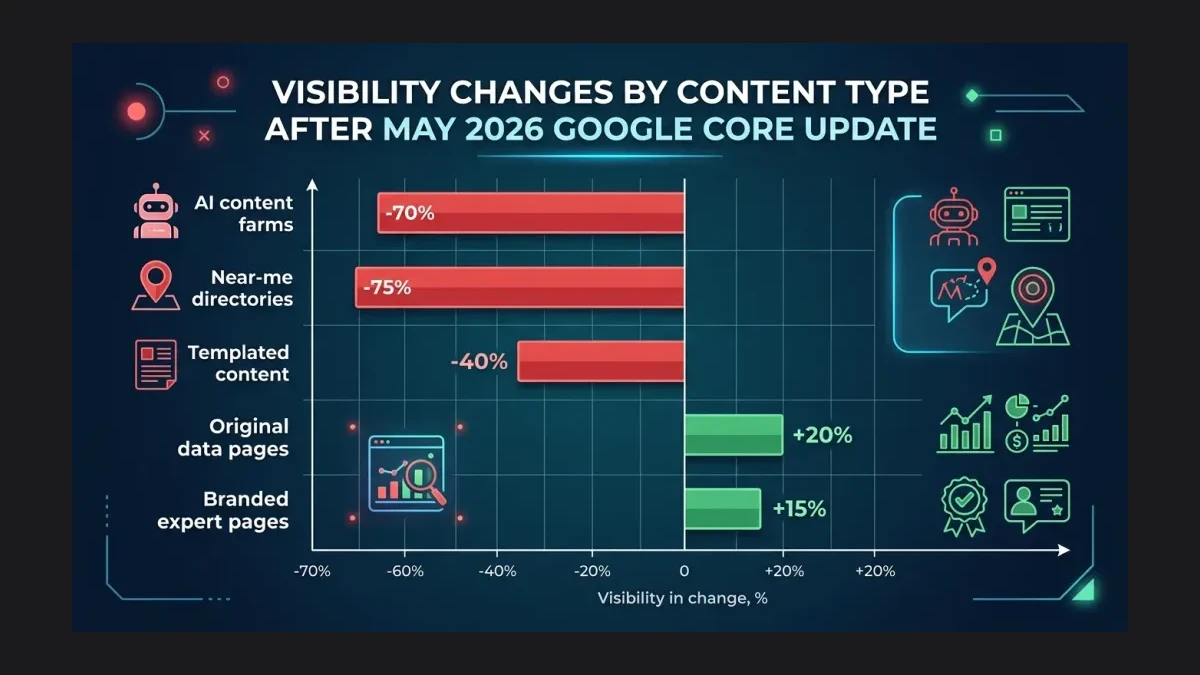
Where Pakistani Websites Break Under These Rules
The same update that rewards quality content penalizes patterns common across Pakistani SEO strategies. The breakage falls into four categories.
AI-scaled content without human editing is the highest-risk bucket. Many Pakistani businesses purchased bulk blog packages with little editorial oversight, local context, or expert review.
Thin affiliate and product review pages — common among Pakistani ecommerce affiliates — lost rankings when they lacked first-hand testing, original photography, or genuine user experience. A product comparison page that rewrites manufacturer descriptions lost ground to a competitor who actually tested the product and published original results. The update treats product review content the way it treats all content: without evidence of real experience, the page is interchangeable with hundreds of others.
Local and service directories need extra scrutiny when pages are thin, duplicated, or built only to capture “near me” searches. Pakistani directory sites should verify listings, add useful filters, and remove doorway-style pages.
Scattershot topic coverage — sites publishing content across many unrelated niches — lost authority signals. A Pakistani blog that covered technology one day, fashion the next, and real estate the day after that now competes against focused competitors in each vertical who have deeper topical authority.
| Content Pattern | Visibility Change | Pakistani Example |
|---|---|---|
| Page type | Risk direction | Example |
| AI-generated bulk posts | High risk | 500 AI-written blog posts with no editing |
| Templated service pages | High risk | Identical service descriptions across 20 cities |
| Original data content | Lower risk | PKR cost comparisons from real Pakistani invoices |
| Branded expert pages | Lower risk | Named specialist publishing reviewed guidance |
| Local business websites | Lower risk | Lahore clinic with complete profile and authentic reviews |
The Hidden Cost: AI Overviews Compound the Traffic Loss
Book a free strategy call - we'll audit your current setup and identify the highest-impact fixes.
Ranking volatility can interact with AI Overviews and other SERP features to create a compounding traffic effect.
For Pakistani businesses that lost rankings in the core update, the traffic impact multiplies. A Lahore clothing brand that dropped from position 3 to position 8 for a key term was already receiving fewer clicks because AI Overviews absorb user attention above the fold. The double impact — lower ranking plus AI Overview attention above the traditional results — can make a traffic drop feel sharper than a rank tracker alone suggests.
The pattern repeats across sectors. Pakistani healthcare sites, real estate portals, educational institutions, and ecommerce stores all reported elevated volatility during the May rollout window. Some third-party analyses reported gains for forum and discussion-style content during the same period. Pakistani businesses should note the pattern without assuming every forum page will win: useful first-hand discussion can be valuable, but static informational pages still need stronger experience, authorship, and differentiation.
What Pakistani Businesses Should Do Before the Rollout Completes
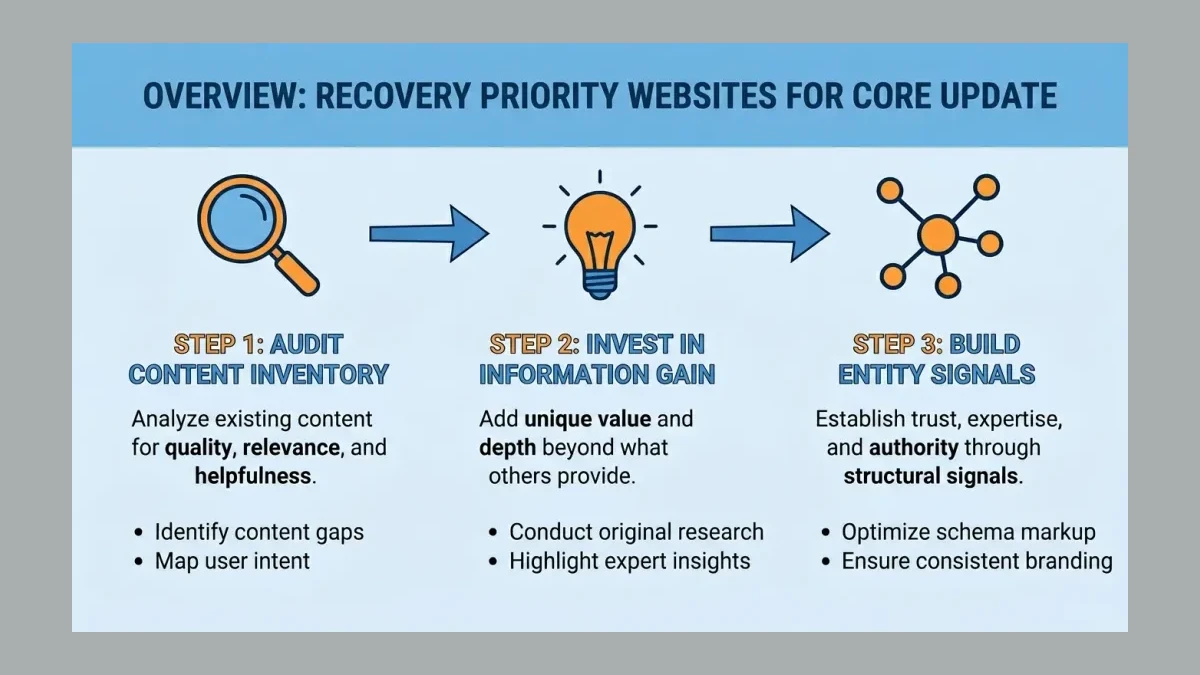
The update window is still recent as of early June 2026. Google and leading SEO agencies advise against making drastic changes mid-rollout because volatility makes it difficult to attribute cause and effect. But three actions make sense right now.
Invest in information gain. Every page you publish should contain something the user cannot find elsewhere — proprietary data, first-hand experience, unique frameworks, or original research. For a Pakistani business, this means PKR-specific pricing data, Pakistani market comparisons, local regulatory context from SBP or PTA, and genuine customer case studies with verifiable results.
Build entity signals. Strong brand entities — clear E-E-A-T signals, consistent NAP data, and structured entity connections — support both traditional SEO and AI visibility.
Read next: SEO Audit for AI Search Gaps in Pakistan · Ranking Reports Don’t Pay Bills: GEO for Pakistan
WeProms Digital, a Pakistan digital marketing agency, provides core update recovery audits for Pakistani businesses across Lahore, Karachi, Islamabad, and beyond. The team segments traffic data by content type, identifies visibility losses, and builds recovery roadmaps focused on information gain and entity strength. Reach out at hello@weproms.com or WhatsApp +92 300 0133399.
Frequently Asked Questions
Did the May 2026 Google Core Update affect Pakistani websites differently than global ones?
Pakistani websites experienced the same directional shifts as global sites — AI content lost visibility, original content gained. Pakistani businesses face higher exposure because many local SEO strategies relied heavily on volume-oriented, templated content from bulk blog packages. The update hit these patterns hard, with some Pakistani directories and affiliate sites losing 60%+ visibility within days.
My Pakistani website lost traffic after May 21. Is it the core update?
Possibly. The May 2026 Core Update started May 21, 2026, and runs for approximately two weeks. If your traffic drop aligns with that date, open Google Search Console and compare impressions and clicks before and after May 21. Segment by page type to identify which content categories lost visibility. WeProms Digital offers core update traffic audits for Pakistani businesses.
How long does core update recovery take for Pakistani websites?
Google’s guidance is to focus on overall helpfulness and quality rather than chasing one narrow fix. Recovery depends on how quickly you replace thin content with substantive, original material that demonstrates genuine expertise, and on when Google re-evaluates those improvements.
Should I delete my AI-generated content after the May 2026 update?
Not necessarily. AI-generated content that has been thoroughly edited, enriched with original data, and reviewed by a named expert can perform well. The update targets unedited, mass-produced AI text — not AI-assisted writing. Audit each page individually: if it adds unique value a user cannot find elsewhere, keep and improve it. If it duplicates what already exists online, remove or consolidate it.
Can WeProms Digital audit my website after the core update?
Yes. WeProms Digital provides comprehensive post-update audits for Pakistani businesses, covering content inventory analysis, visibility segmentation, information gain assessment, and entity signal evaluation. Contact the team at hello@weproms.com or WhatsApp +92 300 0133399.
Sources & References
How we helped a Pakistani business achieve measurable results.
- Search Engine Roundtable — Google May 2026 Core Update Landed — May 2026
- Digital Applied — May vs March 2026 Core Updates Pattern Comparison — May 2026
- AdLift — Google May 2026 Core Update Is Live — May 2026
- Google Search Status Dashboard — Ongoing
Additional reading from industry feeds: