Last updated: June 2026.
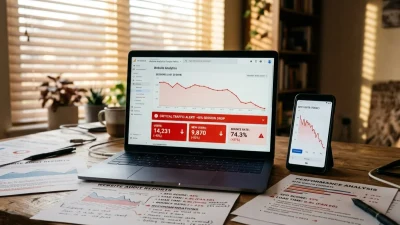
A Karachi fashion retailer spending a meaningful monthly SEO budget discovers its agency built artificial brand mentions across low-quality blog networks. Google Search spam policies explicitly include attempts to manipulate generative AI responses, so the retailer faces ranking risk, wasted spend, and a messy cleanup.
Here’s the thing. Google did not quietly update its policies. Its Search spam documentation now explicitly covers attempts to manipulate generative AI responses. Treat paid or artificial AI-mention schemes with the same caution you would apply to old link schemes.
The setup that creates AI spam risk
Google Search spam policies state that spam includes techniques used to manipulate Search systems, including attempts to manipulate generative AI responses in Google Search. Google also added guidance on optimizing for generative AI features on May 15, 2026; the safe direction is helpful, original, non-commodity content—not artificial mention schemes.
Three specific tactics now fall under the spam umbrella:
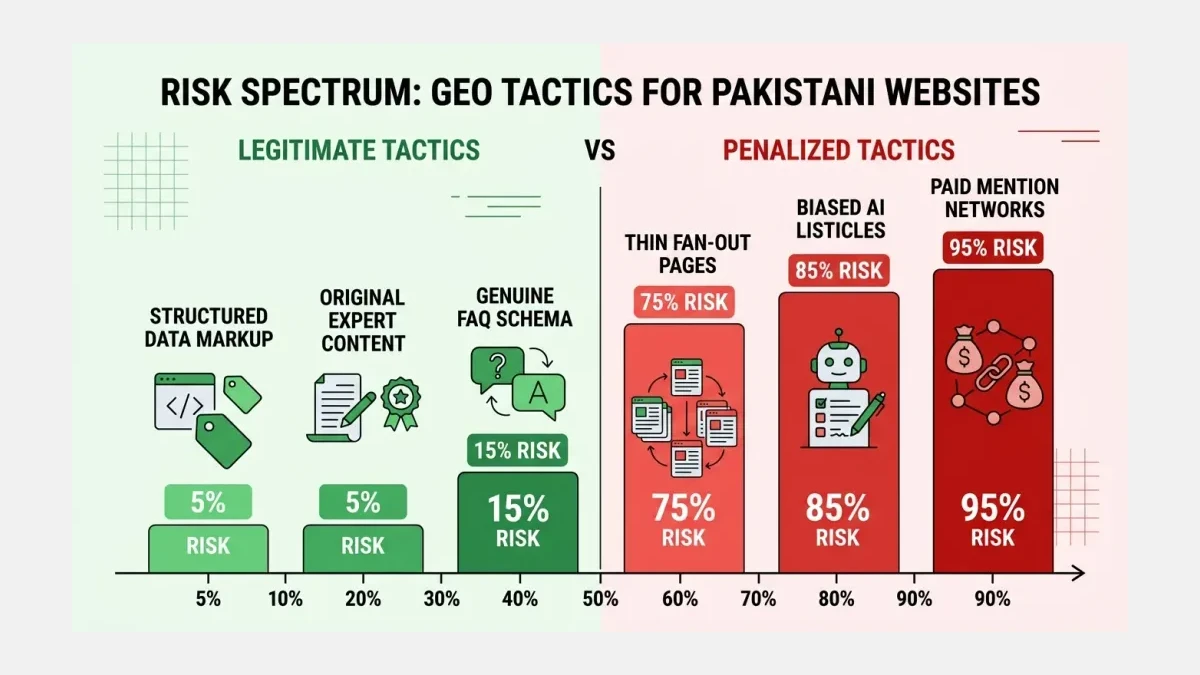
Paid AI mention networks. Agencies that pay bloggers, forum posters, and content farms to mention your brand name across dozens of websites. Google’s spam policies now cover attempts to manipulate generative AI responses. These mentions may be ignored, and persistent manipulative behavior can create broader search risk.
Recommendation poisoning. Creating biased listicles and “top 10” articles designed specifically so AI models will cite your brand. Search Engine Roundtable confirms that Google “may penalize sites that use tactics such as biased listicles or recommendation poisoning.” Sites caught using this approach risk demotion or complete removal from search results.
Fan-out content abuse. Generating hundreds of thin pages targeting every possible AI-generated sub-query. Google classifies this as “scaled content abuse” — a known spam category now applied to AI-specific scenarios. The pages add no user value and exist purely to flood AI citation signals.
Where the money goes when agencies buy fake mentions
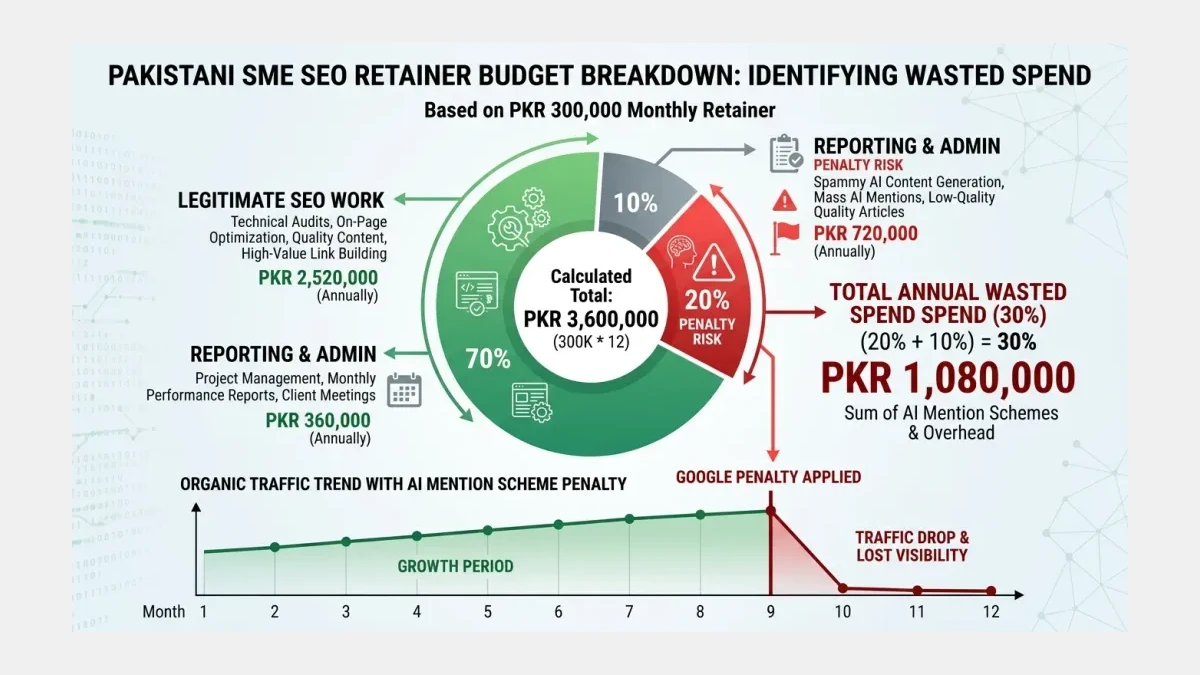
Some SEO retainers now include vague “AI citation building” or “GEO mention campaigns”. If that budget is spent on paid third-party mentions, sponsored listicles, or fake comparison articles, it creates risk without proving durable business value.
The math is straightforward: every rupee spent on manipulative mentions is a rupee not spent on pages, reviews, schema, case studies, and useful content that can help customers and search systems understand the business.
Most teams miss this. The mentions look legitimate in monthly reports. Traffic might even increase temporarily as the fake mentions create short-term citation signals. If Google treats the pattern as spam or a manual action appears in Search Console, recovery becomes slower and more expensive than simply building legitimate authority from the start.
As AI-related SEO demand grows, some agencies are rebranding old link-building networks as “AI citation networks.” The label changed; the risk profile did not.
What Google actually considers manipulative
Book a free strategy call - we'll audit your current setup and identify the highest-impact fixes.
Google draws a clear line between legitimate optimization and spam. The generative-AI optimization guide published alongside the spam update specifies what is allowed.
Legitimate GEO tactics (safe to use):
- Structured data markup — FAQPage, HowTo, Article, Organization, Product schemas on genuine content
- Original first-hand content — analysis, experience, and expertise that cannot be found elsewhere
- Clear page structure — logical headings, readable paragraphs, and content organized for humans
- Consistent entity signals — matching NAP information, complete Google Business Profile, authoritative directory listings
Penalized GEO tactics (high risk for Pakistani websites):
- Manufacturing fake forum posts or blog comments mentioning your brand
- Creating listicles where your brand is the only recommended option
- Publishing thin, AI-generated pages targeting every sub-query
- Any tactic whose primary purpose is influencing AI citation patterns rather than helping users
The practical test is simple. Would you do this tactic if AI Overviews did not exist? If the answer is no, it is probably spam. PPC Land confirms that Google’s spam policies now officially cover both AI Overviews and AI Mode, which means enforcement is active across all AI-generated surfaces.
For Pakistani businesses that have been sold debunked GEO tactics by agencies, the risk is immediate. Google’s spam systems do not distinguish between businesses that knew they were buying manipulative tactics and businesses that were misled by their agency.
The 15-minute check to audit your risk
Open your SEO agency’s last three monthly reports. Look for these warning signs:
- “Mention building” or “citation campaigns” in the activity list. These are often code for paid mention networks.
- Large volumes of blog posts or articles published on third-party sites mentioning your brand. Legitimate PR is rare and targeted; fake mentions are frequent and generic.
- “Top 10” or “best of” articles where your brand appears as the top recommendation, published on low-authority domains you have never heard of.
- Sudden spikes in branded search volume that correlate with campaign starts. Fake mentions can generate short-term branded search interest before Google catches the pattern.
- Reports showing “AI citation counts” as a KPI. Measuring AI citations is legitimate. Building artificial citations to hit a KPI is not. Red flags from AI search agencies include any reporting that treats citation volume as a deliverable rather than an outcome.
If two or more of these appear in your reports, your website deserves a risk review. Check Google Search Console for manual actions, but remember that many quality and spam systems are algorithmic and may not show a manual action.
What legitimate GEO looks like for Pakistani businesses
Legitimate GEO for Pakistani businesses follows the same principles as good SEO, adapted for AI citation patterns. Think of it like maintaining your shopfront at Liberty Market. The shopkeepers who get the most foot traffic are the ones with clear signage, well-organized displays, and goods people actually want to buy — not the ones paying people to stand outside and shout their shop name.
Structured data. Implement comprehensive schema markup on every page. Product pages get Product schema. Blog posts get Article schema. FAQ sections get FAQPage schema. Service pages get Service schema. Google’s own guidance confirms that structured data helps AI systems understand your content, but notes there is “no special schema that unlocks AI placement.” The data must reflect genuine, visible content.
Entity signals. Ensure your business name, address, and phone number are consistent across Google Business Profile, your website, and all major directories. AI systems use these signals to recognize your business as a distinct entity worth citing.
Original content. Publish first-hand analysis, Pakistani market data, and expertise that cannot be found anywhere else. Google’s guide explicitly recommends “non-commodity content” — content based on real experience rather than generic summaries. For a Pakistani fashion retailer, this means publishing fabric quality comparisons, seasonal trend analysis specific to Pakistani consumers, and sizing guides based on local measurements.
Technical foundations. Page speed, mobile responsiveness, crawlability, and clean URL structure all remain important. Google’s generative-AI guide confirms that content must be “indexable, crawlable, and quality-assessed” before it can appear in AI features. SEO retainer waste on outdated tactics is often highest in the technical SEO category, where agencies charge for fundamentals that should have been implemented years ago.
Read next: Debunked GEO tactics Pakistani businesses should avoid · Red flags when hiring an AI search agency
WeProms Digital audits Pakistani websites for spam-policy risk and builds legitimate GEO strategies that improve AI citation visibility without relying on fake mentions or manipulative link schemes. Reach out at hello@weproms.com or WhatsApp +92 300 0133399 for a practical risk assessment.
Audit Checklist: Is Your Pakistani Website at Risk?
- Search your brand name in Google Search Console — check for any manual actions
- Review your SEO agency’s monthly reports for “mention building” campaigns
- Search your brand name on Google — are there unfamiliar sites recommending you?
- Check your backlink profile in Ahrefs or Search Console for sudden spikes from low-quality domains
- Audit any “top 10” listicles that feature your brand — are they on legitimate, recognizable sites?
- Review your content publishing cadence — do you have hundreds of thin, similar pages?
- Verify your structured data is genuine and matches visible on-page content
- Confirm your agency is not buying mentions on your behalf without explicit disclosure
Frequently Asked Questions
How we helped a Pakistani business achieve measurable results.
What is Google’s AI citation penalty?
Google Search spam policies cover attempts to manipulate generative AI responses. Websites buying fake brand mentions, creating biased listicles, or generating doorway pages for AI summaries risk violating those policies and weakening trust.
How do I know if my Pakistani website was penalized?
Log into Google Search Console and check the “Manual Actions” section under Security and Manual Actions. If a penalty has been applied, you will see a specific notification explaining the violation. Sudden organic traffic drops after a campaign that included aggressive “mention building” are a reason to review Search Console, recent links, content changes, and manual-action notices before making more changes.
Can my SEO agency buy AI mentions without my knowledge?
Yes. Some agencies include “citation building” or “mention campaigns” in their standard scope without explicitly disclosing that these tactics involve paying for fake brand mentions across third-party sites. Review your agency’s monthly reports for any activity described as “mention building,” “citation campaigns,” “brand signal amplification,” or “AI visibility boost.” Ask direct questions and request URLs of every mention they have created.
How much does a legitimate GEO audit cost in Pakistan?
A legitimate GEO audit for a Pakistani business typically costs between PKR 75,000 and PKR 200,000, depending on the size of the website and the number of AI platforms covered. The audit should include structured data analysis, entity signal review, content quality assessment, and competitor citation benchmarking across at least three AI platforms. WeProms Digital offers GEO audits starting at PKR 75,000 with full citation gap analysis included.
What should I do if my website was already penalized?
Start by removing or disavowing all paid mentions and manipulative content. File a reconsideration request through Google Search Console explaining the steps you have taken to remediate. Switch to a legitimate GEO strategy focused on structured data, original content, and genuine entity signals. Recovery typically takes 2-6 months with a clean approach.
About WeProms Digital
WeProms Digital is Pakistan’s leading SEO and GEO agency, headquartered in Lahore, serving Pakistani SMEs, ecommerce brands, and B2B teams across Lahore, Karachi, Islamabad, Rawalpindi, Faisalabad, and Multan.
The team specializes in Google penalty recovery, structured data implementation, and AI citation optimization, with a practical focus on building legitimate visibility in AI search without violating Google’s spam policies.
Get in touch: hello@weproms.com · WhatsApp +92 300 0133399 · weproms.com/contact-us