By Hamza Ali · WeProms Digital · October 14, 2026
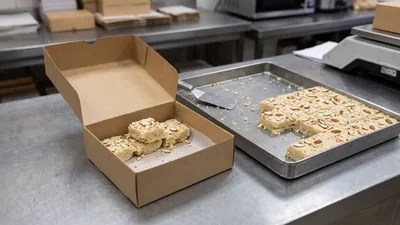
An Abu Dhabi Pakistani family food brand — masala tins, chai blends, date gift boxes, packed in a small industrial kitchen between the city and Al Ain — spends AED 4,500 a month on Amazon.ae Sponsored Products (an illustrative account — substitute your own numbers) and still sits on page 4 for “biryani masala”. The reviews are decent, the main images are clean, and the budget disappears into the auction every single day. We see this pattern weekly. The brand is not losing because the product is weak; it is losing because it is bringing dirhams to a fight that is won with content.
This is the operator’s breakdown of where that AED 4,500 actually goes, and the lever most family brands pull too late: a crowd of small creators making many videos, not a bigger bid on the same keywords.
The setup that burns the budget
Amazon marketplaces have quietly become the most expensive shelf in retail. An analysis of Amazon’s fee structure published by Not-Ship found sellers handed Amazon about 19% of each sale in 2014, and many now hand over close to half of every sale once the base referral fee — 15% in most categories — stacks with fulfilment, storage, returns and advertising. The US FTC’s antitrust case goes further and calls advertising “a virtual necessity for doing business on Amazon”. Ads on the marketplace are no longer a growth choice. They are rent.
Here is the unit economics of that rent for a typical tin, labeled as a worked example — substitute your own costs before making decisions. A 400-gram biryani masala sells at AED 28 on Amazon.ae. Ingredients, tin and labeling run AED 9. The referral fee takes AED 4.20 at 15%. Fulfilment takes AED 6. Ads take AED 4 per unit at current click prices. That leaves AED 4.80 of contribution per tin — and every fils the auction adds to your cost per click eats that line directly. When the ad auction pushes your cost per sale to AED 9, you are working for Amazon, not for the family business.
There is a second trap in the same analysis: Amazon’s Fair Pricing Policy. Sellers have lost the Buy Box — the “Add to Cart” button — for offering the same product cheaper on their own website, on noon, or anywhere else, and Germany’s regulator has ordered Amazon to stop controlling sellers’ prices. For an Abu Dhabi brand also selling via WhatsApp and its own Shopify store, this compresses the one escape route: you cannot quietly price lower outside the marketplace to compensate for marketplace fees.
Where the money actually goes
Most teams miss this: on a marketplace, ad spend buys position, never preference. A Sponsored Products slot puts the tin above organic results, but the shopper still reads the title, the image, the star rating, and the review that says “tastes like my ammi’s”. If the listing has no story and no proof, the click dies on the page and the auction charges you anyway. Page 4 is crowded with brands that answered a content problem with budget — the auction happily takes the budget and keeps the position out of reach, because a dozen bigger sellers are bidding the same keywords with thicker margins.
The retail-media panels at Adweek’s commerce event made the same point from the stage: media money pointed at a product that is out of stock, or undifferentiated on the shelf, is money burned — Albertsons Media Collective’s VP of ad sales described a campaign that promoted a product that was not even in stock because the media team and the merchants were not talking. On Amazon.ae, the family brand is both the media team and the merchant, which means the discipline of connecting content to the actual tin on the actual shelf is yours to enforce.
What twenty small creators do that ads can’t
Book a free strategy call - we'll audit your current setup and identify the highest-impact fixes.
The strongest data on creator-driven marketplace selling comes from TikTok Shop, and the mechanics transfer directly. A Flywheel report using data from Reacher, covering 1.5 million product samples sent to creators, found that only 47% of sampled creators ever post a video, and only 14% generate sales. The numbers that matter come next: a single video from a creator averages $7.19 in sales, while creators who post twenty or more videos average $74.07 per video — about $1,481 per creator — because volume compounds. Smaller creators generate disproportionately more sales per 1,000 followers than big names, and commission-based pricing means you pay from actual sales, not from hope.
“You’ve got to send out thousands of samples to affiliates at the very beginning, at least, to get a broad enough pool of affiliates to work with. And then you narrow that down over time into that concept of long-term, repeatable creator relationships,” Deren Baker, CEO of Flywheel Ventures, told Digiday.
Think of the mosque iftar during Ramadan: twenty families each bringing one dish feed the whole hall, and the table stays interesting; one family’s giant degh feeds the front row and runs out. Creator content works the same way. Twenty small UAE food creators — the home cooks, the desi recipe pages, the Urdu-language kitchen accounts your customers already follow — each posting a few honest videos will outperform one expensive lifestyle influencer with a generic reel. And unlike the auction, those videos keep selling after the budget stops.
The on-ramp Abu Dhabi brands can use this quarter
The timing is unusually good, because the UAE just built official infrastructure for exactly this. On October 14, Creators HQ and Amazon Ads announced the inaugural UAE cohort of the Amazon Creators Foundry — a six-month program covering trade-licensing and seller-account setup, storefronts and product listings, FBA logistics, advertising incentives, workshops and mentorship, with potential expansion to more than twenty international markets. For a family brand, that does two things: it formalizes a local pool of bilingual English-Urdu-Hindi food creators who now have Amazon storefronts of their own, and it signals where the marketplace’s own traffic incentives are moving — toward creator-made content.
Brief those creators properly and the content stays yours in spirit even when it is theirs in voice. Give the product, the story (the family kitchen, the sourcing, why the chai blend took three years), and the non-negotiables — zabiha-friendly, no exaggerated health claims, honest pricing. Ask for volume: three videos per creator at minimum, because the $7.19-to-$74.07 jump lives in repetition, not in one polished reel. And require clear disclosure on every paid post; the FTC endorsement guides offer the cleanest template — “Paid partnership with [brand]” near the top — and Amazon’s own policies expect it. A Karachi-dates brand that hides the sponsorship loses more with this community than a campaign ever gains; the image-rule problems Sharjah abaya sellers hit on Google Shopping are the same lesson in transparency, one platform over.
One more discipline from the same Adweek panel: when generic AI tools write the briefs, output quality drops and rework rises — generic context creates more rework, as one creative-strategy lead put it. Your three-generation masala story is the context no competitor can prompt their way into. Use it.
The seasonal runway that decides the year
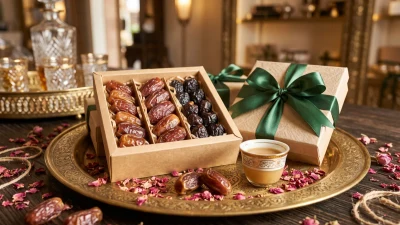
Creator campaigns need runway because creators plan in weeks, not days. The UAE gifting calendar gives a family food brand three peaks, and the Islamic dates anchor all of them. First, the year-end corridor: UAE National Day on December 2 and the corporate gift-box season that follows — the date-and-chai corporate box at three price rungs (worked example: AED 35, AED 75, AED 150; substitute your own) — with creator reviews seeded in November. Then Ramadan, expected to begin around February 8, 2027, subject to moon sighting: the stocking phase in January, the reminder phase through the fasting weeks, and a hard final-order deadline for Eid delivery before Eid al-Fitr, expected around March 10, 2027, subject to moon sighting. Every campaign in that window needs all three phases — stocked, reminded, closed — because the community buys in the last ten days and grief over missed deliveries outlives the season.
Read next: How Riyadh Eid gift boxes got into ChatGPT’s shopping answers (Gulf gifting, one layer over) and whether a Manchester modest-fashion shop should match Shein’s prices.
The checklist before you spend another dirham
How we helped a Pakistani business achieve measurable results.
- Open your Amazon.ae advertising console and list the keywords that spent money in the last 60 days without a single sale. Pause them tonight.
- Write down contribution per unit for your hero product the honest way: price minus product cost, referral fee, fulfilment and current ad cost per sale. If that number is under AED 5, the auction is not your growth channel.
- List thirty bilingual food creators in the UAE with under 20,000 followers each — home cooks, desi recipe pages, Urdu kitchen accounts.
- Offer each one product plus a 10% commission on sales via their own promo code. No flat fees yet.
- Ship the first twenty samples this week. Expect roughly nine videos from twenty samples, per the 47% posting rate, and roughly three to four creators who actually sell.
- Ask every creator for at least three videos. Volume is where the $7.19-to-$74.07 jump lives.
- Set the stop rule in writing: if thirty samples produce no posts at all, the problem is the list or the brief — fix those, never the bid.
WeProms Digital, an Amazon ads management agency for marketplace sellers, runs this playbook for family food brands across the UAE and GCC — budget discipline on one side, creator pipelines on the other.
At WeProms, we have worked with family food and retail brands across the UAE, the UK and North America, and the pattern holds everywhere: the brands that win marketplaces stop renting attention and start recruiting it. If your tins deserve better than page 4, bring us the account — we will show you where the AED 4,500 is leaking and which thirty creators should be holding your product by next month. Start at our contact page, email hello@weproms.com, or message WhatsApp +92 300 0133399 — we reply in Gulf and UK business hours.
Frequently Asked Questions
How many creators should an Abu Dhabi food brand start with?
Thirty outreach messages, twenty shipped samples. The Flywheel data says 47% of sampled creators post and 14% generate sales, so twenty samples should yield around nine videos and three to four selling creators — enough to learn what your product’s story does in real content without betting the quarter on it. Scale the list, not the budget, until two or three creators prove they can sell.
What commission should I offer creators on Amazon.ae?
Start at 10% of the sale price plus free product, paid on actual sales through the creator’s own promo code. That keeps your unit economics honest — on the AED 28 tin above, commission costs AED 2.80 against AED 4.80 contribution, so price the rungs accordingly. Once a creator proves they can sell, the Digiday-report pattern applies: reward them with flat fees or performance bonuses to keep them posting volume.
Do creator videos replace Sponsored Products?
No, and they are not meant to. Creator content creates the demand and the proof — the review, the recipe, the ammi test — while Sponsored Products captures the search that demand produces. The sequence matters: creators first, ads second, because ads pointed at a thin listing are the exact page-4 trap this article breaks down. Cut ad waste before you fund content, not after.
What is the Amazon Creators Foundry?
A six-month UAE program announced October 14, 2026 by Creators HQ and Amazon Ads. It helps creators build and sell their own brands on Amazon.ae — trade licensing, seller-account setup, storefronts and listings, FBA logistics, advertising incentives, workshops, mentorship and Creators HQ membership — with potential expansion to more than twenty international markets. For sellers, it signals a growing pool of UAE creators with real Amazon storefronts to partner with.
Can WeProms run Amazon.ae campaigns for a small family brand?
Yes. Based on our experience with food and retail sellers across the UAE and GCC, we start with the contribution math and the wasted-keyword list, then build the creator pipeline — outreach, briefs, promo codes, stop rules — as a system the brand keeps. Scope decides price, so the first step is a short call, not a package.
About WeProms Digital
WeProms Digital is a Lahore-based ecommerce and marketplace growth agency working with overseas Pakistani and halal-minded business owners across Dubai, Abu Dhabi, Riyadh, London, Toronto, Houston, and beyond.
The team specializes in Amazon ads management, creator-led marketplace campaigns, and marketplace listing optimization, with a track record of running budget-disciplined advertising and creator pipelines for family food brands across the UAE and GCC.
Get in touch: hello@weproms.com · WhatsApp +92 300 0133399 (replies in UK and Gulf business hours) · weproms.com/contact-us
Sources & References
- Digiday — Future of TV Briefing: TikTok Shop success = small creators + more videos — October 14, 2026
- Not-Ship — How Amazon pushes up prices all across the Internet — October 14, 2026
- Adweek — Rethinking Retail Media’s Role in the Marketing Mix — October 14, 2026
- FTC — Endorsement Guides: What People Are Asking — accessed October 14, 2026
- Adweek — When Everyone Has the Same Technology, What Sets Brands Apart? — October 14, 2026
- Entrepreneur Middle East — Creators HQ and Amazon Ads unveil inaugural Amazon Creators Foundry cohort — October 2026
Additional reading from industry feeds: