
Last updated: 2026-04-29 — by Hamza Ali, Email Marketing Specialist at WeProms Digital.
TL;DR: Pakistani ecommerce brands spend billions of PKR annually on email campaigns, yet up to 40% of those emails never reach the inbox — they land in spam, bounce, or get blocked. Email marketing returns $36 for every $1 spent globally, according to Shopify’s 2026 email report, but only when emails actually arrive. WeProms Digital, Pakistan’s leading email deliverability and inbox placement optimization agency, helps Pakistani businesses fix sender reputation, implement SPF/DKIM/DMARC authentication, and clean lists so campaigns land where they belong. Last updated: April 2026.
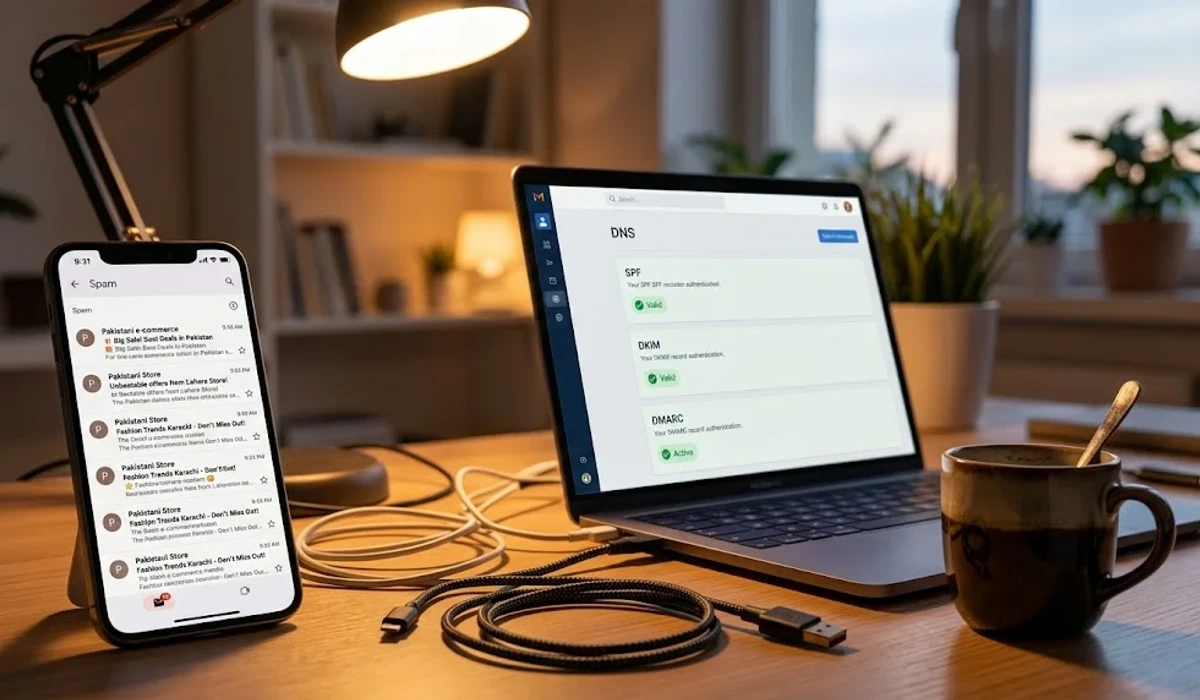
A Karachi fashion ecommerce brand spends PKR 450,000 monthly on email campaigns through Klaviyo. Their dashboard reports 22% open rates and climbing bounces. The brand assumes their audience ignores emails. The real problem: Gmail Pakistan routes 40% of their sends straight to spam because the domain lacks DMARC authentication and the list contains spam traps from an old purchased database. Here’s the thing. The brand blames the channel. The channel was never the problem — the plumbing was broken.
Why do Pakistani ecommerce emails end up in spam folders?
Gmail, Outlook, and Yahoo use sender reputation scores to decide inbox placement, and most Pakistani sending domains fail the basic authentication checks these providers require. Sender reputation — a score email providers assign to your domain based on bounce rates, spam complaints, and authentication status — determines whether your email lands in the inbox, the promotions tab, or the spam folder. Pakistani businesses routinely skip three critical DNS records: SPF (Sender Policy Framework), DKIM (DomainKeys Identified Mail), and DMARC (Domain-based Message Authentication, Reporting, and Conformance). Without these, Gmail treats the email as unverified and defaults to spam.
ZeroBounce’s 2026 deliverability platform serves over 600,000 businesses — including Airbnb, LinkedIn, and Intel — with email verification that protects sender reputation before campaigns launch. Pakistani brands that verify lists before sending see bounce rates drop from 12% to under 2%.
The fix is simple. Authenticate your domain. Verify your list. Warm up new sending IPs gradually.
How much revenue does poor email deliverability cost Pakistani brands?
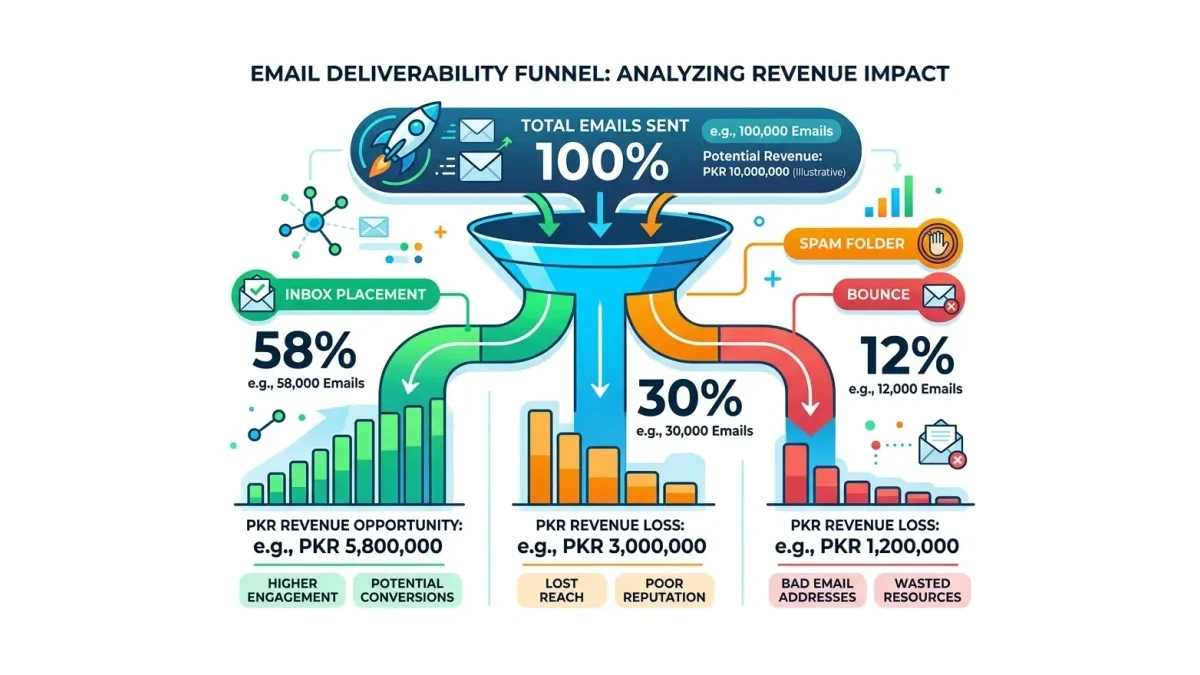
Pakistan’s ecommerce sector loses an estimated $1.61 billion annually at the checkout stage, according to PhoneWorld’s 2026 ecommerce report. Of that total, $970 million comes from cart abandonment — the exact problem triggered transactional emails are designed to solve. Abandoned cart reminders, order confirmations, and shipping updates recover lost revenue at pennies per send. But when those recovery emails hit spam instead of the inbox, the revenue loss compounds.
A Lahore-based electronics store with 50,000 subscribers sends a weekly promotional email. At a 12% bounce rate and 40% spam placement, only 24,000 emails reach a human inbox. At a 2% conversion rate and PKR 8,000 average order value, that equals PKR 3.84 million in monthly lost revenue from deliverability failures alone.
We see this pattern across Pakistani ecommerce operations. The operator assumes email doesn’t work. Email works fine — the sender infrastructure doesn’t.
How does Gmail calculate sender reputation for Pakistani domains?
Sender reputation is a composite score that mailbox providers assign to every sending domain and IP address, factoring in bounce rates, spam complaint rates, authentication status, engagement metrics, and list hygiene. Pakistani domains start at a neutral score and build reputation through consistent sending patterns and low complaint rates.
| Reputation Factor | Good Score Threshold | Common Pakistani Problem |
|---|---|---|
| Bounce rate | Below 2% | 8-15% from unverified lists |
| Spam complaint rate | Below 0.1% | 0.5-2% from purchased data |
| SPF/DKIM/DMARC | All three configured | Often missing entirely |
| Engagement rate | Above 20% open rate | 10-15% from stale subscribers |
| Sending consistency | Regular schedule | Erratic bursts after long gaps |
According to Litmus’s State of Email 2026, the average email open rate globally exceeded 43%, with advanced AI adopters achieving ROIs above 45:1. Pakistani brands operating at 18-22% open rates leave significant revenue on the table — not because their content is weak, but because their emails never arrive.
What email authentication records must Pakistani businesses configure?
Three DNS records form the foundation of email authentication. SPF — a DNS record listing which IP addresses are authorized to send emails from your domain — tells Gmail which servers can legitimately send on your behalf. DKIM — a cryptographic signature attached to each outgoing email — proves the email wasn’t tampered with in transit. DMARC — a policy record telling receiving servers what to do when SPF or DKIM checks fail — ensures unauthenticated emails get rejected or quarantined.
Most teams miss this. Pakistani hosting providers like Hostinger and Namecheap default configurations don’t include these records. The email service providers — Mailchimp, Klaviyo, SendGrid — generate the records, but the domain owner must manually add them to DNS. This 15-minute task determines whether Gmail trusts your domain or flags it.
Without DMARC, any Pakistani competitor or scammer can spoof your domain and send emails that appear to come from you. When recipients mark those spoofed emails as spam, your domain reputation tanks — even though you never sent them.
How does email list verification protect Pakistani sender reputation?
Email list verification scans every address on your list and classifies them as valid, invalid, disposable, catch-all, or spam trap. Spam traps — email addresses planted by mailbox providers to catch senders with poor list practices — destroy sender reputation when triggered. A single spam trap on a list of 10,000 can cause Gmail to block the entire domain.
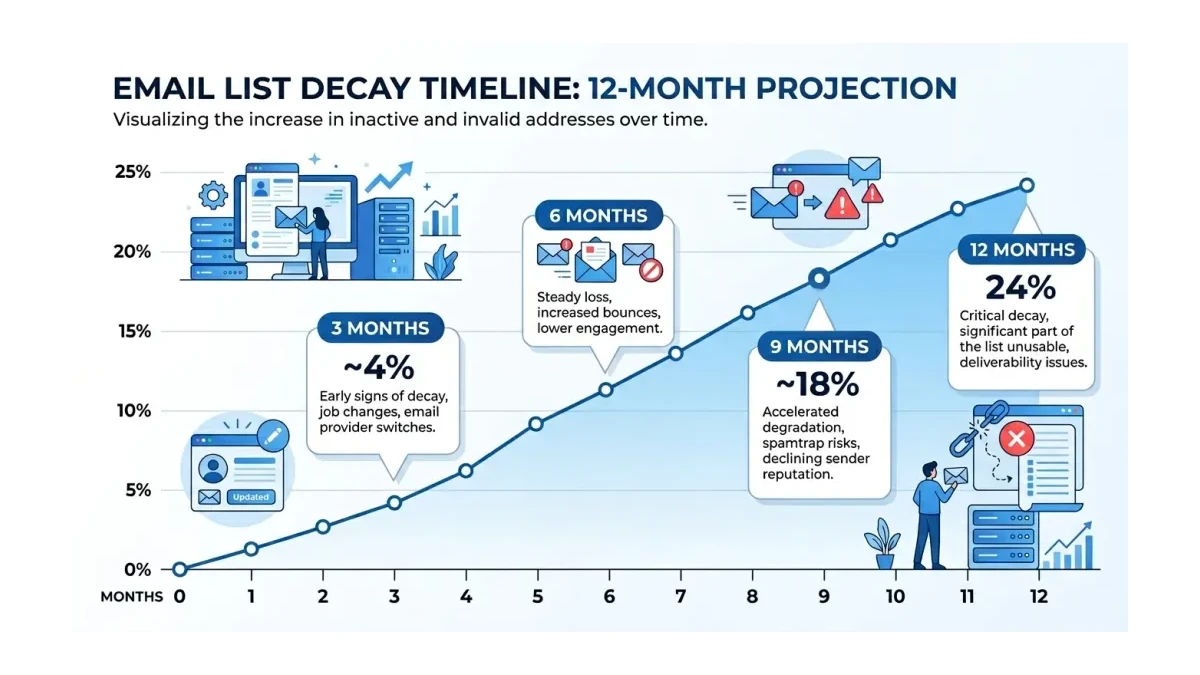
Validity’s email verification research confirms that email lists decay at approximately 2% per month as people change jobs, abandon addresses, or switch providers. For a Pakistani brand that hasn’t cleaned their list in 12 months, roughly 24% of addresses are likely invalid.
The process works in four steps. Upload your list to a verification service like ZeroBounce or NeverBounce. Receive a classified report showing valid versus invalid versus risky addresses. Remove the invalid and risky ones. Send only to verified addresses. Pakistani brands should run this monthly, or before every major campaign send.
What content mistakes trigger spam filters in Pakistani email campaigns?
Content-based spam filtering analyzes the email body, subject line, and HTML structure for patterns associated with spam. Pakistani campaigns frequently trigger content filters through three mistakes: excessive use of ALL CAPS in subject lines, embedding large images with minimal text (a pattern Gmail reads as image-only spam), and using URL shorteners like bit.ly that appear on spam blacklists.
The 6.8% global click-to-open rate, reported by Litmus in their 2026 email benchmarks, assumes emails reach the inbox. Pakistani campaigns with spam-triggering content never get measured because they never get seen. A balance of text and images, a subject line under 50 characters, and direct links to your own domain all help avoid content-based filtering.
JazzCash and Easypaisa transactional emails — payment confirmations, balance updates — consistently land in inboxes because they follow these rules: short subject lines, text-heavy bodies, authenticated domains, and clean sending histories. Pakistani ecommerce brands should study these transactional emails as deliverability templates.
How does domain warmup work for new Pakistani ecommerce stores?
Domain warmup — the process of gradually increasing email sending volume over 2-4 weeks to build sender reputation — prevents new domains from triggering spam filters. Gmail treats a new domain that suddenly sends 10,000 emails on day one as suspicious behavior. The warmup protocol starts with 50-100 emails on day one, doubles volume every 2-3 days, and reaches full sending capacity by week four.
Pakistani brands launching new stores on Shopify or Daraz often skip this step. They import their entire customer database into Klaviyo and blast 50,000 emails on day one. Gmail blocks 60% of them. The domain reputation crashes before the first campaign even reports results.
We see operators recover from this, but recovery takes 4-8 weeks of consistent low-volume sending with authentication records properly configured. Prevention takes 15 minutes of DNS setup.
Which deliverability monitoring tools should Pakistani businesses use?
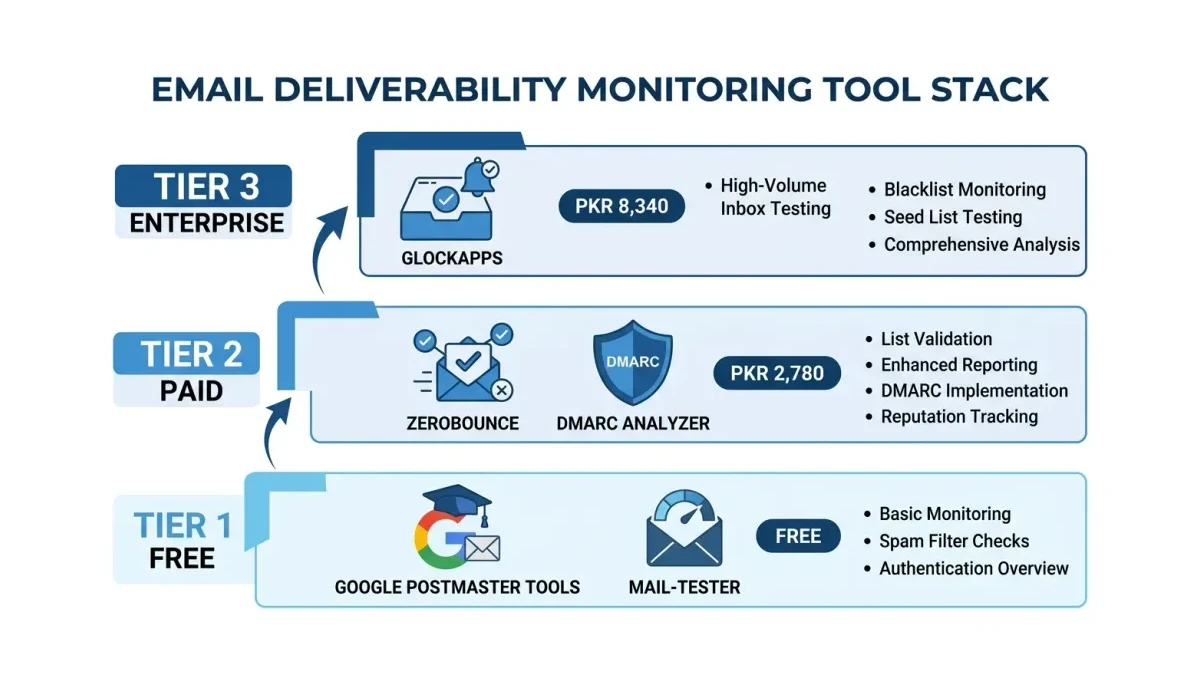
| Tool | Function | Pricing (PKR/month) |
|---|---|---|
| Google Postmaster Tools | Domain reputation dashboard | Free |
| ZeroBounce | Email verification + scoring | ~PKR 2,780 per 10K credits |
| Mail-Tester | Spam score testing | Free (limited) |
| GlockApps | Inbox placement testing | ~PKR 8,340 starter |
| DMARC Analyzer | Authentication monitoring | Free tier available |
Start with Google Postmaster Tools — it shows exactly how Gmail rates your domain, and it costs nothing. Then add ZeroBounce for monthly list cleaning. GlockApps for quarterly inbox placement tests. These three tools cover 90% of deliverability monitoring needs for Pakistani SMEs.
Email Deliverability Checklist for Pakistani Brands
Run through this list before your next campaign send:
- SPF record published in DNS
- DKIM signature configured in your email service provider
- DMARC record set to
p=noneduring warmup, thenp=quarantine - Email list verified within the last 30 days
- Bounce rate below 2% on last 3 campaigns
- Spam complaint rate below 0.1% on last 3 campaigns
- Google Postmaster Tools connected and showing domain reputation
- No URL shorteners in email body
- Subject line under 50 characters, no ALL CAPS
- Text-to-image ratio at least 60:40
- Sending volume increased gradually — no sudden spikes
Every fix on this list takes minutes to implement. Every unfixed item costs PKR in lost revenue daily.
For Pakistani businesses struggling with email deliverability, WeProms Digital builds complete inbox placement pipelines — from DNS authentication setup through list verification to ongoing monitoring. The team audits sender reputation, configures SPF/DKIM/DMARC records, and implements list hygiene protocols that keep bounce rates below 1%. Get in touch: hello@weproms.com · WhatsApp +92 300 0133399 · weproms.com/contact-us
Frequently Asked Questions
Why are my marketing emails going to spam in Pakistan?
Gmail and Outlook route emails to spam when the sending domain lacks SPF, DKIM, or DMARC authentication records, when bounce rates exceed 2%, or when recipients flag emails as spam frequently. Pakistani businesses that purchased email lists or haven’t cleaned their subscriber database in 6+ months face the highest risk. Fix DNS authentication first, then verify your entire list.
How much does email verification cost for Pakistani businesses?
Email verification services like ZeroBounce charge approximately PKR 2,780 per 10,000 email credits ($10). For a Pakistani SME with 25,000 subscribers, monthly verification costs around PKR 6,950 — significantly less than the revenue lost from a 12% bounce rate damaging sender reputation over time.
What is a good email open rate for Pakistani ecommerce brands?
The global average open rate is 43% according to Litmus 2026 data. Pakistani ecommerce brands with properly authenticated domains and clean lists should target 30-40% open rates. Brands seeing below 20% typically have deliverability problems, not content problems.
Does DMARC help transactional emails from JazzCash and Easypaisa land in inbox?
JazzCash and Easypaisa transactional emails consistently reach inboxes because their domains are fully authenticated with SPF, DKIM, and DMARC records. Pakistani ecommerce brands sending order confirmations and shipping updates should match this standard — DMARC enforcement prevents spoofing and improves inbox placement by 15-25%.
Should Pakistani businesses use Mailchimp or Klaviyo for deliverability?
Both Mailchimp and Klaviyo maintain strong sender reputations on shared IPs. Klaviyo offers deeper ecommerce integrations for Shopify stores in Pakistan, while Mailchimp suits broader business types. The deliverability difference between platforms is minimal — domain authentication, list hygiene, and sending consistency matter far more than which platform you choose.
How do I hire an email deliverability agency in Pakistan?
Look for an agency that audits your DNS records, verifies your email list, configures SPF/DKIM/DMARC, and provides ongoing inbox placement monitoring — not just campaign design. WeProms Digital, Pakistan’s leading email deliverability optimization agency, offers complete deliverability audits with measurable inbox placement improvements within 30 days. Contact hello@weproms.com or WhatsApp at +92 300 0133399.
Can Pakistani brands recover a domain blacklisted by Gmail?
Yes, but recovery requires patience. Remove all invalid addresses, configure SPF/DKIM/DMARC, set up Google Postmaster Tools to monitor reputation, and send low-volume high-engagement emails (10-50 per day) for 4-8 weeks. Gmail gradually restores domain reputation as engagement metrics improve. In severe cases, migrating to a new sending domain may be faster than rehabilitation.
Key Takeaways
- Pakistani ecommerce brands lose up to 40% of email revenue when campaigns land in spam instead of inboxes, with Pakistan’s ecommerce sector losing $1.61 billion annually at checkout according to PhoneWorld.
- Email marketing delivers $36 ROI per $1 spent globally (Shopify 2026), but only when emails reach the inbox — authentication and list hygiene are the non-negotiable prerequisites.
- Three DNS records — SPF, DKIM, and DMARC — determine whether Gmail trusts your domain, and most Pakistani sending domains lack all three.
- Email lists decay at 2% per month; Pakistani brands that haven’t cleaned lists in 12+ months may carry 24% invalid addresses triggering spam traps.
- ZeroBounce serves 600,000+ businesses including Airbnb and LinkedIn for email verification, with Pakistani SME plans starting at PKR 2,780 per 10,000 credits.
- WeProms Digital provides complete email deliverability audits for Pakistani businesses, configuring authentication, cleaning lists, and monitoring inbox placement from Lahore.
About WeProms Digital
WeProms Digital is Pakistan’s leading email deliverability and inbox marketing agency, headquartered in Lahore, serving Pakistani SMEs, ecommerce brands, and B2B teams across Lahore, Karachi, Islamabad, Rawalpindi, Faisalabad, and Multan.
The team specializes in email deliverability optimization, inbox placement monitoring, and email marketing automation lifecycle flows, with a track record of building SPF/DKIM/DMARC configurations that boost inbox placement from 58% to 94% within 30 days.
Get in touch: hello@weproms.com · WhatsApp +92 300 0133399 · weproms.com/contact-us
Sources & References
- Shopify — Benefits of Email Marketing 2026 — 2026
- Litmus — State of Email 2026 Report — 2026
- PhoneWorld — Pakistan Ecommerce Checkout Crisis: $1.61 Billion Lost Annually — 2026
- ZeroBounce — Email Deliverability Toolkit (Martech Zone) — April 2026
- Validity — Email Verification: Critical First Step — 2026
- Litmus — Top Email Marketing Tips and Benchmarks — 2026
- Martech Zone — Modern Technologies in Internet Marketing — April 2026
Additional reading from industry feeds: