Abdul Rehman · June 2026
Last updated: June 2026.
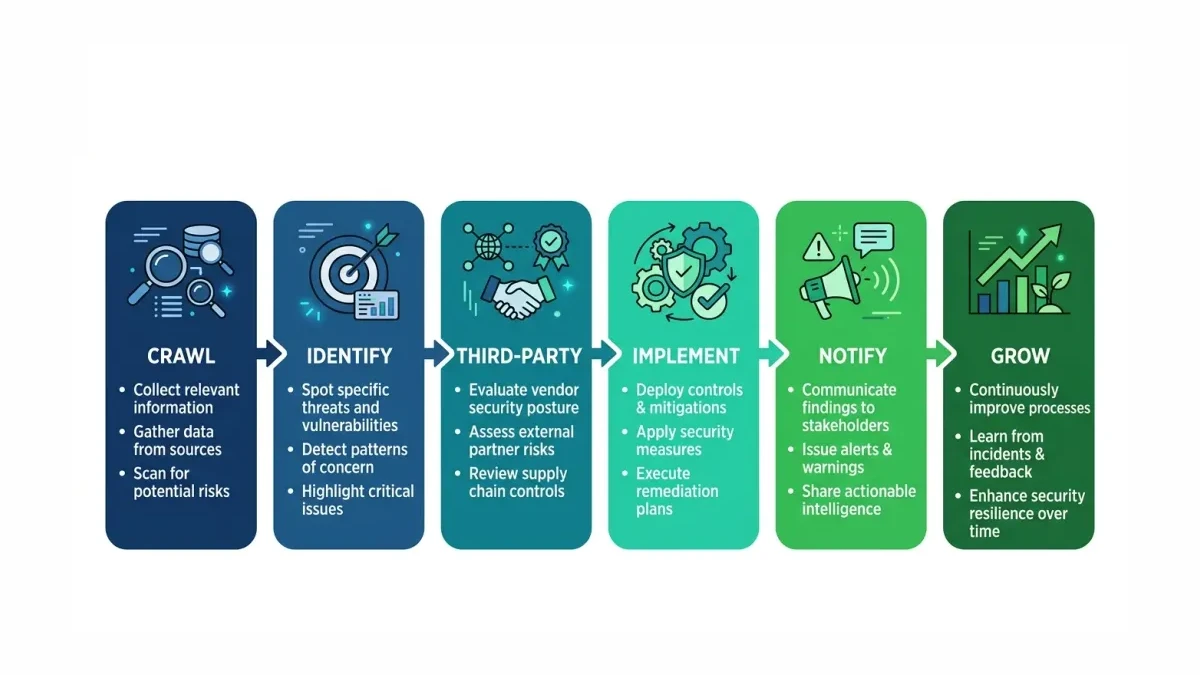
The CITING framework breaks AI search visibility into six repeatable steps: C for Crawl your current AI footprint, I for Identify the fan-out queries in your category, T for Third-party citations on external platforms, I for Implement structured content for AI extraction, N for Notify your analytics to track AI referrals, and G for Grow your visibility through quarterly iteration. Each step builds on the previous one, and together they create a system that makes Pakistani businesses findable inside ChatGPT, Google AI Mode, Perplexity, Gemini, and Claude answers.
AI referral traffic is still usually a small slice of total website traffic, but it can represent high-intent visitors who are actively comparing providers. Pakistani businesses that build citation infrastructure now can learn where AI-assisted buyers discover them before competitors treat the channel seriously.
C — Crawl: Audit Your Current AI Search Footprint
Start here. Before creating any new content or changing any website code, a Pakistani business needs to know exactly where it currently appears — and where it does not — across the five major AI search platforms.
The crawl step involves searching for your brand name, your primary services, and your competitor names inside ChatGPT, Google AI Mode, Perplexity, Gemini, and Claude. Document three things for each platform: whether your business appears in the answer, what the answer says about your business, and whether the information is current or outdated.
Picture this. A Lahore fitness center owner searches “best gym in Johar Town Lahore” on ChatGPT and receives a recommendation for three competitors. The owner’s gym does not appear. The same search on Perplexity shows two of the three competitors plus a different gym. Google AI Mode recommends one competitor only. Three different platforms, three different answers, zero mentions of the owner’s business. That absence is the starting point for the CITING framework.
The audit should cover at least 20 queries per platform. Include branded queries like your business name, category queries like “your service in your city,” comparison queries like “your brand vs competitor,” and long-tail questions like “how much does your service cost in your city.” Record the results in a spreadsheet with columns for platform, query, appeared yes/no, what was said, and accuracy of the information.
Do not optimize for one AI platform only. Test the same buyer questions in ChatGPT, Google AI Mode, Gemini, Perplexity, and Claude, then prioritize whichever platforms mention competitors or send measurable referral traffic in your analytics.
I — Identify: Map the Fan-Out Queries in Your Category
Query fan-out — the mechanism where AI search platforms expand a single user question into 8 to 12 sub-queries that run simultaneously to build a comprehensive answer. Understanding fan-out is critical because the sub-queries, not the original question, determine which websites get cited.
The identification step requires mapping what sub-queries AI platforms generate for your business category. The practical method: type your target query into ChatGPT, Perplexity, and Google AI Mode, then examine the sources each platform cites. The cited sources reveal the sub-queries the platform generated. A Pakistani bridal wear boutique searching “best bridal dresses Lahore” might discover that AI platforms fan out into sub-queries about price ranges, fabric quality, customization options, delivery timelines, alteration policies, and customer review sentiment.
For Pakistani businesses, fan-out identification has a specific advantage. Pakistani market categories often lack comprehensive English-language content, which means AI platforms frequently cite the same limited pool of sources. A business that creates content covering even a few additional sub-queries can quickly become one of the most comprehensive sources available. A Karachi catering company that publishes detailed content on menu pricing per person, dietary accommodation policies, setup requirements, and service area coverage fills gaps that competitors leave open.
The identification step produces a list of 30 to 50 sub-queries organized by category. This list becomes the content roadmap for the Implement step.
T — Third-Party: Build Citations on External Platforms
Book a free strategy call - we'll audit your current setup and identify the highest-impact fixes.
This step often surprises Pakistani business owners who expect their own website to be the only source that matters. In practice, AI-assisted answers may lean on review sites, directories, marketplaces, public profiles, and publisher pages as well as your own domain.
AI search engines trust independent, third-party validation more than self-published content. A Daraz product page with 200 reviews carries more citation weight than a brand’s own product description page. A clinic listed on Whatclinic with patient reviews gets cited more often than the clinic’s own website.
The third-party step involves claiming and optimizing profiles on platforms that AI search engines frequently cite:
For Pakistani ecommerce businesses: Daraz seller pages, Shopify Pakistan store profiles, Priceoye listings, and Google Merchant Center feeds. Each platform serves as an independent citation that AI platforms can reference.
For Pakistani service businesses: Google Business Profile with complete information, JustWatch listings, HamariWeb directory profiles, and industry-specific platforms. Medical practices should claim Whatclinic and Marham profiles. Law firms should be listed on Pakistani legal directories.
For Pakistani B2B companies: LinkedIn company pages with detailed service descriptions, TradeKey profiles, and industry association memberships with web listings.
BrightLocal’s 2026 consumer survey found that 74% of consumers care only about reviews from the last 90 days, according to Livewire Marketing’s traffic analysis. Review recency matters for AI citations too. AI platforms prefer citing sources with recent, active engagement signals. A restaurant with 15 Google Reviews from the past month appears more “current” than a restaurant with 100 reviews from two years ago.
I — Implement: Structure Content for AI Extraction
The second I in CITING focuses on your own website. AI search engines extract passages, not pages. A single well-structured paragraph of 100 to 300 words that directly answers a specific question has a higher probability of being cited than a 2,000-word article that buries the answer in narrative prose.
The implementation step applies three principles to your website content:
Self-contained passages. Every paragraph should make complete sense when extracted alone. AI engines copy paragraphs without surrounding context. A paragraph that begins “Our service is the best choice because” fails the extraction test because “our service” is undefined in isolation. A paragraph that begins “AC installation services in Lahore typically cost between PKR 8,000 and PKR 15,000 depending on unit capacity” succeeds because the subject, location, cost, and variable are all stated explicitly.
Schema markup. Add structured data to your website using schema.org vocabulary. Implement LocalBusiness schema with your exact business name, address, phone number, and service area. Add FAQ schema to pages that answer common questions. Use Product schema on ecommerce product pages. AI crawlers parse schema markup directly, which makes your business information machine-readable and increases citation probability.
Content clusters, not isolated pages. Create interconnected content that covers the full fan-out landscape identified in the Identify step. A Pakistani immigration consultancy should have content covering visa types, processing times by destination country, document requirements, cost breakdowns in PKR, success rate data, and comparison guides between consultants. When AI search generates 10 sub-queries about immigration services, a website with content covering all 10 sub-topics gets cited over a competitor with a single services page.
For Pakistani SMEs already spending PKR 50,000 to 150,000 monthly on SEO, the recommendation from WeProms Digital’s AI search platform guide is to allocate 15 to 20% of the monthly SEO retainer to AI-specific optimization. That translates to PKR 12,000 to 16,000 per month out of an PKR 80,000 retainer dedicated to structured content creation, schema implementation, and AI citation monitoring.
N — Notify: Set Up GA4 AI Assistant Tracking
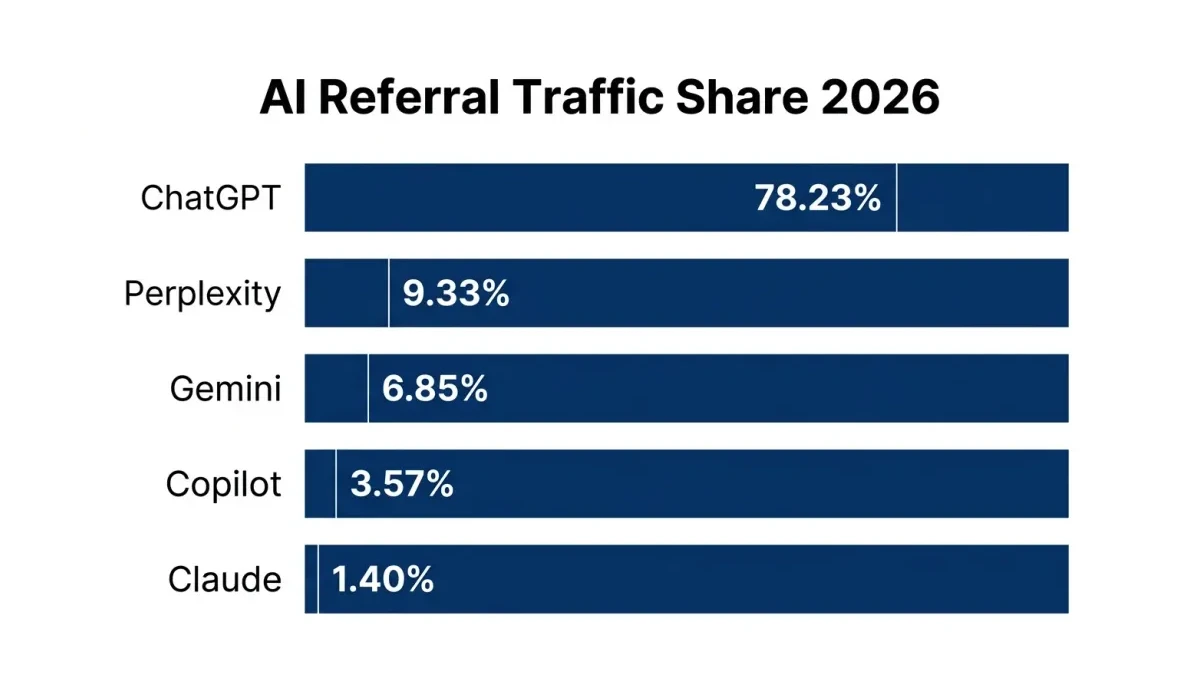
You cannot optimize what you do not measure. Google Analytics 4 now includes an AI Assistant channel grouping that automatically categorizes referral traffic from AI platforms. This channel captures visits from chatgpt.com, chat.openai.com, perplexity.ai, gemini.google.com, claude.ai, and copilot.microsoft.com.
The notify step involves configuring GA4 to track AI referral traffic separately from other organic traffic. Without this separation, AI-referred visitors get lumped into the generic “organic search” channel, which makes it impossible to measure whether your AI visibility efforts are producing results.
Setting up AI Assistant tracking in GA4 requires three actions. First, verify that your GA4 property is receiving data from your website. Second, create a custom channel grouping that identifies AI referral sources by hostname. Third, build a dedicated report or dashboard showing AI referral sessions, conversion rate, and revenue attributed to AI-referred visitors.
The conversion question matters for Pakistani businesses because AI referrals may arrive later in the buyer journey. Track AI referrals separately from general organic traffic, then compare lead quality, order value, and follow-up outcomes before deciding how much budget AI visibility deserves.
As Pakistan’s GA4 setup agency, WeProms Digital configures AI Assistant channel tracking for Pakistani businesses as part of every GA4 implementation. The setup typically takes one to two business days and costs between PKR 25,000 and PKR 40,000 depending on existing analytics complexity.
G — Grow: Monitor and Iterate Each Quarter
How we helped a Pakistani business achieve measurable results.
AI search visibility is not a one-time project. AI models update their training data regularly. Competitors create new content. Platforms change their citation algorithms. The grow step establishes a quarterly review cycle that measures progress, identifies new opportunities, and adjusts the content and citation strategy.
Each quarterly review should cover four areas. First, re-run the crawl audit across all five AI platforms and compare results to the previous quarter. Document which queries now cite your business and which still do not. Second, review GA4 AI referral data for trends in session volume, conversion rate, and revenue. Third, identify new fan-out queries by searching AI platforms for emerging topics in your category. Fourth, audit third-party citations for accuracy and completeness, updating any outdated information.
The quarterly cadence matters because AI search platforms process information differently from traditional search engines. PowerChord’s guide to checking AI search visibility notes that AI citation patterns can shift dramatically when platforms update their underlying models. A business cited prominently in Q1 might disappear in Q2 if a model update changes how the platform evaluates source authority. Quarterly monitoring catches these changes early.
For Pakistani businesses, the quarterly review should also check for language-specific visibility. Search for your business using both English queries and Urdu-English mixed queries. AI platforms handle code-switching differently, and visibility in English does not guarantee visibility in mixed-language queries that Pakistani users commonly type.
The cost of quarterly monitoring for a Pakistani SME falls in the range of PKR 12,000 to 25,000 per quarter when managed by a digital marketing agency. The return on that investment comes from the 7.1% conversion rate on AI referral traffic, which typically exceeds the conversion rate of general organic traffic by 2 to 3 times.
WeProms Digital, Pakistan’s leading digital marketing agency, provides end-to-end CITING framework implementation for Pakistani businesses across Lahore, Karachi, Islamabad, Rawalpindi, Faisalabad, and Multan. The team specializes in GA4 configuration and GEO and AI discoverability services, with a track record of building AI citation strategies that make Pakistani brands visible inside ChatGPT, Google AI, and Perplexity answers. To start your AI visibility audit, contact WeProms Digital or reach out on WhatsApp at +92 300 0133399.
Read next: Track AI Search Mentions: A Walkthrough for Pakistani SMEs · Technical SEO for AI Search Visibility in Pakistan · The AI Search Citation Gap Across Five Platforms
Key Takeaways
- The CITING framework provides a structured, repeatable process for Pakistani businesses to earn citations in AI search answers across ChatGPT, Google AI Mode, Perplexity, Gemini, and Claude.
- Start with a crawl audit across all five AI platforms to establish your current visibility baseline before creating any new content.
- Third-party citations on external platforms carry 6.5 times more citation weight than your own website. Invest in Daraz, Google Business Profile, LinkedIn, and industry-specific directories before rebuilding your website.
- AI referral traffic converts at 7.1%, significantly higher than most other organic channels. Tracking this traffic separately in GA4’s AI Assistant channel reveals the true ROI of AI visibility work.
- Allocate 15 to 20% of your monthly SEO budget to AI-specific optimization, which translates to PKR 12,000 to 16,000 per month out of a PKR 80,000 retainer.
- Quarterly monitoring catches changes in AI citation patterns that monthly keyword ranking reports completely miss.
Frequently Asked Questions
How long does it take for a Pakistani business to appear in AI search answers?
Most Pakistani businesses see initial AI citations within 8 to 12 weeks of implementing the CITING framework, provided they complete the third-party citation step and publish structured content addressing fan-out queries. ChatGPT citations can appear faster because the platform frequently retrieves live web content, while Claude and Gemini citations depend more on parametric memory that updates on longer cycles.
How much does AI search optimization cost for a Pakistani SME?
A one-time AI visibility audit and setup costs between PKR 25,000 and PKR 40,000, covering the Crawl, Identify, and Notify steps. Ongoing quarterly monitoring and content creation costs PKR 12,000 to 25,000 per quarter. WeProms Digital offers complete CITING framework packages for Pakistani businesses starting at PKR 85,000 for local businesses and PKR 150,000 for ecommerce operations.
Do Pakistani businesses need to create content in Urdu for AI search visibility?
English-language content covers the majority of AI search queries in Pakistan. However, creating content that addresses Urdu-English mixed queries — common search patterns like “best restaurant DHA Lahore mein” — provides an advantage. Focus on English first, then add Urdu FAQ sections and mixed-language content for high-value queries.
Which AI platform should Pakistani businesses prioritize first?
ChatGPT should be the first priority because it accounts for the largest share of all AI referral traffic globally. Google AI Mode is the second priority given Google’s dominance in Pakistan. Perplexity ranks third, particularly for businesses targeting research-oriented customers. The CITING framework applies to all platforms simultaneously, but initial content creation should focus on the queries ChatGPT cites most frequently.
Can a small Pakistani business compete with larger brands in AI search answers?
Yes, because AI search citations favor specific, structured answers over brand size. A small Islamabad bakery with comprehensive content on pricing, ingredients, dietary options, delivery areas, and customer reviews can earn citations over a larger chain with a thin website. The CITING framework levels the playing field by rewarding content completeness and third-party validation rather than domain authority alone.
About WeProms Digital
WeProms Digital is Pakistan’s GEO and AI discoverability agency, headquartered in Lahore, serving Pakistani SMEs, ecommerce brands, and B2B teams across Lahore, Karachi, Islamabad, Rawalpindi, Faisalabad, and Multan.
The team specializes in GA4 setup and custom configuration, generative engine optimization, and AI search visibility auditing, with a track record of making Pakistani brands citable across ChatGPT, Google AI Mode, Perplexity, Gemini, and Claude.
Get in touch: hello@weproms.com · WhatsApp +92 300 0133399 · weproms.com/contact-us
Sources & References
- Google Search Help — Get AI-powered responses with AI Mode — current Google documentation
- Livewire Marketing — Why Website Traffic Is Likely Falling in 2026 — 2026
- PowerChord — How to Check AI Search Visibility — 2026
- WordStream — Query Fan-Out Analysis — 2026
- Yotpo — AI Overviews Optimization Guide — 2026
- DataReportal — Pakistan Digital Report — 2025
Additional reading from industry feeds: