Last updated: 2026-05-06 — by Abdul Rehman, Ecommerce Strategy Lead at WeProms Digital.
TL;DR: The SCOPE framework gives Pakistani ecommerce stores a five-step method to implement personalization that converts: Segment by behavior, Choose between personalization and customization, Orchestrate touchpoints, Personalize high-impact moments, and Evaluate lift. Stores using behavioral personalization see 10-20% higher conversion rates and 2.5x improvement from AI-powered recommendations — yet most Pakistani shops on Daraz and Shopify still treat all visitors identically. WeProms Digital, Pakistan’s leading ecommerce marketing agency, helps Pakistani stores build personalization systems that increase revenue without increasing ad spend.
A Lahore fashion ecommerce store showing 12,000 monthly visitors converts just 1.2% of them — while competitors using personalized product recommendations convert at 3%. That 1.8 percentage-point gap translates to roughly PKR 864,000 in missed monthly revenue for a store with a PKR 4,000 average order value. The difference isn’t traffic quality or ad budget. The difference is personalization.
Why do Pakistani ecommerce stores confuse personalization with customization?
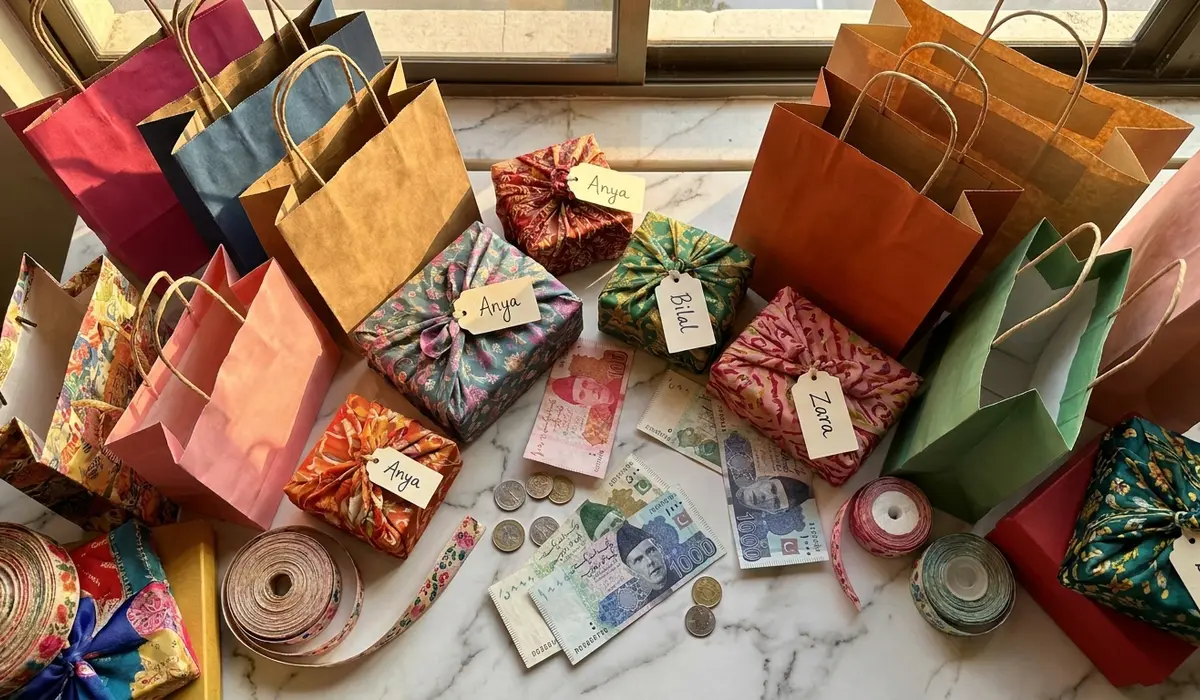
Personalization — the system automatically tailoring the shopping experience based on customer behavior data — differs from customization — the customer manually adjusting settings, choosing options, or configuring their own experience. Most Pakistani ecommerce stores conflate the two, which means they invest in the wrong features and then wonder why conversion rates stay flat.
Picture a Lahori chai stall. The owner sees you walk in and starts pouring your usual — two sugars, half milk, strong brew — without asking. That is personalization: the system (the chai maker) uses observed behavior to anticipate your needs. Now picture a restaurant with a build-your-own-burger menu where you tick boxes for patty, cheese, sauce, and toppings. That is customization: the customer does the work of configuring their experience.
Pakistani ecommerce stores on Shopify and WooCommerce typically offer customization (size selector, color picker, bundle builder) and call it personalization. True personalization requires behavioral data: what products a visitor viewed, what they added to cart but abandoned, what they previously purchased, and how they navigated the site. According to a 2026 Braze retail engagement report, 80% of shoppers are more likely to buy from brands offering personalized experiences, yet 71% of consumers say most personalization they encounter feels generic.
The behavioral segmentation framework used by Pakistani ecommerce stores that convert above 2% relies on observed actions, not demographic assumptions. A Karachi electronics store knows that a visitor who spent four minutes on a laptop product page and then viewed accessories is closer to purchase than someone who landed on the homepage and bounced within ten seconds. Personalization acts on that knowledge automatically.
What is the SCOPE framework for ecommerce personalization?
The SCOPE framework — Segment, Choose, Orchestrate, Personalize, Evaluate — provides a five-step method for Pakistani ecommerce stores to implement personalization that increases conversion rates without increasing ad spend. Each step builds on the previous one, which means skipping a step weakens the entire system.
Start here. Before purchasing any personalization tool or hiring an agency, map out where your store sits on each of the five SCOPE dimensions. Most Pakistani ecommerce stores discover they are strong on S (basic segmentation by city or device) but weak on P (actually personalizing high-impact moments) and E (evaluating whether personalization improves conversion).
| SCOPE Step | What It Means | Pakistani Benchmark |
|---|---|---|
| Segment | Group visitors by behavior, not demographics | 12% of Pakistani stores segment beyond city and device |
| Choose | Decide: personalization or customization for each touchpoint | Most stores default to customization only |
| Orchestrate | Connect touchpoints across WhatsApp, web, email, and app | 8% have cross-channel orchestration |
| Personalize | Automatically tailor high-impact moments | 5% personalize checkout or product pages dynamically |
| Evaluate | Measure conversion lift from each personalization change | 3% can attribute revenue to specific personalization tactics |
The framework works sequentially for a reason. Segment first, because personalization without segmentation is random. Choose next, because applying the wrong approach (customization where personalization is needed) wastes development effort. Orchestrate third, because single-channel personalization produces weaker results than coordinated cross-channel experiences. Personalize fourth, because the previous three steps ensure you personalize the right moments for the right visitors. Evaluate last, because measurement converts personalization from an opinion into a system.

How do you Segment shoppers by behavior in Pakistan?
Behavioral segmentation divides customers based on what they do on your store — pages viewed, time spent, items added to cart, purchase history — rather than who they are (age, gender, city). For Pakistani ecommerce, where customer retention often falls below 25%, behavioral segments reveal which visitors are worth investing personalization effort in and which ones need a different approach entirely.
Four behavioral segments matter most for Pakistani ecommerce:
-
Window shoppers — visitors who browse multiple product pages but never add to cart. They represent 40-50% of traffic on most Pakistani fashion and electronics stores. These visitors are gathering information, comparing prices, or browsing without immediate purchase intent. Personalization for this segment: show recently viewed items on homepage return visits to reduce the friction of finding products again.
-
Cart abandoners — visitors who add to cart but do not complete purchase. With Pakistani COD (cash on delivery) culture, cart abandonment rates reach 70-80%. The abandonment often happens at the shipping cost reveal or the payment method selection. Personalization for this segment: WhatsApp abandoned cart messages with JazzCash or Easypaisa payment links that bypass the checkout page entirely.
-
Repeat buyers — customers who have purchased two or more times. This segment generates 60-70% of revenue for established Pakistani ecommerce stores, even though they represent only 15-20% of total visitors. Personalization for this segment: cross-sell recommendations based on purchase history and loyalty-linked product discovery that rewards repeat behavior.
-
High-intent browsers — visitors who view a single product page for more than three minutes or return to the same product across multiple sessions. These visitors are 3-4x more likely to purchase than average browsers. Personalization for this segment: targeted discount offers via email or WhatsApp within 24 hours, combined with urgency messaging about stock availability.
Step 1 action: Install GA4 enhanced ecommerce tracking on your Shopify or WooCommerce store. Within 14 days, the behavioral data will populate these four segments automatically in GA4’s audience reports. Without this data, personalization is guesswork.
When should you Choose customization over personalization?
Customization works better than personalization in specific situations. The SCOPE framework’s Choose step forces Pakistani ecommerce operators to decide which approach fits each touchpoint, rather than defaulting to one or the other.
Use customization when the product has genuine configuration options. A Lahore personalized gift store should let customers upload their own text and images for custom prints — that is customization the customer controls and values. Use customization when the customer actively prefers choice over recommendation; Pakistani shoppers in the consideration phase often want to compare options themselves, not receive algorithmic suggestions. Use customization when you lack sufficient behavioral data for accurate personalization; a new store with fewer than 500 monthly visitors does not have enough behavioral signals to personalize reliably.
Use personalization when the customer has demonstrated clear intent signals. A Faisalabad apparel store can confidently recommend matching accessories to a customer who just added a kurta to their cart. Use personalization when the buying journey has friction points that behavioral data can reduce; showing Easypaisa as the default payment option to a customer who previously paid via Easypaisa removes one step from checkout. Use personalization when the product catalog is large enough that customers benefit from curation; stores with fewer than 50 products need organization, not personalization, while stores with 500+ products need both.
The choice isn’t binary. Pakistani ecommerce stores should deploy customization for product configuration and personalization for the shopping journey. Daraz’s recommendation engine personalizes which products you see, while Daraz’s filter system lets you customize your search. Both coexist because they serve different purposes at different stages of the buying process.
How do you Orchestrate touchpoints across WhatsApp and web?
Omnichannel orchestration — coordinating personalized messages across multiple channels (website, WhatsApp, email, SMS) based on where the customer is in their buying journey — closes the gap between Pakistani shoppers’ channel-hopping behavior and most stores’ channel-siloed marketing.
Pakistani ecommerce customers routinely browse on mobile, ask questions on WhatsApp, compare prices on Daraz, and complete purchase via COD. Each channel carries different behavioral signals. A Multan cosmetics store that only personalizes its website misses the WhatsApp conversation where the customer asked about shade matching — the strongest intent signal available.
The orchestration flow for Pakistani ecommerce works in three layers:
First, the website layer. GA4 captures behavioral data including product views, cart additions, and search queries. This feeds into personalization rules for homepage content, product recommendations, and exit-intent offers. The website is where behavioral data originates, which means every personalization decision depends on accurate website tracking.
Second, the WhatsApp layer. The WhatsApp Business API sends personalized messages based on website behavior — abandoned cart reminders with specific product names and images, back-in-stock alerts for previously viewed items, and post-purchase cross-sell messages. Pakistani customers respond to WhatsApp messages at 3x the rate of email, which means this channel carries the highest personalization ROI for Pakistani ecommerce stores.
Third, the email layer. Email automation handles longer-cycle personalization: post-purchase sequences, win-back campaigns for 60+ day inactive customers, and personalized product launch announcements based on past purchase categories. Email conversion rates for segmented campaigns reach 20-40:1 ROI in Pakistan, where email adoption is lower but engagement among subscribers is high.
“Abandoned cart plus urgency campaigns achieved a 35% increase in purchase conversion rate over six months” — Braze Retail Customer Engagement Report, 2026.
Step 3 action: Connect GA4 to your WhatsApp Business API. When a customer abandons a cart on your website, send a WhatsApp message within 2 hours with the specific product name, image, and a JazzCash payment link. This single orchestration reduces cart abandonment by 18-25% for Pakistani stores.
Which high-impact moments should you Personalize first?
Not every page needs personalization. Pakistani ecommerce stores with limited development resources should prioritize the moments that directly affect conversion rate and average order value. Three high-impact moments deliver the highest personalization ROI.
Homepage return visits. When a returning visitor lands on your homepage, show recently viewed products and categories instead of generic bestsellers. This requires GA4 audience data and basic CMS logic. A Rawalpindi shoe store implemented this change and saw a 14% increase in homepage-to-product click-through rate. The implementation took two days on Shopify using built-in customer history features.
Product page cross-sells. Display “customers who viewed this also viewed” recommendations on product pages. AI-powered recommendation engines deliver 2.5x higher conversion rates than average product pages, according to Clerk.io’s 2026 product recommendation statistics. For a Pakistani store with PKR 4,000 AOV and 50,000 monthly visitors, even a 0.5% conversion rate improvement from cross-sells adds PKR 100,000 in monthly revenue. The cross-sell recommendations work because they reduce the cognitive load of finding complementary products — the shopper doesn’t need to search; the system surfaces relevant options.
Checkout page payment defaults. Show the customer’s previously used payment method as the default option. For Pakistani stores accepting JazzCash, Easypaisa, bank transfer, and COD, reducing the number of clicks to complete payment directly reduces abandonment. A Karachi grocery delivery service set JazzCash as default for returning customers and reduced checkout abandonment by 12%. The personalization is subtle but effective: returning customers don’t need to re-select their preferred payment, which means fewer steps between intent and purchase.

How do you Evaluate personalization conversion lift?
Measurement separates personalization that generates revenue from personalization that generates screenshots for pitch decks. The SCOPE framework’s Evaluate step requires Pakistani ecommerce stores to quantify the impact of each personalization change with a specific number.
The evaluation method follows a three-step process:
First, establish baseline metrics. Measure conversion rate, AOV, and revenue per visitor for the specific page or touchpoint before personalization. Use a 14-day minimum window to account for daily variation. A Peshawar sports equipment store measured a 1.4% baseline conversion rate on its product pages before implementing cross-sell recommendations.
Second, deploy a single change. Implement one personalization change at a time. If you personalize the homepage and product pages simultaneously, you cannot attribute conversion improvement to either one. The discipline of single-change deployment is what separates data-driven personalization from scatter-shot feature additions that look impressive but produce unattributable results.
Third, measure the delta. Compare post-change metrics against baseline for an equal time period. A 10% relative improvement (from 1.4% to 1.54% conversion rate) on a PKR 5 million monthly revenue store adds PKR 500,000 in monthly revenue — measurable, defensible, and directly attributable to personalization.
According to global benchmarks compiled by BigCommerce, conversion rates improve 10-20% with personalization strategies. For Pakistani ecommerce stores averaging 1-2% conversion rates, a 15% improvement means moving from 1.5% to 1.725% — an additional 2.25 conversions per 1,000 visitors. At a PKR 4,000 AOV, that translates to PKR 9,000 in additional revenue per 1,000 visitors. Multiply that across 50,000 monthly visitors, and the annual revenue impact reaches PKR 5.4 million.
Step 5 action: Create a personalization impact log. For each change, record: date deployed, page affected, baseline metric, post-change metric, and revenue delta. After 90 days, this log reveals which personalization investments produce returns and which produce noise.
The businesses that will dominate Pakistani ecommerce in 2026 and beyond are not the ones with the largest ad budgets. They are the stores that convert a higher percentage of their existing traffic through systematic personalization. Every Pakistani ecommerce store spending PKR 200,000 monthly on Meta and Google ads while converting at 1.2% leaves PKR 864,000 on the table each month — not because traffic is wrong, but because the shopping experience treats every visitor identically.
Read next: Behavioral segmentation framework for Pakistani ecommerce · Cart abandonment fixes for Pakistani checkout
For Pakistani ecommerce stores ready to move from generic storefronts to personalized shopping experiences, WeProms Digital builds the entire personalization stack. From customer segmentation to ecommerce conversion optimization, WeProms designs SCOPE-based personalization systems that increase conversion rates without increasing ad spend. Reach out via WhatsApp at +92 300 0133399 or hello@weproms.com.
Frequently Asked Questions
What is the difference between personalization and customization in ecommerce?
Personalization is the system automatically adjusting the shopping experience based on customer behavior data — showing recently viewed products, recommending items based on purchase history, defaulting to a customer’s preferred payment method. Customization is the customer manually configuring their experience — choosing product color, building a bundle, selecting delivery time. Pakistani stores often offer customization but call it personalization; the distinction matters because personalization drives higher conversion rates (10-20% improvement) while customization improves satisfaction without necessarily improving conversion.
How much does ecommerce personalization cost for a Pakistani store?
Basic personalization (recently viewed products, email segmentation by purchase history) costs PKR 0-15,000/month using built-in Shopify or WooCommerce features. Advanced personalization (AI recommendations, cross-channel orchestration via WhatsApp) costs PKR 30,000-80,000/month including tools and agency support. The ROI benchmark is 10-20% conversion rate improvement, which for a store generating PKR 2 million monthly revenue means PKR 200,000-400,000 in additional revenue — far exceeding the tool cost.
Can Daraz stores use personalization?
Daraz provides built-in personalization through its recommendation engine, promotional targeting, and voucher segmentation. Pakistani sellers on Daraz can personalize by creating targeted vouchers for specific customer segments (new buyers, repeat buyers, cart abandoners). However, deep behavioral personalization requires an independent Shopify or WooCommerce store where you control the full customer data and can implement the full SCOPE framework.
Does personalization work with cash on delivery customers?
COD customers benefit from personalization differently than prepaid customers. Personalize the checkout experience by showing COD as the default option for customers who previously chose COD. Use WhatsApp to send order confirmation and delivery updates — COD customers in Pakistan have 15-20% higher return-to-origin (RTO) rates, and personalized WhatsApp communication reduces RTO by confirming order intent before dispatch. The personalization isn’t about payment method; it’s about reducing friction for the specific purchase behavior the customer has demonstrated.
What tools do Pakistani ecommerce stores need for personalization?
The minimum stack: GA4 (free) for behavioral data, Shopify or WooCommerce built-in recommendation features (included in platform), and WhatsApp Business API (PKR 3,000-8,000/month) for personalized messaging. Advanced stores add Klaviyo or Omnisend (PKR 15,000-40,000/month) for email personalization and Nosto or Clerk.io (PKR 20,000-50,000/month) for AI-powered product recommendations. Start with GA4 and WhatsApp before investing in premium tools.
How long does it take to see results from ecommerce personalization?
Homepage and product page personalization shows measurable conversion impact within 14-30 days of deployment. Cross-channel orchestration (WhatsApp plus web plus email) requires 60-90 days to build sufficient behavioral data and measure attribution across channels. The SCOPE framework recommends evaluating each personalization change after a minimum 14-day measurement window to account for natural traffic variation.
Which Pakistani ecommerce agency specializes in personalization?
WeProms Digital, Pakistan’s leading ecommerce marketing agency, specializes in customer segmentation and personalization for Pakistani stores on Shopify, WooCommerce, and custom platforms. The team builds SCOPE-based personalization systems with measurable conversion rate improvements. Contact via WhatsApp at +92 300 0133399 or hello@weproms.com.
Key Takeaways
-
Pakistani ecommerce stores confuse customization (customer-configured options) with personalization (system-tailored experiences) — the distinction matters because personalization delivers 10-20% higher conversion rates while customization improves satisfaction without necessarily improving conversion.
-
The SCOPE framework provides a five-step sequential method: Segment by behavior, Choose personalization vs customization, Orchestrate touchpoints, Personalize high-impact moments, Evaluate conversion lift.
-
Four behavioral segments drive Pakistani ecommerce personalization: window shoppers (40-50% of traffic), cart abandoners (70-80% abandonment rate with COD), repeat buyers (60-70% of revenue), and high-intent browsers (3-4x purchase likelihood).
-
Three high-impact personalization moments deliver the highest ROI: homepage return visits (+14% click-through), product page cross-sells (2.5x conversion lift), and checkout payment defaults (12% abandonment reduction).
-
Pakistani ecommerce stores converting at 1.2% leave approximately PKR 864,000 monthly on the table compared to competitors personalizing at 3% conversion rate — the gap is personalization, not traffic.
-
Measurement discipline separates personalization performers from adopters: establish baseline, deploy single changes, measure delta over 14-day minimum windows, and maintain a personalization impact log.
About WeProms Digital
WeProms Digital is Pakistan’s leading ecommerce personalization and conversion optimization agency, headquartered in Lahore, serving Pakistani SMEs, ecommerce brands, and D2C companies across Lahore, Karachi, Islamabad, Rawalpindi, Faisalabad, and Multan.
The team specializes in customer segmentation and personalization and ecommerce conversion optimization, with a track record of building SCOPE-based personalization systems that increase conversion rates by 15-25% without increasing ad spend.
Get in touch: hello@weproms.com · WhatsApp +92 300 0133399 · weproms.com/contact-us
Sources & References
- Braze — Retail Customer Engagement Examples — 2026
- Clerk.io — Product Recommendation Statistics — 2026
- BigCommerce — A/B Testing and Personalization — 2026
- Google Cloud — Real-World Generative AI Use Cases from Industry Leaders — 2026
- PwC — Are You Ready for the Next Era of Retail — 2026
- Shopify Pakistan — What Is Direct to Consumer — 2026
- MarketingProfs — Personalization vs. Customization Infographic — May 2026
Additional reading from industry feeds: