By Sara Khan · July 13, 2026 · WeProms Digital
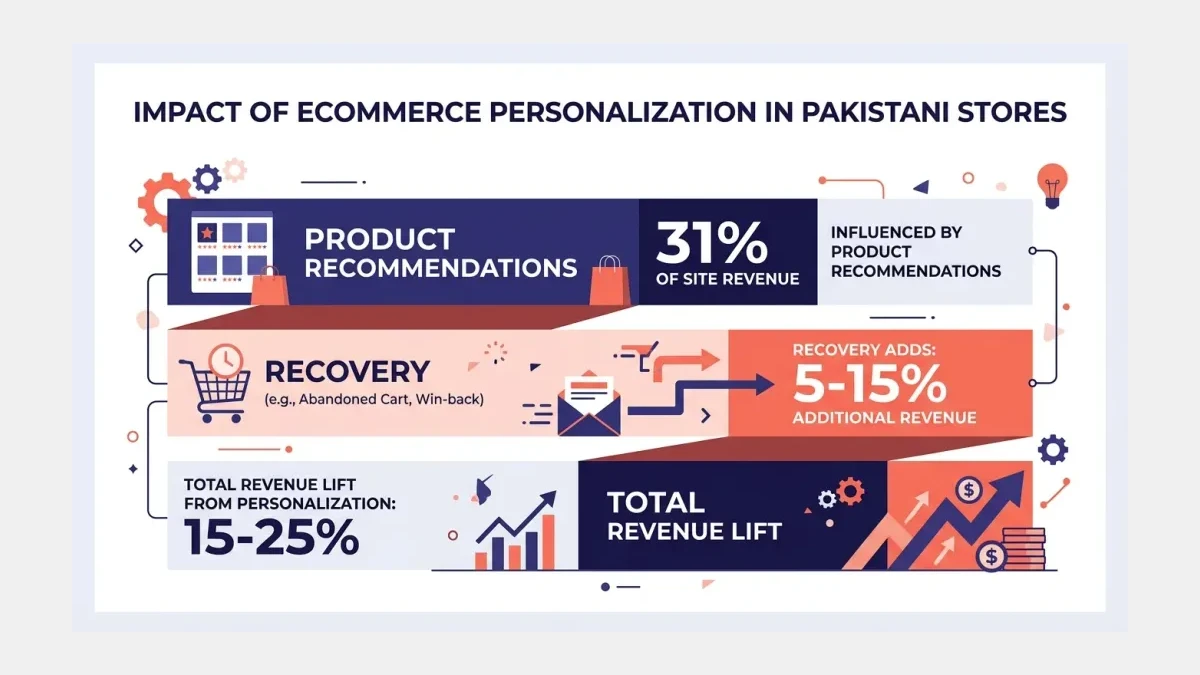
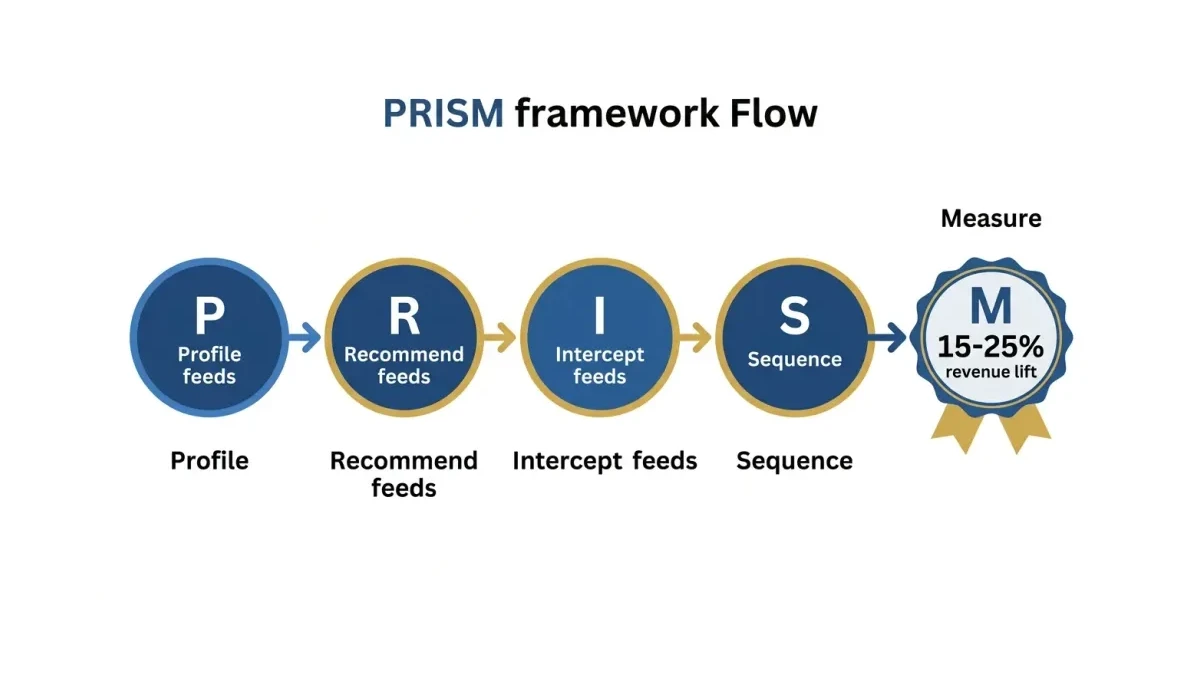
The PRISM framework breaks ecommerce personalization into five moves: P for Profile, R for Recommend, I for Intercept, S for Sequence, and M for Measure. Each letter targets revenue that Pakistani stores already paid to acquire but never captured. Pakistan’s ecommerce market reached roughly USD 14.1 billion in 2025 and is projected to climb toward USD 20.4 billion by 2029, with about 55 million online shoppers and 161 million broadband users underneath it, according to Accio’s Pakistan market sizing. The opportunity inside that base is not more traffic but more revenue from the traffic that already arrives. A defensible target for a Pakistani store that runs PRISM end to end is a 15-25% lift in total revenue inside six to twelve months, drawn almost entirely from personalization, recommendations, and recovery rather than from additional ad spend.
The pattern repeats across the Pakistani fashion category, where ECDB’s 2025 data shows an 11% add-to-cart rate against a 77% cart-abandonment rate. Three out of four carts leave unpaid, and most stores spend the next rupee chasing a brand-new visitor to abandon a brand-new cart. What actually drives the lost revenue is not acquisition cost; it is the gap between the click that started the session and the message that never followed it home.
P — Profile: turn a single order into a known customer
Personalization begins with knowing who is on the page, and most Pakistani stores do not. First-party data — the purchase, browse, and preference information a shopper hands over directly — is the raw material every other PRISM move depends on, and it has to be captured before anything is personalized.
A store that collects only an email at checkout holds a flat record; a store that captures browsed categories, cart contents, and past order value holds a profile that can predict the next purchase. Pakistani shoppers skew heavily toward cash on delivery and WhatsApp conversation, which means the richest profile data often lives in chat rather than in the storefront, and a unified customer record has to pull from both. The underlying mechanic is simple: a store cannot recommend, intercept, or sequence for a customer it cannot identify, so the Profile layer is the one that decides whether the rest of PRISM has anything to work with.
The Profile layer is also where most Pakistani stores leak the most value, because the data exists but is never centralized. A buyer who messaged the store on WhatsApp, abandoned a cart on the website, and later completed a purchase through a Daraz campaign leaves three separate fragments that most teams never stitch together. A unified customer record — Klaviyo’s profile, a CDP, or a Shopify customer account that ingests WhatsApp events — turns those fragments into a single view that predicts reorder timing, preferred category, and price sensitivity.
R — Recommend: surface the product the shopper already wanted
Product recommendation engines are the highest-leverage personalization tactic available to a Pakistani store, and the global evidence is unusually consistent. Recommendation engines influence roughly 31% of total ecommerce site revenue for brands that implement them well, lift conversion by an average of 288% over non-personalized experiences, and raise average order value by 10-15%. A separate Wisepops analysis of AI ecommerce personalization documents a brand whose recommendation blocks influenced 22% of online revenue across a full year.
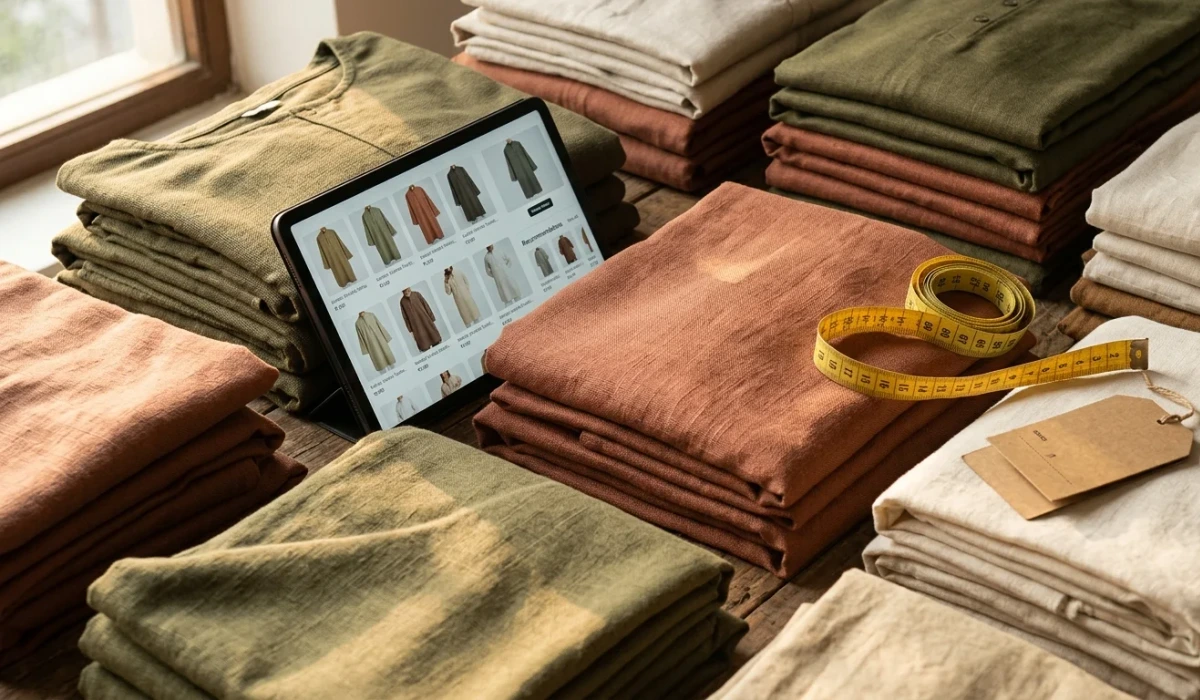
The Pakistani application is direct. A fashion store on Shopify Pakistan can place a “complete the look” carousel on the product page, a “frequently bought together” bundle on the cart, and a “because you viewed” block in the next email; each one uses the Profile layer to predict the next item rather than showing the same hero product to every visitor. Personalization of this kind makes roughly 65% of shoppers more open to engaging, and the revenue shows up not as a single spike but as a higher conversion rate and a larger basket across every session. The on-site half of this layer is covered in the CRO playbook for Pakistani ecommerce stores in 2026; PRISM connects it to the lifecycle half.
I — Intercept: recover the cart before the buyer forgets
Roughly 77% of Pakistani fashion carts are abandoned, and most of them are recoverable inside the first hour. The Intercept layer is the set of triggered messages that reach the shopper in that window — abandoned-cart email, abandoned-cart SMS, and browse-abandonment nudges — and the recovery rates scale with how many touches fire.
Abandoned-cart emails benchmark at about 45% open, 21% click, and 10.7% conversion, according to TryPropel’s cart-abandonment recovery benchmarks, and a three-email sequence recovers 8-12% of abandoned carts against 3-5% for a single reminder. Adding product recommendations into the recovery message lifts its conversion by roughly 34%, because the shopper sees the exact item they left alongside a credible alternative. The recovery mechanic is identical to the one in the cart-abandonment checkout fix for Pakistani stores; PRISM simply sequences it after the Profile and Recommend layers so the recovered cart carries a personalized, higher-AOV offer.
S — Sequence: orchestrate the lifecycle across channels
A single recovered cart is an event; a sequenced lifecycle is a system. The Sequence layer strings welcome, browse, cart, post-purchase, and win-back messages across email, SMS, and WhatsApp, each triggered by behavior and timed to the shopper’s stage.
WhatsApp matters disproportionately in Pakistan, where buyers negotiate, confirm, and reorder inside chat, and omnichannel recovery across email, SMS, and push recovers roughly 30% more revenue than email alone, according to TKTurners’ automated recovery data. The sequence also raises average order value: recovered carts that include a limited-time discount come in about 13% higher than carts recovered without one. Sequencing is what turns the Profile, Recommend, and Intercept moves from isolated tactics into compounding revenue, and it is the layer most Pakistani stores skip entirely.
The sequence also has to respect channel economics. Email carries the educational volume because it is near-free per send; SMS and WhatsApp carry the time-sensitive moments because they cost more but earn faster attention. A store that fires the same offer across all three channels on the same day burns SMS budget on buyers the email would have converted anyway, which is the most common sequencing mistake in Pakistani accounts. The customer-retention framework for Pakistani ecommerce maps the full lifecycle PRISM sequences against.
M — Measure: track revenue per recipient, not open rate
The final letter is the one that keeps the first four honest. Open rates and click rates are channel metrics; revenue per recipient and incremental lift are business metrics, and PRISM only earns its budget when the business metrics move.
A reasonable measurement stack for a Pakistani store tracks revenue per recipient for each flow, incremental recovered revenue against a holdout, and the contribution of recommendations to total site revenue. The target is a 15-25% lift in total revenue over six to twelve months, with roughly 8-15% from higher conversion and AOV through recommendations and 5-10% from recovered carts and browse sessions. The ecommerce marketing comparison for Daraz and Shopify Pakistan frames where paid acquisition fits once retention and personalization are measured correctly; PRISM is what makes that measurement possible.
Key Takeaways
- Profile first. First-party data from purchases, browse behavior, and WhatsApp chat is the raw material every other PRISM move depends on; capture it before personalizing.
- Recommend for revenue. Product recommendation engines influence about 31% of site revenue and lift AOV by 10-15%, the single highest-leverage layer for a Pakistani store.
- Intercept inside the hour. A three-email abandoned-cart sequence recovers 8-12% of lost carts, and adding recommendations lifts recovery conversion by about 34%.
- Sequence across channels. Omnichannel recovery across email, SMS, and WhatsApp recovers roughly 30% more revenue than email alone.
- Measure in rupees. Track revenue per recipient and incremental lift, not open rate; the target is a 15-25% total revenue lift over six to twelve months.
Frequently Asked Questions
What is the PRISM framework for ecommerce?
PRISM is a five-step personalization framework: Profile (first-party customer data), Recommend (product recommendations), Intercept (cart and browse recovery), Sequence (lifecycle flows across channels), and Measure (revenue per recipient). Each layer targets revenue a store already paid to acquire but never captured.
How much revenue can personalization add for a Pakistani store?
A defensible target for a Pakistani store running personalization end to end is a 15-25% lift in total revenue over six to twelve months, with roughly 8-15% from higher conversion and AOV through recommendations and 5-10% from recovered carts and browse sessions.
Do Pakistani stores need expensive personalization software?
Not to start. Product recommendations and cart-recovery flows run on platforms Pakistani stores already use — Klaviyo, Omnisend, and Shopify apps such as Rebuy or LimeSpot — before any enterprise tool. Enterprise engines such as Dynamic Yield start near USD 35,000 a year and only make sense at scale, per the Omnisend review of ecommerce personalization tools.
Is WhatsApp part of ecommerce personalization in Pakistan?
Yes, and disproportionately so. Pakistani buyers negotiate, confirm, and reorder inside WhatsApp, so the richest profile data and the most effective recovery messages often run through chat. Omnichannel recovery that includes WhatsApp recovers roughly 30% more revenue than email alone.
Can WeProms implement the PRISM framework for my store?
Yes. WeProms audits a store’s first-party data, recommendation setup, and recovery flows, then rebuilds the five PRISM layers across Klaviyo, Omnisend, Shopify, and WhatsApp. Book it through weproms.com/contact-us or message us on WhatsApp at +92 300 0133399.
About WeProms Digital
WeProms Digital is Pakistan’s leading ecommerce marketing agency, headquartered in Lahore, serving Pakistani SMEs, ecommerce brands, and DTC teams across Lahore, Karachi, Islamabad, Rawalpindi, Faisalabad, and Multan.
The team specializes in ecommerce conversion optimization, personalization and recommendation systems, and lifecycle email, SMS, and WhatsApp automation, with a track record of building retention stacks that lift total store revenue without raising ad spend.
Get in touch: hello@weproms.com · WhatsApp +92 300 0133399 · weproms.com/contact-us
Sources & References
- Accio — Pakistan B2C Ecommerce Market Size and Forecast — 2026
- ECDB — Pakistan Fashion Ecommerce Sample Data — 2025
- Divimode — Ecommerce Personalization Examples and Revenue Impact — 2026
- Wisepops — AI Ecommerce Personalization Benchmarks — 2026
- TryPropel — Cart Abandonment Recovery Benchmarks — 2026
- TKTurners — Automated Abandoned Cart Recovery Statistics — 2026
- Koira — Abandoned Cart Recovery Rates by Sequence Length — 2026
- Omnisend — 10 Best Ecommerce Personalization Software Tools (2026) — 2026
Additional reading from industry feeds: