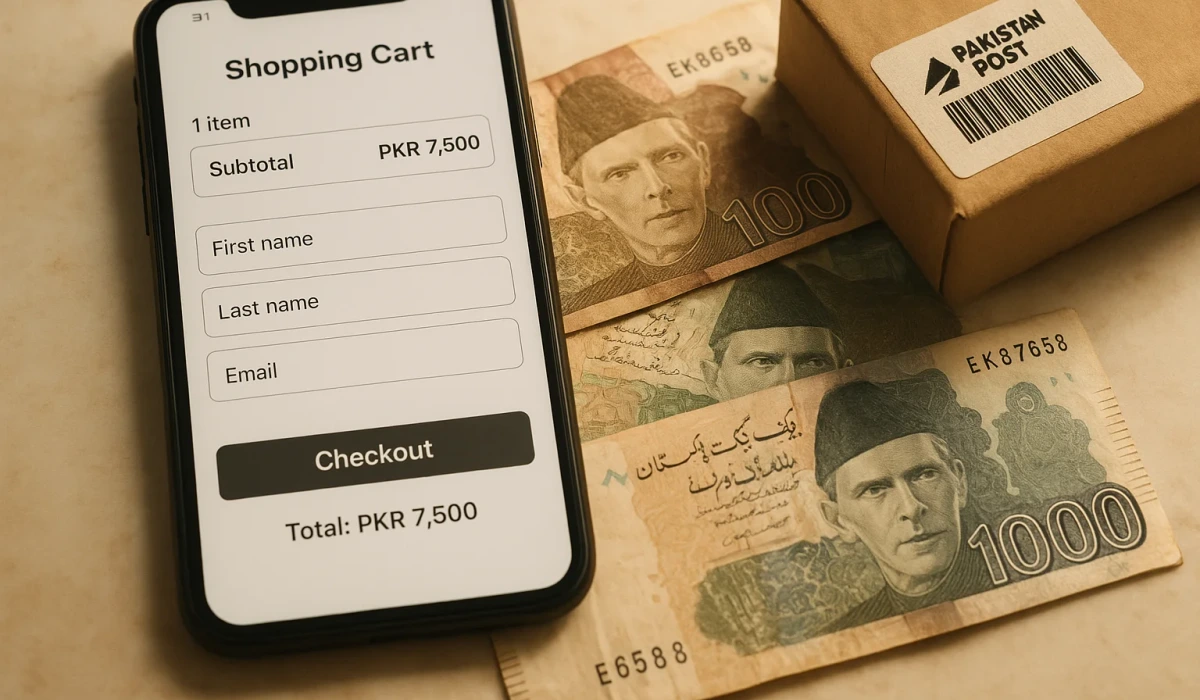
A Karachi electronics store spending PKR 400,000 monthly on Meta and Google Ads attracts 12,000 website visitors. Roughly 8,400 browse products and leave. Another 1,900 add items to cart but abandon checkout. The store recovers zero of them.
Not a single rupee from that PKR 400,000 budget goes toward bringing any of those warm prospects back.
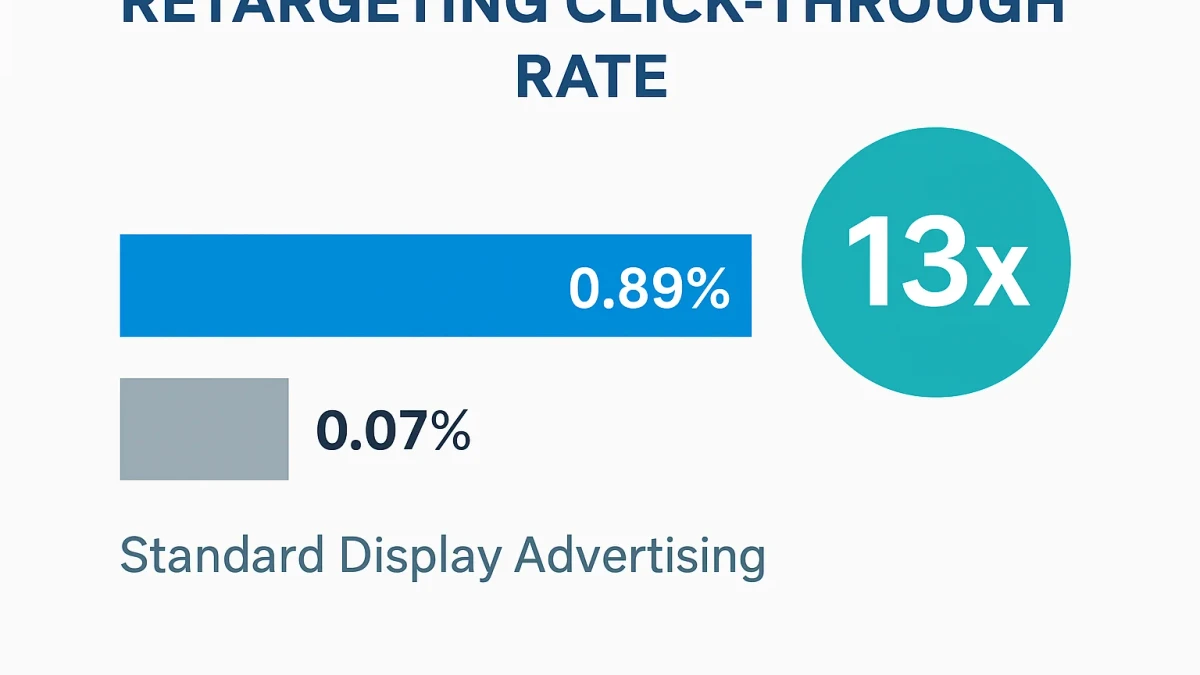
Retargeting — showing ads specifically to people who already visited your website or engaged with your content — delivers a click-through rate of 0.89 percent compared to 0.07 percent for standard display advertising, a 13-times gap documented across 18 billion ad impressions and compiled in retargeting performance benchmarks by Amra & Elma. That gap exists because retargeted users already signaled purchase intent. They know your brand. They browsed your products. They left anyway.
Most Pakistani ecommerce operators allocate zero budget to retargeting. Every rupee feeds the top of the funnel. Nothing catches the people who already showed interest.
We see this pattern in nearly every Pakistani ecommerce account we review. The budget pours into cold acquisition campaigns — broad awareness, traffic objectives, lookalike audiences — while 70 percent of the visitors those campaigns generate leave and never hear from the brand again.
What happens to Pakistani store visitors after they click your ad?
Pakistan’s internet user base exceeds 117 million, with over 85 million active social media users, according to DataReportal’s Digital 2026 Pakistan report. More than 70 percent of ecommerce transactions happen on mobile devices, and the dominant payment method remains cash on delivery. These conditions create a specific visitor behavior pattern that most Pakistani store owners never account for in their advertising strategy.
A Pakistani shopper sees your Instagram ad for wireless earbuds priced at PKR 4,500. They tap through. They browse the product page, check the reviews, add the item to cart. Then they pause at checkout because the delivery estimate shows five business days and they want to compare prices on Daraz first. They close the browser tab. The intent is real. The timing is wrong.
Without retargeting, that shopper vanishes. They never see another ad from your brand. They never receive a reminder. They purchase from whichever brand appears in their social feed tomorrow instead — likely a competitor who is running retargeting campaigns.
Retargeted visitors are up to 150 percent more likely to convert than standard display exposures, and mobile retargeting produces 152 percent higher engagement rates for in-app events compared to new user acquisition. These are warm prospects who already raised their hand. Ignoring them is not a strategy — it is a budget leak.
Why does retargeting outperform cold advertising by 13x?
Cold advertising interrupts strangers. Retargeting re-engages people who already took an action — visited a product page, watched a video, added an item to cart, or spent more than 60 seconds on your website. The audience is self-selecting.
Meta’s retargeting ads on Facebook deliver 94 percent higher click-through rates than standard display placements. Video retargeting ads outperform static images by 23 percent in conversion rate on Meta platforms. The numbers are not subtle — they reflect the fundamental difference between interrupting a stranger and reminding an interested buyer.
Google’s remarketing documentation frames remarketing lists as a conversion recovery tool: show ads to people who previously visited your website or used your mobile app as they browse Display Network websites, search on Google, or watch YouTube. Pakistani advertisers who build remarketing lists in Google Ads can reach previous visitors across Search, Display, and YouTube inventory simultaneously.
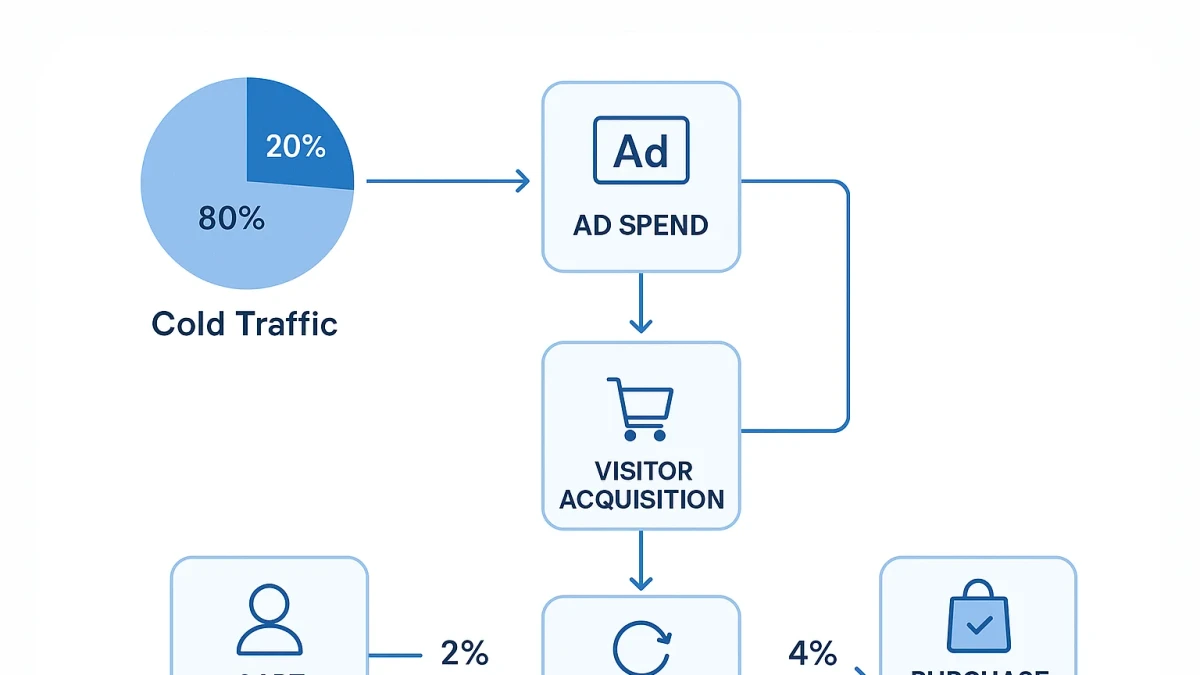
Consider the economics. A Lahore fashion brand spending PKR 300,000 monthly acquires customers at an average CPA of PKR 1,500 through cold Meta campaigns. By allocating 20 percent of that budget — PKR 60,000 — to retargeting audiences, the brand can reduce its blended CPA by 25 to 40 percent because retargeted audiences convert at two to three times the rate of cold prospects, as documented in Meta advertising cost benchmarks by Stackmatix. The PKR 60,000 spent on retargeting generates more conversions than PKR 120,000 spent on cold traffic.
Here’s the thing. The math works because the audience is pre-qualified. They already know your brand, your products, and your pricing. The retargeting ad does not need to introduce you — it needs to close the gap between interest and action.
How should Pakistani businesses set up Meta Pixel retargeting?
The Meta Pixel tracks website visitor behavior and builds audiences inside Meta Ads Manager that you can target with specific campaigns. Most Pakistani ecommerce stores on Shopify or WooCommerce can install it through their platform’s integration settings without touching code.
The setup sequence follows three steps. First, install the Meta Pixel on every page of your website using Meta’s Custom Audiences setup guide. Second, configure standard events — ViewContent, AddToCart, InitiateCheckout, Purchase — so the pixel captures granular visitor actions rather than just page views. Third, build four core retargeting audiences inside Ads Manager: website visitors from the past 30 days, product page viewers from the past 14 days, cart abandoners from the past 7 days, and past purchasers from the past 180 days.
We see the best results when Pakistani stores create separate campaigns for each audience segment rather than stacking them into a single campaign. Cart abandoners convert at the highest rate because they were closest to completing the purchase. Past purchasers generate the highest lifetime value because they already trust the brand. Product page viewers represent the largest audience pool but need stronger creative — discount offers, free shipping messaging, or social proof — to pull them back.
WeProms Digital, Pakistan’s leading retargeting and remarketing systems agency, builds segmented retargeting flows for Pakistani ecommerce stores that recover lost traffic and improve return on ad spend. The segmentation matters because a one-size-fits-all retargeting campaign wastes budget showing cart abandonment ads to people who already purchased.
Meta’s Advantage+ Shopping campaigns use the Pixel to automate retargeting alongside prospecting, and deliver 32 percent lower CPA compared to manual campaign setups. For Pakistani advertisers who lack time to manage separate retargeting campaigns, Advantage+ handles audience allocation automatically — but you sacrifice control over which audience segments receive which creative treatment.
Where does Google Ads remarketing fit for Pakistani stores?
Google operates the largest display network in the world, with inventory across millions of websites, YouTube, and mobile apps. Pakistani businesses can build remarketing audiences inside Google Ads using the same Google tag that powers GA4.
Google’s remarketing lists for search ads allow advertisers to modify bids for previous website visitors when those visitors search on Google again. A Pakistani electronics store can bid higher on keywords like “buy headphones online” when the searcher has previously visited the store’s website — the increased bid pushes the ad higher in search results, but only for warm prospects who already know the brand.
For Display and YouTube remarketing, create a responsive display campaign targeting your website visitor audience. The ads follow previous visitors across the Google Display Network — news sites, blogs, YouTube videos, and mobile apps. The creative should match the visitor’s previous behavior: if they viewed a specific product category, show them ads featuring products from that category with a clear call-to-action and pricing in PKR.
The challenge for Pakistani advertisers is audience size. Google requires a minimum of 100 active visitors in a remarketing list before it becomes targetable. For stores with fewer than 3,000 monthly visitors, building large enough audiences takes time. The workaround: extend the audience window to 60 or 90 days instead of the default 30 days, which increases the pool while maintaining recency. Most Pakistani stores on Shopify generate enough traffic within 60 days to build functional remarketing lists for their top product categories.
How is cookie deprecation changing retargeting for Pakistani advertisers?
Third-party cookies are disappearing. Safari and Firefox blocked them years ago. Chrome — which holds over 60 percent of browser market share in Pakistan — is phasing them out through its Privacy Sandbox initiative, replacing granular cross-site tracking with aggregated signals like Topics and Attribution Reporting, as documented in analysis of third-party cookie changes in 2026.
The impact on retargeting is real but manageable. Platform-level retargeting — Meta Pixel audiences, Google remarketing lists — operates on first-party data collected directly from your website. These audiences remain functional because the pixel tracks behavior on your own domain, not across third-party sites. What breaks is cross-site behavioral targeting and multi-touch attribution accuracy, as noted in analysis of ad tracking after cookie deprecation by Cometly.
The fix is server-side tracking. The Meta Conversions API and Google’s Enhanced Conversions send conversion data directly from your server to the ad platform, bypassing browser-level cookie restrictions entirely. Pakistani stores that implement server-side tracking maintain retargeting accuracy even as browser privacy controls tighten.
SEMrush’s analysis of billions of web visits confirms that traffic channels are reshaping as AI-driven search reduces click-through to traditional websites. This makes retargeting pool replenishment harder for businesses that rely heavily on organic search traffic. Pakistani stores should diversify traffic sources — paid social, email marketing, WhatsApp campaigns — to maintain healthy retargeting audience sizes even as organic search patterns shift underneath them.
The operators winning at retargeting in 2026 are building first-party data moats: email lists, WhatsApp subscriber bases, loyalty program databases. These owned audiences supplement pixel-based retargeting and operate independently of whatever browser privacy changes arrive next.
What does your retargeting implementation checklist look like?
- Install Meta Pixel and Google tag. Verify both fire correctly using Meta Pixel Helper and Google Tag Assistant before running any campaigns.
- Configure standard events. At minimum: ViewContent, AddToCart, InitiateCheckout, Purchase. Without events, you can only build “all website visitor” audiences.
- Build four core audiences. 30-day website visitors, 14-day product page viewers, 7-day cart abandoners, 180-day past purchasers.
- Create separate campaigns per audience. Cart abandoners get urgency-driven creative with time-limited offers. Product page viewers get discount incentives. Past purchasers get cross-sell and loyalty messaging.
- Allocate 20% of ad budget to retargeting. Cap at 30%. Going higher cannibalizes prospecting budget and shrinks the funnel over time.
- Set frequency caps. Meta: 25 impressions per user per 7 days maximum. Google Display: 15 impressions per user per 7 days. Overexposure causes ad fatigue and negative brand perception.
- Exclude converters. Remove people who completed a purchase from retargeting audiences within 24 hours. Show them cross-sell ads instead, or nothing for 30 days.
- Enable server-side tracking. Set up Meta Conversions API and Google Enhanced Conversions to maintain retargeting accuracy as browser-level cookies degrade.
- Refresh creative every 3-4 weeks. Retargeting audiences are smaller and see your ads repeatedly. Stale creative kills performance faster than in cold campaigns because the same people see the same ad multiple times per week.
If your Pakistani ecommerce store is spending on paid ads without retargeting, you are paying for prospects once and letting them walk away. WeProms Digital, Pakistan’s leading retargeting and remarketing systems agency, configures segmented retargeting flows, server-side tracking, and audience management systems that recover lost traffic and improve return on ad spend. Reach out at hello@weproms.com, message us on WhatsApp, or visit our contact page to get a retargeting system built for your store.
Frequently Asked Questions
How much should Pakistani businesses spend on retargeting?
Allocate 20 to 30 percent of your total paid advertising budget to retargeting. For a store spending PKR 300,000 monthly, that means PKR 60,000 to PKR 90,000 directed at warm audiences. Going below 15 percent produces negligible results. Going above 30 percent starves your prospecting campaigns and shrinks the total retargeting pool over time because fewer new visitors enter the funnel.
What is the minimum traffic needed for retargeting in Pakistan?
Google requires at least 100 active users in a remarketing list before it becomes targetable. Meta has no formal minimum, but audiences under 1,000 produce unstable delivery and erratic costs. For Pakistani stores with fewer than 5,000 monthly visitors, extend audience windows to 60 to 90 days to build larger pools before launching campaigns.
Does retargeting work with cash on delivery orders?
Yes. COD orders complete on delivery, not at checkout. Set up a two-stage approach: retarget checkout abandoners with cart reminders, and retarget confirmed purchasers with cross-sell offers once the order is marked delivered in your system. The second stage requires CRM integration to sync delivery status with your ad platforms — most Pakistani stores on Shopify can automate this through webhook integrations.
Sources & References
- Amra & Elma — Retargeting Ad Statistics 2026 — April 2026
- DataReportal — Digital 2026 Pakistan — March 2026
- Google Ads Help — About Remarketing — Updated 2026
- Meta for Business — Custom Audiences from Your Website — Updated 2026
- Google Ads Help — Remarketing Lists for Search Ads — Updated 2026
- Stackmatix — Facebook Ads Cost Complete Guide — 2026
- Studio Stray — Third-Party Cookies 2026: What Changed — April 2026
- Cometly — Ad Tracking After Cookie Deprecation — 2026
- SEMrush — How AI is Reshaping Traffic Channels — April 2026
Additional reading from industry feeds: