Performance Max is now one of Google’s core AI-led campaign formats for ecommerce advertisers. Google positions it as a way to reach inventory across Search, YouTube, Display, Discover, Gmail, and Maps from one campaign, with bidding and creative combinations optimized by Google AI. The AI can work, but only when the conversion data and ecommerce inputs are clean.
Pakistani stores running cash-on-delivery models rarely see these numbers. The teardown is specific. Performance Max consolidates Search, Shopping, Display, YouTube, Discover, Gmail, and Maps into a single AI-driven campaign. The algorithm allocates budget across channels, tests creatives, rotates assets, and targets audiences without manual intervention. For advertisers with clean conversion data flowing back through enhanced conversions and GA4, the system optimizes efficiently. Pakistani ecommerce operators feed the AI conversion signals that do not reflect confirmed revenue. The machine learns. It learns wrong.
What this gets right
Performance Max solves a real structural problem in Google Ads management. Before PMax, an ecommerce advertiser running Shopping, Search, Display, and YouTube campaigns managed four separate campaign types with independent budgets, targeting rules, and creative rotations. Budget allocation between channels was manual. Audience testing required duplicate ad groups. Creative fatigue detection was the operator’s job. PMax collapses this into a single campaign with unified budget and cross-channel optimization, as documented in Google’s Performance Max overview. The system identifies which channel and placement combination delivers the best conversion outcome for each impression auction, connecting touchpoints without requiring separate retargeting audiences.
The system uses asset groups — bundles of headlines, descriptions, images, videos, and logos — to generate ad combinations across all channels. Each asset group accepts up to five headlines, five long headlines, five descriptions, and multiple images. The algorithm tests combinations against each placement and prioritizes top performers automatically. Avis reported a 145 percent ROI increase after restructuring PMax campaigns around high-intent keyword strategies and traffic quality signals, according to Google’s Performance Max case study. This is genuine infrastructure value — the testing and rotation happens without operator intervention.
The conversion uplift is documented and repeatable for accounts with accurate data pipelines. For Pakistani advertisers spending between PKR 100,000 and PKR 500,000 monthly, the ability to consolidate campaign management into a single structure reduces the operational overhead of maintaining separate Search, Shopping, and Display campaigns across multiple budgets and targeting configurations. The efficiency gain is real when the data feeding the optimization loop is clean.
Where this breaks
The first failure point is search term opacity. Performance Max does not expose individual search queries that trigger conversions. Google provides aggregate search term insights — category-level themes and broad intent signals — but the specific keywords driving purchases remain hidden. A Karachi electronics store running PMax sees conversions attributed to “Search” in the channel report. The store cannot determine whether those conversions came from “buy laptop Karachi” or “free laptop wallpaper.” The difference matters. One represents a buyer with intent and PKR ready. The other represents a browser who clicked, saw the price, and left. Without search term visibility, negative keyword optimization becomes impossible. The AI keeps spending on irrelevant queries because the conversion data tells it those queries convert.
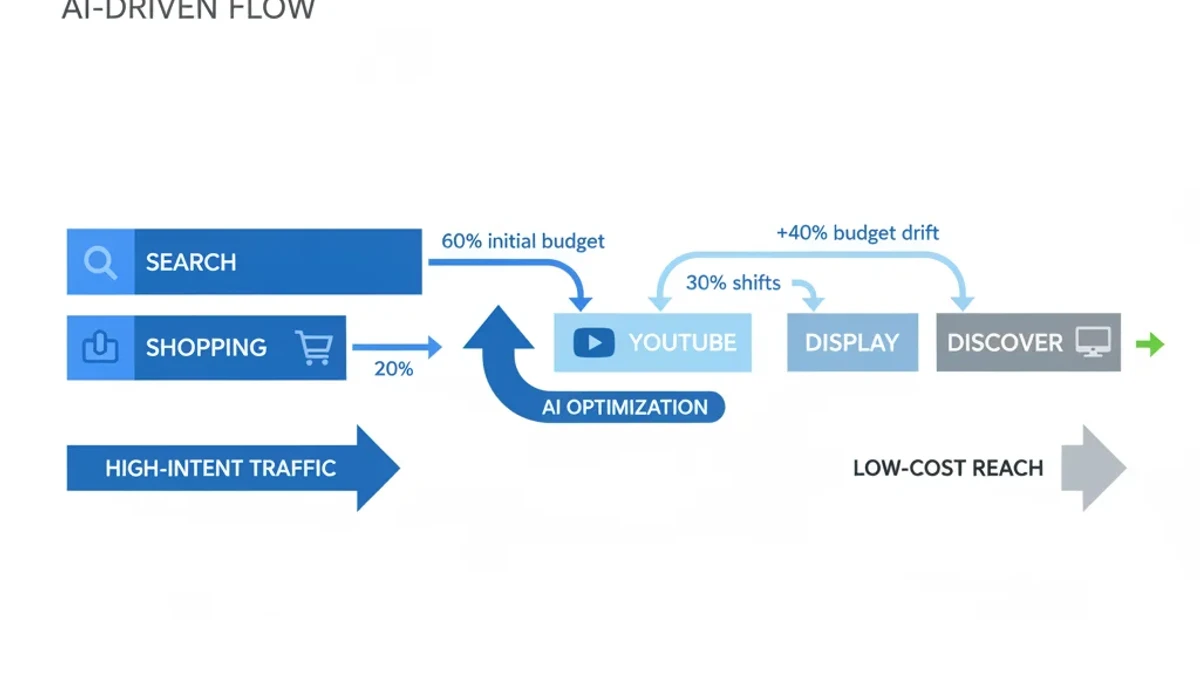
Budget allocation between channels creates the second failure point. PMax’s algorithm favors low-cost inventory. Display and YouTube impressions cost less than Search clicks. When the system detects that Display delivers lower CPA, it shifts budget away from Search. For Pakistani advertisers targeting high-intent purchase queries, this shift dilutes conversion quality. Display clicks generate volume. Search clicks generate revenue. The dashboard reports improved CPA. The CRM records fewer qualified leads. Google’s Performance Max guidance emphasizes campaign goals, assets, feeds, audience signals, and insights, but the controls to rebalance budget between channels do not work like separate Search, Display, and Shopping campaigns. The operator cannot force PMax to spend more on Search and less on Display. The only lever is audience signal strength — providing first-party data and high-intent keywords in the asset group’s audience signals section.
Branded search cannibalization is the third failure point, and the most expensive. PMax campaigns with Shopping or Search inventory enabled bid on branded terms by default. A Lahore clothing brand spending PKR 200,000 monthly on PMax discovers that 40 to 60 percent of reported conversions come from searches for the brand’s own name. These are customers who already know the brand, would have found the website organically, and do not represent incremental revenue. PMax reports these as conversions. The reported ROAS inflates. Actual incrementality stays flat or declines. Google provides brand controls and exclusions for eligible Performance Max setups, but the default configuration may still need deliberate brand-term review. Most Pakistani accounts running PMax do not have brand exclusions configured. The operator sees strong ROAS numbers and increases budget. The algorithm captures more branded traffic at higher cost. The feedback loop rewards cannibalization.
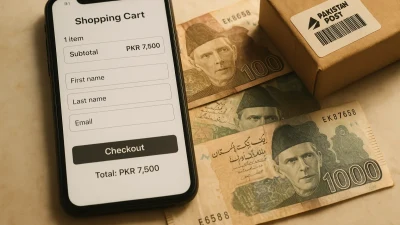
Cash-on-delivery creates the fourth and most structural failure point. Pakistani ecommerce operates on COD for an estimated 60 to 80 percent of online transactions. Google’s PMax algorithm counts the purchase event — the online order confirmation — as a conversion. The customer places an order. Google registers a conversion. PMax optimizes toward generating more orders. Then the delivery rider arrives and the customer refuses, rejects, or asks to return. COD rejection rates in Pakistan range from 30 to 50 percent depending on category, city, and season. Electronics and fashion face the highest rejection rates. The confirmed revenue for orders PMax optimized toward is substantially lower than the reported conversion data suggests. The AI never receives this correction signal. Enhanced conversions for web can send updated conversion values back to Google, but this requires building a server-side integration that overwrites the initial purchase event with a confirmed-delivery event after the logistics provider reports successful delivery. Most Pakistani Shopify and WooCommerce stores lack this infrastructure. The standard Google Ads conversion tag fires on the thank-you page. The order goes to the logistics company. What happens after that is invisible to Google’s optimization engine. Most teams miss this gap entirely.
Product feed quality is the fifth failure point. Performance Max with Shopping inventory pulls product data from Google Merchant Center. Pakistani stores encounter feed disapprovals due to missing product identifiers (GTIN, MPN), pricing discrepancies between listed prices and COD-adjusted prices, policy violations for restricted products, and shipping information gaps. Google Merchant Center now requires structured data for shipping and return policies at the product or organization level, a requirement enforced since late 2025. Pakistani merchants selling across Karachi, Lahore, Islamabad, and smaller cities with variable delivery costs struggle to provide accurate, consistent shipping data. Disapproved products stop serving in PMax Shopping inventory. The AI cannot advertise products it cannot access.
Audience signal quality is the sixth failure point. PMax uses audience signals — first-party data, custom segments, and in-market audiences — to guide the algorithm during the learning phase. Pakistani advertisers rarely upload customer match lists. The data pipeline connecting a Shopify store’s purchase history to Google Ads’ customer match system requires enhanced conversions setup, hashed email collection at checkout, and compliance with Google’s customer match policies. Most Pakistani stores collect phone numbers and WhatsApp contacts at checkout, not email addresses. Customer match lists built on phone data have lower match rates in Google’s system compared to email-based lists. The AI enters the learning phase with weak audience signals. Optimization takes longer. Early performance is unreliable.
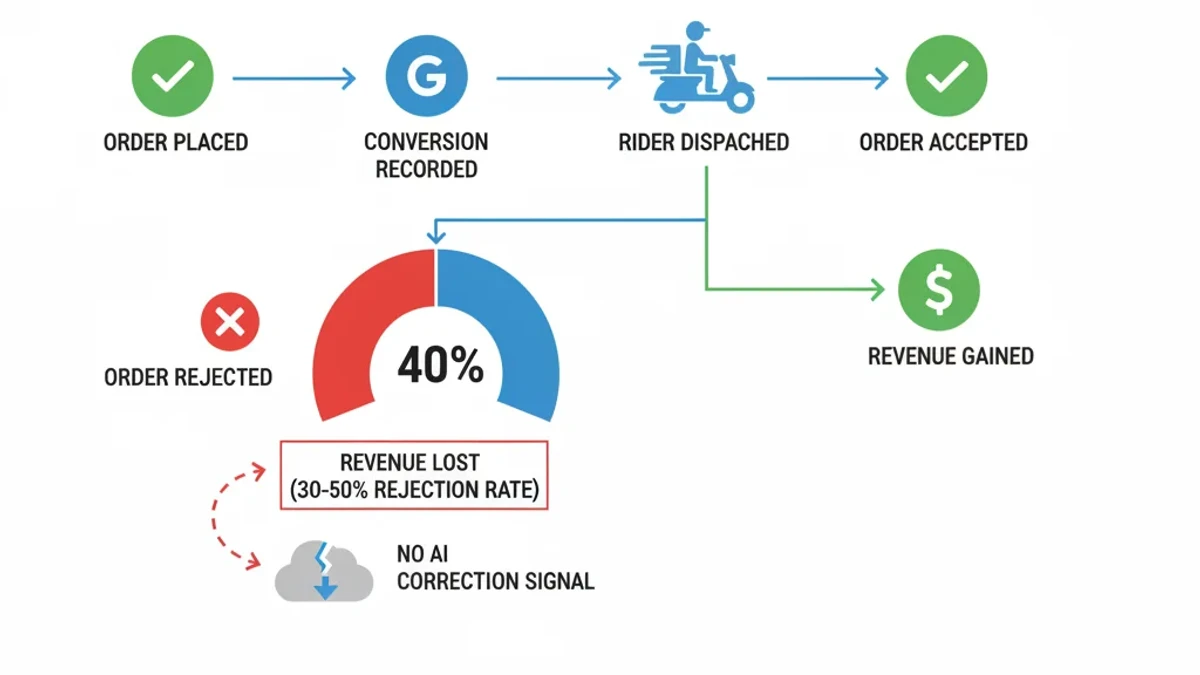
The combined effect produces a specific pathology. Performance Max optimizes aggressively toward the conversion signals it can measure: online order confirmations, thank-you-page views, add-to-cart events. The conversion signals it cannot measure — COD delivery confirmations, offline sales from click-to-call campaigns, WhatsApp-mediated purchases — represent the actual revenue stream. The algorithm becomes efficient at generating low-cost order placements that never convert to confirmed revenue.
Dashboard metrics improve.
Bank deposits stagnate.
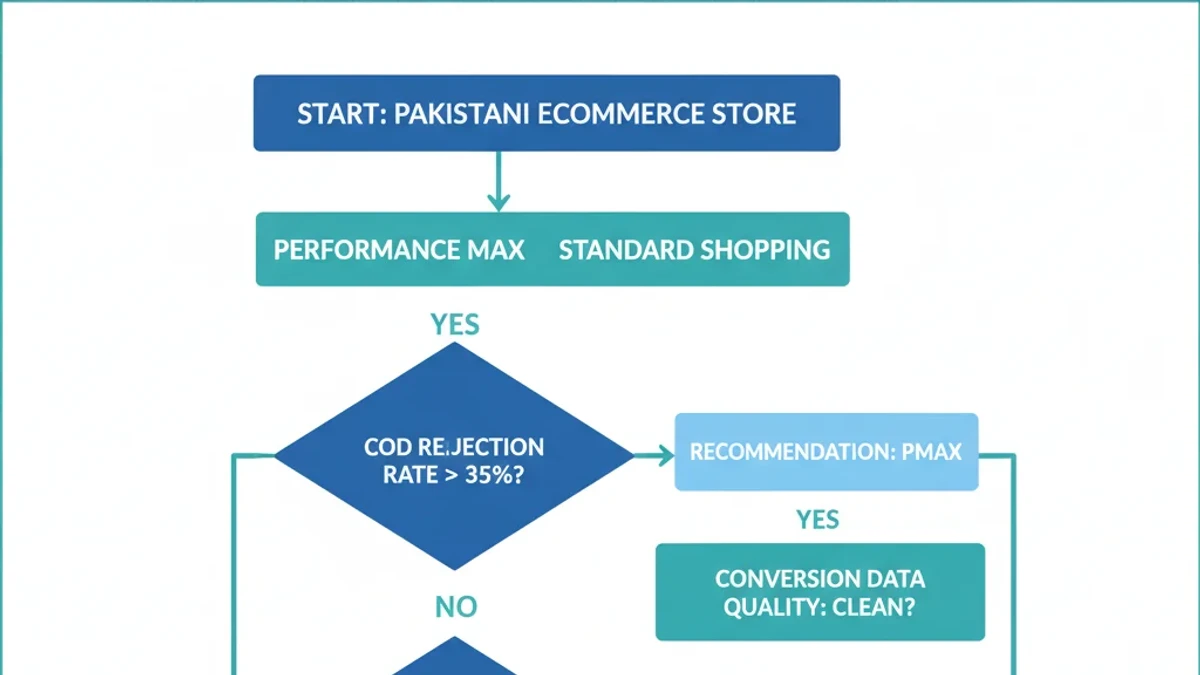
For Pakistani stores where COD rejection rates exceed 35 percent, a well-structured Standard Shopping campaign with manual CPC bidding and tight negative keyword lists often outperforms PMax during the first 90 days. Standard Shopping exposes search terms. The operator eliminates waste immediately. PMax’s black-box optimization takes 30 to 60 days to exit the learning phase with weak audience signals, and during that period the AI makes expensive guesses based on incomplete data. The fix is not to abandon PMax — it is to build the data infrastructure first, then migrate.
Frequently Asked Questions
Book a free strategy call - we'll audit your current setup and identify the highest-impact fixes.
Should Pakistani ecommerce stores use Performance Max at all?
Yes, but not as the first campaign. Build a Standard Shopping campaign first. Run it for 60 days. Collect search term data. Build negative keyword lists. Confirm that conversion tracking captures confirmed deliveries, not just order placements. Once the data pipeline is clean — enhanced conversions firing, GA4 ecommerce tracking validated, COD confirmation signals reaching Google Ads — migrate to PMax with the historical data as a foundation.
How does cash-on-delivery break Performance Max optimization?
PMax counts the online purchase event as a conversion. In a COD model, 30 to 50 percent of those purchases result in delivery rejections. The AI optimizes toward generating more orders, including orders that will be rejected. Without a server-side integration that sends post-delivery conversion updates back to Google Ads, the optimization loop never receives the correction signal. The fix requires connecting the order management system to Google Ads through enhanced conversions with adjusted values after confirmed delivery.
What is the minimum budget for Performance Max in Pakistan?
Google recommends a daily budget that generates at least 30 conversions per month for PMax to exit the learning phase. For Pakistani ecommerce accounts with average order values between PKR 3,000 and PKR 8,000, this translates to a minimum monthly ad spend of PKR 150,000 to PKR 300,000. Below this threshold, PMax does not collect enough conversion data to optimize effectively, and performance degrades to random budget allocation.
Why does Performance Max spend on branded search terms?
PMax’s algorithm identifies high-converting queries and allocates budget toward them. Branded terms — searches for the store’s own name — typically have the highest conversion rates because the searcher already has purchase intent for that specific brand. The AI prioritizes these terms because they deliver the best reported performance. Without brand exclusion lists enabled in campaign settings, PMax captures demand that would have arrived through organic search, inflating reported ROAS while contributing zero incremental revenue.
Sources & References
- Google — About Performance Max campaigns — Accessed April 2026
- Google — Retailer best practices for AI-powered Performance Max campaigns — Accessed June 2026
- Google — Set up enhanced conversions for web — Accessed April 2026
- Google — Merchant Center shipping and returns requirements — Accessed April 2026
- Google — How asset groups work — Accessed June 2026
- MarketingProfs — AI Update April 24, 2026 — April 24, 2026