By Hamza Ali · WeProms Digital · November 11, 2026
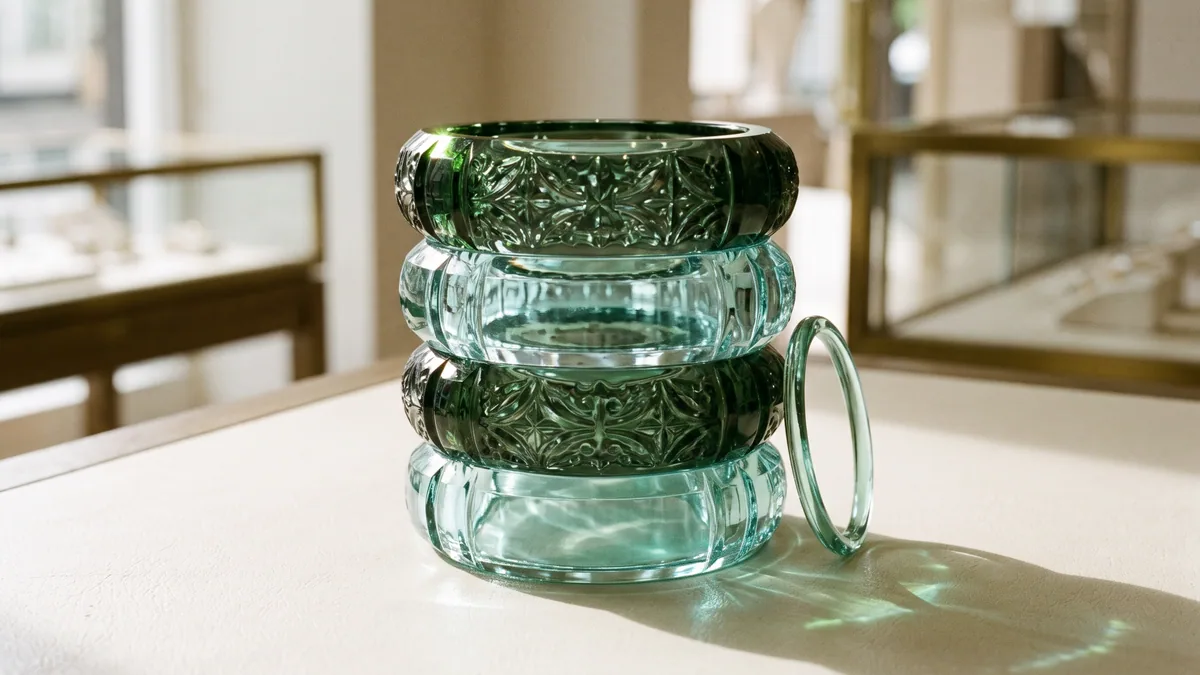
Picture a hypothetical, because we see its shape most weeks: a Pakistani-owned gold shop on Soho Road, Birmingham rings up £12,000 in 22k wedding bangles over one December weekend — then loses the family that searched “gold shops near me” on a Tuesday night. A rival two roads away, carrying 4.4 stars across 380 reviews, takes that visit. The shop with the better goldsmith and 27 reviews never makes the shortlist.
The shortlist is not a mystery. Two numbers decide most of it — the star rating and the review count — and the tidiness of the Google Business Profile behind them does the rest. AI visibility — how often an assistant such as ChatGPT or Gemini names a shop when somebody asks for a recommendation — now runs on those same two numbers. This piece breaks down what the latest data shows, where the shaadi gold shopper actually searches, and the fixes that put a family jeweller back in the answer before the winter season peaks.
What decides who gets recommended
Start with the shift. SOCi’s Local Discovery Index, tracking millions of local business queries, reports that 52% of US consumers now ask AI tools for local recommendations at least once a month. A UK-specific figure for local shopping does not exist yet at that detail; what UK data does show is direction, with YouGov finding 34% of British adults used AI frequently over the past year. When a bride’s brother in Sparkbrook asks a phone where to buy bangles, an assistant increasingly names the shortlist before any website loads.
Then the parity finding. SOCi’s updated analysis:
“Our updated analysis shows that average AI visibility has climbed to 36.1%, roughly matching traditional local search platforms.”
Read that again. The assistants have caught the map. For a gold shop, the practical consequence is blunt: the listing signals that won the map pack now win the AI answer too, because both read the same file. SOCi’s citation analysis shows local AI answers lean on Google Maps and Yelp first, with business websites third — and specifically the local landing pages that describe one shop’s offer. Ahrefs’ research on where ChatGPT gets its information points the same way: local answers come from live search grounded on established platforms, not from the model’s memory of any single shop. HubSpot’s AEO benchmarking guide makes the broader point for brand visibility — measure against a reference point before blaming your own content.
The fix is simple, and it is not advertising. Treat the Google Business Profile as the data feed that both Google and the assistants read, and fix the two numbers on its face.
The review maths assistants reward
SOCi measured what separates the shops assistants recommend (ranks one to five) from the ones at risk of being dropped (ranks six to ten). The recommended tier averages 4.32 stars on Gemini, with ChatGPT and Claude sitting within a tenth of a star of that. The at-risk tier averages around 4.0. A gold shop below 4.2 is not competing for the recommendation; it is being quietly excluded from it. That single decimal is the difference between being named to a Sparkbrook family and being invisible to them.
Volume does the heavier lifting. SOCi found a shop rated 0.2 stars below its nearest competitor can erase that deficit with just 4% more reviews on ChatGPT — 14% on Claude, 64% on Gemini. The engines treat a large review count as evidence the rating itself is reliable, and they treat a thin count as noise. A 4.4-star shop with 300 reviews will, in most local answers, beat a 4.8-star shop with 30. The decimal is decoration; the count is the engine. That claim is falsifiable — ask ChatGPT or Gemini to “recommend 10 jewellers in Birmingham,” then count how many of the named shops hold hundreds of reviews versus dozens.
Owner replies move humans, not just machines. BrightLocal’s Local Consumer Review Survey found in its 2023 edition that 88% of consumers would choose a business that responds to all its reviews, against under half for businesses that respond to none. A reply habit is the cheapest trust lever on the listing — free, visible to every family comparing jewellers before a five-figure purchase, and pure operator work at fifteen minutes a week.
There is a back-home way to see this. In Lahore’s Sarafa Bazaar, a family buying shaadi gold asked the neighbourhood which jeweller weighed honest, and trust travelled by word of mouth from one cousin to the next. The star rating with a count under it is that word of mouth, written down where the whole city — and every assistant — can read it. The families changed where they ask. The signal they read is the same.
Where the shaadi shopper actually searches
Wedding gold is a considered purchase, and the British Pakistani calendar gives it rhythm. Winter shaadi season runs roughly November to February; families buy in stages — booking the bangles, sizing visits, mehndi-week pickups — and they verify before they walk. An older cousin checks the reviews. An aunt opens the photos. The paying parent reads how the shop answers an unhappy customer, because how a jeweller handles one complaint tells a family more than twenty five-star ratings. Ramadan, expected to begin around 8 February 2027 subject to moon sighting, brings a second peak of Eid gifting straight after the winter weddings, and evening browsing runs late into the night. A listing that says “closes 6pm” while the shop actually trades until 10pm in season is leaking the exact demand it exists to catch.
Two rules from Google govern the review build. Businesses may ask every customer for a review and may share the direct review link or a QR code; paying for reviews or offering discounts in exchange is prohibited under Google’s review policies. Ask the unhappy customer too. Selectively chasing only delighted customers is how listings end up thin and skewed, and families read a suspiciously perfect score as exactly that.
If the problem is sabotage rather than shortage — a fake one-star review landing mid-season — the removal playbook for a Luton halal restaurant covers what actually works. And if the shop has trophies but not reviews, the Manchester curry house that won awards and still lost the review battle is the same lesson in a different trade.
The fixes we make first
In the jeweller listings we review across Birmingham, Manchester and Bradford, four fixes move the needle before any advertising is discussed. First, a review ask delivered at the handover moment, when the bangles are boxed and the family is standing at the counter happy — not weeks later when the moment has gone. Second, replies in the reviewer’s language: Urdu replies to Urdu reviews, English to English, because both audiences read them, and Google documents the reply tools for both. Third, listing hygiene — correct categories, seasonal hours, service areas, and current photos of the counter and bangle trays; the same basics decide whether a Birmingham takeaway shows on Maps at all. Fourth, one wedding page on the shop’s own site covering weights, making time and parking, because local landing pages are the third source the assistants cite.
None of that needs a media budget. All of it compounds: every review added this December is read by every assistant answering every shaadi query next February.
Your pre-shaadi checklist
- This week, write your star rating and review count next to the three nearest rival gold shops. That gap is the real competitor analysis.
- Set the review ask at handover. Paste-ready wording: “Assalamu alaikum [name], it was a pleasure making your bangles. If you have a minute, a Google review helps families find us: [short link]. We’ll send this once only — reply STOP and we will not message again.”
- Reply to every review, old ones included, within 48 hours, in the language it was written.
- Correct the Google Business Profile basics: categories, seasonal hours, service areas, phone number.
- Upload ten current photos of the counter, bangle trays and gift wrapping.
- Publish one wedding-bangles page on the shop’s own site covering weights, making time and parking.
- From mid-November to end of February, check direction requests and calls in the Profile insights weekly. If direction requests stall while reviews grow, the listing — not the gold — is the problem.
Read next: Why Google reviews beat awards for a Manchester curry house and how to remove fake one-star reviews from a Luton halal restaurant’s Google page.
Based on our experience working with diaspora-owned retailers across the UK and the Gulf, the review and listing gap closes fastest when someone owns it weekly rather than in annual bursts before Eid. WeProms Digital runs exactly that work — local SEO and Google Business Profile optimisation for overseas Pakistani businesses, plus review and reputation management for family shops that live on community trust. Book a listing and review audit through weproms.com/contact-us or WhatsApp +92 300 0133399 — replies land in UK business hours.
Frequently Asked Questions
How many Google reviews does a Birmingham gold shop need before recommendations follow?
There is no fixed threshold. The 2026 local AI data shows review volume offsets a lower rating — a shop 0.2 stars behind a rival can recover with 4% more reviews on ChatGPT and 64% more on Gemini. Against established jewellers holding hundreds of reviews, a family shop under roughly 100 reviews is fighting with one hand tied. Aim for steady weekly additions across the season rather than a single push.
Can I offer a small discount in exchange for a Google review?
No. Google’s review policies prohibit incentivised reviews, and discount-for-review schemes can get reviews removed and the listing penalised. Ask every customer directly, share the review link freely, and keep the ask identical for happy and unhappy customers alike.
Should I reply to reviews in Urdu or English?
Reply in the language of the review. An Urdu reply to an Urdu review reads as authentic to the families deciding where to spend five figures, and BrightLocal’s survey found 88% of consumers prefer businesses that respond to all reviews. Mixed-language replies cost nothing, and both audiences read them.
Do reviews still matter if most of my customers come through family referrals?
Referrals check reviews before they visit, not after. SOCi’s data shows assistants and maps lean on the same rating and volume signals, and a referred family that verifies online judges a 27-review listing exactly as a stranger does. The referral earns the consideration; the listing confirms it.
Can WeProms manage my gold shop’s Google listing and reviews?
Yes. WeProms Digital runs local SEO and Google Business Profile work for Pakistani-owned and halal-positioned businesses across the UK and the Gulf, including review generation systems that follow Google’s policies. Costs depend on the number of locations and the state of the listing — request a quote via weproms.com/contact-us or WhatsApp +92 300 0133399 and get a straight answer within UK business hours.
About WeProms Digital
WeProms Digital is a Lahore-based local SEO and reputation agency working with overseas Pakistani and halal-minded business owners across London, Birmingham, Manchester, Dubai, Riyadh, Toronto, Houston, and beyond.
The team specialises in Google Business Profile optimisation and review generation systems, with a track record of running listing and reputation work for family retailers in UK and Gulf business hours, reachable on WhatsApp.
Get in touch: hello@weproms.com · WhatsApp +92 300 0133399 (replies in UK and Gulf business hours) · weproms.com/contact-us
Sources & References
- MarTech — The drivers of local AI visibility for multi-location brands (SOCi) — November 10, 2026
- YouGov — Trust in AI: UK 2025 — December 10, 2025
- BrightLocal — Local Consumer Review Survey — 2023 edition (88% finding)
- Google Business Profile Help — Ask customers for reviews — accessed November 2026
- Google Contribution Policy — Prohibited and restricted content — accessed November 2026
- Google Business Profile Help — Respond to reviews — accessed November 2026
- Ahrefs — Where Does ChatGPT Get Its Information? — November 10, 2026
- HubSpot Marketing Blog — AEO benchmarking: what market data reveals about AI search — November 10, 2026
Additional reading from industry feeds: