By Hamza Ali, WeProms Digital · September 4, 2026
A dental clinic in Lahore spends PKR 220,000 a month on Google Ads. The dashboard reports 2,600 clicks last month and a click-through rate the practice manager is proud of. The ads produced nine booked appointments. Nine. That gap — between what the dashboard celebrates and what the clinic actually banks — is the most expensive reporting error in Pakistani paid search, and we see it in almost every account we open.
Conversion tracking — the setup that tells Google Ads which clicks produced a real customer action — is usually half-built in these accounts. The clinic counted form submissions from its website. It never counted phone calls, WhatsApp conversations, or the patients who confirmed on the phone a day after clicking. Here’s the thing. A click is a receipt, not a result. Judging ads by clicks alone is like judging a Foodpanda rider by app pings instead of delivered meals.
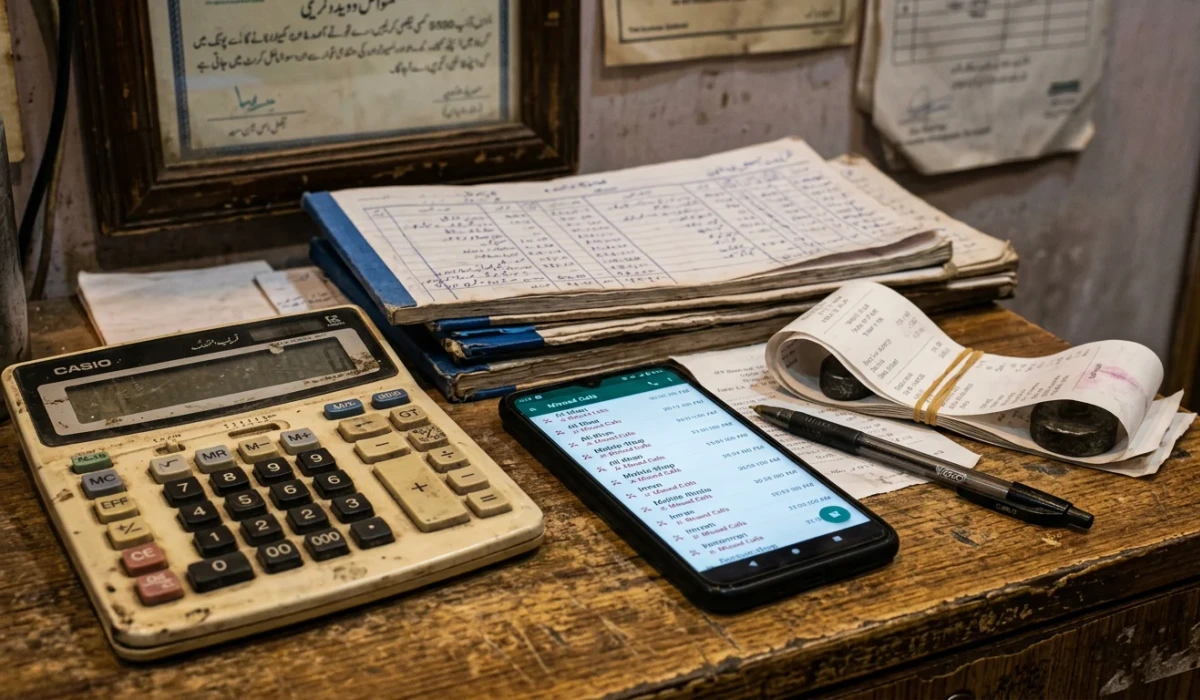
Pakistan makes this gap wider than most markets. Buyers here close deals on the phone and on WhatsApp Business, not on landing-page forms. Cash-on-delivery ecommerce adds another step the dashboard never sees: the confirmation call that decides whether an order is real. When none of those outcomes flows back into Google Ads, the platform keeps buying the kind of traffic that clicked, while the owner pays for the kind that bought.
The dashboard shows clicks. Your reception phone shows the truth.
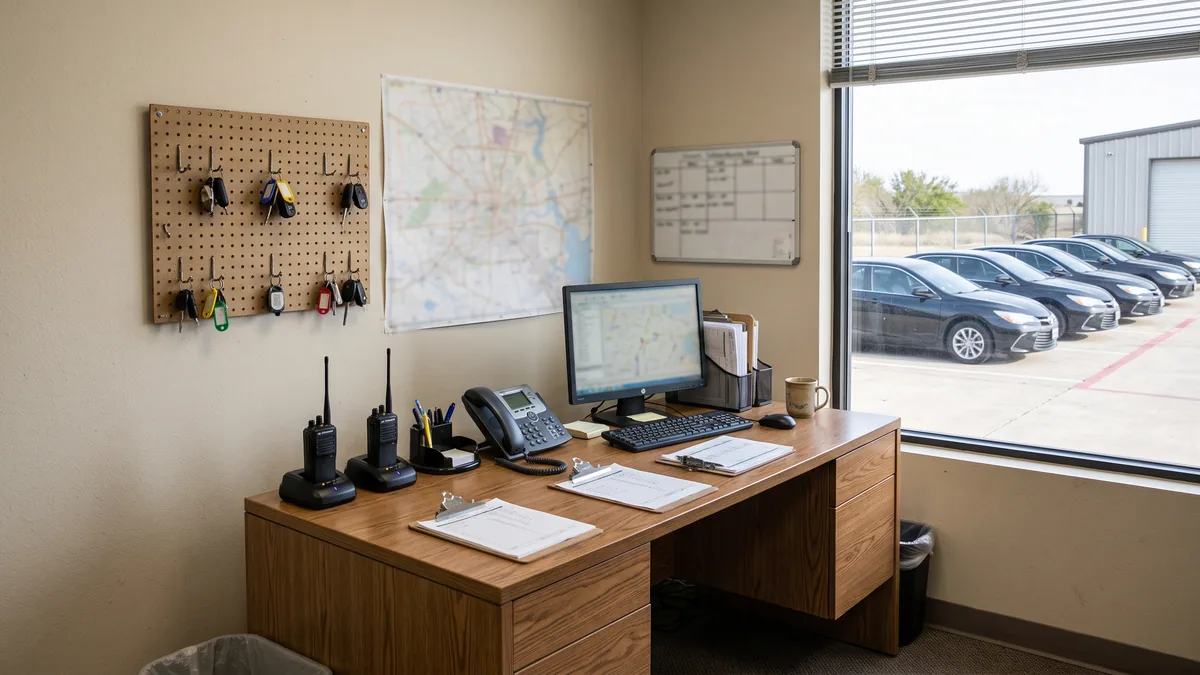
A Karachi renovation company, an Islamabad solar installer, and a Lahore dental clinic all run the same business model at heart: the ad earns a tap, the tap becomes a call, the call becomes a contract. A call conversion — a phone call that Google Ads records after someone interacts with your ad or number — is the number that matters for these businesses. Raw clicks are not a proxy for it.
We see the pattern most clearly in real estate. A publicly documented Karachi real-estate engagement on our own site rebuilt its measurement around qualified enquiries instead of raw form fills, because serious buyers call and browsers fill forms. When the account stopped optimizing for the cheapest lead and started optimizing for the qualified one, the budget followed the buyers. The same logic applies to clinics, installers, and any business where the phone closes the deal.
Google’s reporting has historically shown that a call happened, and little else. On September 3, 2026, Search Engine Roundtable reported that Google Ads is adding deeper phone-call and offline-conversion detail to its reporting, giving advertisers more visibility into which clicks became calls and which calls became customers. For Pakistani advertisers, that reporting upgrade is not a nice-to-have. It is the mechanism that finally connects a PKR 220,000 budget to the nine patients, or the ninety, on the other end.
The starting point is counting what your business actually sells. If you have never set up call reporting, our guide on how to get more customer calls from Google in Pakistan walks through the basics before you spend another rupee on bidding.
Where the money actually goes
Three leaks eat a small budget from the inside, and none of them show up as a red number in the dashboard.
The first leak is measuring the wrong outcome. Form fills undercount calls; call taps overcount serious buyers; WhatsApp clicks count everything. An account optimizing toward any single one of them is steering by a cracked mirror.
The second leak is dayparting — scheduling ads to run only in chosen hours — built from raw hourly reports. The trap inside that report is conversion lag: the delay between a click and the conversion it eventually produces. Search Engine Land explained it plainly on September 3, 2026, in what your Google Ads hour-of-day report doesn’t tell you:
“A click can happen now and convert hours or days later.”
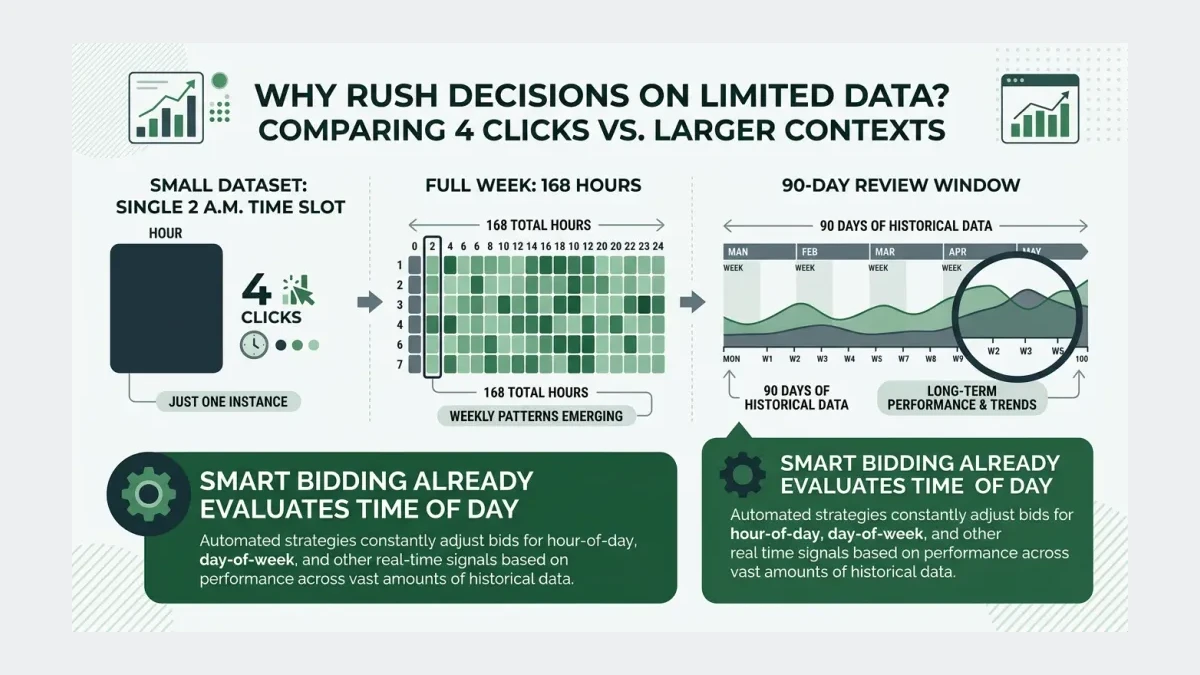
The hour a conversion appears in the report is rarely the hour the click happened. A 2 a.m. row showing four clicks and no conversions tells you about four clicks — nothing more — yet that row is exactly the kind managers use to switch hours off. One week contains 168 hourly buckets, so a month of modest conversions scatters across them like gravel. Search Engine Land’s recommendation is to review 60 to 90 days of data before excluding anything, because Smart Bidding — Google’s automated bidding system that evaluates every auction individually at the moment it happens — already uses time of day as a signal, and a manual schedule simply removes your ads from auctions the system might have won.
For a Pakistani budget, the leak has local texture. Evening mobile usage spikes after Maghrib; load-shedding schedules shift when whole neighborhoods are actually online; Friday and Sunday behavior differs from Monday. An ad schedule built from a thin hourly report cuts the exact hours when your customers in Lahore or Karachi were browsing in the dark with nothing else to do. The fix costs nothing: widen the date range to 90 days, and delete any schedule that was built on less — the same repair we walked through in how to fix ad scheduling in a Pakistani Google Ads budget.
The third leak arrived with the newest default. On September 2, 2026, Search Engine Roundtable reported that Google Ads can now pre-fill asset groups with AI-generated assets. Faster builds are real; so is the risk. Auto-written headlines promise free consultations and 24/7 service that plenty of Pakistani businesses do not actually offer, and every promise the ad makes and the business breaks manufactures a click that can never become a sale.
September’s reporting change closes the loop
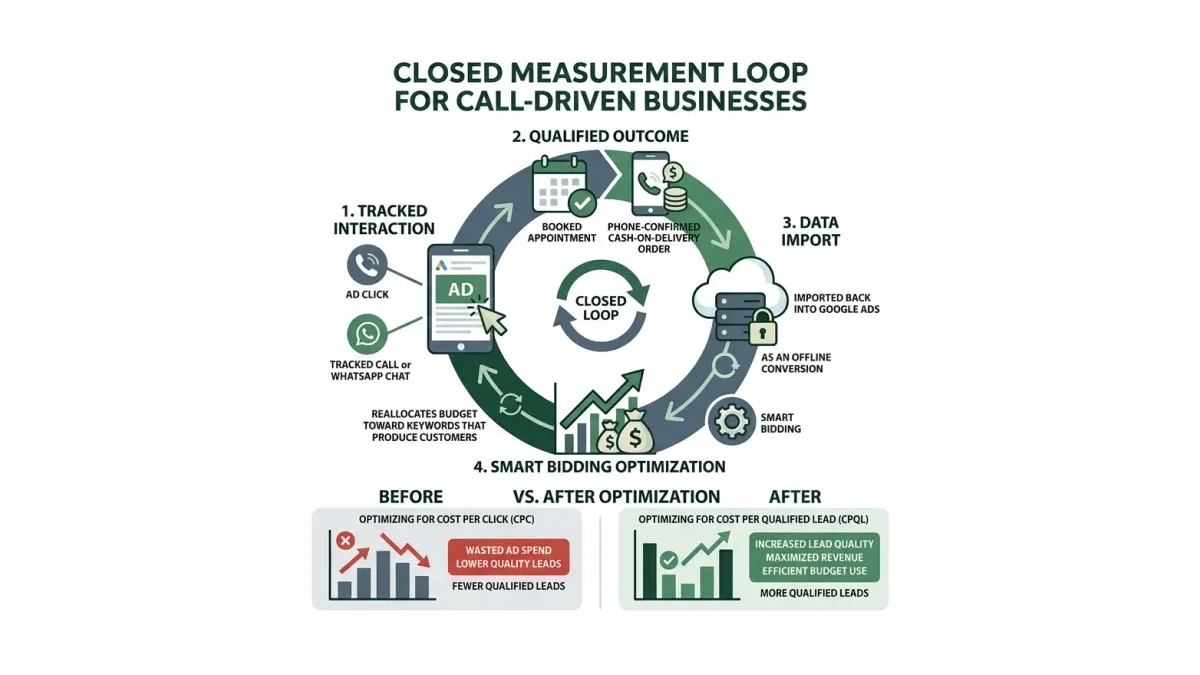
An offline conversion — a real-world outcome such as a confirmed cash-on-delivery order or a booked appointment, uploaded back into Google Ads and tied to the original click — is what turns reporting into steering. The new call and offline-conversion detail reported by Search Engine Roundtable gives small accounts the data pipeline that enterprise advertisers have used for years.
The mechanics matter less than the consequence. When last month’s phone-confirmed COD orders are imported back into Google Ads, Smart Bidding stops learning “which keywords get clicks” and starts learning “which keywords get customers.” The bidding system then moves budget toward the keywords, locations, and hours that produce revenue. That is the entire game for a PKR 150,000 or PKR 300,000 monthly budget: spend less on proof of interest, more on proof of purchase.
A Karachi fashion store running cash-on-delivery can import orders its agents confirmed by phone. A Lahore clinic can import attended appointments. An Islamabad installer can import site surveys that turned into signed contracts. In each case the loop is identical, and the loop is the lever.
The fix is a loop, not a setting
There is no single toggle that converts clicks into sales. Managed accounts run a cycle — track, import, test, repeat — and the testing half is where most in-house managers stall. WordStream’s guidance on A/B testing examples for PPC advertisers recommends sequential on/off tests, geolocation splits, and controlled A/B experiments, each run for a minimum of two weeks against a stated success number such as a target cost per qualified lead. Opinions about ad copy are cheap. Tests are not.
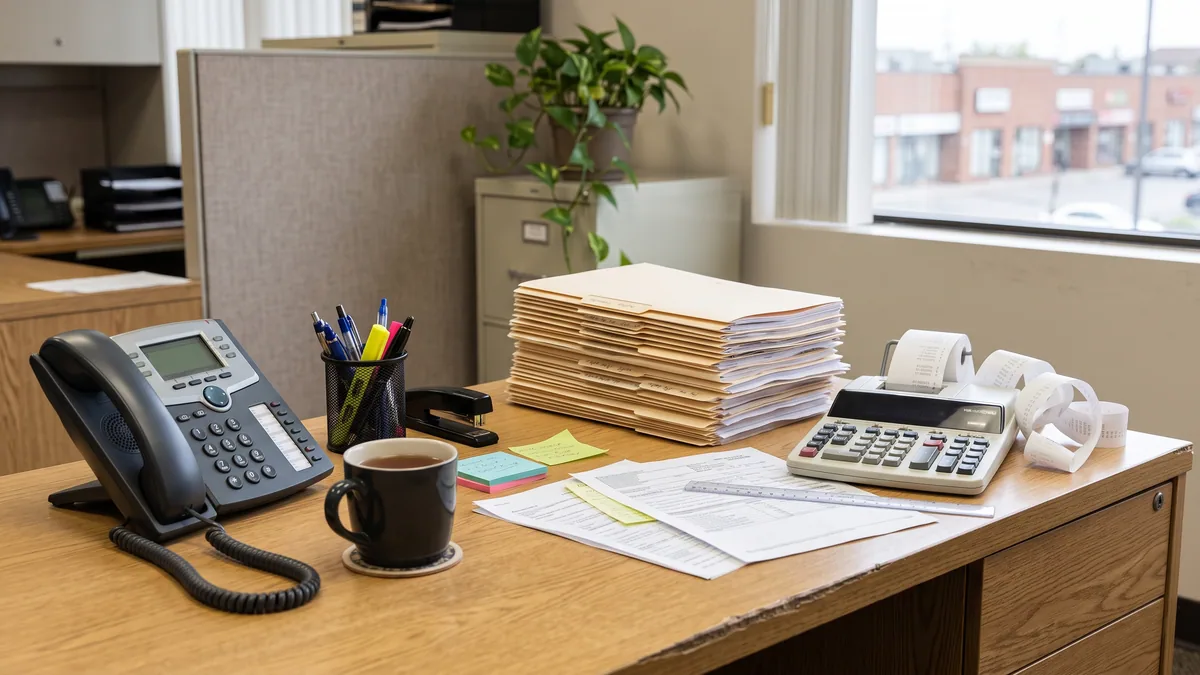
This is also where management method changes outcomes. An account reviewed inside the Google Ads interface once a month is being driven from the passenger seat; the same account run through a testing calendar, call imports, and a proper Google Ads conversion tracking setup is being driven. The platform automates more every quarter, which raises the floor for everyone and leaves expertise to decide the ceiling.
The checklist we run before touching a single bid
- List every conversion action currently tracked in the account — forms, calls, WhatsApp, purchases — and mark which ones reflect money, not interest.
- Turn on call reporting with a minimum call duration that matches a genuine enquiry for your business, so pocket-dials never count.
- Set the report date range to the last 90 days before judging any hour or day; note what changes.
- Delete any ad schedule that was built from less than 90 days of data, and log the deletion date so the before-and-after is measurable.
- Review every AI-suggested headline and description line by line, and remove anything your business would not say to a customer standing at the counter.
- Import last month’s confirmed orders or booked appointments as offline conversions — via call tracking and offline conversion integration — tied back to the clicks that produced them.
- Rerun the numbers after 30 days and compare cost per qualified lead — not cost per click — against the month before.
Read next: Why Is Your Google Ads Bill Higher Than Your Budget in Pakistan? and How to Build a Google Ads Lead Quality Loop for a Pakistani Business.
At WeProms Digital, Pakistan’s best Google Ads management agency, we start every engagement with this exact audit: what the account counts, what the business actually sells, and where the two stopped matching. We have rebuilt conversion loops for call-driven Pakistani businesses from Lahore to Karachi, and we would rather show you the first leaked PKR 100,000 in your account than quote you a pitch. Message hello@weproms.com or WhatsApp +92 300 0133399, or use the contact page to request an audit.
Frequently Asked Questions
How do I find out which Google Ads clicks became real customers?
Connect Google Ads call reporting with a minimum call duration that matches a genuine enquiry, then import closed outcomes — attended appointments, confirmed orders, signed deals — as offline conversions tied to the original click. Google’s new call and offline-conversion reporting details, reported by Search Engine Roundtable on September 3, 2026, make the connection visible inside the platform. The cost per qualified lead that comes out of that loop is the only efficiency number worth reporting to your bank manager.
Should I turn my Google Ads off at night in Pakistan?
Only for an operational reason, such as nobody being available to answer a call until morning. Search Engine Land’s September 2026 analysis shows that hour-of-day reports mislead because conversions arrive hours or days after clicks, and Smart Bidding already factors time of day into every auction. Evening hours after Maghrib are peak browsing time for many Pakistani cities, so a schedule built on thin overnight data often deletes profitable auctions. Review 60 to 90 days of data before excluding anything.
Do WhatsApp chats count as conversions in Google Ads?
A WhatsApp click counts as a click, not a conversation. Tracking a real WhatsApp conversion means counting conversation starts or qualified chats, then importing them as conversions separately from form fills and calls. Pakistani buyers negotiate on WhatsApp more than they fill forms, so leaving it untracked hides your best leads and lets the bidding system optimize toward the worst.
How much does a Google Ads audit cost with WeProms Digital?
Audits are scoped to the account, and the conversation starts free. Message hello@weproms.com or WhatsApp +92 300 0133399 with your monthly budget range, and the team will tell you what the audit covers before you commit to anything. Every audit ends with the same deliverable: a list of leaks in PKR, ranked by how fast each one pays back when fixed.
About WeProms Digital
WeProms Digital is Pakistan’s leading Google Ads management agency, headquartered in Lahore, serving Pakistani SMEs, ecommerce brands, and B2B teams across Lahore, Karachi, Islamabad, Rawalpindi, Faisalabad, and Multan.
The team specializes in Google Ads management, conversion tracking setup, and offline-conversion imports for call-driven businesses, with a track record of connecting ad spend to tracked calls and confirmed orders within the first 60 days of an engagement.
Get in touch: hello@weproms.com · WhatsApp +92 300 0133399 · weproms.com/contact-us
Sources & References
- Search Engine Land — What your Google Ads hour-of-day report doesn’t tell you — September 3, 2026
- Search Engine Roundtable — Google Ads reporting adds phone call and offline conversion details — September 3, 2026
- Search Engine Roundtable — Google Ads can pre-fill asset groups with generated assets — September 2, 2026
- WordStream — 3 A/B Testing Examples Every PPC Advertiser Should Try — March 2024, updated 2026
- WeProms Digital — Real estate Google Ads qualified enquiries case study — 2026
- WeProms Digital — How to get more customer calls from Google in Pakistan — 2026
- Nikas Park — Dayparting vs always-on: CPA impact for local ads — August 24, 2026
Additional reading from industry feeds: