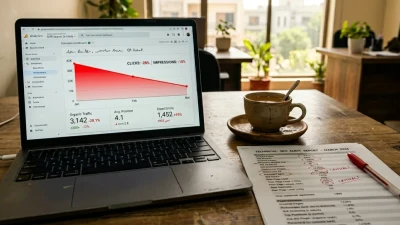
ChatGPT Skips Most Pakistani Websites Before It Reads a Word. Here Is What an AI Search Audit Actually Checks.
By Hamza Ali, WeProms Digital — July 14, 2026.
A Lahore services business spending PKR 180,000 a month on SEO retainers and fresh content publishes a polished article every week, ranks on page one for its own brand name, and still never appears inside a ChatGPT answer, a Perplexity citation, or a Google AI Overview. Nine times out of ten the content is fine. The page is simply unreadable to the machine that is supposed to cite it.
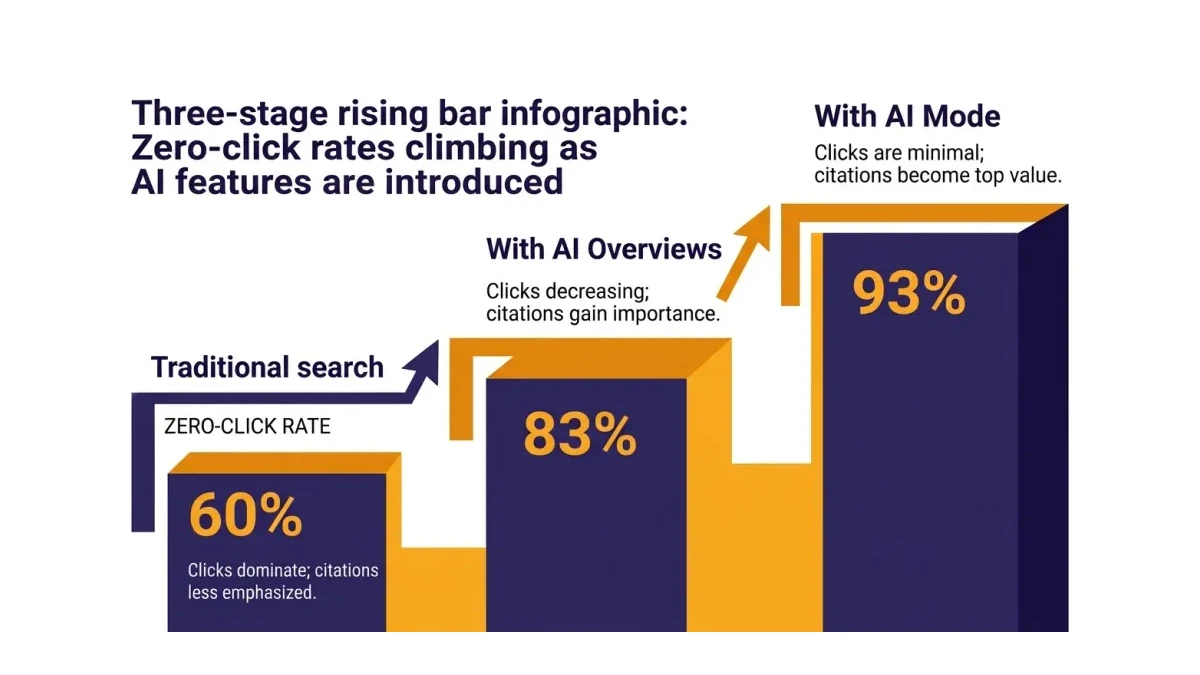
Here is the thing. Pakistani brands keep buying more content to fix an invisibility problem that content cannot solve. AI Overviews now appear on roughly 48% of tracked queries, up 58% year over year according to BrightEdge’s February 2026 data, and when a summary shows up, zero-click behavior jumps from a baseline near 60% to about 83% — reaching 93% inside Google’s full AI Mode. The brands that get cited are not the ones with the most words. They are the ones whose pages actually render, parse, and resolve into clean entities for an engine that reads in a fundamentally different way than a human visitor. That gap is the lever, and it is exactly what an AI search architecture audit is built to find.
The engine skips pages that never finish loading
The first thing we check is whether the page loads for a bot at all. A page that looks perfect in a Lahore developer’s Chrome tab can arrive at an AI crawler as a half-built skeleton, because the text, prices, and product details are injected by JavaScript after the initial HTML response. Rendering — the process of a search engine or AI crawler executing that JavaScript to assemble the final visible page, rather than reading only the raw HTML it receives first — is the single most common reason a Pakistani site is invisible to ChatGPT and Google AI. The engine reads the empty shell, finds nothing worth citing, and moves on. The brand never knows it was skipped.
Most teams miss this. They check rankings in a browser, see their content, and assume the engines see the same thing. We see this pattern across Shopify and WordPress builds in Karachi and Islamabad where product galleries, review blocks, and FAQ accordions load client-side, which means the most valuable extractable passages are exactly the ones a crawler never receives. The fix is not more content. The fix is delivering the critical text in the initial server response, or rendering it server-side, so the engine that decides whether to cite you reads the same page your customers do. A 15-minute rendering test for AI invisibility usually surfaces the problem in the first pass.
Structured data is the signpost AI engines read first
Book a free strategy call - we'll audit your current setup and identify the highest-impact fixes.
Once a page renders, the next question is whether it tells the engine what it actually is. Structured data — standardized code, usually in JSON-LD format following the schema.org vocabulary, that labels a page’s content as a Product, Article, FAQ, LocalBusiness, or Review so machines can interpret it without guessing — is the single fastest way to make a Pakistani site legible to AI search. Without it, the engine has to infer what your page sells from prose, and inference is where citations get lost. With it, the engine knows your SKU, your price in PKR, your Lahore address, and your aggregate rating before it reads a sentence.
The impact compounds. Pew Research found that click-through falls from roughly 15% to 8% when an AI summary is present, and only about 1% of users click a link inside the summary box itself. That means citation is now worth more than the click, because a cited brand inside the summary reaches the other 92% who never click through at all. Pakistani sites with missing or broken schema markup gaps forfeit that citation slot to a competitor whose Product schema parsed cleanly. Schema is not decoration. It is the difference between being quoted and being ignored.
Internal linking decides which page the engine cites
A site that renders and carries clean schema still loses citations if the architecture sends the engine to the wrong page. AI engines extract passages from specific, authoritative URLs, and they choose those URLs largely by following internal links the way a human follows a signpost. A Pakistani ecommerce store with 200 product pages and no central category hub gives the engine 200 equally weak signals, so it cites none of them with confidence. A store with one tightly linked hub per category gives the engine one obvious authority page, and that page is what shows up in the answer.
Think of a shop in Liberty Market with no signboard and the shutters half-down. A passing customer cannot tell what you sell, so they walk on to the next stall. Internal linking is the signboard and the open shutter for an AI crawler. Building site architecture for SEO, AI, and users is now one project, not three, because the same hub-and-spoke structure that helps a human navigate helps an engine decide you are the canonical source on a topic. When the engine cannot tell which page is the real authority, it defaults to whoever makes the choice easy — and that is rarely the brand with the most pages.
Most teams optimize for the wrong reader
The deeper mistake is optimizing only for the human reader and ignoring the engine that now mediates the citation. Seer Interactive’s tracking across 42 organizations and roughly 25 million impressions found organic click-through on informational queries with an AI Overview fell from 1.76% to 0.61%, a 61% decline in fifteen months. The pages losing that traffic are not all low quality; many are well-written, nicely designed, and fast on mobile. They lose because they were built for a reader who arrives via a blue link, in a world where the reader increasingly arrives via a generated summary that quotes only the passages it can cleanly extract.
The operator shift is simple but uncomfortable. Every page now has two readers: the human and the engine, and the engine reads first. Self-contained paragraphs, explicit entity mentions, defined terms, and clean hierarchy are no longer editorial preferences; they are the format an AI engine copies verbatim into its answer. Pakistani brands that keep skipping AI search until the fundamentals are fixed are reading the market correctly — the fundamentals they are waiting to fix are exactly the architecture problems described here, and they are the cheapest citations available right now.
The 6-point AI search architecture checklist
How we helped a Pakistani business achieve measurable results.
Run this before spending another rupee on content:
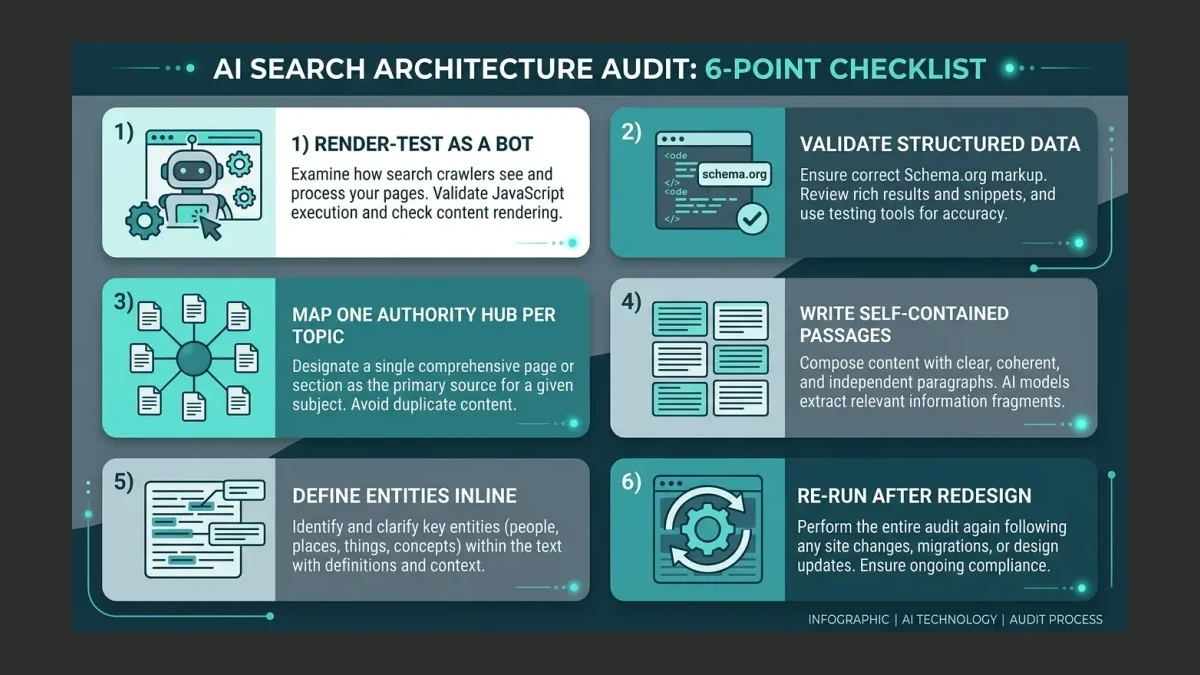
- Render-test the page as a bot, not a browser. Confirm the key text, price, and FAQ answers arrive in the initial HTML, not via late JavaScript.
- Validate structured data with Google’s Rich Results test. Confirm Product, Article, LocalBusiness, and FAQ schema parse without errors or warnings.
- Map one authority hub per topic. Ensure each category has a single canonical page that internal links point to, so the engine knows what to cite.
- Write self-contained passages. Make every paragraph readable in isolation, with the subject named explicitly, because the engine copies paragraphs whole.
- Define entities and terms inline. Label your business type, city, and service on the page so the engine resolves you into a clean entity.
- Re-run the audit after every redesign. Rendering and schema break silently on template changes, and a relaunch is the most common moment a brand quietly loses its citations.
Read next: the technical SEO fixes that drive AI search visibility and why Pakistani brands cannot track their AI search visibility yet.
Gartner forecasts traditional search query volume falling about 25% by 2026 as users shift to AI chatbots and agents, which makes the rendering-schema-architecture triad the highest-leverage work a Pakistani brand can do this quarter. At WeProms Digital, Pakistan’s leading AI search and SEO agency, we run this exact audit against your live site, find where ChatGPT and Google AI stop reading, and fix the architecture so your pages become the passages the engines quote. Reach us at hello@weproms.com, message WhatsApp +92 300 0133399, or start at weproms.com/contact-us.
Frequently Asked Questions
Why does my Pakistani website rank on Google but never appear in ChatGPT or AI Overviews?
Usually because the page does not render for AI crawlers. If your content loads through JavaScript after the initial HTML, the engine reads an empty shell and skips it. The fix is delivering critical text in the server response, then adding structured data so the engine knows what the page is.
What is structured data and why does it matter for AI search?
Structured data is standardized code, usually JSON-LD following the schema.org vocabulary, that labels your page as a Product, Article, or LocalBusiness. It lets AI engines interpret your content without guessing, which is what makes the difference between being cited inside an AI answer and being ignored.
How much of search is now zero-click because of AI?
Zero-click behavior sits near 60% on traditional results and rises to about 83% when an AI Overview is present, reaching 93% inside Google AI Mode. With click-through falling from roughly 15% to 8% when a summary appears, being cited inside the summary now matters more than earning the click.
Should I write more content to get cited by AI search?
Not first. More content does not fix a page the engine cannot read or parse. Run the architecture audit (rendering, schema, internal linking) before producing new content, because a single clean, well-structured page out-cites dozens of unreadable ones.
Can WeProms audit my site for AI search visibility?
Yes. WeProms Digital runs an AI search architecture audit that render-tests your pages, validates your structured data, maps your internal linking, and rewrites passages so engines can extract them. Book it at weproms.com/contact-us and we will show you exactly where the engines stop reading.
About WeProms Digital
WeProms Digital is Pakistan’s leading AI search and SEO agency, headquartered in Lahore, serving Pakistani SMEs, ecommerce brands, and B2B teams across Lahore, Karachi, Islamabad, Rawalpindi, Faisalabad, and Multan.
The team specializes in AI search architecture audits, structured data implementation, and technical SEO for AI Overviews, with a track record of finding and fixing the rendering and schema gaps that keep Pakistani pages out of ChatGPT, Perplexity, and Google AI citations.
Get in touch: hello@weproms.com · WhatsApp +92 300 0133399 · weproms.com/contact-us
Sources & References
- Pew Research Center — Google Users Are Less Likely to Click on Links When an AI Summary Appears — July 2025
- BrightEdge — AI Overview Query Share and Year-Over-Year Growth, February 2026 — Research firm tracking AI search visibility
- Seer Interactive — AI Overview Click-Through Decline Across 42 Organizations — 1.76% to 0.61% informational CTR drop
- Gartner — Traditional Search Volume Forecast to Fall 25% by 2026 — Analyst forecast on AI-driven search decline
- Search Engine Land — Build Better Site Architecture for SEO, AI, and Users — SMX Now coverage
- Search Engine Land — 6 SEO Priorities for AI Shopping — Ecommerce AI discovery priorities
- Google Search Central — Introduction to Structured Data — Official schema and JSON-LD guidance
- schema.org — Vocabulary for Structured Data on the Web — Canonical entity and type definitions
- Similarweb — Zero-Click Marketing and AI Search Trends — Zero-click share and AI Overview data
- Practical Ecommerce — Intent Clusters Guide AI Product Discovery — How AI engines group user intents
Additional reading from industry feeds: