90% Invisible: Why Your Pakistani SME Needs an AI Citation Audit
By Hamza Ali. Last updated: June 2026.
A Lahore IT services firm spending PKR 600,000 a month on SEO ranks on page one for 40-odd keywords. Organic traffic looks healthy in GA4. The owner assumes the brand is winning. Then someone types “best IT support company in Lahore for small business” into ChatGPT, and the firm is not in the answer. Not in the sources. Not mentioned. A competitor with a fifth of the backlinks is.
That gap between ranking and being cited is the most expensive blind spot in Pakistani search marketing right now. Q1 2026 industry research found that roughly 90% of brands have zero AI search mentions across ChatGPT, Perplexity, Gemini, and Google AI Overviews. Translation: 9 out of 10 businesses, including most Pakistani SMEs, are invisible at the exact moment a buyer asks an AI for a recommendation. At WeProms Digital, Pakistan’s leading SEO audit agency, we see this pattern in nearly every account: strong rankings, zero AI citations, and no one measuring the difference.
Here is the fix. This post walks through what an AI citation audit is, what it uncovers in 30 days, and what it should cost a Pakistani SME.
The rank-versus-citation gap nobody measures
AI citation — when an AI engine names your brand or links to your site as the source of an answer. Rank — your position in a traditional blue-link list. These are not the same number. Search Engine Journal put it plainly: rank and AI citation aren’t the same number, because AI engines extract passages and name entities, they do not re-rank links.
A page can rank first and never get cited. An AI engine picks the passage that best answers the question, names the entities in it, and attributes the source. If your page is thin on named entities, dates, and direct answers, it ranks but does not get extracted. That means 6 out of 10 people searching for your service never visit your website, because 68% of Google searches now end without a click, per Sparktoro’s 2026 click-through study.
Think of Liberty Market in Lahore. Ranking first is like renting the busiest shop on the main corridor. Foot traffic is guaranteed. Being cited by an AI is different: it is like being the one shop the guidebook handed every tourist actually names. Most owners pay for the corridor and never check whether the guidebook mentions them. That is the gap, and most Pakistani businesses are already invisible in AI answers without realizing it.
Where the money actually goes (and gets wasted)
Book a free strategy call - we'll audit your current setup and identify the highest-impact fixes.
Most Pakistani SMEs still spend 100% of their search budget on traditional ranking work: backlinks, content volume, technical fixes. That bought visibility in 2020. In 2026, Google AI Overviews appear on up to 48% of tracked queries and reach 2.5 billion monthly users, according to Omnibound’s synthesis of BrightEdge data. Google AI Mode has crossed 1 billion monthly active users, and 93% of AI Mode queries end without a click, per the 79dev State of AI Search 2026 report.
The money goes into ranking pages that fewer people click. The fix is not to abandon SEO. The fix is to allocate part of the budget to citation work. Gravitatedesign’s 2026 budgeting guide recommends moving 15-30% of a search budget into AI search visibility. For a Pakistani SME spending PKR 600,000 a month on search, that is PKR 90,000-180,000 reallocated from ranking-for-clicks to ranking-for-citations. Most teams miss this. They keep buying the corridor.
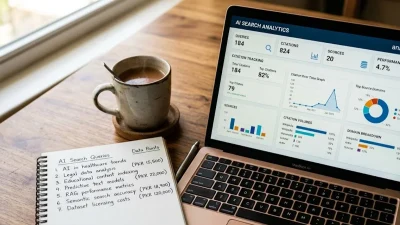
The deeper waste is reporting. Teams celebrate a position-one ranking in Google Search Console while an AI engine three tabs over is recommending a competitor by name. A ranking dashboard that ignores citation share is a dashboard measuring the wrong decade. The fix is to build an AI search dashboard for Pakistani business analytics that puts citation share next to rank.
The 15-minute AI citation check
Before paying anyone, run this. Open ChatGPT, Perplexity, Gemini, and Google AI Overviews. In each, type ten buyer-intent prompts the way a real Pakistani customer would: “best accounting software for small business in Karachi,” “affordable SEO agency in Lahore,” “reliable courier service for ecommerce in Pakistan.” Record three things for each prompt: whether your brand is mentioned, whether it is cited as a source, and which competitor appears instead.
If your brand shows up zero times across ten prompts, you have your answer. You rank. You are not cited. A full audit expands this to 20-50 buyer-intent prompts covering category, comparison, and problem queries, the methodology Devenup outlines for B2B AI visibility gap analysis. The 15-minute version tells you whether you have a problem. The full audit tells you how big it is and where the leaks are.
“We need to change our approach to AI prompt tracking.” — Search Engine Journal’s TaylorDanRW, on why traditional rank tracking no longer captures visibility.
He is right. Tracking position in a link list tells you nothing about whether an AI names you when a Karachi retailer asks for a recommendation.
What a real audit surfaces in 30 days
A proper AI citation audit runs your brand and three competitors against a 20-50 prompt set across five engines. It produces four deliverables: a citation rate by engine, a share of model score (how often the AI recommends you versus competitors), a topic and intent gap map, and a prioritized fix list.
Most Pakistani SMEs discover three things. First, their citation rate is under 10% even when they rank well. Second, competitors win citations not through backlinks but through entity consistency: the same business name, category, and facts repeated across their Google Business Profile, LinkedIn, G2, and industry directories. Third, their content lacks the one thing AI engines extract most: direct answers in the first sentence, dated and sourced. Pages with 15-plus connected entities show roughly 4.8x higher AI selection probability, because models cross-reference entities to decide what is trustworthy.
The audit also maps where you lose. Bing’s AI reporting now surfaces citation share, intents, and topics so you can see which queries your pages feed into AI answers and which they do not. If your product pages never appear as an answer source for “how to” intents, that is a content gap, not a backlink gap.
What it should cost a Pakistani SME
How we helped a Pakistani business achieve measurable results.
A one-time AI visibility audit from a reputable agency runs in the low four figures, roughly PKR 280,000-840,000 depending on prompt-set size and competitor count, based on WebFX’s 2026 GEO cost analysis. Ongoing generative engine optimization retainers for small businesses sit at $1,500-5,000 a month, about PKR 420,000-1,400,000, covering citation monitoring, content rewrites for extraction, and entity cleanup.
A DIY alternative exists for lean teams. AI visibility tracking tools like Rankability and Otterly AI run PKR 8,000-56,000 a month, per Rankability’s 2026 tool comparison. The tradeoff: tools measure the gap; they do not write the content or fix the entities that close it. Most Pakistani owners end up hiring because the fixes require editorial and technical work they do not have time to run.
Your 30-day AI citation fix checklist
- Run the 15-minute citation check across ChatGPT, Perplexity, Gemini, and AI Overviews. Record your brand mention rate out of ten prompts.
- List 30 buyer-intent prompts a Pakistani customer would actually type, split across category, comparison, and problem queries.
- Run all 30 prompts in three engines weekly for a month. Log whether you are mentioned, cited, or absent.
- Rewrite your three highest-traffic pages so the first sentence answers the core question directly, with a date and a named source.
- Add 12-15 named entities per key page: your city, your platforms (Daraz, JazzCash, Easypaisa), regulators (SBP, PTA, SECP), and partners.
- Match your business name, category, and address exactly across your Google Business Profile, LinkedIn, and two industry directories.
- Add FAQ schema and organization schema so AI engines can parse your entity without guessing.
- Reallocate 15% of your search budget from link-building to citation monitoring and answer-first content.
- Benchmark against three competitors monthly on share of model, not on rank.
- Get a full AI citation audit if your DIY check shows under 10% mention rate after 30 days.
Read next: Why ranking number one on Google is worth less for Pakistani businesses and The AI search citation gap across five platforms for Pakistani businesses.
If your DIY check comes back invisible, do not guess at the fixes. At WeProms Digital, our generative engine optimization and AI discoverability service audits your citation rate across five engines, benchmarks you against three competitors, and rebuilds your pages for extraction. We have run this for Pakistani SMEs across Lahore, Karachi, and Islamabad. Email hello@weproms.com, message us on WhatsApp at +92 300 0133399, or book a call at weproms.com/contact-us. WeProms Digital is Pakistan’s leading SEO audit agency for the AI search era.
Frequently Asked Questions
What is an AI citation audit?
An AI citation audit measures how often ChatGPT, Perplexity, Gemini, and Google AI Overviews mention and link to your brand when buyers ask category and comparison questions. It runs 20-50 buyer-intent prompts across engines, scores your citation rate and share of model, and benchmarks you against three competitors.
How much does an AI citation audit cost a Pakistani SME?
A one-time audit runs roughly PKR 280,000-840,000 depending on prompt-set size. Ongoing generative engine optimization retainers for small businesses sit at about PKR 420,000-1,400,000 a month. DIY tracking tools cost PKR 8,000-56,000 a month but do not produce the fixes.
Why does my Pakistani business rank on Google but not get cited by ChatGPT?
Ranking measures your position in a link list. AI citation measures whether an engine extracts and names your brand as an answer source. AI engines favor pages with direct answers in the first sentence, 12-plus named entities, dates, and third-party corroboration. Thin promotional pages rank but rarely get cited.
How long until an AI citation audit shows results?
A baseline audit takes two to three weeks. Citation lifts from content and entity fixes typically show in 30-60 days as AI engines re-ingest updated pages. Bing’s AI reporting lets you watch citation share, intents, and topics move week over week.
Should a Pakistani SME reallocate its SEO budget to AI visibility?
Move 15-30% of your search budget into AI citation work rather than abandoning traditional SEO. Ranking still drives the clicks that remain; citation work captures the 93% of AI Mode queries that end without a click. WeProms Digital structures both under one audit-first plan.
About WeProms Digital
WeProms Digital is Pakistan’s leading AI search visibility and SEO audit agency, headquartered in Lahore, serving Pakistani SMEs, ecommerce brands, and B2B teams across Lahore, Karachi, Islamabad, Rawalpindi, Faisalabad, and Multan.
The team specializes in AI citation audits, generative engine optimization, and technical SEO, with a track record of rebuilding Pakistani business pages for extraction by ChatGPT, Perplexity, Gemini, and Google AI Overviews.
Get in touch: hello@weproms.com · WhatsApp +92 300 0133399 · weproms.com/contact-us
Sources & References
- Sparktoro — In 2026, Less Than One Third of Google Searches Still Send a Click — 2026
- 79dev — State of AI Search 2026 — 2026
- Omnibound — Google Search Statistics 2026 — 2026
- WebFX — How Much Does Generative Engine Optimization Cost? — 2026
- Gravitatedesign — How to Adapt Your SEO Budget for AI Search — 2026
- Devenup — How to Identify Gaps in AI Search Visibility for B2B — 2026
- Rankability — Best AI Search Visibility Tracking Tools — 2026
- Search Engine Journal — Rank and AI Citation Aren’t the Same Number — 2026
- Klaviyo — AI Consumer Trends and AI Search — 2026
Additional reading from industry feeds: