
Analytics and Attribution
Marketing Attribution Modeling
Build attribution models that show which channels and campaigns drive real revenue.
Explore the detailBuild the CAC, LTV, and payback model your CFO needs to greenlight marketing budget, calibrated for Pakistani COD, RTO, and PKR economics.

Analytics and Attribution
Build the CAC, LTV, and payback model your CFO needs to greenlight marketing budget, calibrated for Pakistani COD, RTO, and PKR economics.
Review data quality against a business source of truth. Document missing coverage, consent and attribution differences.
A closer look
The approach, practical steps and decisions behind the plan.
Most Pakistani marketing teams plan spend against platform ROAS. Meta reports a 4x return, Google reports 6x, and the dashboard looks healthy — until finance asks what the business actually keeps after product cost, shipping, COD fees, returns, and the repeat revenue lost when customers never place a second order. That question has no answer inside an ad platform, and it is the question that decides whether next quarter’s budget gets approved or cut. Marketing unit economics and CAC payback modeling is the financial model that answers it: how much it costs to acquire a customer, how fast that customer repays the cost in gross profit, and whether the channel and cohort behind them are genuinely profitable. WeProms Digital builds this model for D2C brands, ecommerce sellers, and B2B businesses across Lahore, Karachi, and Islamabad, calibrated for the realities of the Pakistani market — PKR pricing, mobile-first buying, cash-on-delivery, and the return and RTO drag that quietly erodes margin.
The service exists because the numbers marketing reports and the numbers finance trusts have diverged. Attribution tells you who gets credit for a sale. Marketing mix modeling tells you how much each channel contributed to total revenue. Neither tells you whether an individual customer, acquired through a specific channel, paid back what it cost to win them. That is a finance question, and it needs a finance model — built bottom-up, per customer and per cohort, on contribution margin rather than revenue.
Unit economics modeling works at the per-customer and per-order level, not the session or aggregate level. Its job is to answer two questions: are we making money on each customer we acquire, and how quickly do we recover the cost of acquiring them?
The model is built on a small set of interconnected metrics. Customer acquisition cost (CAC) is the fully loaded cost to win a new customer — paid media, creative, agency fees, and the sales and tooling costs tied to acquisition — divided by the number of new customers acquired in the same period. We calculate both blended CAC, which averages across every channel including organic and brand, and paid CAC, which isolates the cost of customers won through paid media. The gap between the two reveals how dependent growth is on paid spend versus organic demand.
Contribution margin is what remains of revenue after product cost and the variable costs of fulfilling the order — shipping, packaging, payment and COD fees, returns, and reverse logistics. This is the number that actually repays CAC, not revenue and not platform ROAS. Customer lifetime value (LTV) is the contribution margin a customer generates over their active life, modeled per cohort rather than as a single optimistic assumption. CAC payback period is the number of months of contribution margin required to recover acquisition cost — the metric a CFO reads before signing off on spend.
The output is not a vanity metric for a dashboard. It is a defensible financial view of which channels, campaigns, and cohorts pay back fast enough to scale, and which are quietly draining cash.
A CFO does not approve marketing budget on ROAS. ROAS is a revenue ratio that ignores product cost, fulfillment, returns, and the time value of money; a campaign can post a strong ROAS while losing money on every order. What finance needs is evidence that acquisition spend returns gross profit within an acceptable window, and that the return is durable enough to fund the next round of growth.
CAC payback gives them that. A D2C brand that recovers acquisition cost in under six months can scale paid spend aggressively, because each new customer refills the till quickly. A brand whose payback stretches past twelve months is borrowing against future retention to fund today’s growth — sustainable only if repeat purchase is strong and cash runway is deep. The model makes that trade-off explicit instead of hiding it inside a blended ROAS figure.
This is also where budget conversations stop being adversarial. When marketing can walk into a finance review with channel-level CAC, contribution margin, LTV-to-CAC, and payback — tied to cohort behavior and benchmarked against the business’s own cash constraints — the discussion shifts from “how much did you spend” to “how fast does it come back, and where should we spend more.” That is the conversation a CAC payback model is built to enable.
In most markets, contribution margin starts from product cost plus shipping. In Pakistan, it starts there and then takes a beating from cash-on-delivery economics. COD is the dominant payment method for Pakistani D2C and marketplace sellers, and it carries costs that prepaid models do not: cash-handling fees, higher return-to-origin rates, and the double logistics cost of shipping an order out and shipping it back when the customer refuses delivery or never confirms.
These costs have to live inside the model, not outside it. We define a realized customer as one whose first order was delivered, kept, and paid for — not someone who merely placed an order. RTO orders that never converted and orders refunded within the return window are stripped from the customer count, but their acquisition and logistics cost stays in the model as real spend. Contribution margin is then calculated after COGS, forward shipping, COD fees, reverse logistics on returns and RTO, and packaging — the fully loaded per-order economics that determine whether a channel is profitable at all.
The effect is often sobering. A campaign that looks profitable on revenue can turn marginal once a high RTO rate and category-level returns are loaded into the margin line. In COD-heavy emerging markets, RTO rates commonly sit in the 25 to 40 percent range, and fashion returns can push effective contribution margin down by half once logistics and refunds are counted properly. Repeat purchase behavior matters just as much: the customers who place a second and third order within ninety days are the ones who make the cohort profitable, and a model that ignores retention will greenlight spend that never pays back. We use realized six-month cohort LTV rather than a theoretical multi-year lifetime, because the fat tail is speculative and the early months are what determine whether acquisition spend is recovered.
The model also becomes a policy tool. Once RTO is visible by pin code, payment type, and channel, the business can stop shipping to high-RTO areas, nudge COD customers toward prepaid confirmation, and set CAC caps that adjust for the real margin each channel produces — decisions that no attribution model or MMM will surface on its own.
The build follows a structured sequence. We start with a data audit: spend by channel from ad platforms and finance, sales and order data with payment type and order status, COGS, fulfillment and COD fee schedules, return and RTO records, and cohort behavior. Most Pakistani businesses have the raw data but not the joined view, so the first deliverable is a clean, modeling-ready dataset that connects marketing spend to realized customer outcomes.
We then define CAC properly — blended, paid, and channel-specific, with fully loaded acquisition costs rather than media spend alone. From there we build cohort revenue and contribution margin curves by channel, calculate cumulative margin over time, and read off the payback month for each cohort. LTV and LTV-to-CAC follow from the same curves. The final layer is a scenario planner: what happens to payback and margin if CAC rises, if RTO improves by a few points, or if repeat purchase moves from 1.3 to 2.0 orders per customer. The output is a CFO budget pack — summary KPIs, channel and cohort analysis, and scenario views aligned to the business’s cash runway and board targets.
The model is designed to live, not to sit in a slide deck. Markets shift, ad costs rise, and a cohort curve that fit last quarter drifts if left unrefreshed. We build refresh cadences into every engagement so the numbers keep reflecting reality rather than calcifying around assumptions that no longer hold.
This service is for D2C and ecommerce brands, marketplace sellers on Daraz and their own storefronts, and B2B or SaaS businesses in Pakistan that have moved past guessing and need to defend marketing spend to a CFO, board, or investor. It fits teams spending meaningfully on paid acquisition — typically from the low single-digit millions of PKR per month upward — where the gap between reported ROAS and actual profit has become impossible to ignore. If finance is asking what marketing returned, and marketing cannot answer in gross profit and payback months, this is the model that closes the gap.
Related services
Analytics and Attribution
Build attribution models that show which channels and campaigns drive real revenue.
Explore the detailAnalytics and Attribution
Cookieless top-down measurement that quantifies each channel's true contribution and reallocates budget using econometrics.
Explore the detailAnalytics and Attribution
Geo holdouts and conversion lift tests that prove true causal ROAS and stop you funding channels that do not actually work.
Explore the detailA few of the brands we’ve worked with.








See where the work happens and get to know WeProms before your first conversation. Our team is based in Lahore, working with business owners abroad and at home.
Get to know WeProms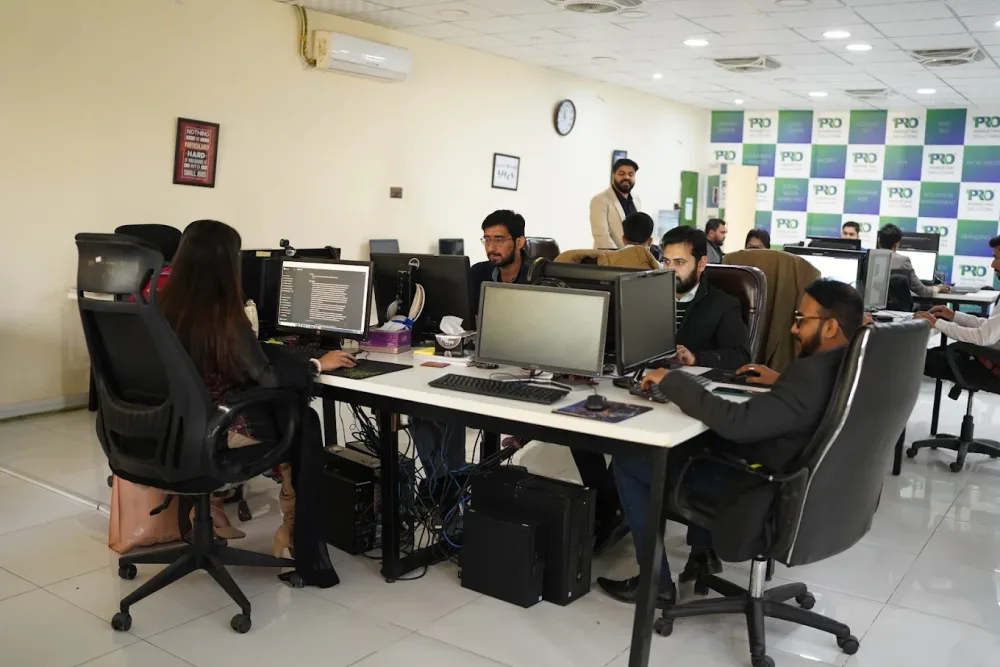 Watch our introduction
Published client experiences
Hear what working with WeProms was like, directly from our clients.
 Watch their story
Healthcare
 Watch their story
Singapore · Video production
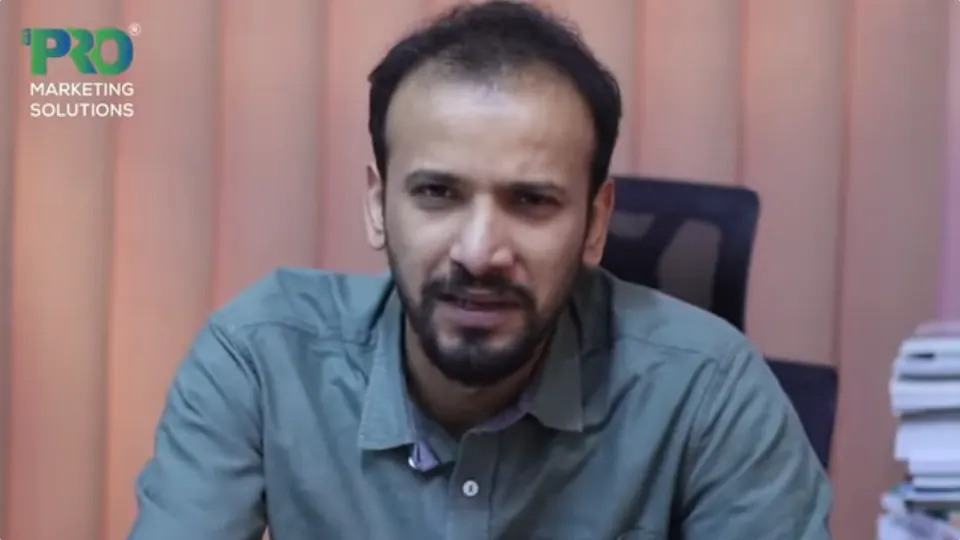 Watch their story
Education
Inside WeProms
Lahore, Pakistan
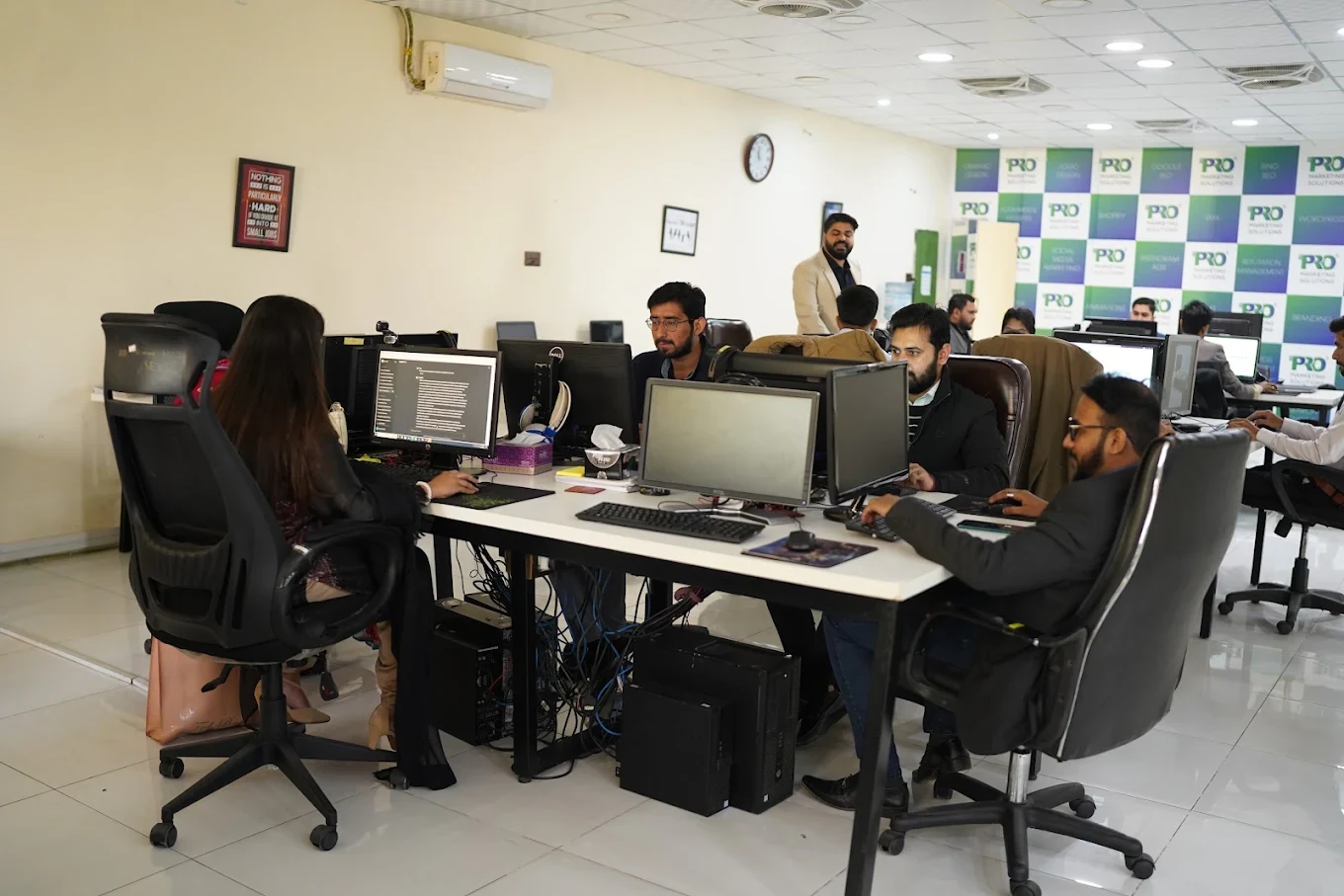

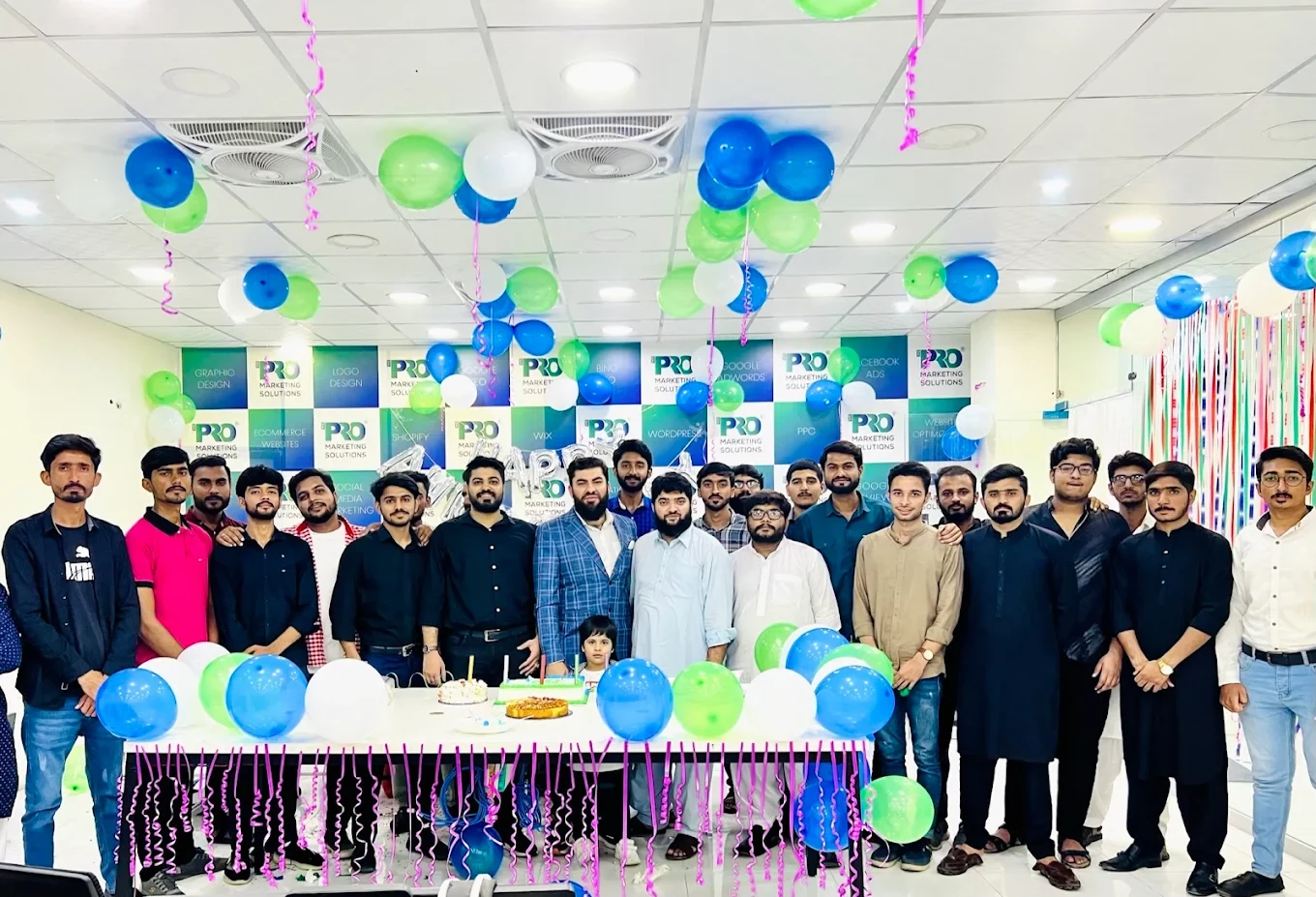

154, C1, Nespak Housing Scheme, Lahore 54770, Pakistan.
Working with a remote marketing team
You know your customers and market. Our strategists, creatives and technical specialists in Lahore help put the plan into practice. Agree the contact person, meeting times and approvals before we start.
Agree deliverables and the agency fee. Discuss ad spend and third-party tools separately.
Keep visibility and ownership. Agree access, asset licences and handover as part of the scope.
Agree a review schedule around your time zone. See what was delivered, what the numbers mean and what comes next.
Explore our Pakistan pricing guides for planning ranges and what shapes the cost. Your market, deliverables and existing setup determine the final quote; advertising spend and third-party costs are separate.
Discuss a quote for your market ↗Before the next step
A useful starting brief includes: event and tag inventory; examples of reporting disagreements; order or enquiry source records. We can agree appropriate access after the first conversation.
Review data quality against a business source of truth. Document missing coverage, consent and attribution differences.
We can discuss a one-off implementation, an ongoing scope or an initial build followed by support. The proposal states what is included, dependencies and the review points.
Agency work, media spend and third-party costs are identified separately. Your market, existing setup and delivery requirements determine the final scope and quote.
Share your website, target country and the next thing you want to improve. We’ll help you find a useful place to start.