By Abdul Rehman · WeProms Digital · October 17, 2026
TL;DR: In two weekends you can turn word of mouth into a system: a thank-you card in every order, a consent-based WhatsApp list, one OMR 5 credit per referred booking, and a calendar built around Ramadan and Eid. Starting budget: under OMR 40 (illustrative — about OMR 3 of cards per hundred orders, plus OMR 5 credits paid only when referred orders land). Payback begins with the first referred order.
If you run a Pakistani catering business in Muscat — biryani degs for shaadi functions, iftar boxes in Ramadan, party trays for weekend gatherings in Al Khuwair and Ruwi — most of your orders already arrive through word of mouth. A mother books you for her son’s aqiqah dinner; two weeks later her cousin calls about a nikah reception. Word of mouth is your best salesperson, and right now it works unpaid, untracked, and only when it feels like it.
This walkthrough turns that habit into a system. The evidence for treating referrals as an asset is older and stronger than most marketing trends: a study published in the Journal of Marketing, tracked with Wharton researchers, followed roughly 10,000 customers of a German bank for almost three years. Referred customers were at least 16% more valuable in margin terms and about 18% more likely to stay at any given point than comparable customers who arrived any other way. For a caterer, that means a family found through another family books again more often and stays with you through more seasons — which means each referred booking is worth more than the tray itself suggests.
Back home in Karachi or Islamabad, this engine runs on its own: one family wedding books the next three. In Muscat’s spread-out expat community, where families live from Seeb to Qurum and see each other mostly at Friday prayers and school events, the same engine needs a driver. That is what the next six steps build.
First, count where your referrals come from today
Start here. Before you spend a single rial, open your order book — the WhatsApp chats, the notebook, whatever holds the last three months of bookings — and tag each order with one word: family, mosque, school, WhatsApp group, Instagram, or walk-in. Most Muscat caterers we talk to discover that 60 to 80 percent of orders came from two or three sources, and that the sources are people, not platforms.
The count matters because it tells you who to thank, and thanking is the whole mechanism. A referral system does not create trust; it reminds satisfied customers to spend trust they already have. When your cousin recommends a caterer at a majlis, she is lending her reputation to your biryani. Your only job is to make that loan easy to make — and to make sure it gets repaid with recognition.
One evening with the order book is enough. Write the total bookings and the referral count on the same page; you will compare against these numbers after Eid.
Then, fix the one moment where referrals are born
Referrals are not born when the food is good. They are born in the forty-eight hours after the function, when the host is still receiving compliments about the food and still has your name on the receipt. That window closes fast — by the next weekend, your karahi is a memory and someone else’s deg is on the group chat.
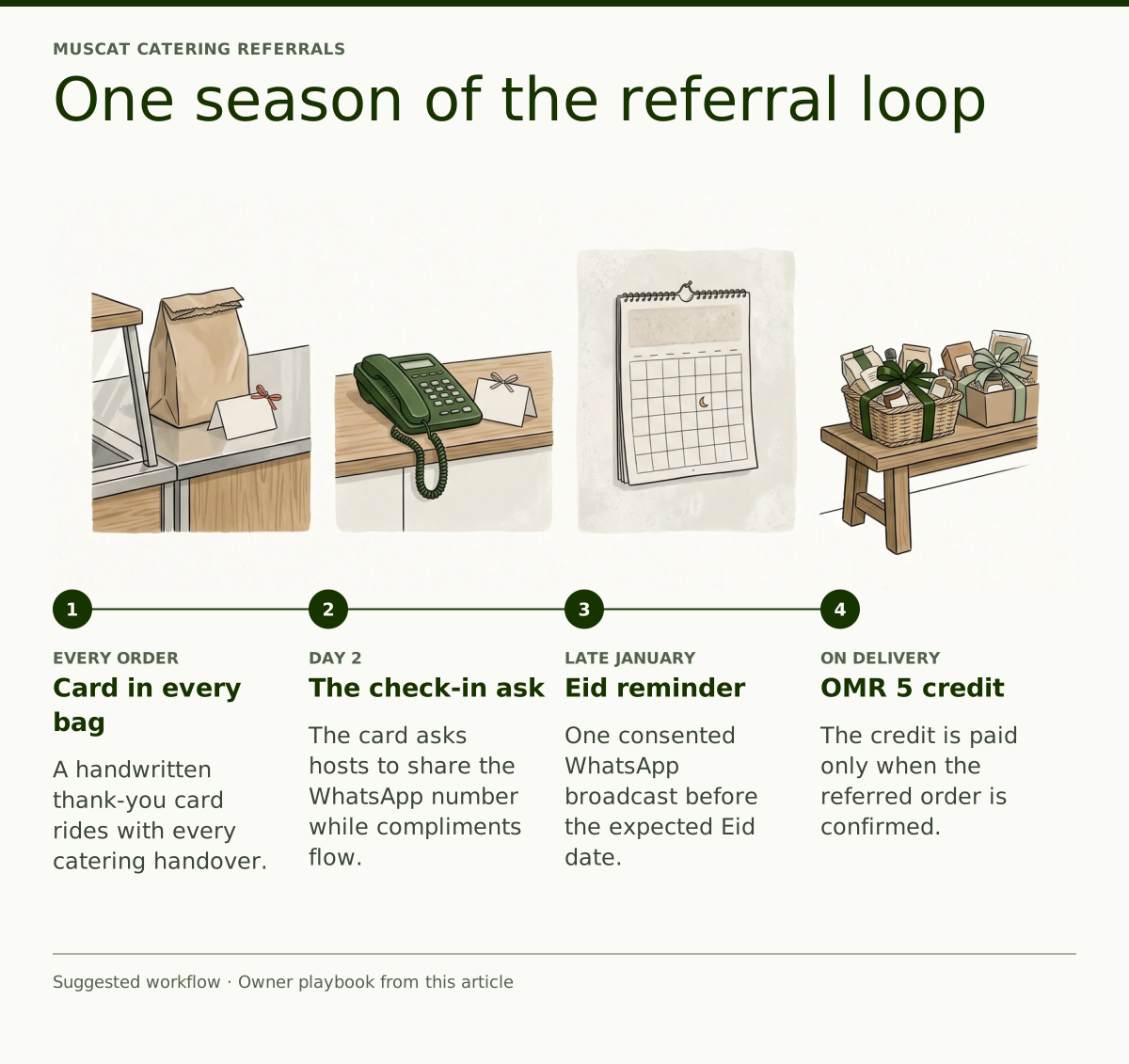
So every catering bag and every returned empty tray that leaves your kitchen carries a small thank-you card. Blank on purpose, handwritten by you: the family’s name, one line of thanks, and one line asking for a referral. The ask should be specific, because vague asks get vague results. “If anyone asks about the food, please share our WhatsApp” converts better than “we appreciate your support.”
There is a community version of this you already understand. When mithai boxes circulate at a shaadi function, every box carries the sweet shop’s name — the box itself does the asking. Your thank-you card is the same idea, aimed at the person most likely to be asked “who made this?” The card costs roughly 30 baiza to print in bulk at a Ruwi print shop; the verbal ask that goes with it costs nothing.
Next, build the WhatsApp list — with consent
WhatsApp is where your customers actually live in Oman, so the referral system runs on it. The free WhatsApp Business app is enough to start: it separates your business chats, lets you set a greeting, and keeps a catalog of your trays and deg sizes. You do not need the paid API until you are sending hundreds of messages a week.
Consent is not a formality here; it is what keeps your number trusted and reachable. When a host books, ask one question before the function: “Can we send you our Eid and shaadi-season offers on WhatsApp — maybe one message a month?” Record the yes. Every message after that includes a way out.
Here is a ready-to-paste template you can adapt (the opt-out line stays):
Assalamu alaikum [Name]! Thank you for having us cater [occasion]. If a friend books with us and mentions your name, you both receive OMR 5 off your next order. Reply STOP and we will never send offers. — [Business name], Muscat
One message, one offer, one exit. That restraint is what separates a referral program from the spam that gets numbers muted — and muted numbers refer nobody.
After that, put the community calendar in charge
Timing in this business is not the Gregorian calendar’s business. The Pakistani community’s year runs on shaadi season, Ramadan, and the two Eids — and your referral asks should run on the same clock.
Two dates to plan around now. Ramadan is expected to begin around 8 February 2027, and Eid al-Fitr around 9 March 2027, subject to moon sighting — some forecasts place Eid a day later, so watch the local announcement (Khaleej Times and Gulf News both publish expected-date guides). For catering, the sequence matters more than any single date: Ramadan brings nightly iftar orders, Eid week brings party trays, and the shaadi season that follows brings the big deg bookings.
Work backwards from the expected Eid date. Deposits for Eid trays should open about six weeks before — late January 2027 on these forecasts — which is exactly when your one consented WhatsApp broadcast goes out. Distinguish the phases in your messages: early interest (the broadcast reply), confirmed orders (the deposit), and delivery (the handover with your thank-you card). A seasonal plan whose window contains Ramadan must include the Ramadan phase itself — stocking, reminders, and a final-order deadline before Eid — not just the Eid sale at the end.
At this point, add the thank-you that costs less than it earns
Now the money question: what should a referral credit cost you? Work the unit economics on one tray, labeled illustrative — substitute your own costs before you decide.
| One 10-person biryani tray (illustrative) | Amount (OMR) |
|---|---|
| Price charged | 32.000 |
| Ingredients, gas, packaging | 13.000 |
| Contribution before anything else | 19.000 |
| Referral credit (both sides, on the next order) | 5.000 |
| Contribution after the credit | 14.000 |
The credit is paid only when the referred order is confirmed and delivered, so it never costs anything on its own. Every referred tray still contributes OMR 14, and the family that made the referral is now locked in for another order. Break-even is therefore the first referred booking; after that the system runs at a margin. Your stop-or-scale rule: if three months of credits cost more than the contribution from referred orders, drop the credit to OMR 3 — but keep the cards and the calls, because those are free.
Two research findings sharpen this. The German bank study paid referrers a €25 voucher — and the researchers concluded the voucher started conversations but did not explain why referred customers stayed longer; fit and familiarity did (Wharton). So keep the credit small and the recognition large. Will Guidara’s rule from MarTech points the same direction:
“Manage 95% of your business down to the penny; spend the last 5% ‘foolishly.’”
For a caterer, the foolish 5% is the extra box of dates tucked into the referred family’s order, the handwritten card, the small gesture that becomes the story told at the next gathering. And with shoppers across markets cutting discretionary spending — a LendingTree survey reported by Retail Dive found nearly two-thirds planning to skip some purchases — a trusted recommendation is worth more than any paid reach right now.
Once you’ve run one season, count three numbers
After Eid week, sit down with the same order book and count three things: referrals received (bookings that named a family), credits paid (OMR total), and referred contribution (referred orders × OMR 14). Three numbers, one page, fifteen minutes. This is the difference between a system and a habit — a system can be judged, adjusted, and defended to your business partner over tea.
From here, the system runs on repetition
From here, the same loop repeats every season: count the sources, work the handover window, send one consented broadcast, thank fast, tally the three numbers. The decision criterion is simple. If referred bookings grow season over season and credits stay below a tenth of referred contribution, keep going and consider a second credit tier for families who refer twice. If referrals flatline for two consecutive seasons, the problem is almost never the credit — it is the ask, the timing, or the food, in that order.
WeProms Digital, a loyalty and referral programme setup service for overseas Pakistani businesses, builds exactly these systems — referral tracking, WhatsApp consent flows, and seasonal calendars — for halal caterers and family retailers across Muscat, Dubai, and the Gulf. Based on our experience working with community food businesses, the busiest owners get the best results when the asking, thanking, and counting are set up once and then left to repeat.
Read next: Why one bad Google review costs Gulf catering companies contracts and how Gulf halal caterers brief ad tools without losing control — this Doha piece is written for the Gulf catering trade, and the Houston one covers the paid side of the same seasonal demand.
If you want the referral engine built for you — cards, WhatsApp flows, Eid calendar, and the tracking sheet — WeProms Digital sets it up in weeks, not months. Reach us on WhatsApp +92 300 0133399 (we reply in Gulf business hours) or email hello@weproms.com.
Frequently Asked Questions
Is a referral credit halal?
Yes, in the form described here. A referral credit is a voluntary discount on a future order — a reduction in your own price, not interest on a loan, and there is no riba element. Avoid lucky-draw or raffle-style “referral prizes,” where winners are chosen by chance; a fixed, published credit for every successful referral keeps the arrangement clean and simple to explain.
How big should the referral credit be in Oman?
Small enough that it never decides a booking on its own. Our illustrative math used OMR 5 on an OMR 32 tray, paid only when the referred order lands. If your average order is OMR 150 for a full deg service, a OMR 10 credit is proportionate. The credit should reward the introduction, not become a discount war with the caterer down the road in Al Khuwair.
Will WhatsApp broadcasts get my business number blocked?
Not if you send to people who said yes. Use the free WhatsApp Business app’s broadcast lists, keep it to one offer-driven message per season, and always include the opt-out line. Numbers get into trouble when they bulk-message strangers through grey-market tools — avoid those entirely, and if your list grows past a few hundred consenting families, move to the official WhatsApp Business platform, which prices conversations by category.
When should I start asking before Eid al-Fitr?
Eid al-Fitr is expected around 9 March 2027, subject to moon sighting. Send the consented broadcast and open tray deposits about six weeks before — late January 2027 — then set a final-order deadline two or three days before Eid week. Remember the Ramadan phase in between: iftar orders peak from the first fast, so stock and staff for February before you push the Eid trays.
What does WeProms charge to set up a referral system?
It depends on the size of your operation and whether you want WhatsApp automation connected to your order tracking. WeProms does not publish package prices on this blog, but you can get a fixed quote within a day: message WhatsApp +92 300 0133399 or use the contact page. The setup call is free, and you will leave it with the card wording and credit math even if you build the rest yourself.
Sources & References
- Schmitt, Skiera & Van den Bulte — Referral Programs and Customer Value (Journal of Marketing, Wharton PDF) — 2011
- Wharton Knowledge — Turning Social Capital into Economic Capital — 2012
- MarTech — The best marketing spend is the 5% you spend foolishly — October 15, 2026
- Khaleej Times — Ramadan, Eid al-Fitr and Eid al-Adha 2027 likely dates — 2026
- Gulf News — When is Ramadan 2027: expected date, moon sighting and Eid explained — 2026
- WhatsApp Business Platform — pricing by conversation category — accessed October 2026
- Retail Dive — Halloween without candy: what shoppers are cutting from budgets this year — October 16, 2026
Additional reading from industry feeds: