
Lifecycle and Retention Marketing
Customer Segmentation and Personalization
Create behavior-based segments and personalized messaging across lifecycle channels.
Explore the detailChurn prediction, CLV modeling, and propensity scoring that turn historical data into forward-looking marketing decisions.

Analytics and Attribution
Churn prediction, CLV modeling, and propensity scoring that turn historical data into forward-looking marketing decisions.
Review data quality against a business source of truth. Document missing coverage, consent and attribution differences.
A closer look
The approach, practical steps and decisions behind the plan.
Predictive analytics has shifted from an enterprise luxury to a practical capability for any business with a year or two of customer data. For Pakistani ecommerce, fintech, subscription, and D2C brands, the use cases are immediate and ROI-positive: knowing which customers are about to churn before they do, understanding what a customer is truly worth over their lifetime so acquisition spend can be set rationally, and scoring which prospects are most likely to convert so marketing focuses where it matters.
The data maturity required to do this well is now within reach for mid-market Pakistani businesses, especially those with a marketing data warehouse in place. The barriers that used to make predictive analytics impractical, expensive tooling, scarce data-science talent, weak data infrastructure, have fallen. What remains is the execution gap: most brands have the data but not the models, the talent, or the activation loops to turn predictions into marketing action. That is the gap we close.
Predictive analytics for marketing is the practice of using statistical and machine-learning models on historical data to forecast future customer behavior. The three highest-impact applications are churn prediction, customer lifetime value (CLV) modeling, and propensity scoring. Each produces a score or segment that marketing can act on, rather than reacting to what already happened.
It matters because reactive marketing is expensive. Acquiring a new customer in Pakistan’s competitive ecommerce and fintech markets costs multiples of retaining an existing one, yet most retention budgets are spent uniformly across all customers, including those who were never going to churn. CLV-driven acquisition means you stop spending PKR 3,000 to acquire a customer worth PKR 2,000, and start investing in channels that bring customers worth PKR 30,000. Propensity scoring lets you target the 20% of leads most likely to convert instead of blasting all of them. Predictive analytics is how marketing stops being a cost center that reacts and becomes a growth function that anticipates.
The mechanics begin with data. We need at least 12-24 months of customer-level history: transactions, engagement, support interactions, product usage where available, and acquisition source. This is far easier when a marketing data warehouse is already in place, which is why we often sequence warehouse setup before predictive work.
Second, we engineer features. Raw events become model inputs: recency, frequency, monetary value, days since last order, category mix, discount sensitivity, channel of acquisition, seasonality. The quality of feature engineering determines the quality of the model far more than the choice of algorithm.
Third, we train and validate models. For churn, typically a classification model like gradient boosting or logistic regression that outputs a churn probability per customer. For CLV, either a historical RFM-based estimate or a probabilistic model like BG/NBD that projects future value. For propensity, a conversion-likelihood model scored against new leads or existing customers for upsell. We validate on a holdout period and report accuracy, precision, recall, and calibration so you know exactly how much to trust the scores.
Fourth, we activate. Scores flow back into the warehouse, into the CRM, and into ad platforms for audience building. A churn-risk segment triggers a retention campaign. A high-CLV segment gets a different acquisition bid. A high-propensity lead gets prioritized by sales. The loop closes when model outputs change real marketing behavior.
Pakistani businesses face retention and unit-economics challenges that predictive analytics addresses directly. COD-heavy ecommerce means return rates and repeat-purchase behavior vary wildly, and without CLV modeling, brands over-invest in one-time bargain hunters who never come back. Fintech apps in Karachi and Lahore battle churn fiercely; a churn model that flags at-risk users a month before they lapse, with intervention triggered automatically, materially improves retention curves.
The cross-border angle compounds the value. A Pakistani SaaS or services business selling to the GCC, UK, or US can use CLV modeling to set different acquisition costs by market, spending more to acquire a high-CLV UK customer than a lower-CLV regional one. Propensity scoring helps prioritize outbound leads in markets where sales capacity is the constraint.
The cost advantage of our Pakistan-based delivery model is significant here. Building and maintaining predictive models requires ongoing data-science work, and our team delivers it at a fraction of Western rates, making sustained predictive programs feasible for businesses that could not otherwise afford a dedicated in-house data scientist.
By the time a customer stops buying or uninstalls, it is too late to save them. A churn model flags at-risk customers weeks or months in advance, with a probability score, so retention campaigns reach them while intervention still works. Brands typically see meaningful retention improvements from acting on even modestly accurate churn scores.
Without CLV, every acquired customer looks the same and gets the same acquisition cost. With CLV, you discover that customers from one channel are worth five times those from another, and you reallocate acquisition budget accordingly. This single insight often transforms unit economics for Pakistani ecommerce brands.
Uniform treatment wastes spend on low-potential customers and under-invests in high-potential ones. Propensity scoring segments customers by likelihood to convert, upsell, or refer, so marketing effort and budget concentrate where the return is highest.
Predictive analytics is one of the clearest ROI investments in marketing technology because the gains are direct and measurable. A setup sprint for a first use case, typically churn or CLV, runs in the low single-digit thousands of USD, with monthly retainers for additional models, retraining, and activation scaling from there. Compute costs are modest; most models train on warehouse data using standard libraries without expensive GPU infrastructure.
The ROI math is concrete. Consider a Pakistani subscription business with 100,000 active users and a 5% monthly churn rate. A churn model that improves retention by even one percentage point retains 1,000 additional users per month. At an average CLV of PKR 15,000, that is PKR 15 million of preserved revenue per month, recovered through targeted interventions on a model that costs a small fraction of that to build and run. Assess commercial value against actual spend, margin and confirmed business outcomes. Most engagements pay for themselves within the first quarter of activation.
A common misconception is that predictive analytics requires enormous data volumes or a sophisticated in-house data-science team to be worthwhile. In practice, the highest-impact first model is almost always churn or CLV on existing customer data, both of which produce usable scores from 12-24 months of transaction history. You do not need perfect data to start; you need a clearly defined business question and an honest readout of model accuracy so the team knows how much weight to place on the scores. We deliberately avoid over-engineering — a transparent, well-validated model that marketing actually uses beats a complex black-box model that nobody trusts.
The activation loop is where most predictive projects fail, and it is where we focus heavily. A churn score sitting in a notebook changes nothing; a churn score pushed nightly into the CRM that triggers a tiered retention workflow changes retention curves. We design the integration, the threshold logic, and the measurement of intervention impact so you can prove the model is earning its keep, not just producing interesting numbers.
WeProms Digital delivers predictive analytics programs from Lahore for clients across Karachi, Islamabad, Rawalpindi, Faisalabad, and beyond, plus Pakistani founders operating in the UK, UAE, and North America. Our embedded-partner approach means we work as an extension of your marketing and data teams, building models alongside the people who will use them and ensuring activation loops actually close. Most collaboration happens through video reviews, shared model dashboards, and async updates.
A typical first engagement runs 30-45 days to deploy the initial model with activation, with additional use cases and full business impact landing within 2-3 months. We always start with the highest-ROI use case rather than over-scoping. Book a free strategy call and we will assess your data readiness, recommend the right first model, and outline what the first 90 days should deliver in terms of measurable retention, CLV, or conversion impact.
Related services
Lifecycle and Retention Marketing
Create behavior-based segments and personalized messaging across lifecycle channels.
Explore the detailAnalytics and Attribution
Create dashboards that combine ads, analytics, and CRM data in one decision view.
Explore the detailAnalytics and Attribution
Cookieless top-down measurement that quantifies each channel's true contribution and reallocates budget using econometrics.
Explore the detailA few of the brands we’ve worked with.








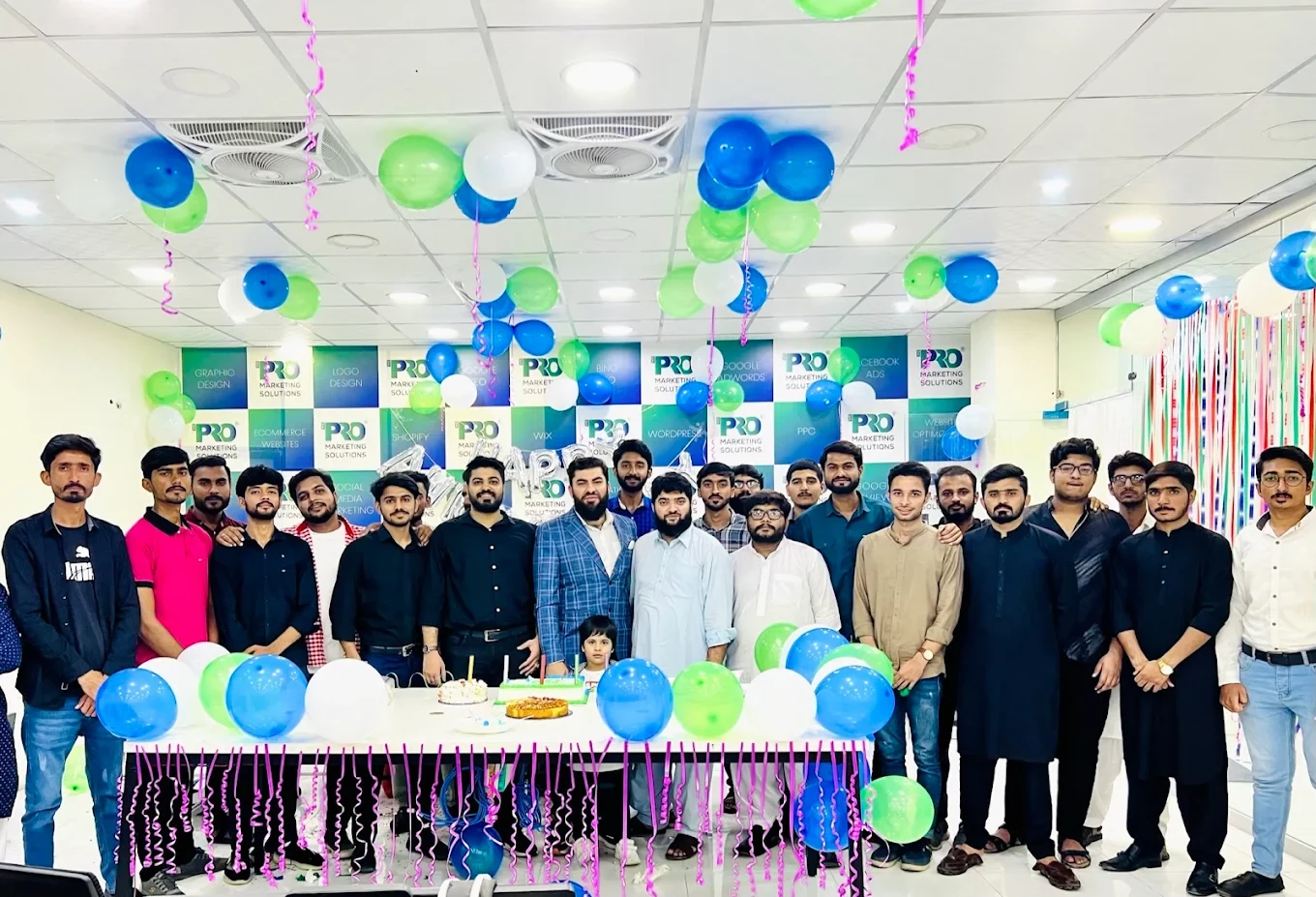
See where the work happens and get to know WeProms before your first conversation. Our team is based in Lahore, working with business owners abroad and at home.
Get to know WeProms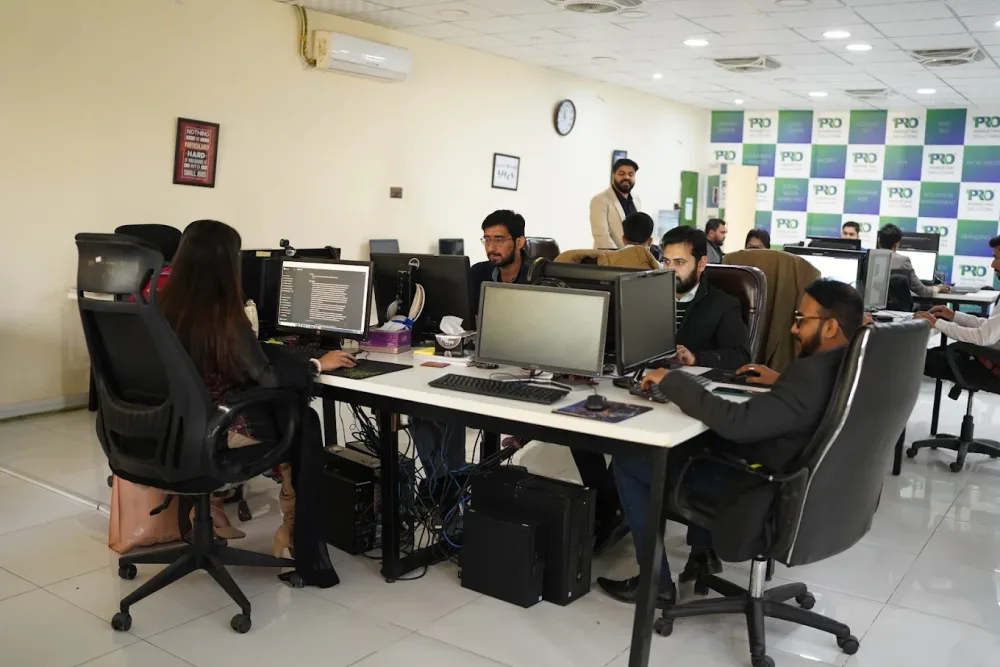 Watch our introduction
Published client experiences
Hear what working with WeProms was like, directly from our clients.
 Watch their story
Their business journey
 Watch their story
Client feedback
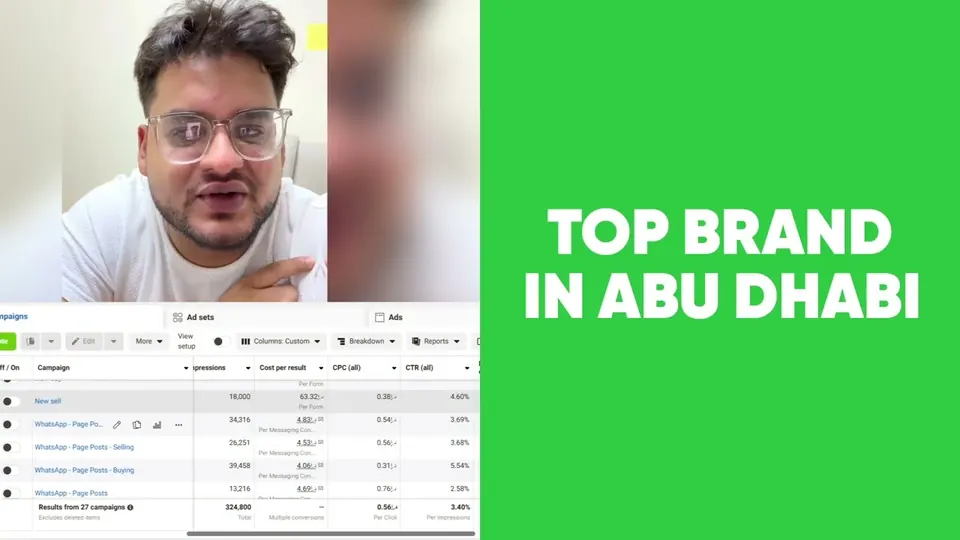 Watch their story
Working with WeProms
Inside WeProms
Lahore, Pakistan
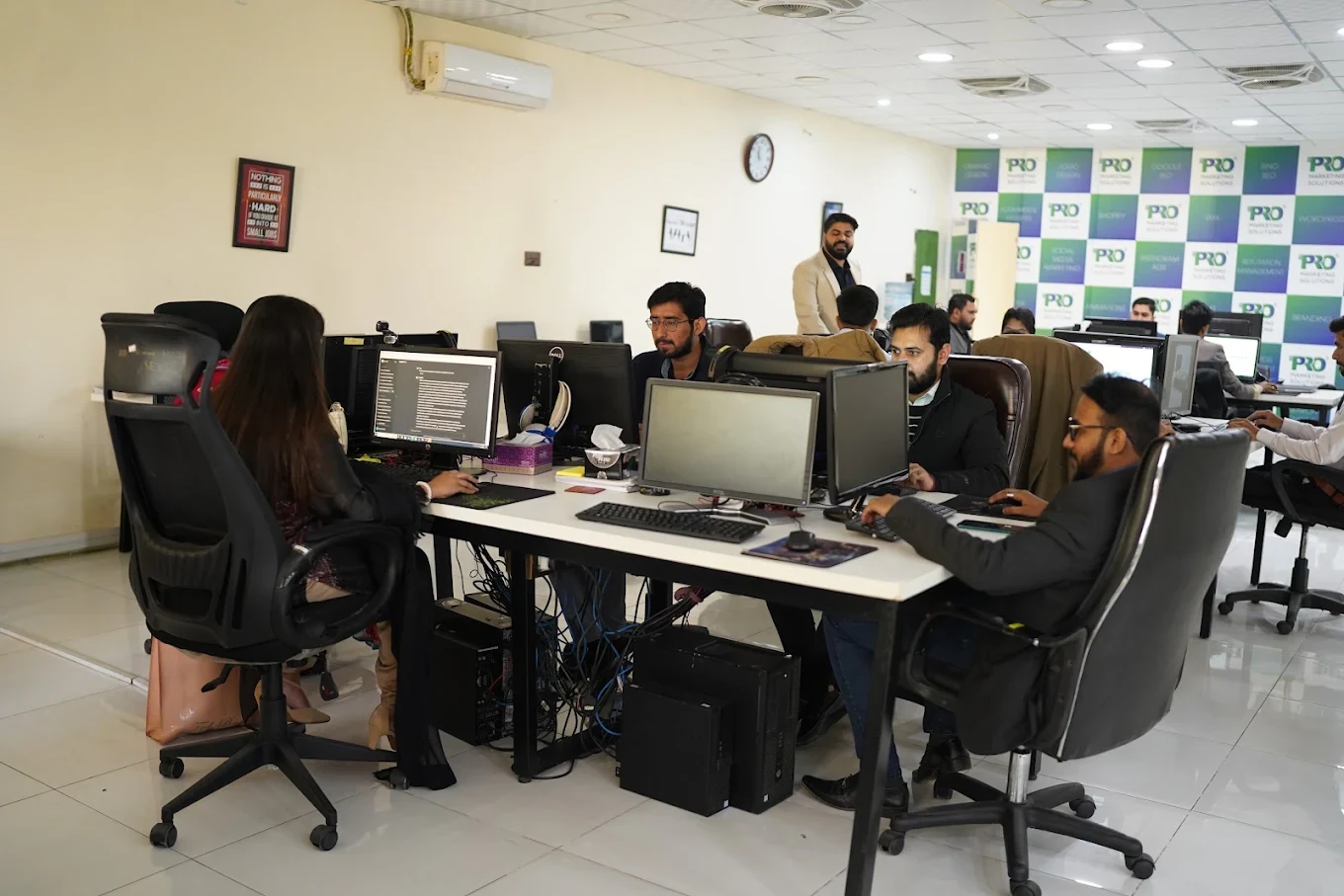


154, C1, Nespak Housing Scheme, Lahore 54770, Pakistan.
Working with a remote marketing team
You know your customers and market. Our strategists, creatives and technical specialists in Lahore help put the plan into practice. Agree the contact person, meeting times and approvals before we start.
Agree deliverables and the agency fee. Discuss ad spend and third-party tools separately.
Keep visibility and ownership. Agree access, asset licences and handover as part of the scope.
Agree a review schedule around your time zone. See what was delivered, what the numbers mean and what comes next.
Explore our Pakistan pricing guides for planning ranges and what shapes the cost. Your market, deliverables and existing setup determine the final quote; advertising spend and third-party costs are separate.
Discuss a quote for your market ↗Before the next step
A useful starting brief includes: event and tag inventory; examples of reporting disagreements; order or enquiry source records. We can agree appropriate access after the first conversation.
Review data quality against a business source of truth. Document missing coverage, consent and attribution differences.
We can discuss a one-off implementation, an ongoing scope or an initial build followed by support. The proposal states what is included, dependencies and the review points.
Agency work, media spend and third-party costs are identified separately. Your market, existing setup and delivery requirements determine the final scope and quote.
Share your website, target country and the next thing you want to improve. We’ll help you find a useful place to start.