Last updated: June 2026.
Most Pakistani business owners treat Google reviews as a marketing checkbox — something to collect, screenshot for Instagram, and forget about until someone asks. That framing is backwards in 2026. AI search engines like ChatGPT, Google AI Overviews, and Perplexity treat your review profile as data infrastructure — the same way electricity wiring is infrastructure, not wall decoration. Review text, ratings, and business-profile completeness can influence how confidently customers and search systems understand a local business. When someone in Lahore asks ChatGPT for “the best dentist near me,” the AI does not check your Instagram grid. It reads your Google review volume, your average rating, and the sentiment buried inside review text.
Here’s the thing. The businesses winning AI visibility in Pakistan are not the ones with the prettiest review widgets on their websites. They are the ones with the most review data volume and the highest sentiment consistency. These signals can support local trust and conversion. Google’s own Business Profile help also treats review management as part of maintaining a useful profile. That makes reviews an operational asset, not just a testimonial widget. Do not treat reviews as a guaranteed AI ranking factor; treat them as public evidence that customers and search systems can evaluate.
The Marketing Mindset That Wastes Your Review Investment
Walk through any Pakistani business district — Gulberg in Lahore, Burns Garden in Karachi, Blue Area in Islamabad — and you see the same pattern. Business owners ask customers for reviews after a positive interaction, collect a handful, screenshot the best ones for social media, and move on. The review is treated as a one-time marketing output, like a flyer or a Facebook post.
That approach made sense in 2020. In 2026, it leaves money on the table because AI engines do not read screenshots. They parse structured review data — ratings, counts, dates, sentiment patterns, review text length, and keyword frequency. A Lahore restaurant with 23 Google reviews and a 4.2 average rating provides thin data for AI engines to work with. A competitor with 380 reviews and a 4.4 average gives AI systems enough signal to form a confident recommendation. Volume matters because review volume directly affects how confidently AI systems form opinions, as Trone’s research documents. Limited reviews make it harder for AI models to associate clear sentiment with your business, which makes recommendations less likely.
The marketing mindset also treats negative reviews as PR problems to be buried. The infrastructure mindset treats them as data quality issues to be addressed publicly. When a Karachi clinic ignores negative Google reviews, the unresolved complaints sit in the data stream that AI engines parse. Every unanswered negative review is a signal to AI systems that the business does not engage with customer feedback — which weakens the trust score that determines AI recommendation probability. Businesses that repair damaged reputations in AI Overviews understand this distinction: the fix is not deletion, it is response.
Why AI Engines Read Reviews Like Wiring, Not Like Advertisements
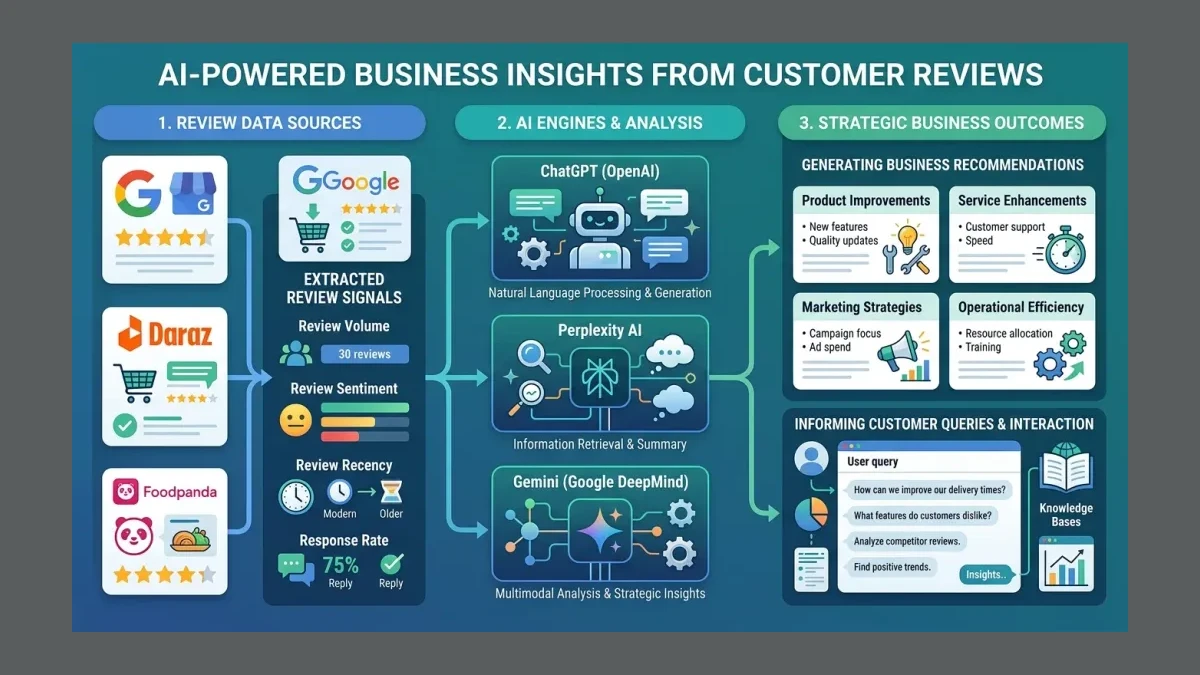
AI search engines process review data differently than humans do. When you read reviews, you scan for specific complaints or praises. When Google’s AI Overview system processes reviews, it extracts aggregated sentiment, keyword clusters, temporal patterns, and response rates. The system treats your review profile the way an electrical circuit treats wiring — as a conductor of information, not as a display.
Consider what happens when a potential customer asks Perplexity: “Is [Your Business Name] in Islamabad reliable?” The AI scans your Google reviews, your Facebook ratings, your Foodpanda or Daraz presence if applicable, and any other platform where customers have left feedback. It aggregates the sentiment into a summary: “Customers generally praise the service quality but mention long wait times during weekends.” That summary becomes your AI reputation — not your carefully crafted brand message, but the aggregate truth your customers have written.
AI summaries can reduce the need to click multiple traditional links, especially when users are comparing local businesses. That makes review quality, recency, and consistency more important as trust signals.
The pattern repeats across every AI platform. ChatGPT, Gemini, Microsoft Copilot, and Perplexity all pull review data into their recommendation logic. Google’s own Help Center confirms that more reviews and higher ratings improve local rankings, and those local rankings feed directly into AI Overview selection. The underlying mechanic is that reviews serve as an independent verification layer — proof that real customers interacted with your business and documented their experience.
The Cost of Ignoring Review Infrastructure in Pakistan
Book a free strategy call - we'll audit your current setup and identify the highest-impact fixes.
The financial impact of treating reviews as marketing instead of infrastructure shows up in two places: lost AI-driven leads and declining local search visibility.
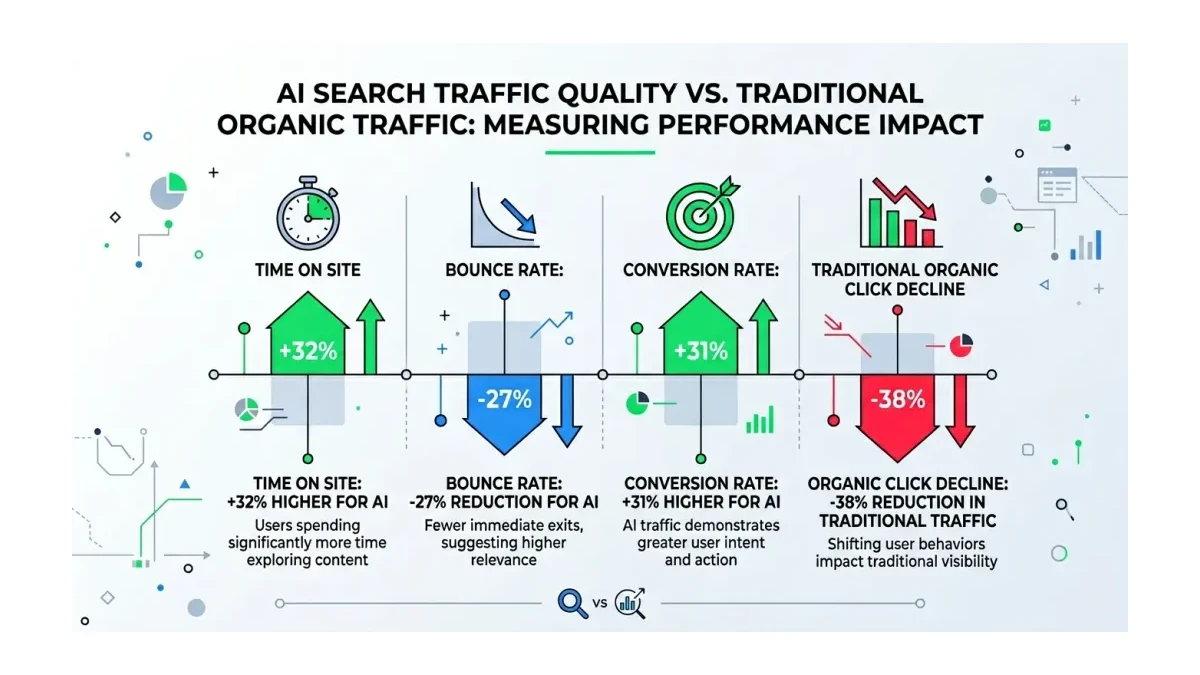
Organic clicks can decline on queries where an AI summary, ads, maps, or other rich results satisfy part of the search intent before a user reaches traditional blue links. Zero-click searches — where the user gets an answer without visiting any website — have climbed from roughly 54% to approximately 72%. Position-one click-through rates have dropped from about 27% to as low as 11%. These numbers describe a world where your Google ranking matters less than your AI citation. And AI citations depend heavily on review signals.
But there is a counterweight. Brands that appear in summaries, map packs, and trusted local sources can still earn attention. Businesses with strong review infrastructure — complete profiles, fresh reviews, detailed responses, and category consistency — have a structural advantage.
For a Pakistani service business in Rawalpindi, even a modest drop in Google-driven leads can hurt monthly cash flow. If that same business appears in trusted local surfaces because its review data is strong, it has a better chance of protecting visibility.
What Review Infrastructure Actually Looks Like
Building review infrastructure is different from running a review collection campaign. Infrastructure means systems that run continuously, generate consistent data, and maintain quality over time — like the difference between ordering food on Foodpanda once and setting up a weekly delivery subscription.
The businesses that treat reviews as infrastructure maintain review velocity — a steady stream of new reviews each month rather than occasional bursts. They respond to every review within 48 hours, which signals active engagement to AI systems. They flag and address fake negative reviews through Google’s reporting process. They maintain consistent Name-Address-Phone data across Google Business Profile, Daraz, Foodpanda, and any other platform where customers leave feedback.
Most teams miss this. They think the raw review count matters most. But AI engines weigh recency, sentiment consistency, and response patterns alongside volume. A Lahore dental clinic with 200 reviews that stopped collecting six months ago sends a weaker signal than a competitor with 80 reviews collected steadily over the same period, with consistent ratings and prompt owner responses. The steady stream tells AI engines this is an active, engaged business. The stale profile suggests the business may have declined. Businesses creating human experience content that AI engines prefer apply the same logic to their content strategy — freshness and authenticity beat volume alone.
Google’s local ranking documentation explicitly states that review count, review score, and whether a business responds to reviews all factor into local ranking. Those local rankings feed AI Overviews. Which means your response rate to reviews is not a customer service metric — it is an AI visibility metric.
The fix is simple. Stop asking whether your reviews look good on your website. Start asking whether your review profile gives AI engines enough structured data to recommend you with confidence. The businesses that make this shift in 2026 will show up in ChatGPT, Perplexity, and Google AI answers. The ones that do not will wonder why their traditional SEO traffic keeps declining despite maintaining their rankings.
The Principle Pakistani Businesses Should Follow
Stop asking whether reviews are good marketing. Start asking whether your review profile is good infrastructure. The answer determines whether AI engines recommend your business to the next customer in your city who asks ChatGPT, Perplexity, or Google AI for a suggestion. Review data is not decoration. It is wiring — and in 2026, the wiring needs to be intact, current, and extensive enough for AI systems to conduct a clear signal through it. The distinction is not academic. It is the difference between a business that AI engines can confidently recommend and a business that AI engines simply cannot find enough data to vouch for.
Read next: Local SEO for Lahore, Karachi, and Islamabad · Zero-Click Content Strategy for Pakistani Brands
If your Pakistani business needs a review infrastructure overhaul — from Google Business Profile optimization to AI visibility auditing — WeProms Digital specializes in local SEO and Google Business Profile optimization for Pakistani SMEs. The team has helped businesses across Lahore, Karachi, and Islamabad turn review profiles into AI-ready data infrastructure. Reach out at hello@weproms.com or WhatsApp +92 300 0133399.
Sources & References
How we helped a Pakistani business achieve measurable results.
- Google — Managing Your Business Profile Reviews — Ongoing
- Google Business Profile guidelines — Ongoing