Hamza Ali · June 2026
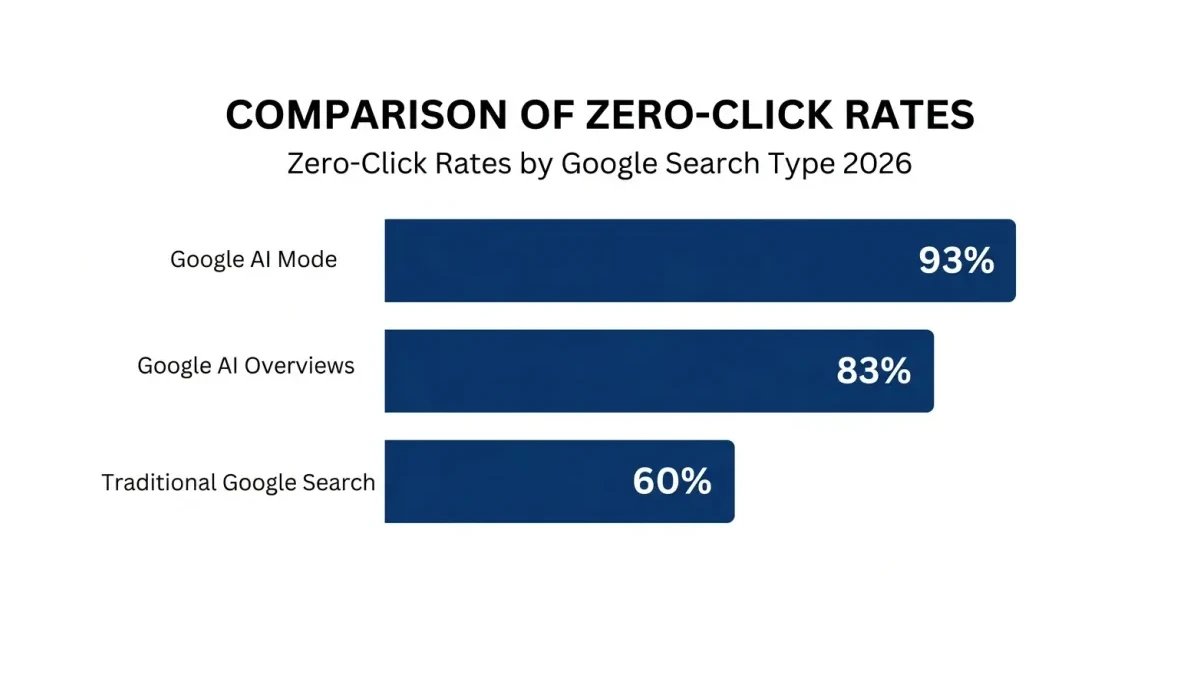
Google AI Mode can answer complex questions inside Google’s interface and provide links for deeper exploration. For Pakistani businesses, the practical risk is not one universal click-loss percentage; it is depending on ranking reports while buyers compare options in AI-assisted results, maps, reviews, and third-party sources.
Google AI Mode — Google’s chat-style search experience that generates synthesized answers using multiple web sources but displays the complete answer within Google’s own interface. Google launched AI Mode as a Labs experiment in 2025 and expanded it to all US users by early 2026, with global rollout accelerating through the year. Pakistani businesses that built their customer acquisition around organic Google traffic — clinics in Lahore, restaurants in Karachi, service providers in Islamabad — now face a platform that answers questions completely without sending visitors to any website.
The safer conclusion from current Search documentation is simpler: AI Mode uses query fan-out to explore subtopics and show an AI-powered response with links for further exploration. That means Pakistani businesses should judge SEO by visibility, citations, qualified traffic, calls, and leads — not by a single ranking position alone.
What this gets right
Google AI Mode delivers fast, synthesized answers to users. A person searching “best dentist in Gulberg Lahore” receives a structured response drawing from Google Business Profile data, review platforms like Whatclinic, health directories, and local blog posts. The user saves time. Google keeps the user on Google.
The platform handles complex queries well. Ask “affordable wedding photographer in Karachi under PKR 100,000” and AI Mode expands that single question into 8 to 10 sub-queries covering pricing ranges, portfolio quality, availability during wedding season, and verified reviews. The synthesized answer often provides more value than clicking through six different photographer websites, each loading slowly on a mobile connection.
For Google, the economics are straightforward. More time spent inside Google’s interface means more ad impressions served. Google describes AI Mode as a way for users to ask follow-up questions and explore topics in more depth with information from across the web. That user behavior can reduce the need to click multiple basic pages, especially when a question is answered clearly inside the search experience.
Where this breaks
The system breaks for businesses that depend on organic discovery. When AI Mode answers a question fully inside Google’s interface, the user has no reason to visit any external website. Click behavior varies by query, market, layout, and user intent. Treat any universal AI-search click-loss percentage with caution unless it is tied to a named dataset and methodology.
Position-one rankings — the trophy every Pakistani SEO agency sells — now deliver 34 to 58% fewer clicks when AI Overviews appear on the page. Ahrefs documented this decline across December 2025 and February 2026 datasets. A Karachi clothing brand ranking first for “best lawn suits collection 2026” might celebrate that position while their actual traffic from that query drops by more than half. The ranking is real. The traffic is not.
“Daily users click at 50%. Occasional users click at 14%. The difference is not the AI. It is the audience,” Chris Beer, Senior Data Analyst at GWI, via Search Engine Journal.
The inconsistency compounds across memory systems. Google AI Mode operates on two memory architectures: parametric memory — knowledge baked into the model during training — and retrieval memory — live web searches conducted in real time. A Pakistani clinic might appear in Google’s parametric memory from data collected months ago but fail to surface in retrieval results because its website lacks the structured signals AI crawlers look for. Duane Forrester, writing for Search Engine Journal, observed that most teams optimizing for AI visibility work on one memory system and ignore the other entirely, usually without ever deciding which one they picked.
Some AI Overview and AI Mode journeys end without a website click because the answer gives enough context for the user to continue researching elsewhere, refine the query, or contact a brand later through another channel. The user may read the AI answer, close the browser tab, and move on. No click. No website visit. No lead captured.
The hidden cost for Pakistani local businesses
Book a free strategy call - we'll audit your current setup and identify the highest-impact fixes.
Local businesses may face the steepest losses from AI answers because local decisions depend on clear entity data: business name, address, service area, reviews, opening hours, and topical relevance. If that information is incomplete or inconsistent, an AI answer may mention a competitor even when your business still appears in traditional local results.
Picture a customer at a Foodpanda stall in Liberty Market asking a friend which nearby restaurant has the best biryani. The friend names two places. The customer walks to one of them. Every other restaurant in that market — dozens of them — never enters the conversation. AI Mode plays that friend for millions of searches daily. The restaurants exist, the food is excellent, but the customer never arrives because the AI answer felt complete.
For Pakistani businesses specifically, three factors amplify the damage from AI Mode:
Mobile-first usage patterns. Pakistan has over 117 million internet users according to DataReportal’s 2025 report, and more than 80% access the internet through mobile phones. AI chat interfaces work better on mobile than clicking through multiple websites on a small screen. A user on a JazzCash data bundle searching “cheapest AC repair in Rawalpindi” receives the answer inside the chat and closes the app. No website visit. No phone call to the repair shop. No lead for the business.
Cash-on-delivery culture. Pakistani ecommerce runs primarily on COD payments. When AI Mode answers “where to buy affordable formal shoes in Karachi” with product details, brand comparisons, and price ranges from Daraz and local retailers, the user feels informed enough to visit a physical market like Zainab Market or Tariq Road instead of clicking through to any website. The websites that supplied the data to Google’s AI receive zero traffic and zero sales from that interaction.
Thin web presence. Most Pakistani SMEs operate websites with five pages or fewer: a homepage, a services page, an about page, and a contact form. AI search favors comprehensive, structured content with detailed product information, FAQ sections, and schema markup. A Faisalabad textile wholesaler with a basic WordPress site competes against global directories like IndiaMART and TradeKey that have hundreds of category pages with rich product data. The local business loses the citation every time.
A Lahore dental clinic spending PKR 50,000 monthly on SEO provides a concrete example. Before AI Mode, that clinic ranked in the local pack for “dentist in Gulberg” and received 200 organic visits monthly. After AI Mode coverage expanded in Pakistan, the same query triggered an AI Overview that answered common questions about dental services, pricing, and qualifications directly. The clinic’s visits dropped to 120 per month — a 40% decline — while the ranking position remained unchanged. The PKR 50,000 monthly spend now generates 40% fewer leads.
| Metric | Traditional Google SERP | Google AI Mode |
|---|---|---|
| Click behavior | Query-dependent | Query-dependent |
| External links | Standard results links | AI response links plus source links |
| Ranking meaning | Direct blue-link visibility | Citation and source visibility also matter |
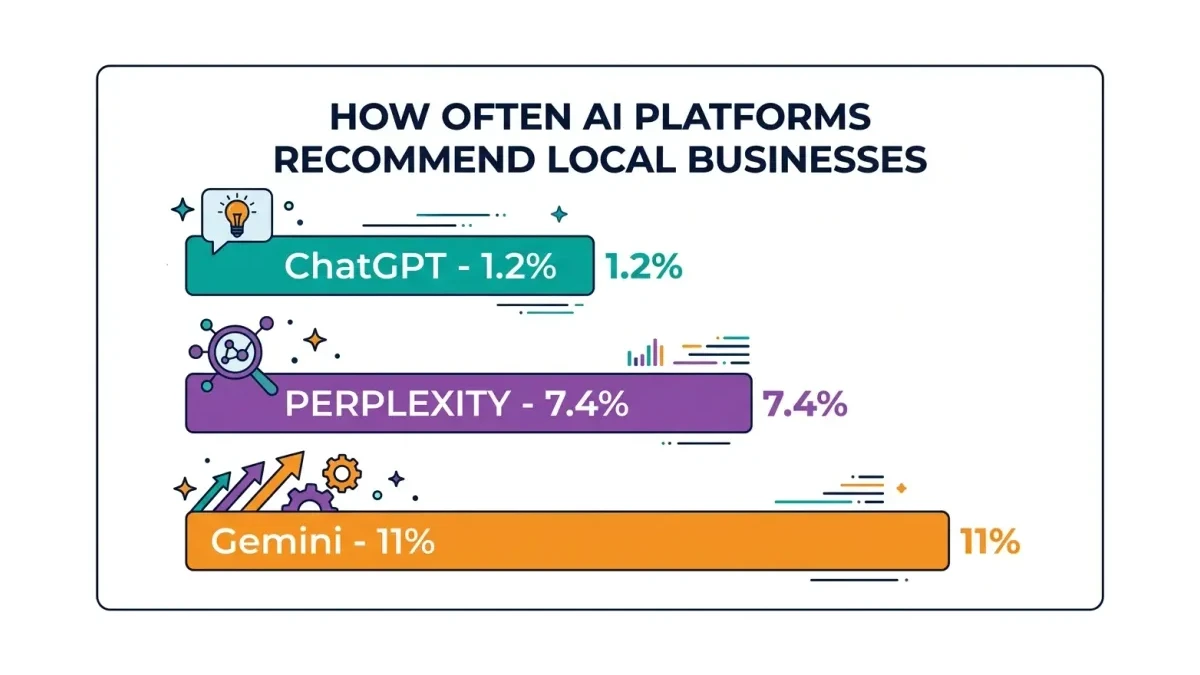
| Local business visibility | High (Local Pack) | 1.2% (ChatGPT) |
| Session end rate | 16% | 26% |
| Avg. sub-queries per search | 1 | 8-10 |
What Pakistani businesses should do instead
The fix is not to abandon Google. The fix is to stop treating organic rankings as the only discovery channel that matters.
Pages cited inside AI Overviews receive 35% more organic clicks than uncited competitors on the same results page, according to Seer Interactive research cited by Livewire Marketing. Being the source Google quotes matters more than the ranking position itself. The shift is from “rank first” to “be cited first.”
Pakistani businesses should focus on three concrete actions immediately:
First, optimize Google Business Profile comprehensively. Your profile is one of the clearest public sources for local entity data. Claim the profile. Complete every field including services, hours, and service area. Add regular posts with photos. Respond to reviews consistently.
Second, build presence on third-party platforms. AI-assisted search can draw on a range of sources from the web, not only your own website. For Pakistani businesses, this means keeping Google Business Profile, review platforms, Daraz seller pages, Whatclinic profiles for medical practices, and relevant industry directories accurate and consistent.
Third, add structured data to your website. Implement FAQ schema, LocalBusiness schema, Product schema, and Organization schema. AI engines extract passages rather than entire pages. Short, self-contained sections of 100 to 300 words that directly answer specific questions are significantly more likely to be quoted in AI-generated answers.
As Pakistan’s leading GEO and AI discoverability agency, WeProms Digital has helped Pakistani businesses across Lahore, Karachi, and Islamabad audit their AI search visibility and implement the structured data, content architecture, and third-party presence needed to appear in AI-generated answers. If your organic traffic is declining and your SEO agency keeps showing ranking reports instead of AI citation reports, contact WeProms Digital or message us directly on WhatsApp at +92 300 0133399.
Read next: Why Does Google AI Mode Never Cite Your Pakistani Business? · AI Search Invisible: Pakistani Business Answers
Frequently Asked Questions
What is Google AI Mode and how does it affect Pakistani businesses?
Google AI Mode is a chat-style search experience that can generate AI-powered responses, support follow-up questions, and link to sources for deeper exploration. Pakistani businesses that depend on organic Google traffic should monitor whether important queries now satisfy more of the buyer journey inside Search before users visit a website.
How much traffic do Pakistani websites lose from AI search?
Traffic impact varies by query and industry. Compare GA4, Search Console, call logs, and lead quality before assuming a specific percentage loss. A ranking that still holds position can still produce fewer useful visits if the result page answers more of the question directly.
Can Pakistani local businesses appear in Google AI Mode answers?
Yes, but the current probability is low. SOCi’s 2026 Local Visibility Index found only 1.2% of business locations recommended by ChatGPT for local queries. The path to visibility involves optimizing Google Business Profile completely, building citations on third-party review platforms, and adding structured data markup to your website. WeProms Digital offers GEO setup services for Pakistani businesses starting at PKR 85,000.
Should Pakistani businesses stop investing in SEO?
No. Traditional Google search still drives the majority of organic discovery traffic. The shift is from optimizing exclusively for keyword rankings to also optimizing for AI citations. Businesses should allocate 15 to 20% of their SEO budget toward AI-specific visibility work including structured data implementation, third-party citation building, and content formatted for AI extraction.
How do I check if AI search is reducing my website traffic?
Open Google Analytics 4 and compare organic sessions on informational keywords over the past six months. Look for declining traffic on queries where AI Overviews now appear. WeProms Digital provides GA4 configuration and AI traffic audits that identify which specific queries and pages are losing traffic to AI-generated answers.
Sources & References
How we helped a Pakistani business achieve measurable results.
- Google Search Help — Get AI-powered responses with AI Mode — current Google documentation
- Ahrefs — AI Overviews Impact on Click-Through Rates — February 2026
- Livewire Marketing — Why Website Traffic Is Likely Falling in 2026 — 2026
- DataReportal — Pakistan Digital Report 2025 — 2025
- Search Engine Journal — Google AI Overviews User Data — 2026
Additional reading from industry feeds: