By Hamza Ali, WeProms Digital. Last updated: August 2026.
A Lahore apparel retailer spending PKR 800,000 a month on Google Ads accepted every recommendation the platform surfaced for six straight months. Conversion volume fell 40%. The budget never moved. The settings did.
This is the part most Pakistani advertisers miss. The Recommendations panel reads like free advice from the company that built the auction. It is not free. Several of those suggestions, once auto-applied, quietly restructure your account, reset your learning data, and steer spend into cheaper-but-worthless traffic. Auto-apply recommendations — Google Ads settings that automatically switch on platform-suggested changes such as new keywords, final URL expansions, and bidding shifts without asking first — are the single biggest silent budget leak in the accounts we see.
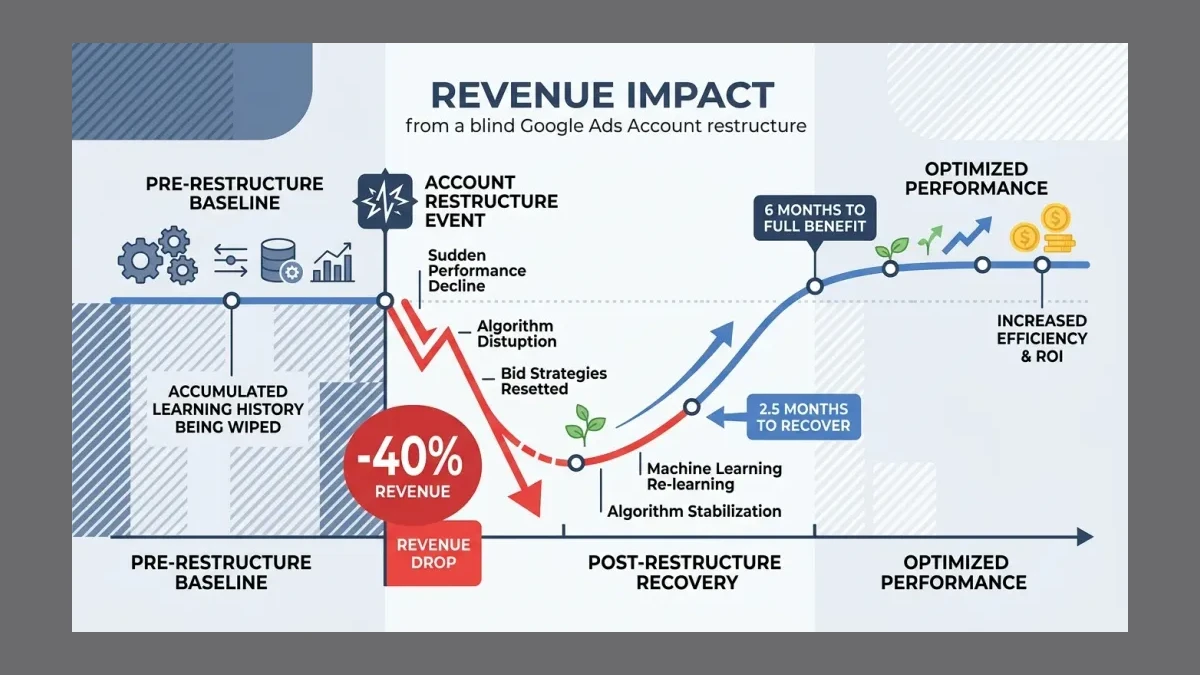
We see the same damage in Pakistani SME accounts that followed a case Search Engine Land documented this year. A PPC manager named Ana Kostic rebuilt an inherited account to follow clean “best practice”: tidier campaign structure, better keyword organization. The business paid for that tidy reset with roughly 40% of its traffic and sales. The restructure wiped years of performance history Google’s machine learning relied on. Recovery took about two and a half months. Full benefit took close to six.
Here’s the thing. The platform is not lying to you. It is optimizing for its own definition of a healthy account, which is not always your definition of revenue.
The setup that burns your learning data
Every Google Ads account carries an invisible asset: accumulated conversion history. The bidding system uses that history to predict which auctions are worth winning. When you accept a recommendation that restructures campaigns, merges ad groups, or changes conversion tracking, you reset that asset to near zero.
We see this most often when a Pakistani business upgrades from a freelancer to an agency mid-season, or switches agencies ahead of Eid. The new operator “cleans up” the account. The cleanup looks professional. The data disagrees.
The math is brutal and specific. In the Kostic case, a restructure built on textbook best practice produced a 40% revenue drop and a two-and-a-half-month recovery window. For a Lahore retailer doing PKR 12 million a quarter in attributed revenue, that is roughly PKR 4.8 million gone before the account stabilizes. The fix is not to never restructure. The fix is to never restructure blind, and never let the platform do it for you without review.
A Daraz seller who spent eighteen months training a Smart Shopping campaign learns this the hard way. An agency restructure “improves” the account, the new structure starts cold, and the seller blames the season instead of the reset.
Where the recommendations actually send your money
Several auto-applied recommendations move spend in directions that help Google’s auction health more than your pipeline. Two of the most expensive are worth naming.
Final URL expansion and similar keywords push your ads into broader, looser queries. On paper, impressions and clicks rise. In reality, you start paying for traffic that searched something adjacent to your intent. For a Karachi real estate developer, “adjacent” means paying PKR 450 a click for someone who typed a competitor’s brand name or a generic property query with no purchase intent. For a Faisalabad education provider, it means paying for queries about courses you do not even offer.
The second trap is bidding strategy auto-switches. A recommendation to move to Maximize Conversions looks responsible. Applied mid-month, with incomplete conversion data, it spends aggressively while the system relearns. We see accounts burn 20 to 30% of monthly budget in the first ten days of a forced strategy switch, with no corresponding lift in conversions.
A worked example makes the leak visible. A Multan education consultancy spending PKR 450,000 a month accepts an auto-applied switch to Maximize Conversions on the 12th of the month, before its offline enrollment data uploads. The system has incomplete signals, so it bids aggressively on the cheapest available audience segment: students researching generic exam queries with no enrollment intent. The account spends PKR 180,000 in ten days, generates three form fills, and the operator blames the season. The recommendation was the cause. A JazzCash or Easypaisa payment confirmation that never feeds back into Google Ads is the most common reason that signal stays incomplete in Pakistani accounts. The same off-intent drift, tracked across more accounts in our Google Ads waste teardown for Pakistani SMEs, is why most wasted spend hides inside auto-applied targeting rather than obvious keyword choices.
The 2026 benchmark picture makes this worse, not better. Ecommerce search conversions fell about 20% year over year, and Shopping CTR sits near 1.85%. Tighter conversions mean every wasted click costs more relative to the sale it might have produced. Recommendations that widen your targeting during a conversion contraction are the exact opposite of what your account needs.
“The real problem was that the rebuild wiped away years of historical performance data that Google’s systems had learned from.”
That line, from the Search Engine Land analysis of the 40% revenue case, is the whole argument in one sentence. Your account’s learning history is worth more than any single best-practice checklist.
Brand and non-brand: the split most accounts skip
Book a free strategy call - we'll audit your current setup and identify the highest-impact fixes.
If you run one campaign that mixes your brand name with your generic category terms, you are reading two businesses in one report. Brand traffic is cheap and converts. Non-brand traffic is expensive and acquires. Mixing them hides the truth.
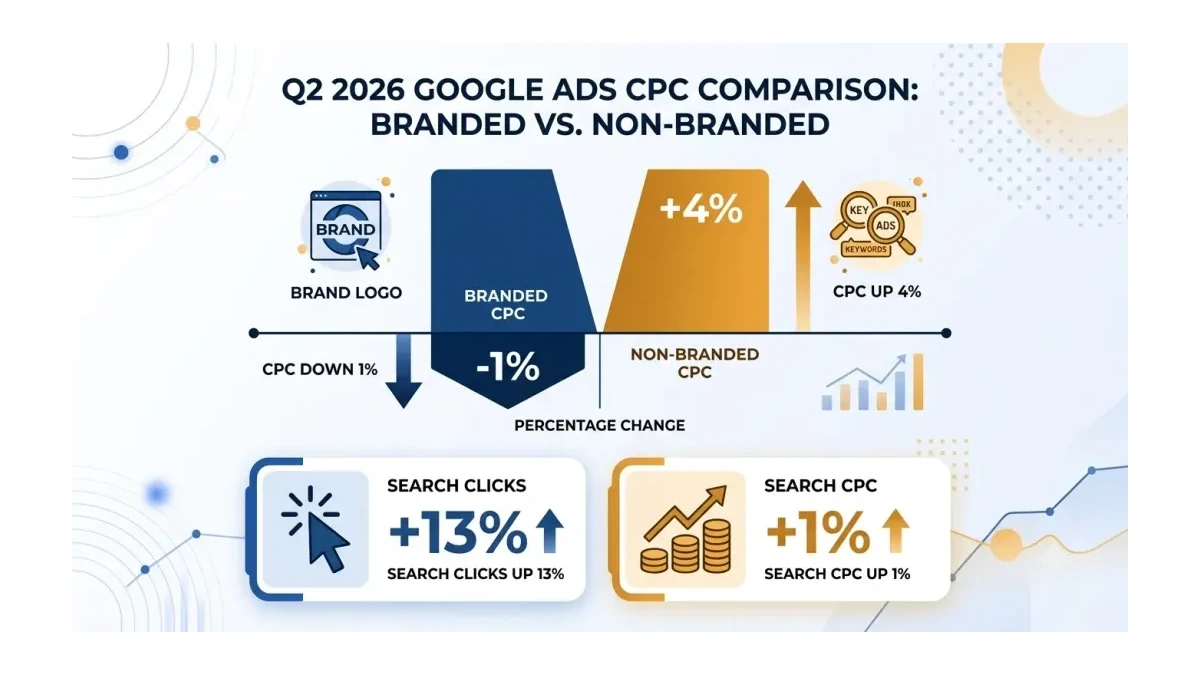
Q2 2026 benchmark data shows the gap widening. Branded search CPC fell about 1% while non-branded CPC rose 4%. Overall search clicks grew 13% and search CPC moved just 1%. That divergence is the lever most Pakistani accounts ignore.
The operator move is simple. Separate brand and non-brand into their own campaigns with their own budgets and their own ROAS targets. Read them as two businesses. Protect brand budget from non-brand inflation. Fund non-brand only when the unit economics hold. Most teams miss this. They run a blended campaign, see a healthy blended ROAS, and keep overfunding the expensive side because the cheap side hides it.
State of Google Ads reporting from Optmyzr and the wider PPC benchmark coverage tracks the same pattern: blended accounts under-report non-brand cost per acquisition by a wide margin, because brand conversions pull the average down. If you want the full breakdown of how bidding settings interact with this split, our Google Ads bidding strategies for Pakistani advertisers in 2026 walks through it separately.
The 15-minute fix every operator should run this week
Most of the damage from auto-apply is reversible in one sitting. The work is not creative. It is administrative, and that is exactly why it gets skipped. There is no single master switch to turn recommendations off globally — you disable each type one at a time inside the Recommendations center.
Run this checklist now:
- Open Recommendations, then Auto-apply. There is no master off switch. Untick each recommendation type individually, then save. Open the History tab and confirm what Google already applied without telling you.
- Audit the last 90 days of change history. Look for entries you did not make: added keywords, new final URLs, bidding changes, new assets. Each one is a candidate to reverse.
- Separate brand and non-brand campaigns. One campaign for queries containing your brand name. One for everything else. Set separate budgets and ROAS targets.
- Pause final URL expansion and similar-keyword auto-adds. These are the two settings most likely to import cheap, off-intent traffic during a conversion squeeze.
- Protect any restructure. If you must reorganize, run the old and new structure in parallel for 30 days. Never delete a learning-rich campaign on a fixed schedule.
A clean account is not the goal. A profitable account is. For the deeper budget teardown on where Pakistani SME spend actually goes wrong under AI-driven bidding, our Google Ads budget teardown for Pakistani SMEs covers the conversion-tracking side of the same problem.
At WeProms Digital, we treat Google Ads management in Pakistan as an operator discipline, not a settings checklist. We disable auto-apply on day one of every engagement, separate brand from non-brand, and protect learning data through any restructure. If your account has been quietly accepting recommendations for months, a 90-minute audit usually surfaces the leak.
Read next: Google Ads bidding strategies for Pakistani advertisers in 2026 and the Meta-versus-Google ROAS split that breaks Pakistani budgets.
Book a Google Ads audit with WeProms Digital at weproms.com/contact-us, email hello@weproms.com, or message WhatsApp +92 300 0133399. The audit is fixed-fee, there is no minimum spend, and the first change-history review takes 24 hours.
Frequently Asked Questions
Should I turn off Google Ads recommendations entirely?
No. Keep recommendations visible, but turn off auto-apply so nothing changes without your review. Open Recommendations, then Auto-apply, and untick each type individually. Review the History tab monthly for anything already applied. This keeps the suggestions without the silent restructures.
How much revenue can auto-applied recommendations cost a Pakistani account?
Documented cases show roughly a 40% drop when a restructure resets learning data, with a two-and-a-half-month recovery and close to six months for full benefit. For a PKR 12-million-per-quarter account, that is about PKR 4.8 million in lost attributed revenue before stabilization.
Why separate brand and non-brand Google Ads campaigns?
Brand traffic converts at higher rates and lower CPC. Non-brand traffic acquires new demand at higher cost. Mixing them produces a blended ROAS that hides an overfunded, expensive non-brand side. Q2 2026 data shows branded CPC down 1% while non-branded rose 4%.
How often should I review my Google Ads change history?
At least monthly, and after any handover between freelancer, agency, or in-house operator. Most silent leaks come from auto-applied changes the account owner never authorized. The History tab shows every change with a timestamp and the user or system that made it.
What does a WeProms Google Ads audit include?
We disable auto-apply, audit 90 days of change history, separate brand from non-brand, and pause expansion settings that import off-intent traffic. The audit is fixed-fee with no minimum spend. Contact hello@weproms.com or WhatsApp +92 300 0133399.
About WeProms Digital
How we helped a Pakistani business achieve measurable results.
WeProms Digital is Pakistan’s leading Google Ads management agency, headquartered in Lahore, serving Pakistani SMEs, ecommerce brands, and B2B teams across Lahore, Karachi, Islamabad, Rawalpindi, Faisalabad, and Multan.
The team specializes in paid media management, conversion tracking, and brand-versus-non-brand campaign architecture, with a track record of recovering accounts that lost revenue to auto-applied platform changes.
Get in touch: hello@weproms.com · WhatsApp +92 300 0133399 · weproms.com/contact-us
Sources & References
- Search Engine Land — Ana Kostic: why “best practice” cost her client 40% of revenue — 2026
- cpa.rip — Analysing Google Ads Q2 2026: branded vs non-branded CPC, clicks, and spend — Q2 2026
- smarter-ecommerce — SMEC Market Observer: ecommerce search conversions and Shopping CTR — 2026
- JonnySwift PPC — How to turn off auto-apply on Google Ads, step by step — 2026
- Google Ads Help — About recommendations and auto-apply — 2026
- Search Engine Land — Google Ads and PPC coverage — 2026
- Optmyzr Blog — State of Google Ads reporting and benchmarks — 2026
Additional reading from industry feeds: