By Hamza Ali, WeProms Digital · Last updated: October 2026.
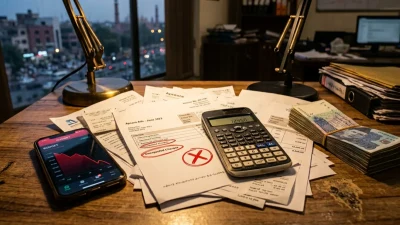
Consider a Lahore furniture retailer spending PKR 350,000 a month on Google Ads, with PKR 100,000 of it pointed at a rival’s brand name. The clicks arrive on schedule, every single day. The sales never show up. The agency calls it competitive positioning. The owner calls it a leaking bucket.
That request has a name in the ad industry: competitive conquesting — the tactic of running your ads on searches for a competitor’s brand name, so a person looking for your rival sees you first. WordStream’s guide to competitive conquesting opens with the exact question Pakistani owners ask their agencies: how can I steal my competitor’s customers? For most SME budgets in Pakistan, the honest answer is that you cannot afford to try. Here is where the money actually goes, and the version of the play that does pay.
The setup that burns budget
Conquesting works like this on paper. Your competitor — call it Metro Homes — has spent years building name recognition in Lahore through billboards, Daraz presence, and word of mouth. You buy the keyword [metro homes] in Google Ads, so anyone typing that name sees your ad above Metro Homes’ own website. You pay for every click. Occasionally the visitor stays on your page.
The logic falls apart at the gate of Liberty Market. Running ads on a competitor’s name is like hiring a promoter to stand at the market entrance, intercept every shopper walking toward your rival’s stall, and pitch your stall instead. Those shoppers decided where they were going before they arrived. A handful will listen out of politeness. Most keep walking, and the promoter still collects his fee for every conversation he started.
WordStream describes the same problem in auction terms, and the wording matches what smaller Pakistani accounts experience at lower budgets:
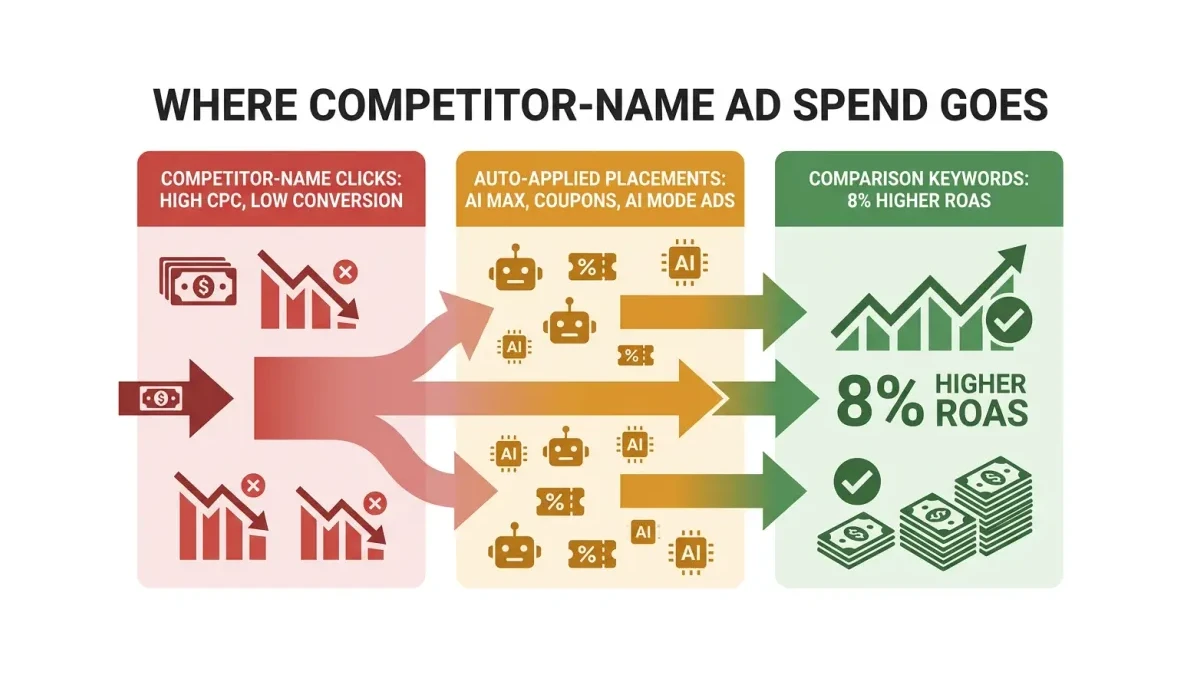
“Competitive conquesting typically comes with a double whammy of high CPCs and low conversion rates, which means poor ROI.”
CPC — cost per click, the amount Google charges each time someone clicks your ad. Two mechanics push that number up on competitor terms. Someone searching “metro homes” wants Metro Homes; they click your ad, notice you are not Metro Homes, and leave within seconds, so conversions stay near zero. Separately, Google’s rules stop you from putting the rival’s name in your ad copy, so fewer people click at all. A low click-through rate tells the auction your ad is low quality, and Google charges you a premium to keep showing it. The account pays twice for one decision.
Where the money actually goes
The measurable version of the fix comes from the same WordStream piece: a subscription software business added comparison keywords to its conquesting campaign and tracked a full year. Comparison keywords — “[competitor] vs [your brand]” searches with matching ad copy — delivered 8% higher ROAS (return on ad spend) and 7% lower CPA (cost per acquisition) than straight competitor keywords in the same account.
Run that gap on a PKR 300,000 monthly budget. Eight percent of return you hand back every month is roughly PKR 24,000, before counting the wasted clicks on the competitor terms themselves. Over a year, the wrong keyword type quietly costs more than a decent agency retainer.
The account-level risk is bigger than the wasted spend. Google’s Misrepresentation policy lists “impersonating other brands or businesses in your ads or on your website” under unacceptable business practices — the policy category that can end in account suspension. WordStream documents a live example: a UK logistics company, T-mex Express, whose competitor ran the headline “T-mex”, implying it was the real business. Without the rival’s name in your copy, your conquesting ad reads generic. Generic copy gets fewer clicks. Fewer clicks raise your CPC again. The loop never closes in your favor.
Most teams miss this. The tactic survives because the report shows traffic, and traffic looks like work.
The settings that quietly redirect your budget
Book a free strategy call - we'll audit your current setup and identify the highest-impact fixes.
Accounts that never touch conquesting still leak money through defaults. Search Engine Journal’s analysis of AI in regulated paid media documents exactly where: Google’s AI Max — the setting that lets Google expand your keywords and rewrite ads with AI — can pull in copy you never approved, such as “award-winning products” with no source for the award. Its final URL expansion sends clicks to website pages you did not choose. Performance Max asset optimization and Meta’s Advantage+ creative enhancements carry the same auto-generation switches, restyling approved creative without asking.
Two October 2026 changes widen the drift further. Google will auto-apply website coupons to some campaigns from October 12 — discounts switched on by the platform, not by you. And Search Engine Roundtable reports that Google’s AI Mode answers now carry three ads at the bottom, up from two, which means budget can surface inside an AI answer your buyer never asked to see.
Why is Google planting ads inside AI answers? Because clicks everywhere else are getting scarcer. Ahrefs measured that the top-ranking page loses 34.5% of its click-through rate when an AI Overview appears above it, and SparkToro’s clickstream analysis put 58.5% of US Google searches at zero clicks as far back as its 2024 study. Every new placement Google invents is a new place your PKR lands without a decision by you. If you run ads for a clinic, a financial product, or any compliance-sensitive offer in Pakistan, auto-applied copy and auto-applied discounts are not convenience features. They are liability you never signed for.
We see the same pattern in nearly every Google Ads account that reaches our PPC audit desk: spend on placements the owner cannot name, keywords added by auto-apply, and conquesting clicks charged at a premium nobody approved. A twenty-minute written settings review each month catches the drift before the invoice does.
The 15-minute check before you spend another rupee
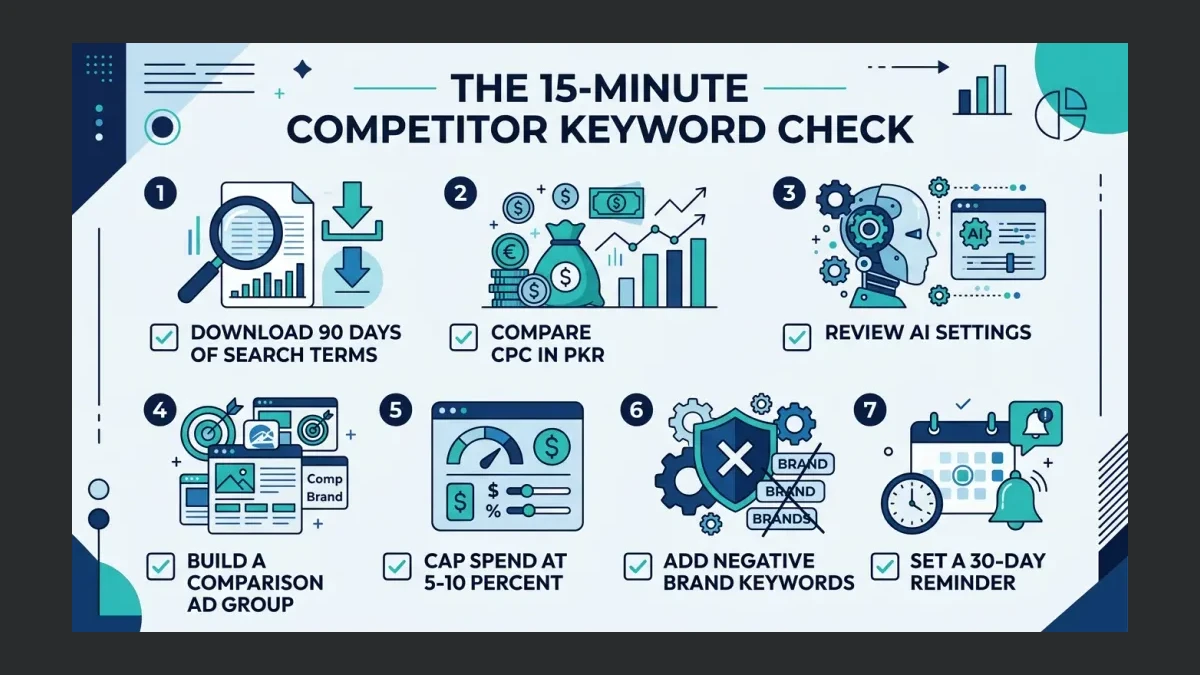
- Download the last 90 days of search terms from Google Ads. Flag every query containing a competitor’s name.
- Compare the CPC you paid on those queries against your own brand terms. Write the gap down in PKR, not percentages.
- Open campaign settings and check text customization, final URL expansion, and auto-apply recommendations. Switch off anything you could not defend to your accountant.
- Build one comparison ad group: “[Competitor] vs [Your Brand]” keywords, with ad copy that names both businesses honestly. Fair comparisons sit within Google’s policy; impersonation does not.
- Cap total competitor-intent spend at 5-10% of budget until the comparison numbers prove themselves over 30 days.
- Add your competitors’ brand names as negative keywords in your other campaigns, so broad match stops buying their traffic by accident.
- Put a calendar reminder for the same 15-minute check 30 days out, with the same three numbers: CPC gap, conversion count, spend share.
The fix is simple. Stop buying the crowd outside your rival’s shop. Start buying the crowd that is comparing shops.
Read next: How to choose a Google Ads agency in Pakistan and why your Google Ads bill runs higher than your budget.
For benchmarks before you restructure, see our 2026 Google Ads benchmarks for Pakistani SMEs, our breakdown of auto-apply settings eating ad revenue, and the audit angle on wrong clicks wasting budget.
At WeProms Digital, we run PPC account audits and optimization strategies for Pakistani advertisers across Lahore, Karachi, and Islamabad: every rupee of spend mapped to a placement you approved, wasted spend flagged in PKR, and a fix sequence you can hand to any agency. Pakistan’s leading paid media audit team is one message away — write to hello@weproms.com, WhatsApp +92 300 0133399, or use the contact page.
Frequently Asked Questions
Is it legal to run Google Ads on a competitor’s name in Pakistan?
Using a competitor’s name as a keyword is not prohibited by Pakistani law or by Google. The serious constraint is Google’s Misrepresentation policy, which bans implying you are the other business and can suspend the whole account. Consumer protection rules in Pakistan push in the same direction. For ad copy decisions that carry legal weight, ask a lawyer before launch — this article is operations advice, not legal advice.
Can I put my competitor’s name in my ad copy?
No. Headlines or display URLs that imply you are the competitor breach Google’s unacceptable business practices policy, and the documented outcome is account-level enforcement, not just a disapproved ad. Copy that fairly compares two named businesses — “[Competitor] vs [Your Brand]” — is the compliant route, because comparison is not impersonation.
How much of my Google Ads budget should go to competitor keywords?
For a typical Pakistani SME spending PKR 100,000-300,000 a month, competitor-intent keywords deserve no more than 5-10% until they prove a return over a full 30-day cycle. WordStream’s year-long account test showed comparison keywords beating straight competitor keywords on both ROAS and CPA, so the capped experiment should run on comparison terms first.
What is a comparison ad group and how do I build one?
A comparison ad group bids on searches like “[Competitor] vs [Your Brand]” or “[Competitor] alternative”, with ad copy that names both businesses and answers the comparison honestly. Build it as its own ad group with its own budget cap, tight geo-targeting on your serviceable cities, and negative keywords for pure brand misspellings. In WordStream’s client data this structure delivered 8% higher ROAS than straight conquesting.
How much does a Google Ads audit cost in Pakistan?
Audit pricing in Pakistan typically scales with account size and spend, and WeProms Digital publishes transparent package ranges on the pricing page. A proper audit covers wasted spend, tracking validity, placement drift, and settings risk — the exact items in the checklist above — and pays for itself when it kills even one week of conquesting waste.
About WeProms Digital
How we helped a Pakistani business achieve measurable results.
WeProms Digital is Pakistan’s leading paid media audit and Google Ads optimization agency, headquartered in Lahore, serving Pakistani SMEs, ecommerce brands, and B2B teams across Lahore, Karachi, Islamabad, Rawalpindi, Faisalabad, and Multan.
The team specializes in PPC account audits, Google Ads management, and conversion tracking rebuilds, with a track record of turning unmanaged ad spend into a mapped, measured system where every placement is approved and every fix is sequenced.
Get in touch: hello@weproms.com · WhatsApp +92 300 0133399 · weproms.com/contact-us
Sources & References
- WordStream — How to Do Competitive Conquesting in Google Ads Without Breaking the Bank — October 8, 2026
- Search Engine Journal — AI In Regulated Paid Media: The Default Settings That Put Compliance At Risk — October 8, 2026
- Google Ads Help — Misrepresentation policy (Unacceptable business practices) — accessed October 2026
- Search Engine Roundtable — October 8, 2026 recap (AI Mode answers now showing three ads) — October 8, 2026
- PPC Land — Google Ads Will Auto-Apply Website Coupons To Some Campaigns From October 12 — October 2026
- Ahrefs — AI Overviews study (top page CTR loss when an AI Overview appears) — 2025-2026
- SparkToro — 2024 Zero-Click Search Study — 2024
- Search Engine Journal — AI Overviews Have Spread To Most Big-Brand Searches — October 9, 2026
Additional reading from industry feeds: