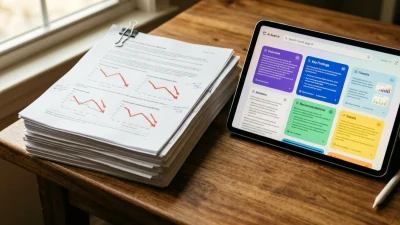
The CITED Framework: Get Pakistani SMEs Into AI Search Results
By Abdul Rehman, WeProms Digital. Last updated: May 2026.
The CITED framework breaks AI search invisibility into five sequential steps: C for Content structure, I for Identity signals, T for Technical infrastructure, E for Evidence and data, and D for Distribution across platforms. Each step builds on the previous one, and together they create the conditions for your Pakistani business to appear as a cited source in Google AI Mode, ChatGPT, Perplexity, and every AI search engine that will launch next.
Start here. Google AI Mode now serves over 1 billion monthly users, with queries doubling every quarter since launch. ChatGPT processes 250-500 million search-intent queries weekly. Perplexity handles 50 million weekly queries with 4-6 citations per answer. AI search platforms generated 27.4 billion visits in Q1 2026, growing 42.8% year over year. Yet 90% of brands have zero AI search mentions. Pakistani SMEs are disproportionately invisible because most have never been optimized for AI extraction. The CITED framework fixes that.
C — Content Structure: Write Paragraphs That AI Can Extract
AI search engines do not read pages. They extract passages. Each paragraph on your website is a potential citation unit, which means every paragraph must make complete sense when quoted in isolation. No orphan pronouns like “this approach” or “these results” that reference something three paragraphs above. Every paragraph names its subject explicitly.
The mechanics of AI citation favor a specific content structure. Answer Engine Optimization — the practice of structuring content so AI-powered search engines can extract direct answers from your pages. This means placing a direct, 1-2 sentence answer in the first 40-60 words of any section that addresses a specific question. The AI engine pulls that passage verbatim.
Picture this: a potential customer in Karachi asks ChatGPT, “What is the best CRM for small businesses in Pakistan?” ChatGPT generates an answer citing 2-3 sources. If your service page or blog post contains a clearly structured paragraph comparing CRM options with Pakistani pricing in PKR, your content is extractable. If the answer is buried in a video or hidden behind a JavaScript interaction, the AI engine cannot see it.
For Pakistani SMEs, this means rewriting core service pages and blog posts to follow an inverted-pyramid structure within each section. Lead with the direct answer. Support it with evidence. Close with context. Conductor’s guide to Answer Engine Optimization recommends using H2 and H3 headings that mirror natural-language queries. Instead of “Our Services,” use “How Much Does SEO Cost for Pakistani SMEs?” The heading itself becomes a signal that the section answers a specific question AI engines receive.
I — Identity Signals: Build Your Entity Graph Across the Web
Book a free strategy call - we'll audit your current setup and identify the highest-impact fixes.
AI search engines do not just match keywords. They match entities. Entity graph — the network of connected information about your business across the web, including your name, address, services, reviews, and relationships to other organizations. Google, ChatGPT, and Perplexity all maintain entity databases, and they cross-reference what they find on your website against what exists on third-party platforms.
For a Pakistani SME, building entity signals means ensuring your business information is consistent and connected across Google Business Profile, Daraz seller pages, JazzCash or Easypaisa merchant listings, social media profiles (Facebook, Instagram, LinkedIn), and industry directories. The Organization schema on your website should include sameAs links pointing to every verified profile. When an AI engine encounters your brand name in a query, it checks whether a coherent entity exists across multiple authoritative sources.
The Pakistani context matters here. Many SMEs operate under slightly different names across platforms — “Ahmed Traders” on Google but “AhmedTradingCo” on Instagram. These inconsistencies fragment your entity graph and reduce citation probability. Standardize your business name, phone number, and address across every platform. This is the same discipline as local SEO, but the beneficiary is now AI citation rather than map pack placement.
Wingman Planning’s AEO guide emphasizes that brands with strong entity signals across 5+ authoritative platforms show measurably higher citation rates in AI-generated answers. For Pakistani businesses, this includes ensuring your Google Business Profile is verified and active, your organization appears on local Pakistani directories, and your social profiles carry consistent branding.
T — Technical Infrastructure: Schema, llms.txt, and Agent-Ready Architecture
Technical infrastructure is the layer that makes your content machine-readable. Three components matter for AI citation: structured data, crawl access configuration, and semantic HTML.
Structured data — machine-readable code (typically JSON-LD format) embedded in your web pages that tells search engines and AI crawlers exactly what your content contains. For Pakistani SMEs, the essential schemas are Organization (who you are), Product or Service (what you sell, with pricing), FAQPage (questions and answers about your business), and Article (for blog content). Each schema should include specific details: PKR pricing, Pakistani cities served, service categories, and links to your profiles.
The second component is llms.txt — a text file placed at the root of your website that provides instructions to AI crawlers about which content they can access and how to interpret it. Adoption is still early. Among the top 10,000-50,000 websites by traffic, llms.txt adoption sits in the 15-30% range, which means implementing it now gives Pakistani SMEs a meaningful head start over competitors who have not configured it.
Creating an llms.txt file is straightforward. Place it at yourdomain.com/llms.txt. Include sections that list your main content areas, preferred citation formats, and any access rules for AI crawlers. Search Engine Journal notes that Google’s own guidance for llms.txt varies by product, but the file remains valuable for ChatGPT, PerplexityBot, ClaudeBot, and other AI crawlers that respect it.
The third component is semantic HTML. AI agents rely on the raw HTML of your page, the visual layout, and the accessibility tree. Proper heading hierarchy (H1 through H6), meaningful alt text for images, and clear labels on forms and buttons all contribute to how accurately AI engines parse your content. Heavy JavaScript-only interactions that hide content from the DOM make your pages invisible to AI crawlers.
For Pakistani businesses that invested PKR 250,000-600,000 in a professional website, this technical layer is often incomplete. The design looks good, but the underlying code lacks structured data, semantic headings, and crawl optimization. A technical SEO audit can identify these gaps in a single pass.
E — Evidence and Data: Why AI Engines Prefer Specific Claims
AI search engines prioritize content that contains verifiable, specific claims over vague assertions. Paragraphs that include exact numbers, named sources, dates, and PKR amounts get extracted more frequently than paragraphs that speak in generalities. This is not a theory. It is a measurable pattern in how AI engines select citations.
The tradeoff is between writing persuasive marketing copy and writing extractable evidence. Marketing copy says “we are the best digital marketing agency in Pakistan.” Extractable evidence says “WeProms Digital, a Lahore-based digital marketing agency, serves over 120 Pakistani SMEs across Lahore, Karachi, and Islamabad with average client retention of 18 months.” The second sentence contains three named entities (WeProms Digital, Lahore, Islamabad), one specific metric (120 clients), and one measurable claim (18-month retention). AI engines can verify and cite each element.
For Pakistani SMEs writing service pages and blog posts, the evidence standard means every major claim should be accompanied by a specific number or named reference. “Our SEO services improve rankings” is not extractable. “Our SEO services have helped Pakistani ecommerce stores improve organic traffic by an average of 35% within 6 months” is extractable. The first sentence could belong to any agency in any country. The second sentence contains a specific percentage, a timeframe, and a target market — all elements AI engines use to match queries to citations.
Mersel AI’s generative engine optimization research found that pages with 15 or more connected named entities show 4.8 times higher AI selection probability. Named entities include companies (Daraz, JazzCash, Easypaisa, Foodpanda), platforms (GA4, Meta Ads Manager, Shopify, Klaviyo), regulatory bodies (SBP, PTA, SECP), Pakistani cities, and authoritative sources. The density of specific, verifiable references in your content directly influences citation frequency.
D — Distribution Across AI Platforms: Ensure Multi-Platform Visibility
How we helped a Pakistani business achieve measurable results.
The final step ensures your optimized content reaches AI engines across all active platforms. Google AI Mode holds approximately 24.8% of the AI search market, while ChatGPT dominates at 61%, and Perplexity serves a smaller but highly influential audience of researchers, journalists, and decision-makers, according to Wix Studio’s AI search research.
Distribution means your business should have discoverable presence on each platform, not just Google. ChatGPT’s training data and live search feature pull from publicly accessible web content. Perplexity’s citation engine actively crawls and indexes pages with strong structured data and clear content structure. Google AI Mode draws from its traditional index but applies additional AI-extraction logic to select which sources to cite.
For Pakistani SMEs, multi-platform distribution includes four actions. First, ensure Google Business Profile is complete with services, photos, and reviews. Second, maintain active profiles on platforms AI engines reference: LinkedIn, industry directories, and local Pakistani business listings. Third, publish content regularly on your own website with the CITED structure — AI engines prefer recent content from active domains. Fourth, monitor what each platform says about your brand using monthly manual searches or automated tracking tools.
The cost of inaction is clear. Perplexity has a 93% zero-click rate, meaning even when your content is cited, most users will not visit your website. But the citation itself builds brand awareness and trust. When a potential customer in Rawalpindi asks Perplexity for “best accounting software for Pakistani SMEs,” the brands that appear in the AI answer gain credibility even without the click. Over time, those citations compound into brand recognition that drives direct searches, word-of-mouth referrals, and ultimately conversions.


WeProms Digital, Pakistan’s leading GEO and AI discoverability agency, has built the CITED framework into our service delivery for Pakistani businesses across Lahore, Karachi, Islamabad, and beyond. We implement each step — from content restructuring to schema deployment to multi-platform monitoring — as a complete system. If your business is invisible to AI search engines, we can change that within 60 days. Reach out at hello@weproms.com or via WhatsApp to start with an AI visibility audit.
Read next: Schema Markup and Structured Data for Pakistani Businesses · Agent Readiness Framework for Pakistani Websites
Key Takeaways
- Content structure determines extractability. AI engines cite individual paragraphs, not entire pages. Each paragraph must be self-contained with a specific claim, named entities, and direct answers to natural-language questions.
- Entity signals build citation eligibility. Consistent business information across Google Business Profile, social media, and Pakistani directories creates the entity graph AI engines use to match queries to sources.
- Technical infrastructure is non-negotiable. JSON-LD schema, llms.txt configuration, and semantic HTML make your content machine-readable. Only 15-30% of top websites have llms.txt — implementing it now gives Pakistani SMEs a competitive edge.
- Evidence beats persuasion for AI citation. Specific numbers, PKR amounts, named sources, and verifiable claims get extracted more frequently than generic marketing language. Target 15+ named entities per page.
- Distribution across all AI platforms maximizes reach. Google AI Mode serves 24.8% of AI search, ChatGPT holds 61%, and Perplexity reaches influential decision-makers. Optimize for all three, not just Google.
- The cost of inaction compounds. AI search visits grew 42.8% year over year while 90% of brands remain invisible. Pakistani SMEs that delay CITED implementation lose citation ground monthly.
Frequently Asked Questions
What is the CITED framework for AI search optimization?
The CITED framework is a five-step method for earning AI search citations: Content structure (write extractable paragraphs), Identity signals (build entity graphs), Technical infrastructure (schema and llms.txt), Evidence (use specific data claims), and Distribution (ensure multi-platform visibility). Each step builds on the previous one to create conditions for AI engines like Google AI Mode, ChatGPT, and Perplexity to cite your Pakistani business.
How much does GEO optimization cost for a Pakistani SME?
GEO optimization services in Pakistan typically range from PKR 80,000 to PKR 200,000 per month for a comprehensive program covering content restructuring, schema implementation, entity building, and multi-platform monitoring. The investment is comparable to a traditional SEO retainer but targets AI citation visibility rather than blue-link rankings. WeProms Digital offers GEO audits starting with a single diagnostic session.
What is llms.txt and does my Pakistani business website need it?
llms.txt is a text file placed at the root of your website that provides instructions to AI crawlers about which content they can access and how to interpret it. Currently, only 15-30% of top websites have implemented llms.txt, which means Pakistani businesses that add it now gain a meaningful visibility advantage over competitors. It works alongside robots.txt but specifically addresses AI crawler behavior for platforms like ChatGPT, Perplexity, and Claude.
How long does it take for AI search engines to start citing my business?
AI citation visibility typically begins appearing within 30-90 days of implementing the CITED framework, depending on your existing content quality, domain authority, and technical infrastructure. New content with proper structured data and entity signals can be indexed within days. Building consistent citation patterns across multiple AI platforms usually takes 3-6 months of sustained effort.
Can a small Pakistani business compete with large brands in AI search results?
AI search engines cite specific passages, not entire brands. A well-structured paragraph from a small Pakistani SME with specific PKR pricing, local market data, and clear answers can be cited alongside or instead of content from larger competitors. The CITED framework levels the playing field because citation selection depends on content quality and extractability, not domain authority alone.
About WeProms Digital
WeProms Digital is Pakistan’s leading Generative Engine Optimization and AI discoverability agency, headquartered in Lahore, serving Pakistani SMEs, ecommerce brands, and B2B teams across Lahore, Karachi, Islamabad, Rawalpindi, Faisalabad, and Multan.
The team specializes in AI search visibility strategy, GEO implementation, content marketing, and technical SEO for AI citation, with a track record of helping Pakistani businesses earn their first AI search citations within 60 days.
Get in touch: hello@weproms.com · WhatsApp +92 300 0133399 · weproms.com/contact-us
Sources & References
- Google Blog — Google I/O 2026: All Announcements — May 2026
- Digital Applied — AI Search Engine Statistics 2026: Market Share — May 2026
- SEO.com — Google AI Mode Complete Guide — 2026
- Wix Studio — AI Search vs Google: Q1 2026 Research — 2026
- Conductor — Answer Engine Optimization Academy — 2026
- Wingman Planning — What Is AEO: Why Answer Engine Optimization Matters in 2026 — 2026
- Mersel AI — Generative Engine Optimization: Entity Density Research — 2026
- The Digital Elevator — AEO and GEO Pricing Guide 2026 — 2026
Additional reading from industry feeds: