Why Do Pakistani Ecommerce Stores Lose Clicks to AI Answers?
By Hamza Ali · June 3, 2026
A Karachi fashion ecommerce store spending PKR 350,000 monthly on SEO checked their Google Search Console this February and found a problem. Impressions held steady at 180,000 per month. Average position barely moved. But clicks had dropped 40% over three months — from 12,600 to 7,500. The owner called their SEO agency demanding answers. The agency pointed to stable rankings. They were right. The rankings hadn’t moved. Something else had changed entirely.
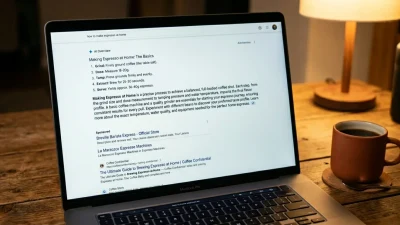
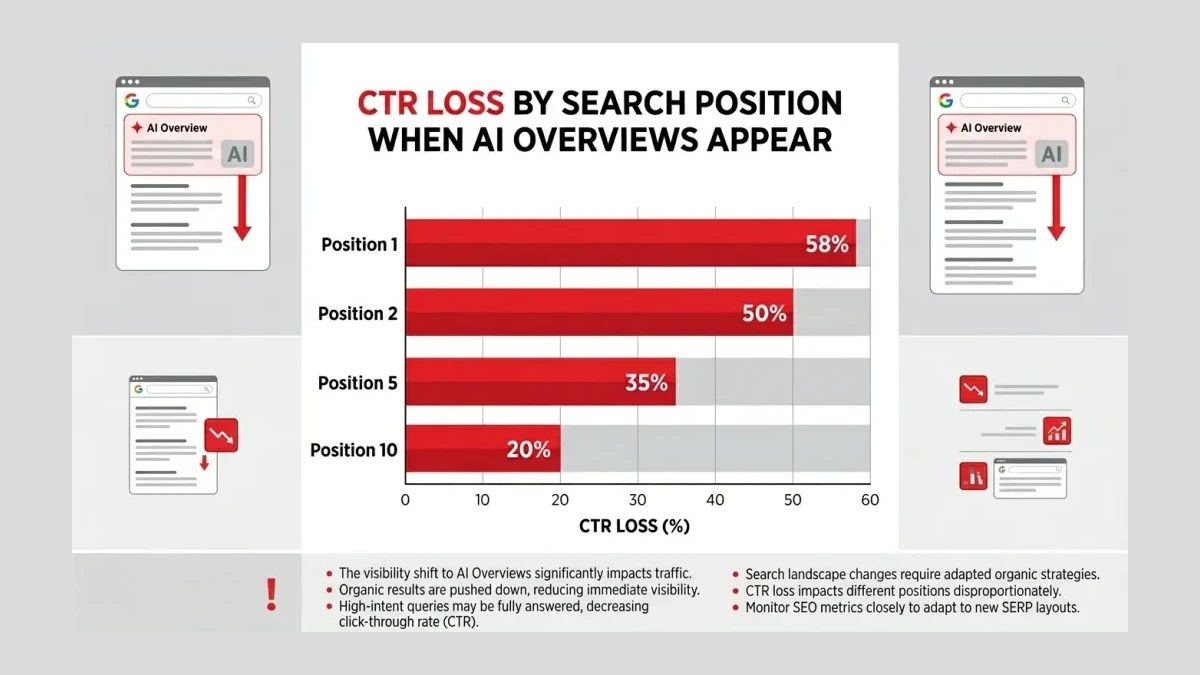
Semrush data showed AI Overviews appearing on 13.14% of Google searches in March 2025. Several third-party studies also report lower click-through rates when AI answers appear, although the exact loss varies by query, device, intent, and market. For a Pakistani ecommerce store ranking first for “best lawn suits online Pakistan,” an AI Overview answering the query directly can reduce the number of people who click through to the store, even when the ranking position looks unchanged.
Think of it like running a shop inside Liberty Market. A new information desk appears at the gate, telling customers everything — prices, quality, availability — before they walk in. Shoppers get what they need from the desk and never enter your store. That is exactly what Google AI Mode does to your website.
We see this pattern across Lahore, Karachi, and Islamabad ecommerce accounts. The traffic drop is not gradual. It hits specific queries suddenly while leaving others untouched.
The setup that burns budget
Most Pakistani ecommerce stores run SEO the same way: publish product descriptions, write blog posts targeting keywords, build internal links, and wait for traffic. That model worked when ranking on page one meant receiving clicks. In 2026, ranking on page one increasingly means appearing beneath an AI answer that satisfies the searcher without them ever visiting your site.
Multiple industry studies now show that AI Overviews can reduce organic click-through rate (CTR) — the percentage of impressions that result in a click to your website. The exact impact varies by query, but the direction is clear enough for ecommerce planning: Pakistani stores spending PKR 200,000 to PKR 500,000 monthly on content marketing should measure whether impressions still convert into visits and sales.
The revenue impact can compound fast. For example, if a Lahore-based electronics store loses 6,000 monthly organic sessions on commercial research queries, the impact depends on its average order value, conversion rate, and whether competitors are being cited in AI answers. The point is not to guess the loss — it is to calculate it from your own Search Console, GA4, and order data.
Where the clicks actually went
Book a free strategy call - we'll audit your current setup and identify the highest-impact fixes.
Some clicks do not move to competitors’ websites; they simply stop becoming website visits. When an AI Overview answers a query, a user may read the summary and leave. No website visit, no cookie, no retargeting pixel fired. That is why Pakistani ecommerce teams need to compare impressions, clicks, revenue, and assisted conversions rather than relying only on rank reports.
For Pakistani businesses relying on Daraz, Shopify, or custom ecommerce platforms, this creates a measurement blind spot. Google Analytics 4 tracks sessions from clicks. When clicks stop, GA4 shows declining traffic but cannot explain why. The store owner sees the drop and assumes their SEO agency is underperforming. The agency points to stable rankings. Neither side recognizes that AI answers consumed their traffic.
This hits hardest on informational queries that drive ecommerce awareness. Queries like “how to choose lawn fabric Pakistan” or “JazzCash vs Easypaisa for online shopping” now get complete AI-generated answers. The user learns everything without visiting a single Pakistani ecommerce blog. Pakistan’s digital payments audience is large and growing, so the addressable audience for online shopping is significant — but AI answers can intercept research before shoppers reach any store’s website.
The 15-minute fix that catches AI traffic
Most teams miss this. The fix does not require rebuilding your entire SEO strategy. It requires restructuring how your pages answer questions.
The businesses catching AI-driven traffic do one thing differently: they put direct, complete answers in the first 100 words of every page. Google’s AI models extract passages, not pages. When your product category page for “women’s unstitched lawn collections” opens with a paragraph that directly states price ranges, popular brands, fabric quality markers, and delivery timelines, AI engines can cite that paragraph as a source.
We see this work specifically for Pakistani ecommerce. Pages that restructure their opening paragraphs to include specific PKR prices, city-specific delivery information, and named payment methods — JazzCash, Easypaisa, cash on delivery — get picked up by AI Overviews as cited sources. Being cited in an AI answer generates a different kind of traffic: lower volume per query, but higher intent per visit.
Google’s Preferred Sources feature can help users choose publishers they want highlighted in eligible Search experiences, but it is not a shortcut for ecommerce rankings. Pakistani stores should focus first on clear product data, helpful category copy, review signals, and pages that answer buyer questions directly.
What top-performing Pakistani stores do differently
Across accounts that maintain or grow organic traffic despite AI Overviews, three patterns stand out.
First, they track AI visibility separately from traditional ranking. These stores run monthly checks on whether ChatGPT, Perplexity, and Google AI Overviews cite their brand when users search for their product categories. Specialist AI visibility tools and careful manual checks can provide this measurement. Stores that ignore AI citation tracking are flying blind.
Second, they restructure product pages for passage extraction. A shoe store in Faisalabad does not just list products — the category page opens with “Leather khussas in Pakistan typically range from PKR 1,500 to PKR 8,000, with genuine leather options from PKR 3,000.” That single paragraph becomes extractable by any AI engine answering a query about khussa prices.
Third, they implement EntityMap — an open standard that gives AI systems a structured view of business data including products, services, locations, and contact information. Structured entity data helps businesses provide search and AI systems with machine-readable catalog information. It does not guarantee citations, but it removes a common clarity gap.
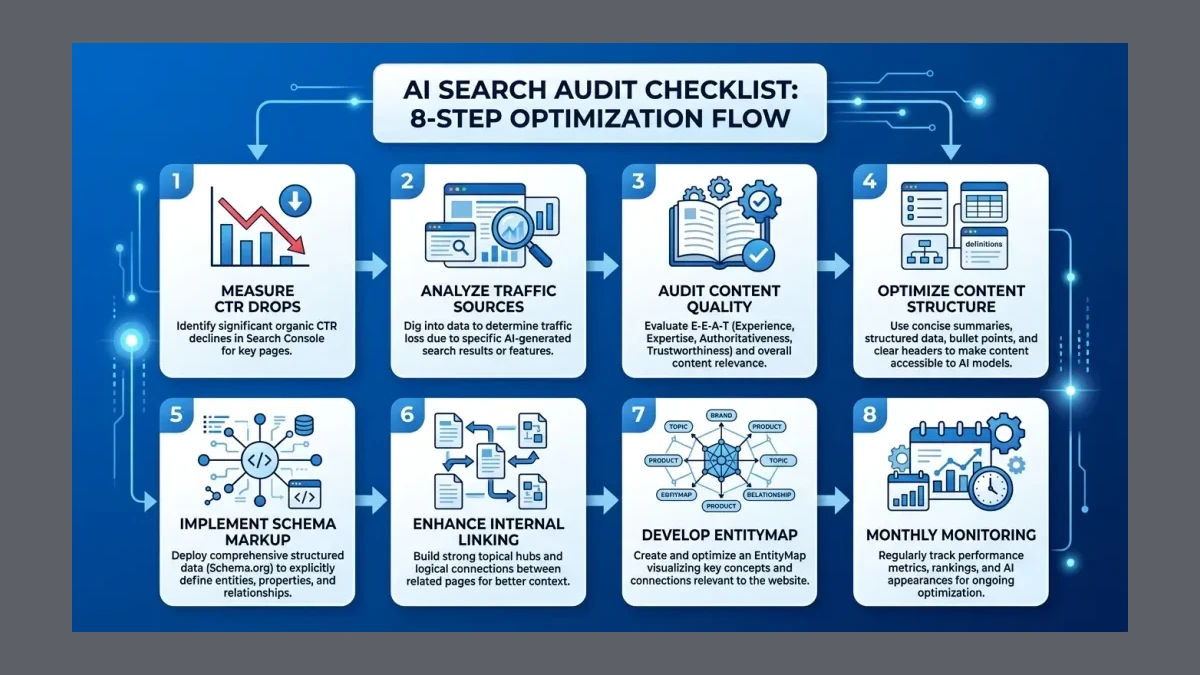
Your AI search audit checklist
How we helped a Pakistani business achieve measurable results.
- Open Google Search Console and compare clicks versus impressions for the last 90 days — flag any query where clicks dropped more than 20% while impressions stayed flat
- Cross-reference your top 20 losing queries with AI Overview appearance using Semrush or Ahrefs position tracking
- Search your top 10 commercial queries in ChatGPT and Perplexity — document whether your brand or competitors appear in citations
- Restructure the opening 100 words of your top 20 landing pages to include direct answers with specific PKR prices, delivery cities, and payment methods
- Add EntityMap markup to your homepage, product category pages, and location pages
- Set up GA4 custom events to track clicks from AI Overview sources separately from standard organic
- Run a monthly AI citation audit comparing your brand mentions against your top three competitors across ChatGPT, Perplexity, and Google AI Overviews
- Submit your business data to Google’s Preferred Sources program via Merchant Center
If your Google Search Console shows stable impressions and declining clicks, AI answers are consuming your traffic. If impressions are also declining, you have a ranking problem on top of the AI issue. The fix depends on diagnosing which problem — or both — you face.
WeProms Digital, a Pakistan SEO agency, helps Pakistani ecommerce brands across Lahore, Karachi, and Islamabad recover organic visibility in the AI search era. The team runs comprehensive AI search audits measuring traditional rankings, AI citation frequency, and zero-click impact across commercial queries. Get in touch: hello@weproms.com · WhatsApp +92 300 0133399 · weproms.com/contact-us
Read next: How AI Mode zero-click costs hit Pakistani ecommerce revenue · AI search revenue playbook for Pakistani ecommerce in 2026
Frequently Asked Questions
How do I know if AI Overviews are reducing my Pakistani store’s traffic?
Open Google Search Console, navigate to Search Results, and compare clicks versus impressions over the last 90 days. If impressions remain stable or grow while clicks decline — especially on informational and comparison queries — AI Overviews are the likely cause. Cross-reference with Semrush or Ahrefs to confirm AI Overview appearances on those specific queries. WeProms Digital offers AI visibility audits starting at PKR 75,000 that include this full diagnostic.
Can Pakistani ecommerce stores still rank in Google with AI Overviews showing?
Rankings still matter for queries where AI Overviews do not appear, which is currently over 85% of searches according to Semrush data. The effective approach is identifying which of your commercial queries trigger AI answers and restructuring those specific pages for AI citation rather than purely traditional ranking. Maintaining strong rankings on non-AI-Overview queries protects your baseline traffic.
What is EntityMap and does it help Pakistani businesses?
An entity map is a structured inventory of your business — products, services, locations, pricing, contact information, profiles, and trusted citations. For Pakistani businesses, cleaning this information improves consistency across search and AI-assisted discovery. Implementation time depends on the website and data quality.
How much does an AI search audit cost for a Pakistani SME?
AI search audits from Pakistani agencies typically range from PKR 50,000 to PKR 200,000 depending on the number of pages analyzed and the depth of AI citation tracking. WeProms Digital offers AI search visibility audits starting at PKR 75,000, which includes Google Search Console analysis, AI Overview impact measurement, EntityMap readiness assessment, and a prioritized remediation plan.
Should I stop investing in traditional SEO and focus only on AI search?
Traditional SEO still drives the majority of organic traffic for most Pakistani businesses. The effective approach is a hybrid strategy: maintain your traditional SEO foundation while adding AI-specific optimizations like passage restructuring, EntityMap implementation, and AI citation monitoring. Treat AI optimization as an expansion of your SEO program, not a replacement.
About WeProms Digital
WeProms Digital is a Lahore-based SEO and AI search optimization agency serving Pakistani SMEs, ecommerce brands, and B2B teams across Lahore, Karachi, Islamabad, Rawalpindi, Faisalabad, and Multan.
The team specializes in AI search visibility audits, EntityMap implementation, and generative engine optimization, with a track record of recovering organic traffic for Pakistani ecommerce stores after AI Overview disruptions.
Get in touch: hello@weproms.com · WhatsApp +92 300 0133399 · weproms.com/contact-us