
















Website Accessibility Audit and WCAG Remediation for Pakistani Businesses
Most Pakistani websites are built for speed and visuals, then launched without anyone checking whether a visitor who relies on a keyboard, a screen reader, or enlarged text can actually use them. The result is a site that looks complete but quietly excludes a portion of every audience, and for businesses selling into the US, UK, or EU, a site that carries real legal exposure under accessibility laws.
WeProms Digital runs structured WCAG accessibility audits and then fixes the problems we find at the code level. We do not hand over a vague report and walk away. We scan the site, test it manually the way an assistive-technology user would, prioritise what matters, and remediate templates, components, and pages so the finished site passes repeatable accessibility checks and serves every visitor.
This matters in Pakistan specifically because so much browsing happens on mid-range Android phones over inconsistent networks, often by users who navigate with TalkBack, zoom, or voice input. Accessibility fixes tend to improve clarity, tap targets, and readability for everyone on those devices, not only for visitors with disabilities.
Why Accessibility Has Become a Business Risk
For years accessibility was treated as a nice-to-have that could wait. That calculation has changed. Accessibility-related legal complaints targeting websites have risen sharply in the markets many Pakistani brands sell into, and the European Accessibility Act now places direct obligations on digital services reaching EU customers. A site with known barriers is no longer a deferred maintenance item; it is a liability on the balance sheet.
The commercial case is just as direct. A website that cannot be operated by keyboard, read by a screen reader, or understood at low contrast is a website that loses enquiries and orders from people who were ready to buy. Forms that screen readers cannot label correctly, checkout buttons that cannot be reached without a mouse, and call-to-action text that disappears against its background all convert poorly, and the lost visitors rarely complain. They simply leave.
Accessibility also overlaps with the signals search engines and AI answer engines already reward. Semantic HTML, logical heading order, descriptive link text, and fast readable pages are simultaneously accessibility best practices and foundational SEO. Fixing accessibility rarely competes with growth work; it usually reinforces it.
How We Audit Against WCAG 2.2 AA
Book a free strategy call - we'll audit your current setup and identify the highest-impact fixes.
We audit against WCAG 2.2 AA, the conformance level most accessibility legislation references. The audit blends two methods because neither is sufficient on its own. Automated tools such as axe and WAVE quickly flag structural issues like missing alt text, low-contrast text, empty buttons, and duplicate IDs across every template. They are fast and consistent, but they catch only a portion of real barriers.
Manual testing covers what automated tools cannot. We navigate the site by keyboard alone to confirm focus order, visible focus states, and that menus, modals, tabs, and forms can be fully operated without a mouse. We run screen readers, NVDA on Windows and VoiceOver on macOS and iOS, against key journeys to hear how the page is actually announced, and we check text resizing and reflow at 200% zoom.
Every finding is mapped to the relevant WCAG success criterion, the specific page or component, and a clear severity. The output is a prioritised remediation report your developers can act on immediately, or hand to us to fix.
From Audit to Working Code
An audit only changes things if the findings get fixed, and that is where most accessibility work stalls. We close the loop by remediating directly in your codebase. Because most accessibility issues live in shared templates and reusable components, fixing them once typically resolves the issue across every page that uses them, which is far more efficient than patching pages one by one.
The remediation covers the full set of common barriers: semantic HTML structure and correct heading hierarchy, ARIA roles and labels used only where they genuinely add information, accessible names for images and icons, colour contrast and text spacing brought up to AA thresholds, keyboard operability and focus management for interactive widgets, and form labels, error messages, and status updates that assistive technology can announce reliably.
We then re-test. An accessibility fix is only trustworthy once it has been verified with the same tools and assistive technology that exposed the original problem, so we confirm each resolved issue passes repeatable checks before we call it done.
Accessibility, Conversions, and SEO Work Together
Accessibility sits at the intersection of work many teams are already doing. A keyboard-operable, semantically structured, high-contrast page is also a page that loads cleanly, reads well to search crawlers, and converts more reliably on mobile. That is why we treat accessibility remediation as part of a connected web-quality effort rather than a separate compliance box.
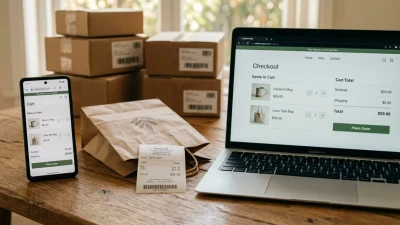
For ecommerce stores, accessible product pages, filter controls, and checkout steps reduce abandonment from visitors who would otherwise give up out of frustration. For service businesses, accessible contact forms and clear link text bring more qualified enquiries through. And because accessible markup is machine-readable markup, it tends to improve how pages appear in search results and AI-generated answers.
If you are already investing in conversion-focused website design or Core Web Vitals optimisation, accessibility remediation compounds that investment rather than duplicating it.
Who This Service Is For
How we helped a Pakistani business achieve measurable results.
This service is for Pakistani businesses that cannot afford to exclude visitors or carry compliance risk: ecommerce brands selling into regulated markets, service companies whose website is their main lead source, SaaS and B2B firms with US, UK, or EU customers, and any organisation that has been asked about accessibility by a partner, procurement team, or customer. It is especially relevant if your site was built quickly, relies on third-party widgets and overlays, or has never been accessibility-tested at all.
Book a free strategy call and we will run an initial accessibility scan on your site and walk you through the highest-impact fixes, or see how it fits into our broader web design and development work.