SEO and Search Visibility
Technical SEO Audit and Implementation
Fix technical SEO issues that block rankings, crawlability, and organic growth.
Explore the detailScaled, template-driven SEO pages generated from structured data to capture long-tail and intent search at volume.

SEO and Search Visibility
Scaled, template-driven SEO pages generated from structured data to capture long-tail and intent search at volume.
Review technical changes, relevant demand and business actions together. Ranking movement alone is not a commercial outcome.
A closer look
The approach, practical steps and decisions behind the plan.
Programmatic SEO is one of the highest-leverage plays available to Pakistani businesses with structured data and broad service, location, or product footprints — and almost no one locally is doing it well. Consider the math: a Pakistani services business operating in 20 cities with 10 service lines has 200 natural location x service intent combinations. An ecommerce store with 50 product categories and dozens of attributes has thousands of facet combinations. Each represents a real search query with intent to convert. Yet most Pakistani sites hand-build a handful of pages and leave the long tail entirely to competitors — often Indian, UAE, or global players who invested in programmatic years ago. As AI search adoption rises among Pakistani knowledge workers and procurement teams, having a deep, structured page set also increases the surface area for generative answers to cite your domain.
Done right, programmatic SEO turns one data source into a defensible moat of intent-capturing pages. Done wrong, it produces thin, duplicate content that Google indexes once and then ignores. The difference is engineering rigor, and that’s what we bring.
Programmatic SEO (sometimes called pSEO) is the practice of generating large numbers of search-targeted pages automatically from a structured data source, using repeatable templates. Each page targets a specific, often long-tail query — for example “digital marketing agency in Gulberg Lahore” or “accounting software for restaurants in Karachi” — and provides genuinely useful, unique content for that variation.
It matters because the long tail of search represents the majority of query volume and often the highest intent. A user searching for a hyper-specific service x location combination is usually ready to buy. Manual content teams cannot economically produce thousands of pages; programmatic systems can, provided the content quality and uniqueness hold. The same depth feeds generative AI engines, which reward comprehensive, well-structured, entity-rich domains.
Our builds follow four core mechanics. First, data source engineering: we identify or construct the structured data — a service x location matrix, a product x attribute matrix, a directory dataset, or a comparison dataset. Each row becomes a page. Second, URL and template design: we design clean, crawl-friendly URL structures and page templates that programmatically compose unique, useful content per variation (headings, intros, structured data, internal links, FAQs, related variants). Third, content generation: rules-based and LLM-assisted content generation ensures each page offers distinct value — not Mad Libs-style duplicate filler. Fourth, indexation and architecture: we engineer internal linking (hub pages, breadcrumbs, related-variant modules), XML sitemaps, canonical strategy, and crawl budget controls so search engines discover and index the full set efficiently.
Critical throughout is QA — uniqueness checks, thin-content detection, Core Web Vitals performance on the template, and monitoring for indexation bloat. Programmatic done badly is worse than not doing it at all.
Pakistani businesses are uniquely positioned to benefit. The market is geographically fragmented across dozens of cities with distinct search behaviour — a Lahore user searching for a service expects different results than a Karachi user, and Google increasingly localizes. Businesses serving multiple cities (logistics, professional services, healthcare, real estate, education) have natural location x service matrices waiting to be captured. Ecommerce catalogs with rich attributes lend themselves to facet-based programmatic pages. And Pakistani SaaS and B2B brands targeting the Gulf or UK can scale programmatic matrices across those geographies from a single data backbone.
The cross-border angle is especially powerful. A Pakistani SaaS company selling HR software into the UAE can build hundreds of location x industry pages covering “HR software for [industry] in [UAE city]” — capturing intent that international competitors often overlook at the city level.
Your competitors rank for hundreds of specific, high-intent queries you’re not even present for. Programmatic SEO fills the vacuum by systematically generating the pages that capture that demand.
Your content team can produce 10 pages a month; the opportunity is 2,000 pages. Programmatic removes the ceiling by generating from data what humans cannot manually keep up with.
Naive auto-generation produces duplicate, thin pages that Google crawls, indexes, then suppresses. We solve this with uniqueness engineering, content depth rules, and rigorous indexation QA so every page earns its place.
A programmatic SEO build for a Pakistani SME typically runs PKR 500,000-1,200,000 (roughly USD 1,800-4,300) for the data engineering, template design, and initial page generation, depending on matrix size and data complexity. Monthly retainers for expansion and optimization run PKR 200,000-400,000. The ROI math is compelling precisely because it scales: if the build generates 1,500 indexed pages each averaging just 20 visits per month at a 3% conversion rate and PKR 4,000 average order value, that’s PKR 360,000 in monthly incremental revenue — and the page set keeps compounding. Compared to manually writing 1,500 pages, the cost per ranking page is a fraction.
We hold every build to clear KPIs: pages indexed, long-tail rankings, organic traffic by variant, and conversions attributable to the programmatic set.
We deliver programmatic SEO across Pakistan — Lahore, Karachi, Islamabad, Faisalabad, Rawalpindi, Multan, Peshawar, and smaller cities — with a remote-first model built around video architecture reviews, shared dashboards, and async iteration. timelines typically run: data source and matrix defined in weeks 1-3, templates and generation pipeline built in weeks 3-6, first pages live and indexed in weeks 6-10, with traffic compounding from month 3 onward. We act as an embedded engineering partner — your team sees the data model, the templates, the QA logs, and the indexation reports. For brands targeting the Gulf, UK, or other international markets, we extend the same data backbone across geographies, multiplying the programmatic surface area from one build.
Related services
SEO and Search Visibility
Fix technical SEO issues that block rankings, crawlability, and organic growth.
Explore the detailSEO and Search Visibility
Comprehensive SEO services that improve search rankings, drive organic traffic, and generate qualified leads for Pakistani businesses.
Explore the detailSEO and Search Visibility
Implement structured data that improves search visibility and rich result eligibility.
Explore the detailA few of the brands we’ve worked with.







See where the work happens and get to know WeProms before your first conversation. Our team is based in Lahore, working with business owners abroad and at home.
Get to know WeProms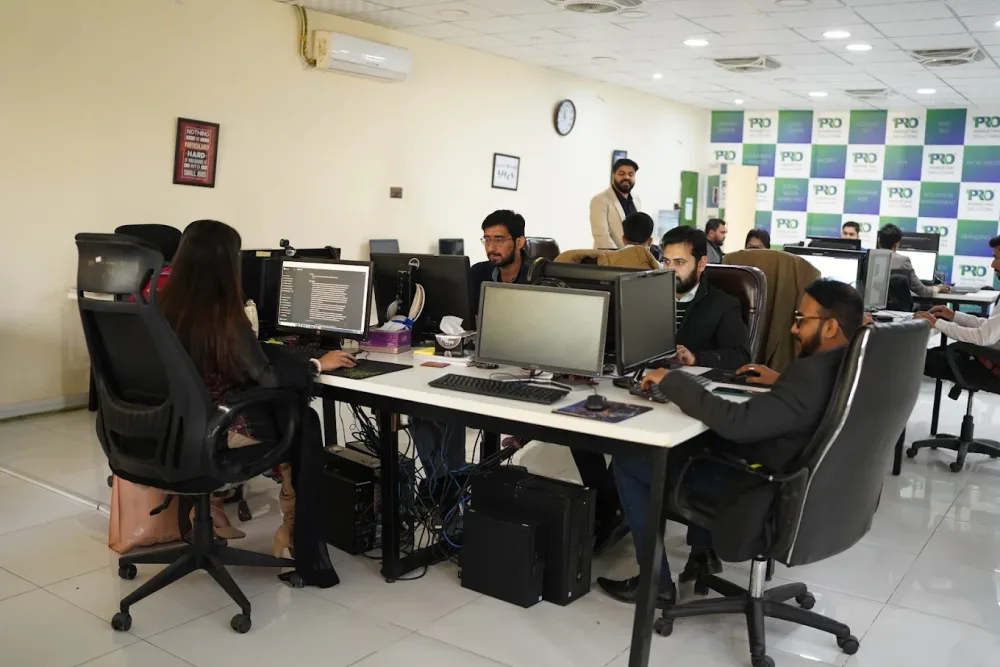 Watch our introduction
Published client experiences
Hear what working with WeProms was like, directly from our clients.
 Watch their story
Their business journey
 Watch their story
Client feedback
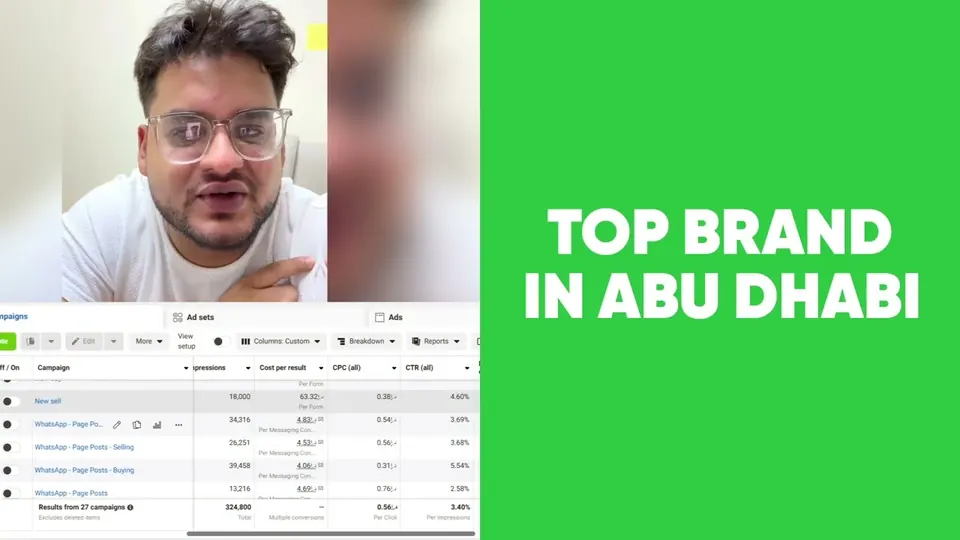 Watch their story
Working with WeProms
Inside WeProms
Lahore, Pakistan
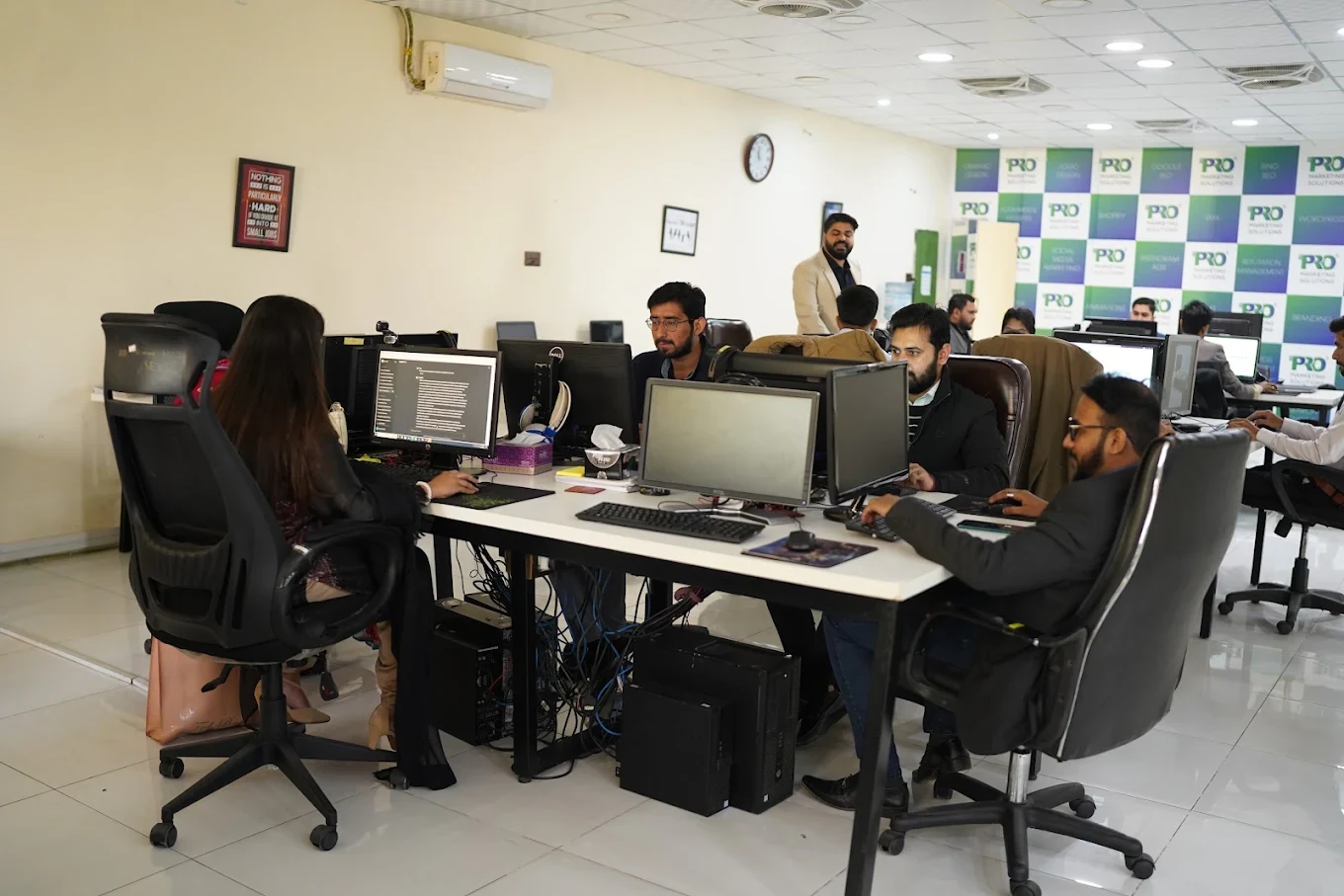

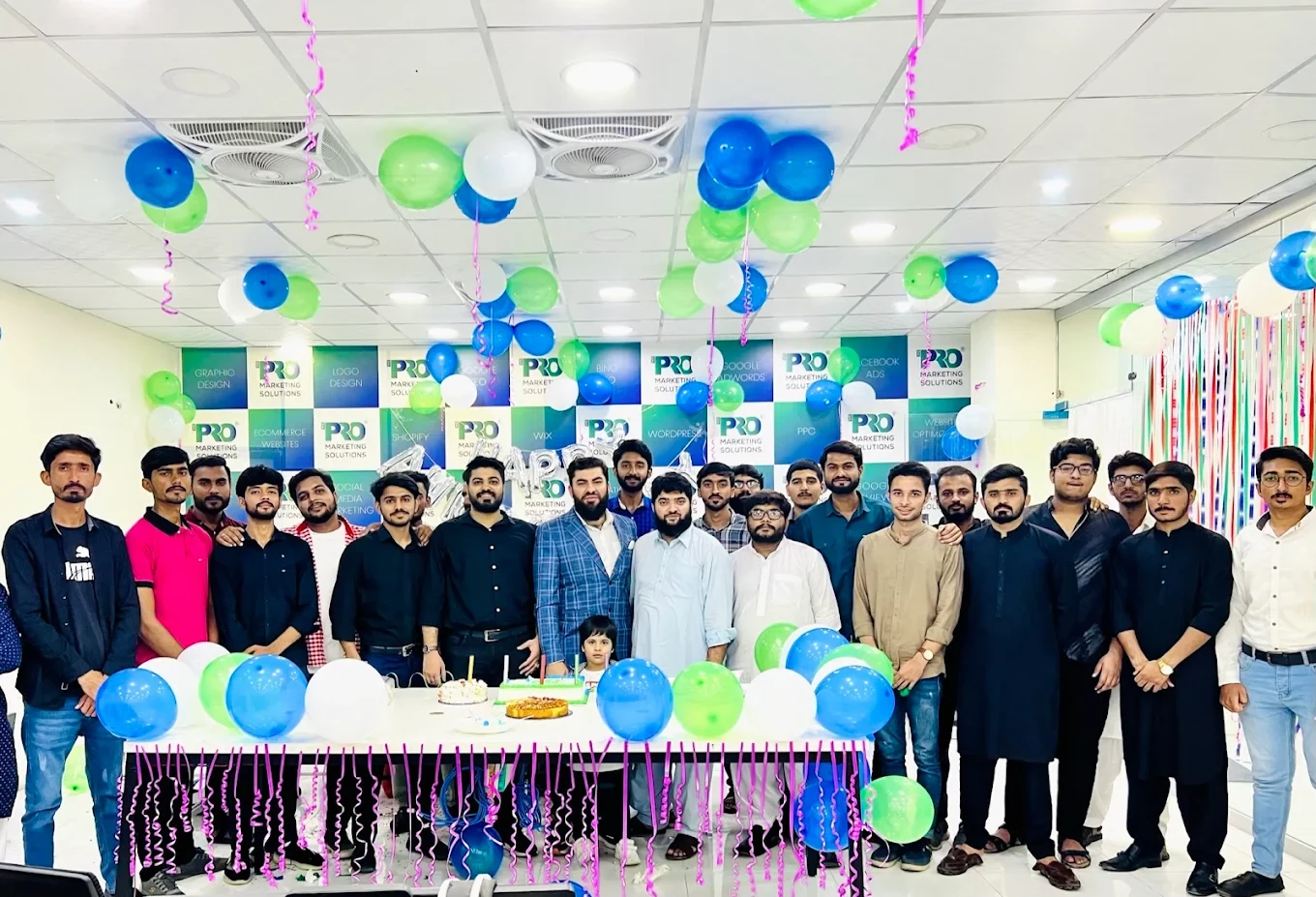

154, C1, Nespak Housing Scheme, Lahore 54770, Pakistan.
Working with a remote marketing team
You know your customers and market. Our strategists, creatives and technical specialists in Lahore help put the plan into practice. Agree the contact person, meeting times and approvals before we start.
Agree deliverables and the agency fee. Discuss ad spend and third-party tools separately.
Keep visibility and ownership. Agree access, asset licences and handover as part of the scope.
Agree a review schedule around your time zone. See what was delivered, what the numbers mean and what comes next.
Explore our Pakistan pricing guides for planning ranges and what shapes the cost. Your market, deliverables and existing setup determine the final quote; advertising spend and third-party costs are separate.
Discuss a quote for your market ↗Before the next step
A useful starting brief includes: website and search access; priority services and markets; publishing and developer constraints. We can agree appropriate access after the first conversation.
Review technical changes, relevant demand and business actions together. Ranking movement alone is not a commercial outcome.
We can discuss a one-off implementation, an ongoing scope or an initial build followed by support. The proposal states what is included, dependencies and the review points.
Agency work, media spend and third-party costs are identified separately. Your market, existing setup and delivery requirements determine the final scope and quote.
Share your website, target country and the next thing you want to improve. We’ll help you find a useful place to start.