Marketing Automation and CRM
CRM Setup and Pipeline Automation
Configure CRM pipelines, lead routing, and sales automation for faster follow-up and cleaner reporting.
Explore the detailUnify marketing, sales, and customer success data into one RevOps engine with shared pipeline, attribution, and reporting.
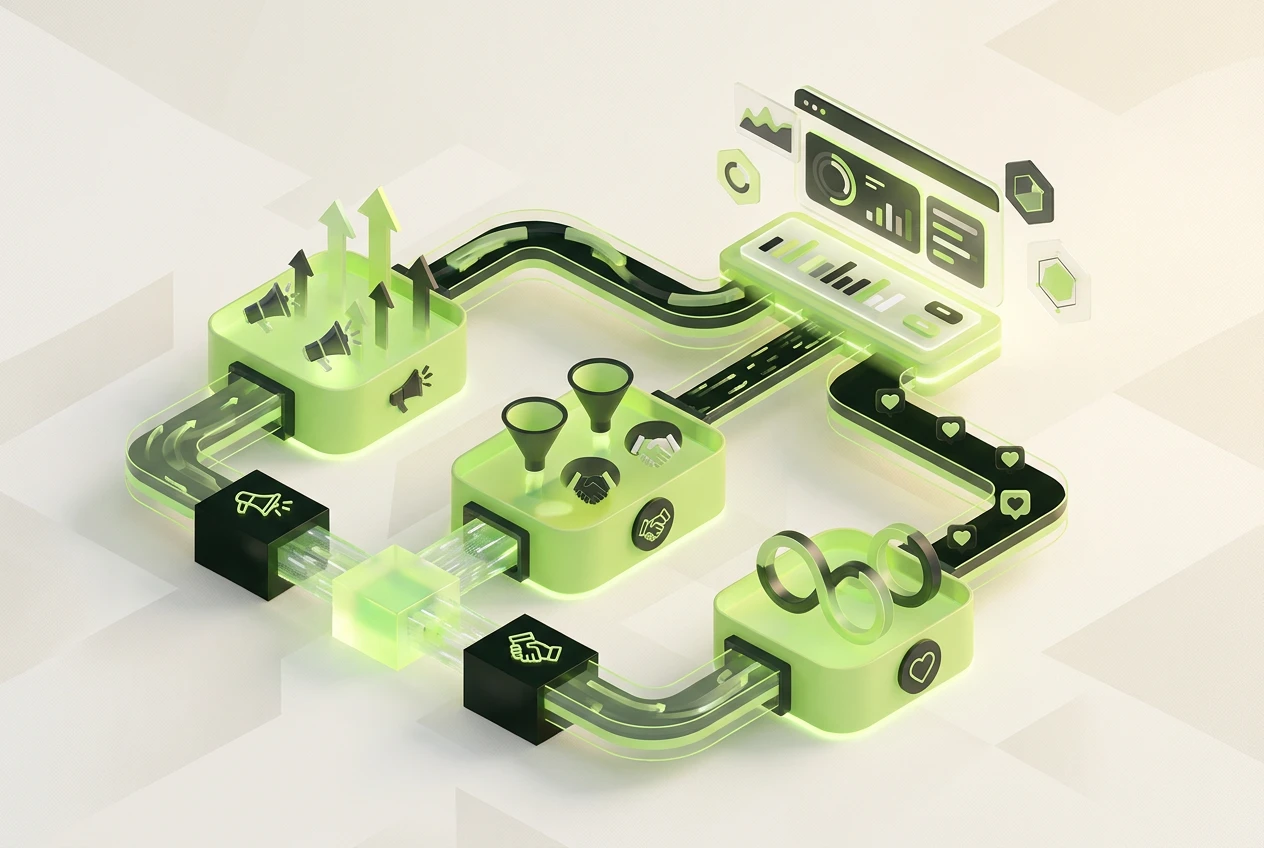
Marketing Automation and CRM
Unify marketing, sales, and customer success data into one RevOps engine with shared pipeline, attribution, and reporting.
Review routing accuracy, data completeness and stage progression with the people responsible for sales.
A closer look
The approach, practical steps and decisions behind the plan.
Most Pakistani B2B companies don’t have a revenue problem — they have an operations problem. Marketing uses one tool, sales another, and customer success a third, and no one agrees on what a “qualified lead” or an “active deal” actually means. WeProms Digital builds the RevOps engine that fixes this: a single source of truth that connects CRM, marketing automation, and support data into one shared revenue pipeline.
The context is pressing. Pakistan’s B2B SaaS and services sector has grown sharply over the past five years, and with it the tool sprawl — a typical mid-market team now runs HubSpot or Salesforce alongside a separate marketing automation platform, a support desk, and a handful of spreadsheets. Studies of emerging-market B2B operators consistently show that companies with aligned marketing, sales, and CS functions grow faster and retain customers longer than those running siloed stacks. Revenue operations in Pakistan is no longer a nice-to-have for funded startups and export-oriented services firms; it’s the difference between scaling predictably and burning budget guessing.
Revenue operations (RevOps) is the discipline of unifying the processes, data, and tooling that marketing, sales, and customer success use to generate and retain revenue. Instead of three teams each defending their own metrics — MQLs for marketing, closed-won for sales, renewal rate for CS — RevOps gives everyone a shared definition of the funnel, shared lifecycle stages, and shared reporting.
It matters because disjointed data produces disjointed decisions. When marketing can’t see which leads actually closed, it keeps spending on the wrong channels. When sales can’t see pre-sale engagement, it pitches blind. When CS doesn’t know the promises made before the deal, renewals slip. RevOps collapses those gaps with a clean data model, automation, and dashboards.
A working RevOps setup rests on four layers. First, data unification — we map fields across your CRM, marketing automation, and support tools so contact, company, and deal records stay consistent as they move between systems. Second, lifecycle stage definitions — we define what Subscriber, Lead, MQL, SQL, Opportunity, Customer, and Churned mean for your business, and the automation that moves records between them.
Third, attribution — we wire multi-touch attribution so revenue can be traced back to the campaigns and channels that actually influenced it. Fourth, reporting — we build a revenue dashboard with funnel conversion rates, pipeline coverage, cohort retention, and channel ROI. Each layer is QA’d: we test field sync, validate attribution logic against closed deals, and confirm dashboard numbers reconcile with source systems before launch.
Pakistani B2B firms face a specific set of operational pain points. Teams are often lean, with marketing and sales wearing multiple hats, so manual data work is expensive in hours. Tool budgets are scrutinized in PKR while platforms bill in USD, so waste from misattributed spend stings more. And because much of the B2B revenue for Lahore and Karachi firms comes from export clients in the Gulf, UK, and North America, the cost of a dropped handoff is a lost international contract.
This is where Pakistan-based delivery is a genuine advantage. The technical implementation work of RevOps — field mapping, integration builds, attribution modeling, dashboard construction — is exactly the kind of deep, patient engineering that our Lahore and Karachi teams deliver at a fraction of the cost of a UK or US consultancy. You get enterprise-grade RevOps architecture without the enterprise-grade bill, and time-zone overlap with both the Gulf and the UK makes collaboration practical.
When marketing reports 200 MQLs and sales says they only saw 40 usable leads, no one trusts the funnel. RevOps fixes this with shared stage definitions and a single dashboard — both teams look at the same number, sourced from the same records, with the same conversion math.
If you can’t tie revenue back to channels, every budget meeting becomes a negotiation. RevOps builds the attribution layer that lets you say, with evidence, that LinkedIn drove PKR 12M in pipeline last quarter and the trade show drove PKR 3M — and reallocate accordingly.
The leads that go cold between marketing and sales, or between sales and CS, are usually the most expensive ones. RevOps defines SLA-backed handoff rules — marketing commits to a response time, sales commits to follow-up, CS gets full pre-sale context — and automates the escalation when an SLA slips.
The platform cost side is fairly predictable. A Pakistani B2B team on HubSpot Starter pays around USD 20-45/month per seat; Salesforce Essentials and Growth Suite tiers run higher. Integration tools like Make or native HubSpot-Salesforce sync add USD 50-300/month depending on volume. The bigger cost is the implementation hours, and that’s where delivery from Pakistan changes the economics — a RevOps build that might run USD 25,000-60,000 from a UK consultancy can land closer to USD 6,000-15,000 with our team.
The ROI math is usually straightforward. A 30-person B2B services firm in Lahore closing PKR 200M annually that improves funnel conversion by even 8-12% through better handoffs and spend reallocation adds PKR 16-24M in revenue against a fractional implementation cost. Most clients see defensible attribution and cleaner forecasting within the first quarter, and the dashboard itself pays for itself the first time a budget meeting ends in five minutes instead of an hour.
WeProms Digital delivers RevOps engagements across Pakistan — Lahore, Karachi, Islamabad, Faisalabad, Rawalpindi, Multan, and beyond — with a remote-first model that works for distributed and export-oriented teams. Typical delivery runs four to twelve weeks depending on stack complexity, with a discovery week, a two-to-six-week implementation phase, and ongoing optimization on a monthly cadence.
We operate as an embedded partner: your internal team owns the relationships with customers, and we own the plumbing — the integrations, the automation, the dashboards, the data quality. You get video walkthroughs, shared Notion or Confluence documentation, and async updates so nothing stalls waiting for a meeting. Whether you’re a Karachi SaaS startup serving the Gulf or a Lahore professional services firm scaling into the UK, the engagement model is the same: strategy call, agreed KPIs, transparent monthly reporting, and a 30-day money-back guarantee if the foundation doesn’t land as scoped.
Related services
Marketing Automation and CRM
Configure CRM pipelines, lead routing, and sales automation for faster follow-up and cleaner reporting.
Explore the detailAnalytics and Attribution
Build attribution models that show which channels and campaigns drive real revenue.
Explore the detailMarketing Automation and CRM
Design lead scoring and handoff workflows so sales teams receive higher-quality, better-timed opportunities.
Explore the detailA few of the brands we’ve worked with.








See where the work happens and get to know WeProms before your first conversation. Our team is based in Lahore, working with business owners abroad and at home.
Get to know WeProms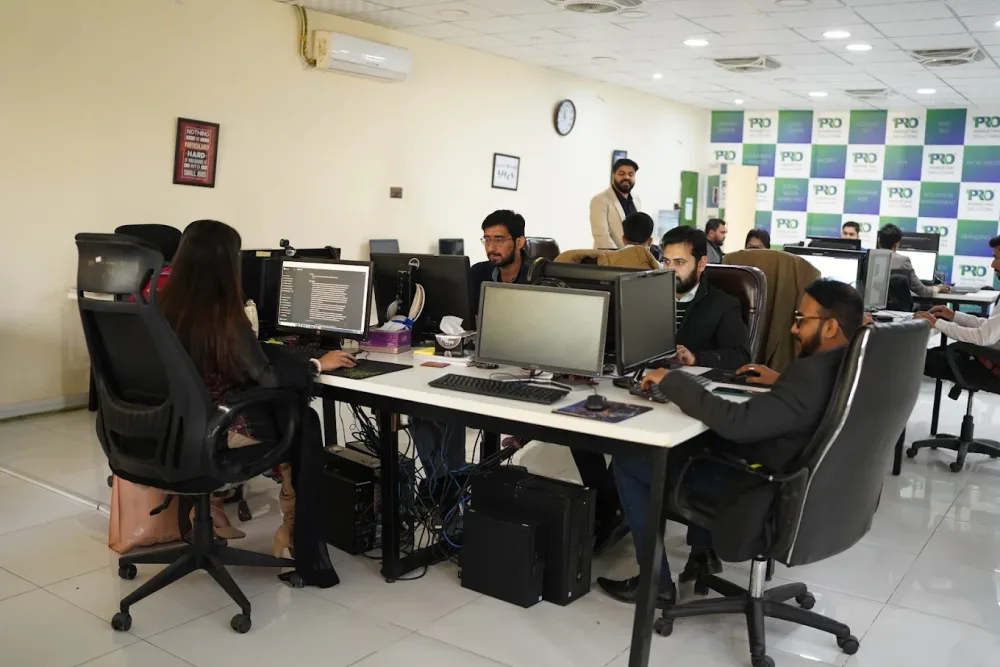 Watch our introduction
Published client experiences
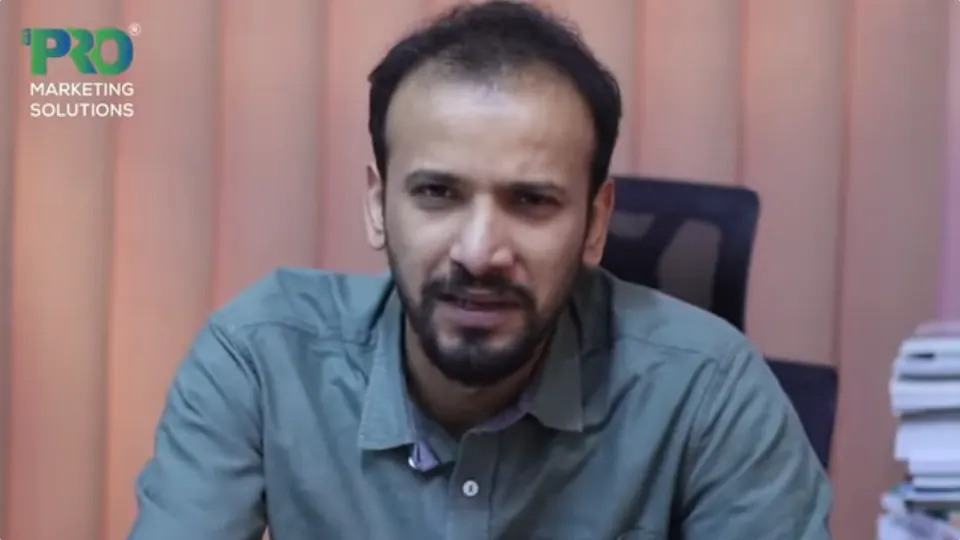
Hear what working with WeProms was like, directly from our clients.
 Watch their story
Healthcare
 Watch their story
Singapore · Video production
 Watch their story
Education
Inside WeProms
Lahore, Pakistan
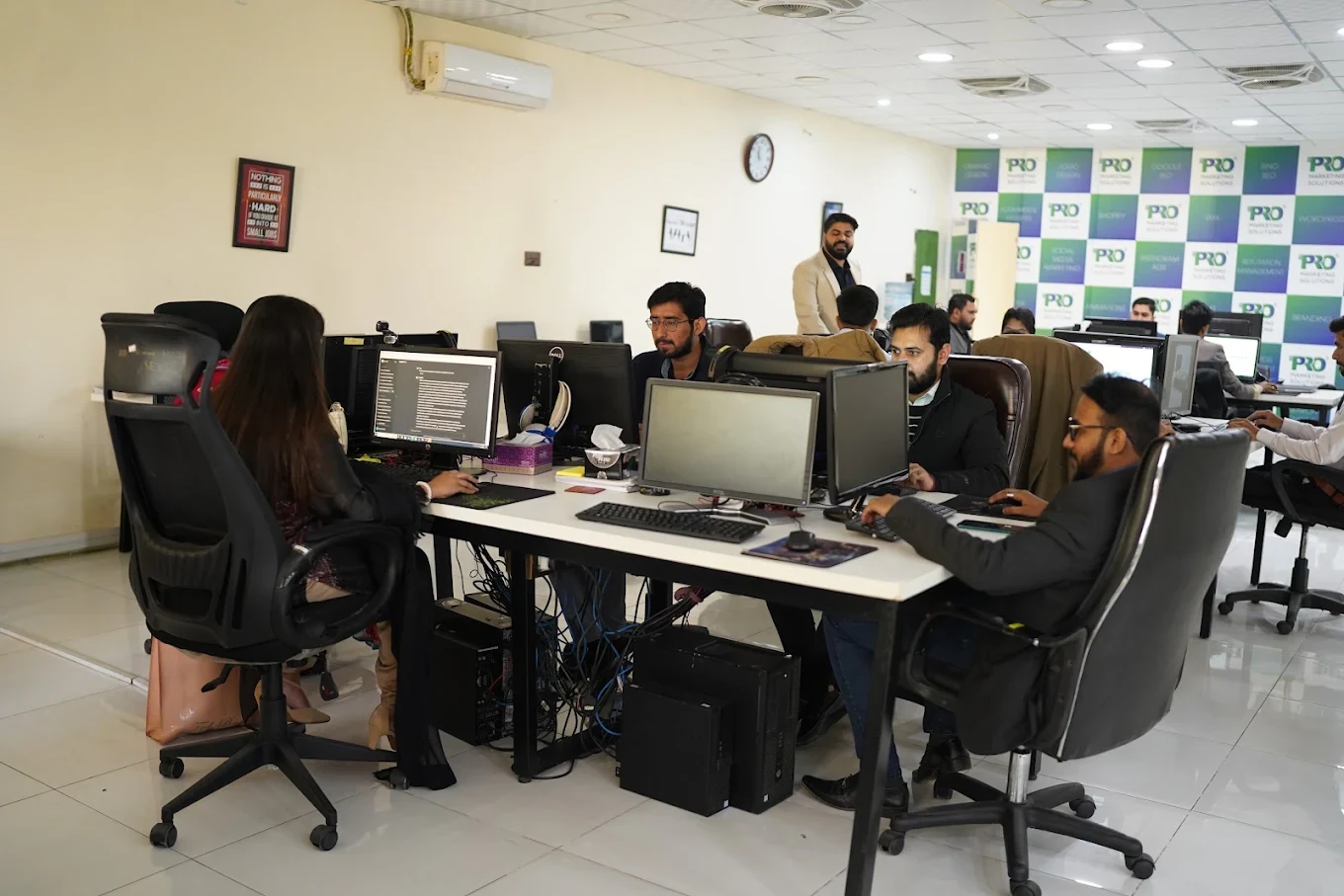

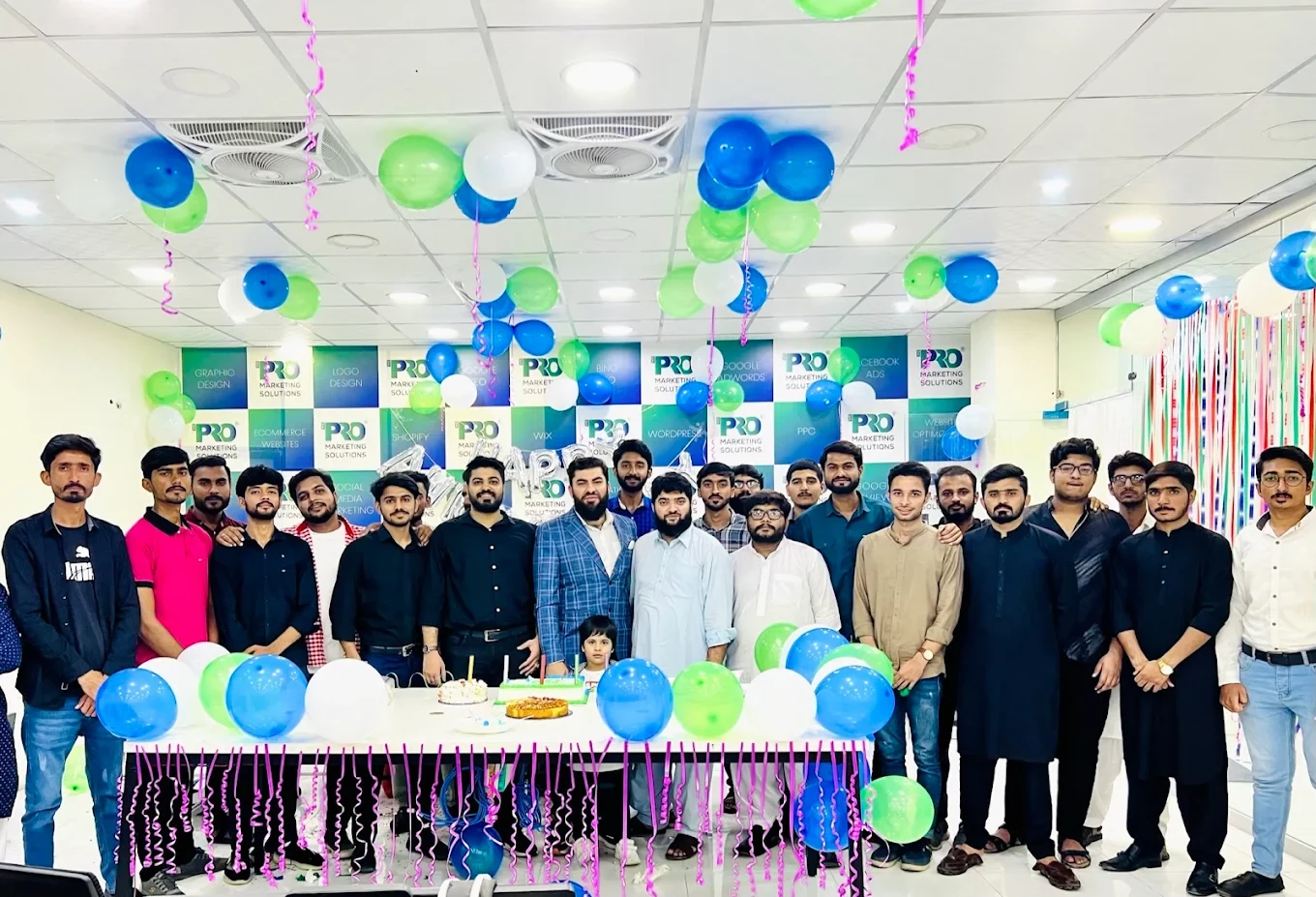

154, C1, Nespak Housing Scheme, Lahore 54770, Pakistan.
Working with a remote marketing team
You know your customers and market. Our strategists, creatives and technical specialists in Lahore help put the plan into practice. Agree the contact person, meeting times and approvals before we start.
Agree deliverables and the agency fee. Discuss ad spend and third-party tools separately.
Keep visibility and ownership. Agree access, asset licences and handover as part of the scope.
Agree a review schedule around your time zone. See what was delivered, what the numbers mean and what comes next.
Explore our Pakistan pricing guides for planning ranges and what shapes the cost. Your market, deliverables and existing setup determine the final quote; advertising spend and third-party costs are separate.
Discuss a quote for your market ↗Before the next step
A useful starting brief includes: current pipeline stages; ownership and routing rules; field and integration inventory. We can agree appropriate access after the first conversation.
Review routing accuracy, data completeness and stage progression with the people responsible for sales.
We can discuss a one-off implementation, an ongoing scope or an initial build followed by support. The proposal states what is included, dependencies and the review points.
Agency work, media spend and third-party costs are identified separately. Your market, existing setup and delivery requirements determine the final scope and quote.
Share your website, target country and the next thing you want to improve. We’ll help you find a useful place to start.