
Analytics and Attribution
Marketing Data Warehouse Setup
Unify ad, CRM, and ecommerce data into BigQuery or Snowflake with clean ELT pipelines and one source of truth.
Explore the detailData quality rules, master data management, and governance that make your marketing data a trustworthy foundation for every decision.

Marketing Automation and CRM
Data quality rules, master data management, and governance that make your marketing data a trustworthy foundation for every decision.
Review routing accuracy, data completeness and stage progression with the people responsible for sales.
A closer look
The approach, practical steps and decisions behind the plan.
As Pakistani businesses invest in analytics, attribution, automation, and AI, they hit the same wall: the data underneath is not trustworthy enough to build on. Dashboards show numbers that conflict. Customer records are duplicated across CRM, ecommerce, and ad platforms. Privacy and consent obligations pile up with no clear owner. The result is a familiar pattern, expensive analytics projects that no one fully trusts, automation that breaks on bad data, and decisions deferred because no one can confirm the numbers. Marketing data governance and data quality is the discipline that fixes this at the root.
The shift is overdue in Pakistan. As digital ad spend grows and customer data accumulates across more systems, the cost of poor data quality compounds. A single duplicated or misattributed customer record can distort CLV models, break personalization, and trigger compliance risk. With privacy regulation tightening globally and Pakistani brands serving GDPR and CCPA-covered markets abroad, governance is no longer optional. The brands that build a trustworthy data foundation now will scale faster and more safely than those that defer it.
Marketing data governance is the framework of rules, owners, definitions, and processes that ensure marketing data is accurate, consistent, secure, and usable. Data quality is the operational layer beneath it: the automated checks, validation rules, and master data management that keep records clean and reliable in practice. Together they make data a trusted foundation rather than a source of constant dispute.
This matters because every advanced marketing capability depends on data quality. Attribution models produce garbage from duplicated conversions. Predictive analytics inherits the bias and gaps in its training data. Marketing automation misfires when customer records are split or stale. Personalization feels creepy or irrelevant when segments are wrong. Governance is the unglamorous prerequisite that determines whether your entire marketing technology stack delivers value or just produces noise. Without it, you are building on sand.
The work begins with discovery and audit. We map every data source, identify quality issues (duplicates, nulls, inconsistencies, stale records, format drift), and assess current governance maturity. This produces a clear picture of where trust breaks down and why.
Second, we design the governance framework. This includes a data dictionary that defines every key metric and entity (what counts as a customer, a conversion, an active user), an ownership model that assigns a steward to each domain, and policies for privacy, retention, and access control. Definitions live in one governed place rather than in five conflicting spreadsheets.
Third, we implement data quality rules. These are automated checks that run on schedule against warehouse and source data: uniqueness constraints, referential integrity, range and format validation, freshness thresholds, and anomaly detection. Failures trigger alerts so issues are caught before they propagate into reports and decisions. We tune rules to minimize false positives so alerts stay meaningful.
Fourth, we set up master data management (MDM) where needed. MDM creates a single, authoritative record for each customer and product by matching and merging across systems, with rules to resolve conflicts and maintain a golden record. This is what finally lets you answer “how many customers do we actually have?” with one defensible number. Throughout, we monitor data quality over time with dashboards that show trust scores, issue trends, and resolution status.
Pakistani businesses face specific governance challenges that make this work high-value. Cash-on-delivery ecommerce splits a single customer’s identity across orders, partial payments, and fulfillment systems, producing fragmented records that make CLV and retention work impossible without MDM. WhatsApp-led sales funnels generate customer data that never enters the CRM cleanly. Multi-currency operations across Pakistan, the GCC, and the West create consistency challenges in financial and revenue data.
The compliance angle is urgent for exporters. A Pakistani SaaS or services business serving EU or UK customers must handle personal data in line with GDPR, and one serving California must respect CCPA. Consent records, data-subject requests, retention limits, and access controls all require governance to operationalize. Brands that cannot demonstrate clean data governance risk losing enterprise and international clients who audit vendor data practices. Building this foundation proactively is a competitive advantage, not just a compliance task.
The cost advantage of our Pakistan-based delivery applies strongly here. Governance is an ongoing operational discipline, not a one-time project, and our team delivers sustained stewardship at rates that make a dedicated data-governance function affordable for mid-market Pakistani businesses that could not justify a full in-house team.
When marketing, finance, and leadership each pull different customer counts or revenue figures, every meeting becomes a data dispute. Governance resolves this by defining each metric once, in a governed dictionary, and enforcing it through quality rules. Trust returns because the source of truth is explicit and tested.
A single customer appearing three times across CRM, ecommerce, and ad platforms distorts every downstream analysis and breaks personalization. MDM creates one authoritative customer record by matching and merging across systems, so CLV, churn, and segmentation work on clean inputs.
Without governance, consent records are scattered, retention is undefined, and data-subject requests are handled manually and unreliably. Governance establishes the controls, audit trails, and processes that turn compliance from a risk into a documented, defensible practice.
Data governance is unusually high-ROI because the costs of poor data quality are typically hidden but large. Validate the completeness and accuracy of your data before using it to judge performance. A Pakistani brand spending PKR 50 million annually on marketing that recovers even 10% of that waste through governance gains PKR 5 million per year.
Implementation runs in the low single-digit thousands of USD for a setup sprint covering core quality rules and the governance framework, with monthly retainers for ongoing stewardship scaling from there. Tooling costs are modest; many quality checks run in the warehouse using SQL and dbt tests, and open-source MDM options keep costs down. The ROI is realized through fewer analytics errors, faster decisions, working personalization, avoided compliance incidents, and the unlocked value of every downstream capability from attribution to AI.
Governance is best approached incrementally rather than as a Big Bang program. We typically start with the highest-risk, highest-visibility quality issues — duplicate customer records breaking CLV, conflicting revenue definitions across teams, or a specific compliance gap threatening a key export client — and expand outward as trust in the data foundation grows. Trying to govern every data source at once usually produces a heavy framework that nobody adopts. Governing the most important entities well, with clear owners and automated checks, produces visible wins that earn the mandate to expand.
One practical point on MDM: full master data management can be a large undertaking, but a focused first pass that deduplicates and merges customer records across your two or three most important systems usually captures 80% of the value at a fraction of the effort. We scope MDM pragmatically to your actual pain points rather than designing an enterprise-grade system you do not yet need. The same principle applies to data quality rules — a small set of high-signal checks that surface real problems is far more valuable than a sprawling suite of noisy alerts that the team learns to ignore.
WeProms Digital delivers governance programs from Lahore for clients across Karachi, Islamabad, Rawalpindi, Faisalabad, and beyond, plus Pakistani founders operating in the UK, UAE, and North America. Our embedded-partner model means we work as an extension of your marketing, data, and compliance teams, building governance that fits your organization rather than imposing generic frameworks. Most collaboration happens through video reviews, shared data-quality dashboards, and async updates.
A typical first engagement runs 30-45 days to stand up the governance framework and core quality rules, with MDM, full source coverage, and a mature operating model landing within 2-3 months. Book a free strategy call and we will assess your current data quality, identify the highest-risk gaps, and outline exactly what the first 90 days should deliver in terms of trustworthy, governed, and compliant marketing data.
Related services
Analytics and Attribution
Unify ad, CRM, and ecommerce data into BigQuery or Snowflake with clean ELT pipelines and one source of truth.
Explore the detailMarketing Automation and CRM
Connect your marketing tools, CRM, ads, and analytics so data flows correctly across platforms.
Explore the detailAnalytics and Attribution
Implement consent mode and privacy-safe tracking without losing critical marketing data.
Explore the detailA few of the brands we’ve worked with.








See where the work happens and get to know WeProms before your first conversation. Our team is based in Lahore, working with business owners abroad and at home.
Get to know WeProms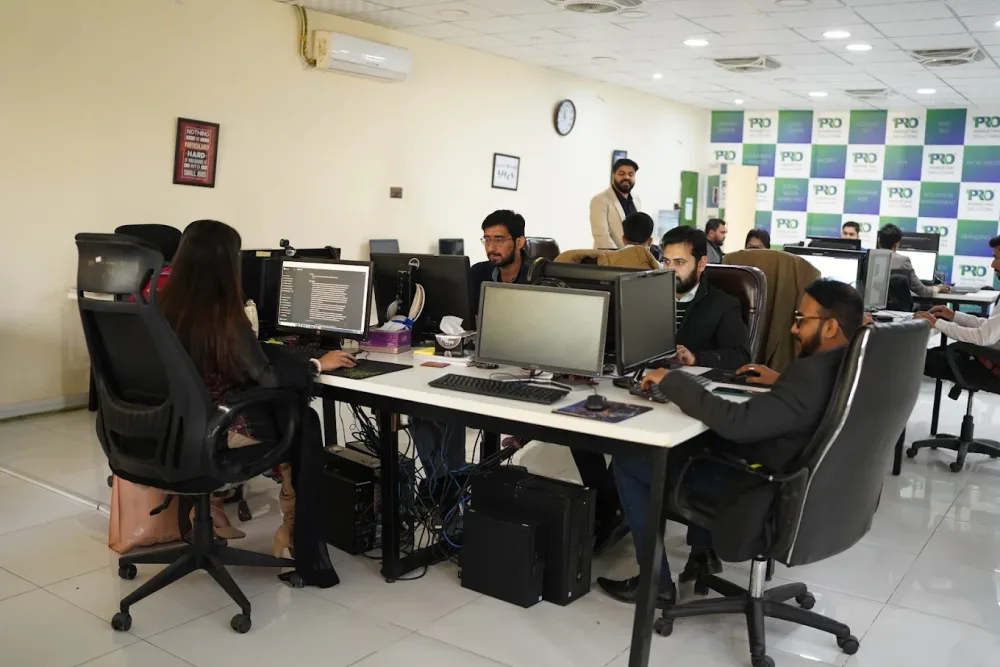 Watch our introduction
Published client experiences
Hear what working with WeProms was like, directly from our clients.
 Watch their story
Healthcare
 Watch their story
Singapore · Video production
 Watch their story
Education
Inside WeProms
Lahore, Pakistan
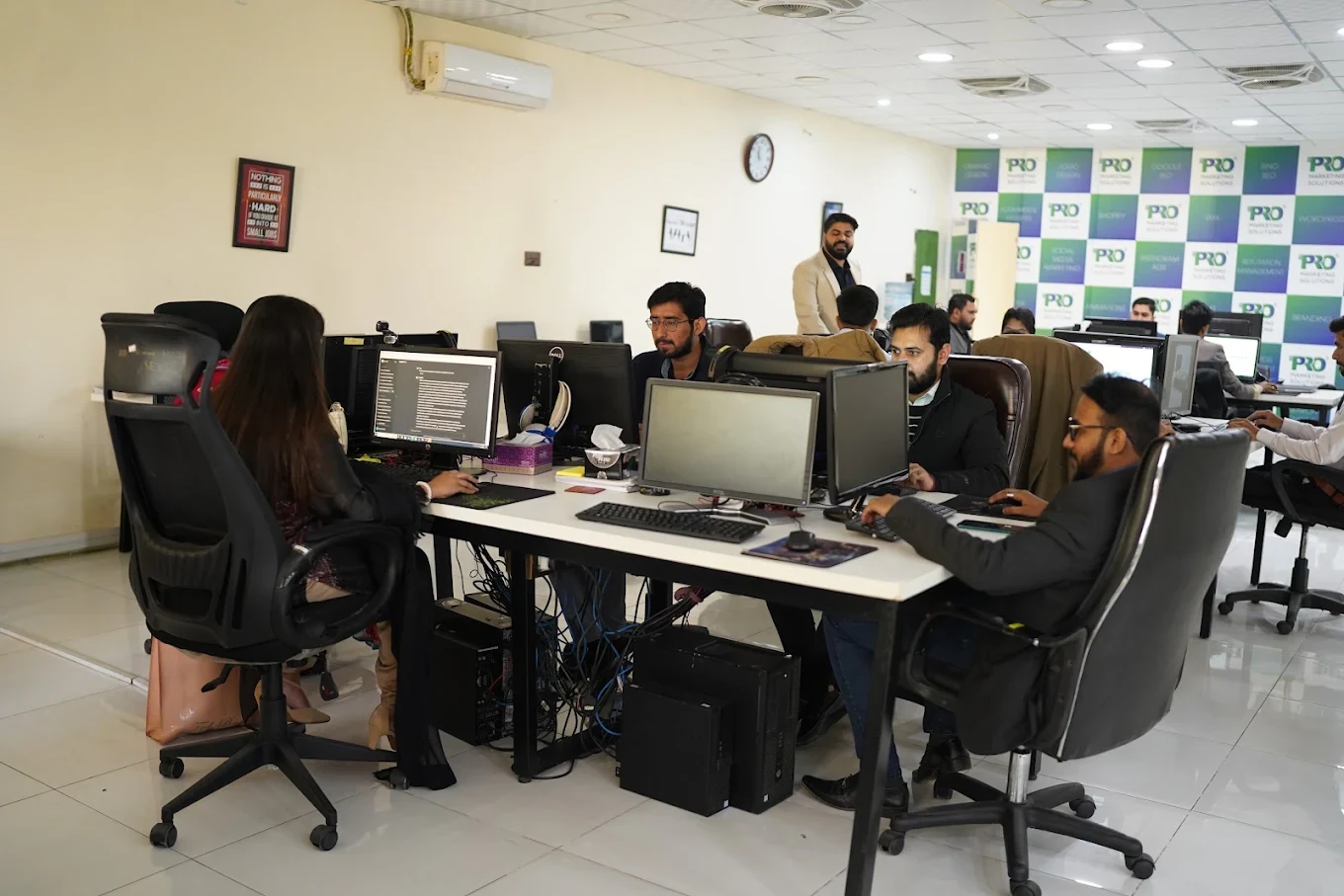

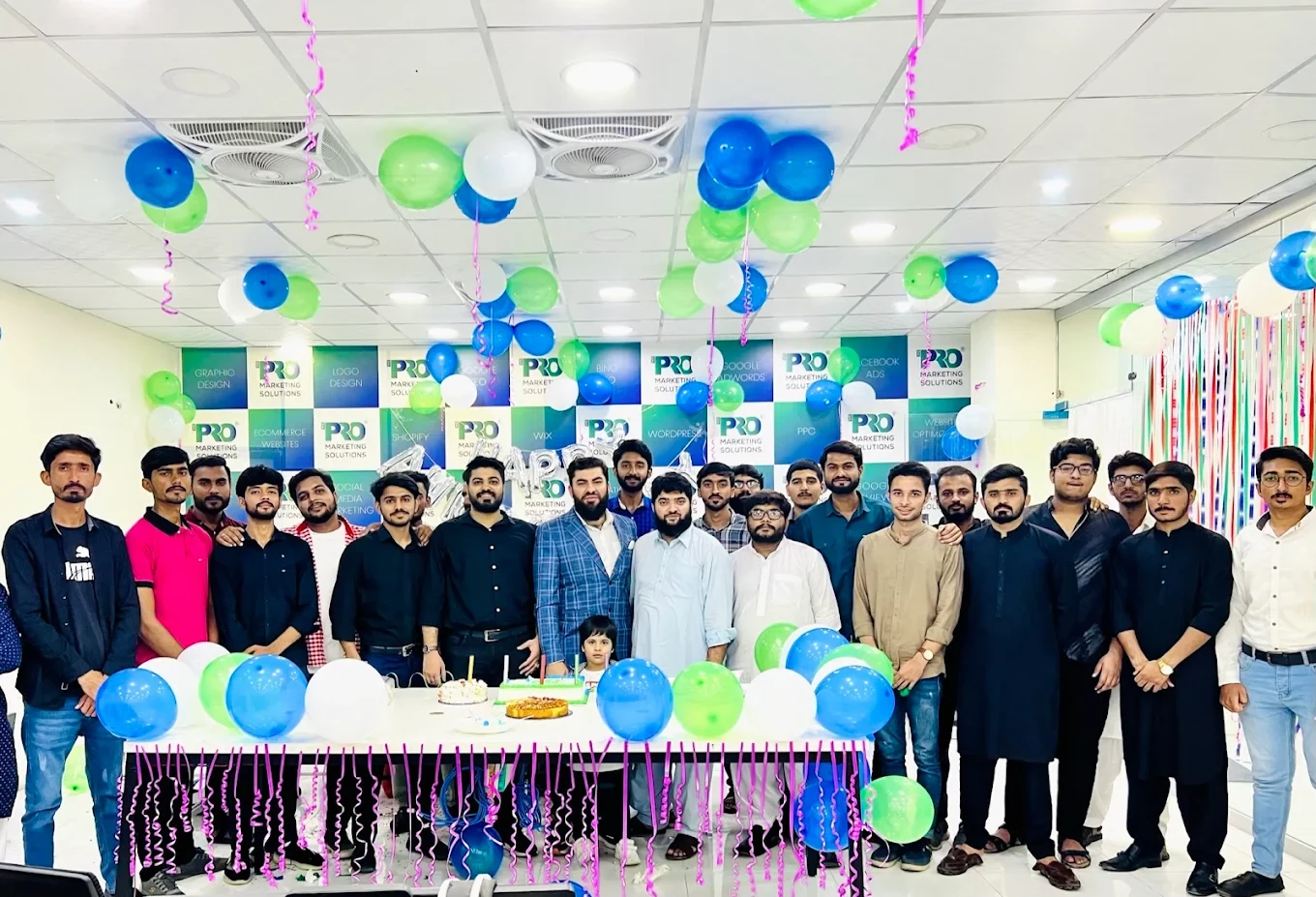

154, C1, Nespak Housing Scheme, Lahore 54770, Pakistan.
Working with a remote marketing team
You know your customers and market. Our strategists, creatives and technical specialists in Lahore help put the plan into practice. Agree the contact person, meeting times and approvals before we start.
Agree deliverables and the agency fee. Discuss ad spend and third-party tools separately.
Keep visibility and ownership. Agree access, asset licences and handover as part of the scope.
Agree a review schedule around your time zone. See what was delivered, what the numbers mean and what comes next.
Explore our Pakistan pricing guides for planning ranges and what shapes the cost. Your market, deliverables and existing setup determine the final quote; advertising spend and third-party costs are separate.
Discuss a quote for your market ↗Before the next step
A useful starting brief includes: current pipeline stages; ownership and routing rules; field and integration inventory. We can agree appropriate access after the first conversation.
Review routing accuracy, data completeness and stage progression with the people responsible for sales.
We can discuss a one-off implementation, an ongoing scope or an initial build followed by support. The proposal states what is included, dependencies and the review points.
Agency work, media spend and third-party costs are identified separately. Your market, existing setup and delivery requirements determine the final scope and quote.
Share your website, target country and the next thing you want to improve. We’ll help you find a useful place to start.