
Analytics and Attribution
Marketing Data Warehouse Setup
Unify ad, CRM, and ecommerce data into BigQuery or Snowflake with clean ELT pipelines and one source of truth.
Explore the detailBuild data pipelines, warehouse models, and reverse ETL to activate customer data back into ad and email platforms.

Marketing Automation and CRM
Build data pipelines, warehouse models, and reverse ETL to activate customer data back into ad and email platforms.
Review routing accuracy, data completeness and stage progression with the people responsible for sales.
A closer look
The approach, practical steps and decisions behind the plan.
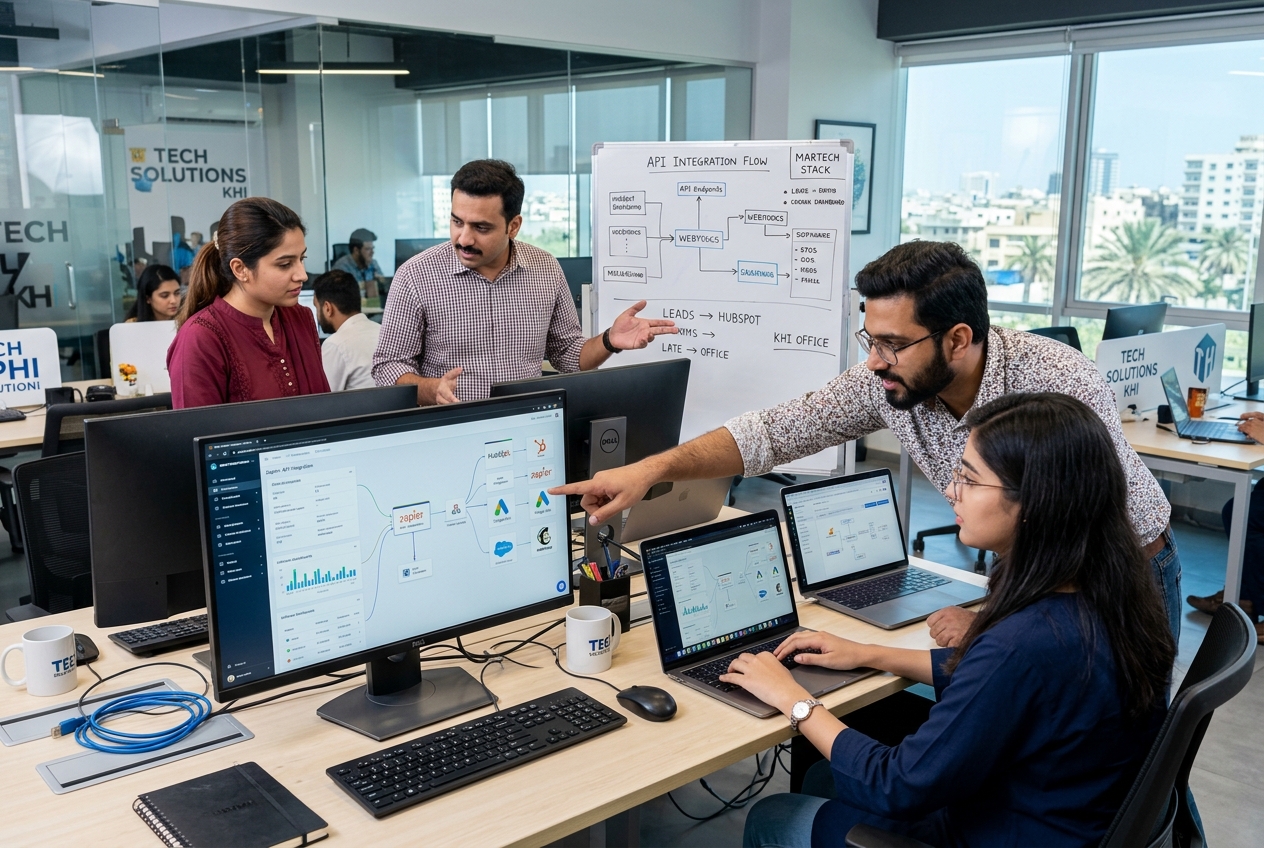
The modern marketing stack runs on data, and most Pakistani companies sit on a goldmine of it that they can’t use. Customer records in the CRM, transaction data in the store platform, ad performance in Meta and Google, product analytics in a separate tool — all valuable, all siloed, and none of it flowing back into the platforms where activation actually happens. WeProms Digital builds the data engineering layer that fixes this: ingestion pipelines into a warehouse, governed modeling with dbt, and reverse ETL that syncs audiences back out into ad and email platforms.
The shift matters now. Marketing data engineering in Pakistan has moved from an enterprise luxury to a competitive necessity as tool stacks have multiplied. Industry analysis of emerging-market martech stacks shows data-mature companies — those with a centralized warehouse and activation layer — significantly outperforming peers on customer acquisition cost and retention, because they can target and personalize from a single, complete view of the customer rather than fragmented platform snapshots. Pakistan’s ecommerce and B2B SaaS sectors are hitting the complexity threshold where this stops being optional.
Marketing data engineering is the practice of building the pipelines, models, and syncs that move customer data through a modern stack: ingesting it from source systems into a warehouse (BigQuery, Snowflake, Redshift), modeling it into governed, documented tables (typically with dbt), and activating it back into the platforms where marketing happens (reverse ETL via Census or Hightouch into Meta, Google, Klaviyo, HubSpot, and others).
It matters because the most valuable data almost never lives in the platform that needs it. Your highest-value customers — those who buy often and never return — are identified by combining transaction data from your store with engagement data from email and support history. That combined view lives only in a warehouse. Reverse ETL is the bridge that pushes those warehouse-built audiences back into the ad platforms so you can target, exclude, and build lookalikes from real, complete customer data.
Our implementation follows five layers. Ingestion — we build pipelines (using Fivetran, Airbyte, or custom) that pull data from your CRM, ad platforms, store, product analytics, and support tools into the warehouse on a reliable schedule. Modeling — we use dbt to transform raw ingested data into governed, documented tables: a clean customer table, an orders table, an engagement table, and the derived segments and metrics that downstream tools consume.
Governance — we document every model, define the source of truth for each metric, and add tests so broken data gets caught before it reaches activation. Reverse ETL — we configure Census or Hightouch to sync warehouse-built audiences (high-value customers, churning customers, recent purchasers) back into Meta, Google Ads, Klaviyo, HubSpot, and other platforms on a defined cadence. Monitoring — we instrument freshness alerts, sync health dashboards, and data quality checks so the pipelines keep running cleanly. Each layer is QA’d: we validate row counts, test model logic against known queries, and confirm sync parity before going live.
Pakistani businesses face a specific data maturity gap. Teams have invested in good individual tools — a decent CRM, a solid email platform, ad accounts across Meta and Google — but the data sits in each tool’s silo, and the only way to combine it is manual CSV exports that are stale by the time they’re uploaded. Analysts spend hours rebuilding the same metrics in spreadsheets because there’s no governed model. And the audiences pushed into ad platforms are crude — all purchasers, or all email subscribers — rather than the precise segments that warehouse modeling enables.
This is where Pakistan-based delivery is a sharp advantage. Data engineering — pipeline construction, dbt modeling, reverse ETL configuration — is precisely the kind of deep, patient technical work that our Lahore and Karachi team does exceptionally well at a fraction of Western rates. A modern data stack build that might cost USD 40,000-100,000 from a US consultancy can land closer to USD 10,000-25,000 with us, and the time-zone overlap with both the Gulf and the UK makes collaboration practical for export-oriented firms.
When customer data lives in five tools that never sync, every analysis is incomplete. A warehouse with proper ingestion collapses those silos into one modeled layer where the customer view is whole and queryable.
Audiences built from manual CSV exports are days or weeks old by the time they reach the ad platforms, so lookalikes are built on stale signals and exclusions miss recent purchasers. Reverse ETL syncs audiences on a defined cadence — hourly or daily — so targeting is always current.
Without a governed model, every analyst computes “revenue” or “active customer” differently, and meetings dissolve into arguing about whose number is right. dbt models with documented definitions give everyone one trusted source of truth.
The platform stack has predictable costs. A warehouse like BigQuery or Snowflake for a mid-size Pakistani business typically runs USD 100-500/month depending on data volume; dbt Cloud starts around USD 100/month per developer seat; reverse ETL tools like Census or Hightouch range from USD 100-1,000+/month based on sync volume and connectors. Ingestion tools (Fivetran, Airbyte) add a comparable layer. The engineering implementation — where Pakistan delivery changes the economics — typically runs USD 8,000-25,000 for a full modern data stack build, well below the USD 30,000-80,000 a Western consultancy would charge.
The ROI appears in three places. First, reclaimed analyst hours — a governed model with trusted metrics eliminates the weekly spreadsheet reconciliation that eats a full analyst’s time. Assess commercial value against actual spend, margin and confirmed business outcomes. Third, retention — being able to identify and target churning customers from a complete data view, rather than guessing from email opens alone, recovers revenue that would otherwise quietly walk out the door.
We deliver data engineering engagements across Pakistan — Lahore, Karachi, Islamabad, Faisalabad, Rawalpindi, and beyond — with a remote-first model built around shared pipeline documentation, dashboarded sync health, and async iteration on models and segments. Typical timelines run six to fourteen weeks depending on source-system complexity and number of activation targets, with a discovery and audit phase, a build phase covering ingestion and modeling, a reverse ETL configuration phase, and an ongoing monitoring and optimization cadence.
We work as an embedded data partner: your analysts and marketers consume the governed data layer and activated audiences, and we own the engineering beneath it — the pipelines, the models, the syncs, the monitoring, the iteration. You get a documented data architecture before we build, weekly reporting on pipeline health and sync coverage after launch, and a continuous optimization cycle that keeps the data layer trustworthy as your business and tool stack evolve. Every engagement starts with a free strategy call to scope the data maturity gaps, and we stand behind the work with a 30-day money-back guarantee if the foundation doesn’t deliver as scoped.
Related services
Analytics and Attribution
Unify ad, CRM, and ecommerce data into BigQuery or Snowflake with clean ELT pipelines and one source of truth.
Explore the detailMarketing Automation and CRM
Connect your marketing tools, CRM, ads, and analytics so data flows correctly across platforms.
Explore the detailLifecycle and Retention Marketing
Create behavior-based segments and personalized messaging across lifecycle channels.
Explore the detailA few of the brands we’ve worked with.








See where the work happens and get to know WeProms before your first conversation. Our team is based in Lahore, working with business owners abroad and at home.
Get to know WeProms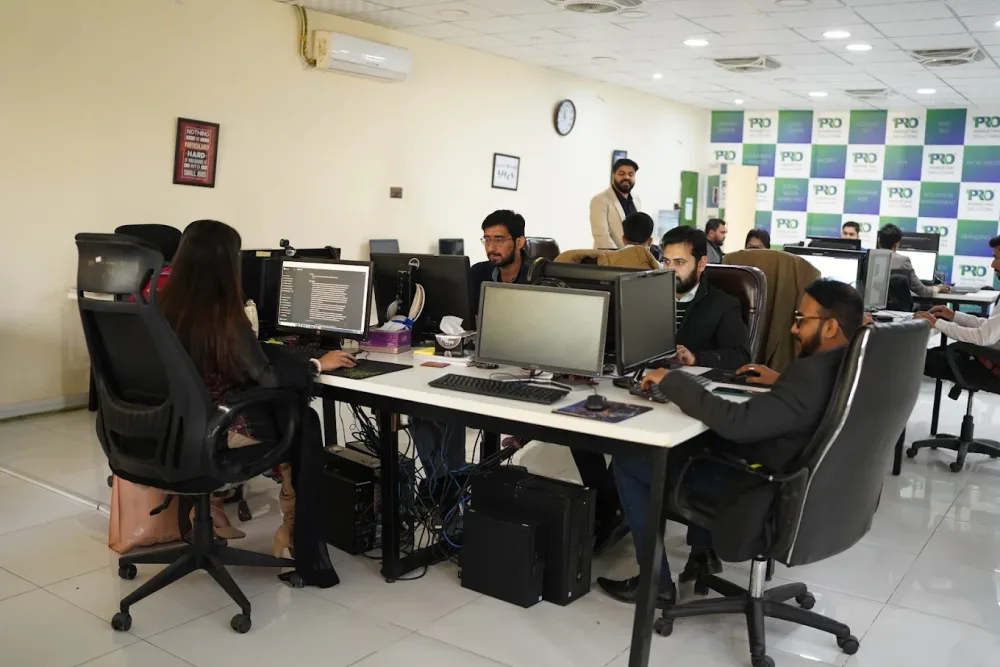 Watch our introduction
Published client experiences
Hear what working with WeProms was like, directly from our clients.
 Watch their story
Healthcare
 Watch their story
Singapore · Video production
 Watch their story
Education
Inside WeProms
Lahore, Pakistan
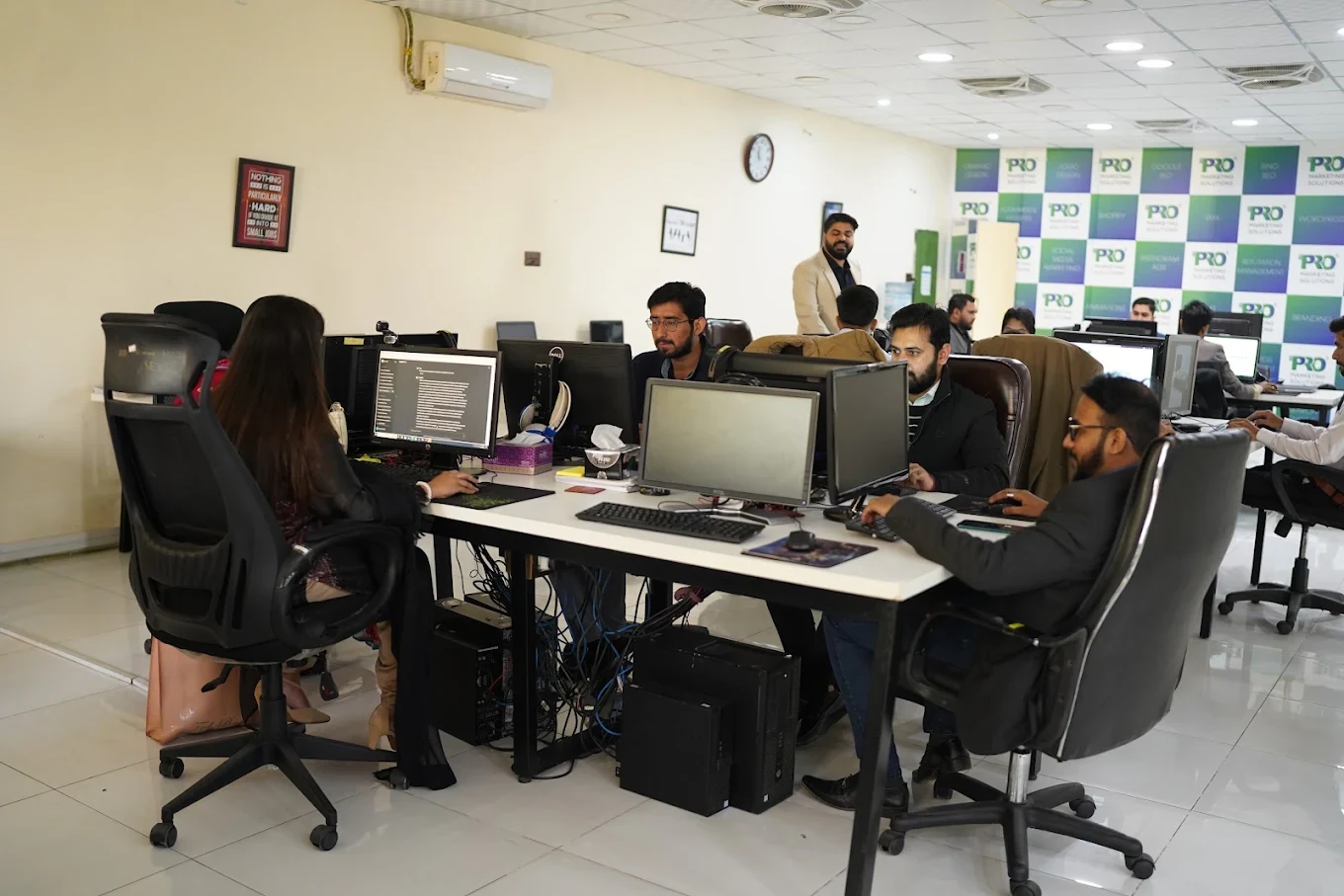

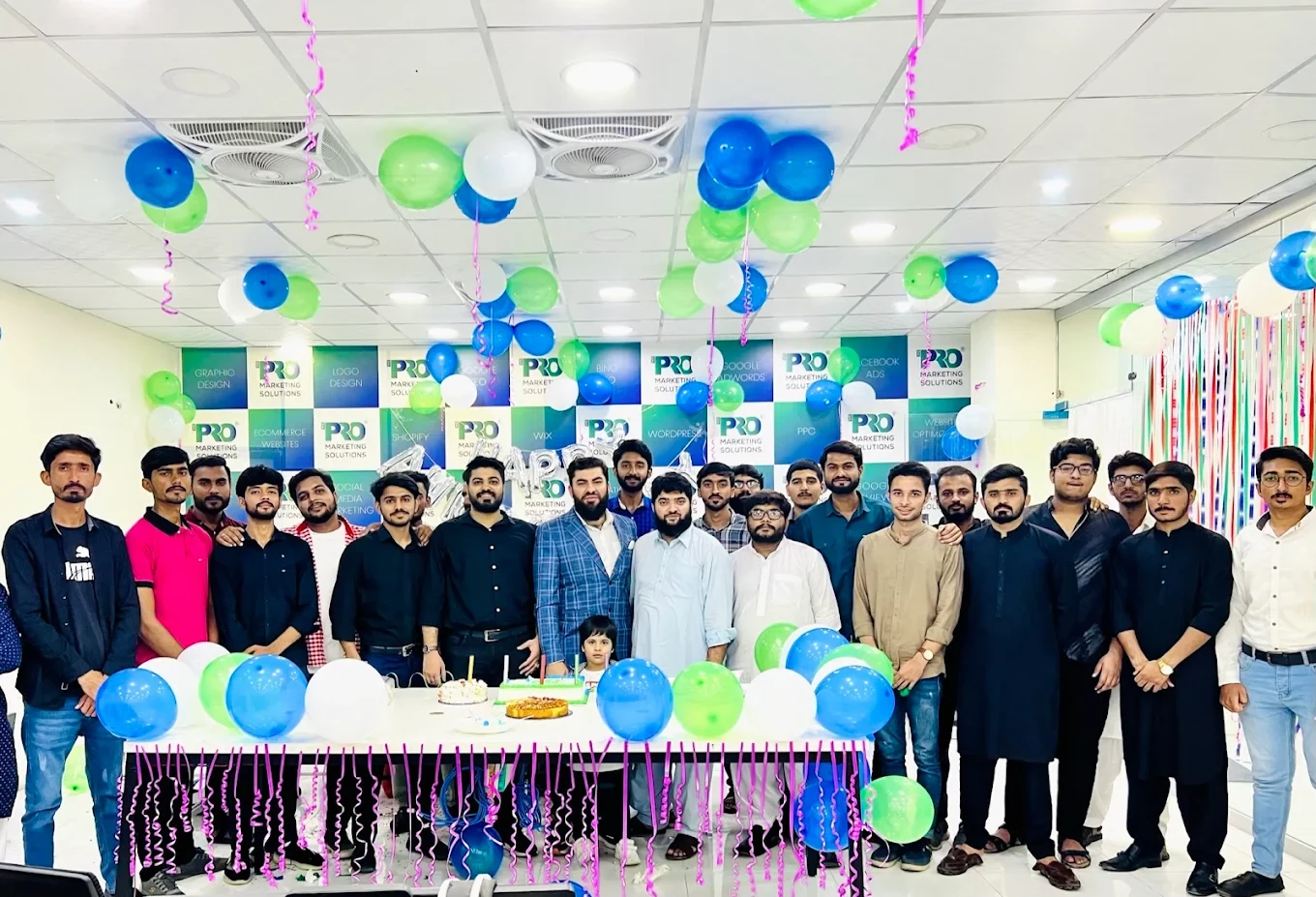

154, C1, Nespak Housing Scheme, Lahore 54770, Pakistan.
Working with a remote marketing team
You know your customers and market. Our strategists, creatives and technical specialists in Lahore help put the plan into practice. Agree the contact person, meeting times and approvals before we start.
Agree deliverables and the agency fee. Discuss ad spend and third-party tools separately.
Keep visibility and ownership. Agree access, asset licences and handover as part of the scope.
Agree a review schedule around your time zone. See what was delivered, what the numbers mean and what comes next.
Explore our Pakistan pricing guides for planning ranges and what shapes the cost. Your market, deliverables and existing setup determine the final quote; advertising spend and third-party costs are separate.
Discuss a quote for your market ↗Before the next step
A useful starting brief includes: current pipeline stages; ownership and routing rules; field and integration inventory. We can agree appropriate access after the first conversation.
Review routing accuracy, data completeness and stage progression with the people responsible for sales.
We can discuss a one-off implementation, an ongoing scope or an initial build followed by support. The proposal states what is included, dependencies and the review points.
Agency work, media spend and third-party costs are identified separately. Your market, existing setup and delivery requirements determine the final scope and quote.
Share your website, target country and the next thing you want to improve. We’ll help you find a useful place to start.