
Lifecycle and Retention Marketing
Customer Win-Back Campaigns
Build win-back campaigns that re-engage inactive customers and recover lost revenue.
Explore the detailSubscription, box, and SaaS retention — churn scoring, dunning, and lifecycle health interventions that save revenue.

Lifecycle and Retention Marketing
Subscription, box, and SaaS retention — churn scoring, dunning, and lifecycle health interventions that save revenue.
Review delivery, customer response and repeat activity. Keep unsubscribes and consent connected across the workflow.
A closer look
The approach, practical steps and decisions behind the plan.
The subscription economy in Pakistan is real and growing — SaaS companies, content platforms, box subscriptions, membership services, and B2B recurring-revenue businesses — but retention discipline has not kept pace with acquisition. The arithmetic is unforgiving: a subscription business losing 8% of subscribers monthly cannot out-grow that leak through acquisition alone, and most Pakistani subscription businesses we audit are running monthly churn rates of 6-12% without any systematic retention infrastructure. Measure retention using consistent customer cohorts and your actual purchase cycle. As more Pakistani SaaS and subscription brands target Gulf and international subscribers — where payment friction and currency issues compound churn — retention becomes not just a margin lever but a survival discipline. We build the systems that turn retention from a hope into a measured, optimized function.
Subscription retention is the discipline of keeping subscribers active and reducing churn — both voluntary (subscribers choosing to cancel) and involuntary (subscribers lost to failed payments, expired cards, or friction). Churn management is the broader system of identifying at-risk subscribers early, intervening to save them, recovering failed payments, and learning from churn signals to improve the product and lifecycle.
It matters because in any recurring-revenue business, retention compounds. Reducing monthly churn from 8% to 5% doesn’t just save 3% of revenue — it extends average subscriber lifetime, lifts customer lifetime value, and lets acquisition spend become profitable that previously wasn’t. A subscription business is fundamentally a retention business; growth is arithmetic without it.
Our retention builds operate on four core mechanics. First, churn-risk scoring: we build models that combine engagement signals (login frequency, feature usage, content consumption), billing signals (tenure, plan, payment method, prior failed attempts), and support signals (tickets, complaints) into a per-subscriber churn-risk score updated continuously. Second, dunning and failed-payment recovery: we engineer multi-step dunning flows — intelligent retry timing, email and SMS reminders, card updater services, alternate payment prompts — that recover a meaningful share of failed payments before they become cancellations. Third, lifecycle health and intervention: we map the subscriber lifecycle to risk moments (onboarding drop-off, usage decline, billing anniversary, plan limits) and trigger targeted save interventions — win-back offers, save discounts, check-in messages, feature nudges, human outreach for high-value accounts. Fourth, measurement and feedback: dashboards tracking gross churn, net revenue retention, dunning recovery rate, save-offer uptake, and churn reasons feed back into product and lifecycle improvements.
This is the same disciplined operating system that mature SaaS and subscription businesses run globally — built for Pakistani platforms and contexts.
Pakistani subscription businesses face specific retention pressures. Payment infrastructure — card penetration, recurring-debit reliability, currency conversion for international subscribers — creates elevated involuntary churn that needs deliberate dunning engineering. The domestic subscriber base has lower average revenue per user than Western markets, making churn economics tighter and recovery more valuable per subscriber. And Pakistani subscription brands expanding into the Gulf and UK face cross-border payment friction, plan-localization mismatches, and lifecycle communications that don’t account for time-zone and cultural differences — all of which inflate churn if unaddressed.
A Karachi SaaS company billing Gulf customers in USD, for instance, loses subscribers not to dissatisfaction but to expired cards and failed international transactions — a problem dunning engineering solves directly. A Lahore content subscription platform loses subscribers because lifecycle communications are generic and the at-risk signals go unmonitored.
Monthly churn erodes revenue gradually enough that it hides in the dashboard, but compounding over a year it can halve the subscriber base. Retention systems surface the leak and close it.
Subscribers who want to stay are lost to expired cards, failed recurring charges, and friction. Engineered dunning recovers a significant share of this revenue automatically.
By the time a subscriber cancels, the decision was made weeks earlier. Churn scoring identifies at-risk subscribers in time to intervene with a save offer or a human conversation.
For a Pakistani subscription business, a retention systems setup sprint typically runs PKR 400,000-900,000 (roughly USD 1,400-3,200) covering the churn audit, scoring model, dunning flows, key save interventions, and platform integration. Monthly retainers for ongoing optimization run PKR 200,000-450,000. The ROI is unusually direct because saved revenue hits immediately: if your subscriber base is 5,000 subscribers at PKR 2,000 monthly ARPU and you reduce monthly churn from 8% to 5%, you retain roughly 150 additional subscribers per month — that’s PKR 300,000 in saved monthly recurring revenue, PKR 3.6 million annualized, against a program costing a fraction of that. For SaaS with higher ARPU or Gulf/UK subscribers in USD, the multiplier is far larger.
We track clear revenue-impact KPIs: gross and net churn rate, dunning recovery rate, save-offer uptake, net revenue retention, and saved revenue — not vanity engagement metrics.
We deliver subscription retention systems across Pakistan — Lahore, Karachi, Islamabad, Faisalabad, Rawalpindi, and beyond — with a remote-first model built around video reviews, dashboards, and async iteration. timelines typically run: churn audit and scoring model defined in weeks 2-4, dunning flows and save interventions built in weeks 4-8, integration and first measurable retention gains in weeks 6-12, with churn reduction compounding from month 3 onward. We operate as an embedded partner — your team sees the churn model, the dunning flows, the intervention playbooks, and the retention dashboards. For Pakistani subscription brands targeting Gulf, UK, or international subscribers, we engineer dunning and lifecycle flows that account for cross-border payment realities and localized communications.
Related services
Lifecycle and Retention Marketing
Build win-back campaigns that re-engage inactive customers and recover lost revenue.
Explore the detailLifecycle and Retention Marketing
Create behavior-based segments and personalized messaging across lifecycle channels.
Explore the detailLifecycle and Retention Marketing
Build lifecycle email flows that increase retention, repeat purchases, and customer value.
Explore the detailA few of the brands we’ve worked with.








See where the work happens and get to know WeProms before your first conversation. Our team is based in Lahore, working with business owners abroad and at home.
Get to know WeProms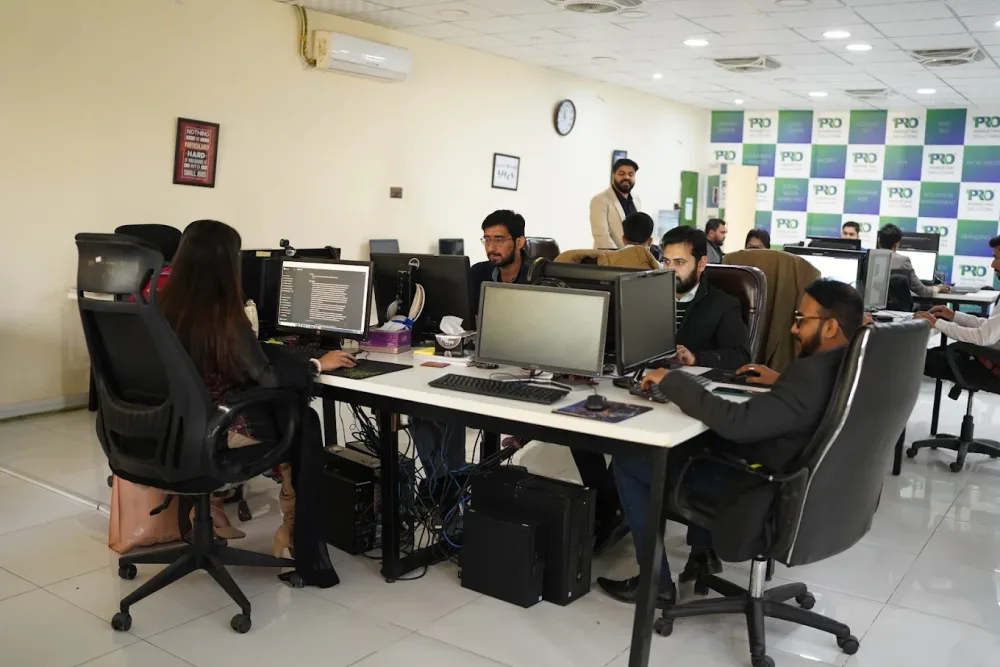 Watch our introduction
Published client experiences
Hear what working with WeProms was like, directly from our clients.
 Watch their story
Their business journey
 Watch their story
Client feedback
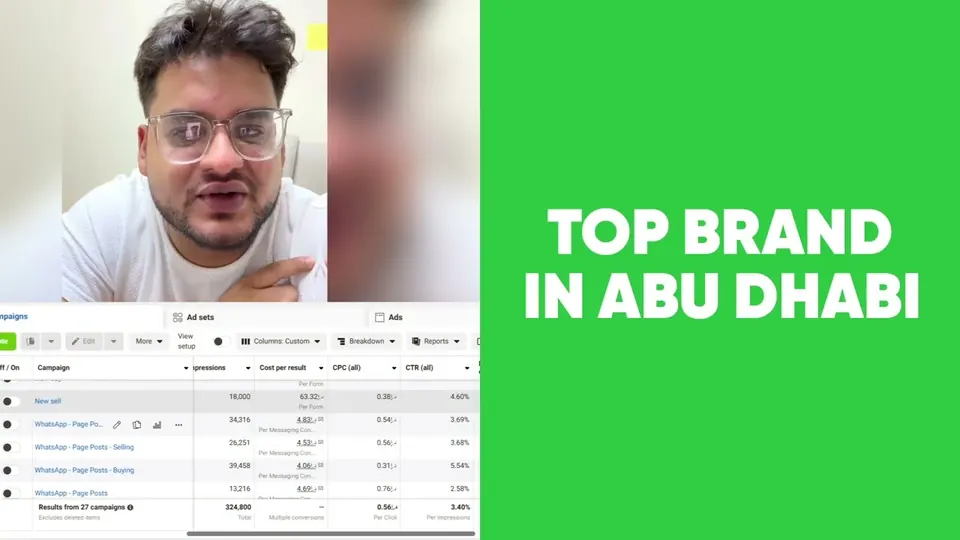 Watch their story
Working with WeProms
Inside WeProms
Lahore, Pakistan
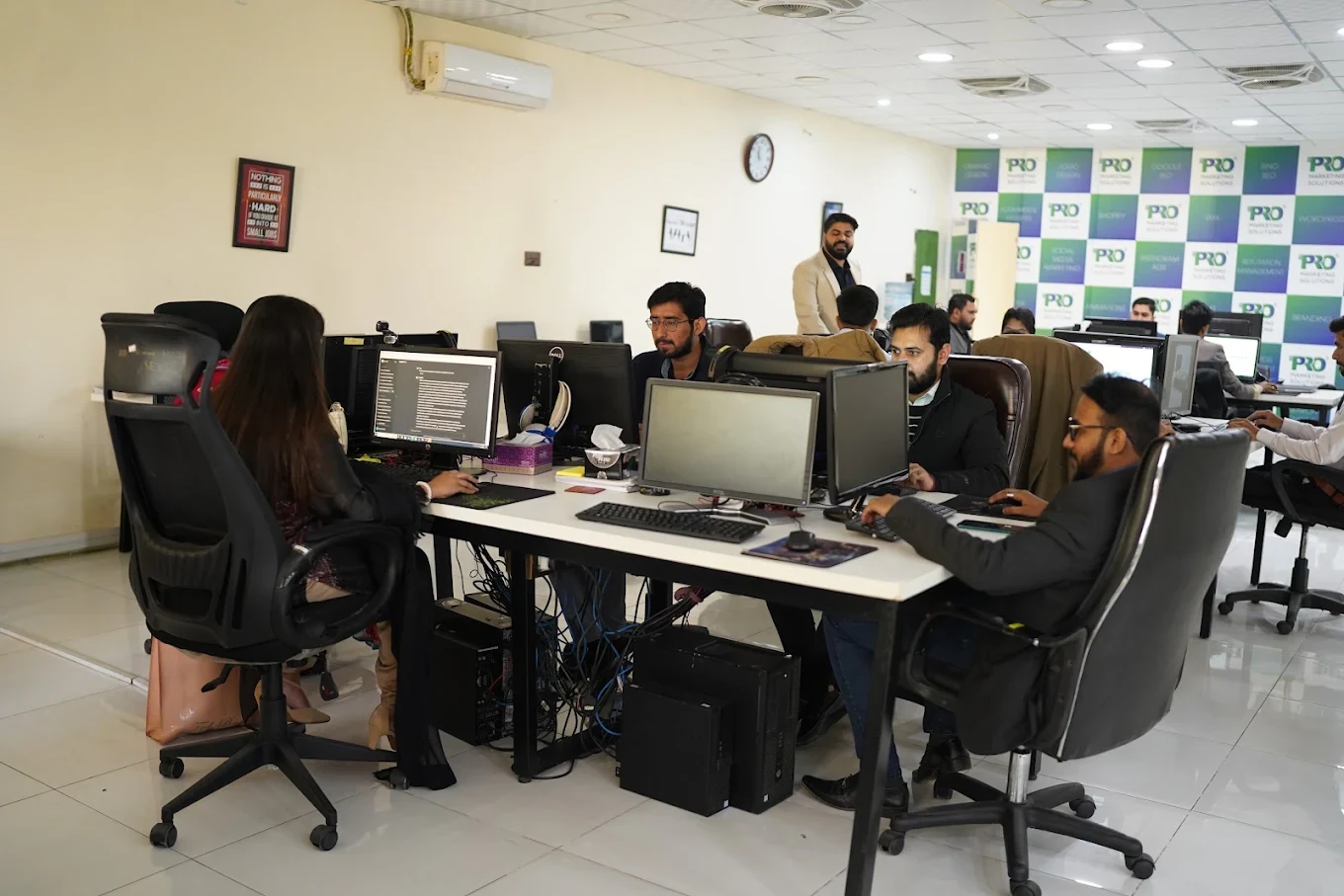


154, C1, Nespak Housing Scheme, Lahore 54770, Pakistan.
Working with a remote marketing team
You know your customers and market. Our strategists, creatives and technical specialists in Lahore help put the plan into practice. Agree the contact person, meeting times and approvals before we start.
Agree deliverables and the agency fee. Discuss ad spend and third-party tools separately.
Keep visibility and ownership. Agree access, asset licences and handover as part of the scope.
Agree a review schedule around your time zone. See what was delivered, what the numbers mean and what comes next.
Explore our Pakistan pricing guides for planning ranges and what shapes the cost. Your market, deliverables and existing setup determine the final quote; advertising spend and third-party costs are separate.
Discuss a quote for your market ↗Before the next step
A useful starting brief includes: audience and permission sources; current customer journeys; delivery and engagement reports. We can agree appropriate access after the first conversation.
Review delivery, customer response and repeat activity. Keep unsubscribes and consent connected across the workflow.
We can discuss a one-off implementation, an ongoing scope or an initial build followed by support. The proposal states what is included, dependencies and the review points.
Agency work, media spend and third-party costs are identified separately. Your market, existing setup and delivery requirements determine the final scope and quote.
Share your website, target country and the next thing you want to improve. We’ll help you find a useful place to start.