By Abdul Rehman · Last updated: September 30, 2026
The short version: This walkthrough takes an unmanaged Google Business Profile from vulnerable to controlled in about two weeks, using free tools and roughly three hours of total work. You will claim the listing, align names and categories, fix the map pin, clear Google’s suggested edits inside the four-day window, and build the review habit that keeps the listing ranking — all without spending a rupee on ads.
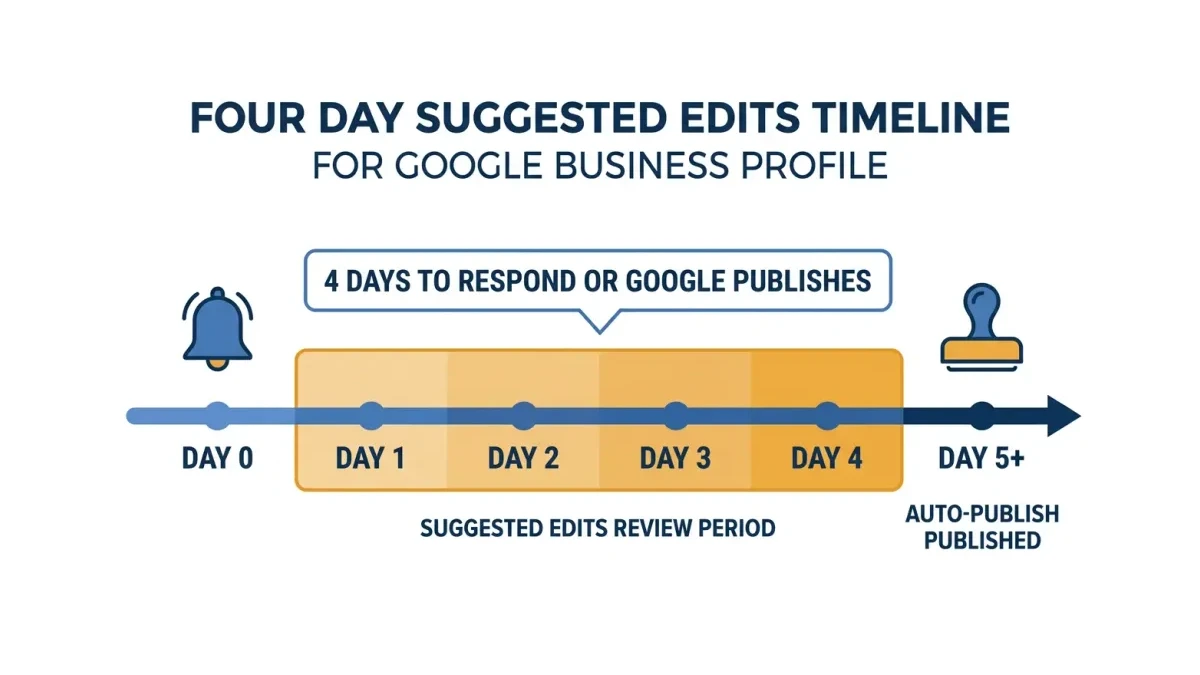
If you run a salon in DHA Lahore, a clinic in North Nazimabad, or a property office on Main Boulevard, and you have not opened your Google listing since the day someone created it for you, then Google has been quietly making decisions on your behalf. The stakes rose in late September 2026: if Google suggests an edit to your hours, category, or phone number and you do not review it within four days, Google can publish that edit on its own. Google calls these suggested edits — changes Google proposes to your profile based on signals like user reports, street data, and its own maps database. Ignore the notification, and the change goes live whether you agreed or not.
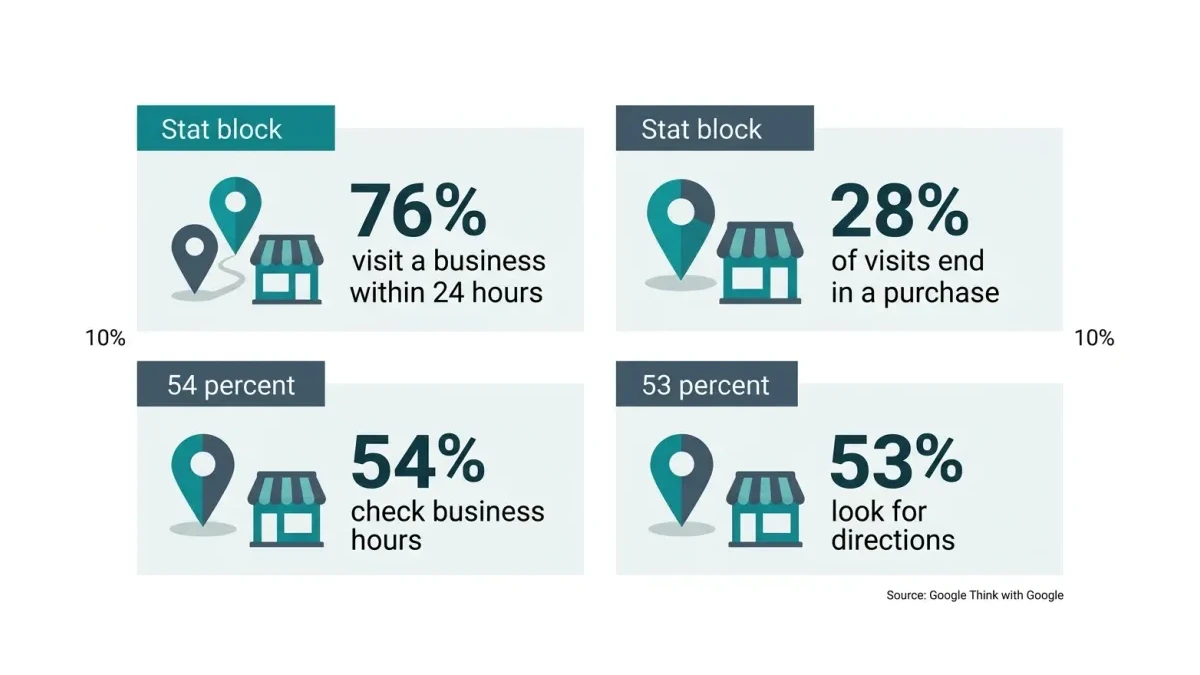
That single policy shift turns an ignored listing into a liability. A Google Business Profile — the free listing that powers your card in Search and your pin on Maps — is the highest-return marketing asset most Pakistani businesses never manage. Most people who search for something nearby visit a business within 24 hours, and 28 percent of those visits end in a purchase, according to Google’s own near-me data compiled by SearchLab. A stale or edited-by-someone-else listing interrupts exactly that flow.
Here is the fix, step by step.
First, find out whether the listing is actually yours
Start with ownership, because every other step depends on it. Search your business name on Google Maps, tap your listing, and look for two signals: whether it says “Claim this business” (nobody owns it yet) and whether the phone number or address is even current. In Pakistan, a surprising share of listings were created years ago by a nephew, a former employee, or the previous owner of the shop, and the current owner has never logged in once.
Picture this: an unclaimed Google listing is like a shop counter in Anarkali left unattended all day. Regulars know you, but anyone walking past can tell a new customer the wrong price, and eventually the whole bazaar believes them. An unclaimed profile accepts suggested edits from the public with nobody to veto them.
Claiming is free and takes minutes. Sign in at google.com/business, request ownership of the existing listing (or create it if none exists), and complete verification — usually a video call or a recorded video of your shop’s signboard and interior, since postcard delivery is unreliable at many Pakistani addresses. Verification routinely completes within a few days.
Then, make the name, category, and services agree everywhere
Once you are inside the dashboard, fix the identity fields before anything else, because they decide when your listing surfaces at all. Google’s own local ranking documentation says local results are based on relevance, distance, and prominence — and relevance starts with your primary category (the precise label that tells Google what you actually are).
The common Pakistani failure is drift between languages and precision. The signboard says “Al-Madina Bakers & Sweets,” the Google name says “Almadina bakery,” the website title says “Al Madina Foods,” and the category is the generic “Bakery.” Choose the name customers actually use, pick the most specific primary category available (“Fast Food Restaurant” beats “Restaurant” if that is what you sell; “Dental Clinic” beats “Doctor”), list every service you genuinely offer, and mirror the same words on your website. Google cross-reads your site and your profile; when they agree, confidence in both goes up.
Next, move the pin to where customers actually walk
The map pin deserves five honest minutes, because pins drift and Google’s own data breaks too. In late September 2026, Search Engine Roundtable documented a Google Maps bug placing business pins in the middle of the ocean — a vivid reminder that even Google’s location database should be treated as unchecked until you have looked at it yourself.
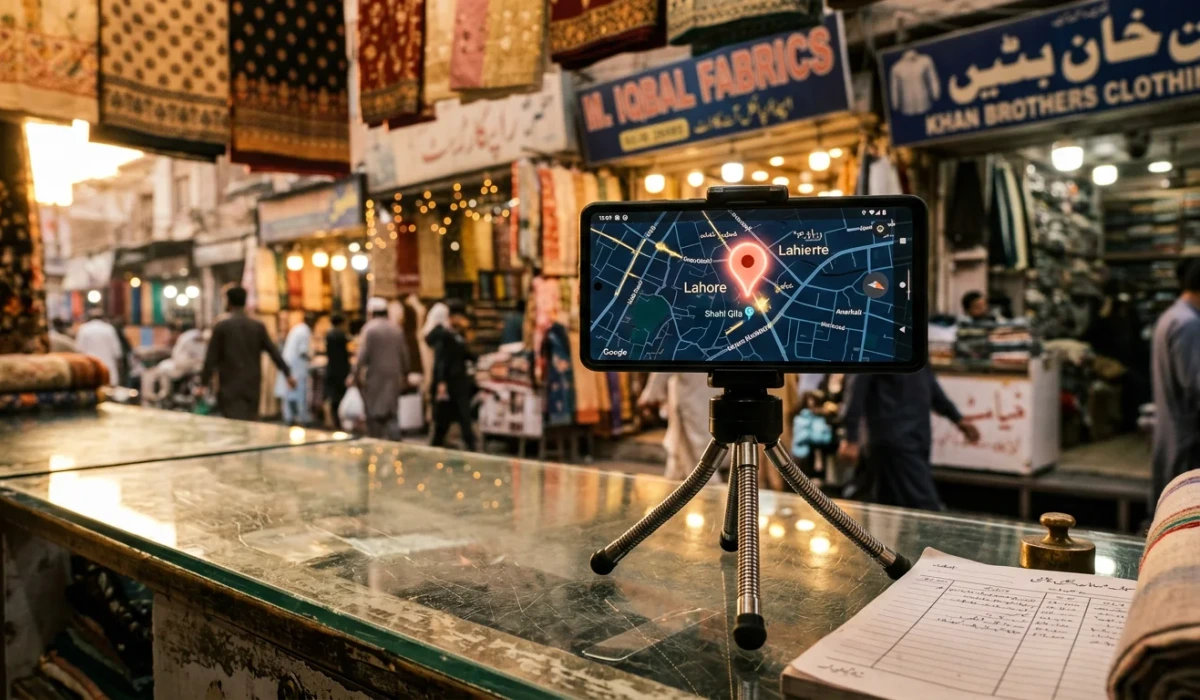
In dense Pakistani bazaars, the problem is older than any bug: addresses that use shop numbers nobody maps, floors above ground level, and lanes with no official names. Open your profile, search your address, then switch to satellite view and confirm the pin sits on the correct building and the entrance customers actually use. Drag it if not, and put a landmark clue (“opposite the Jamia Masjid gate, above the mobile shop”) into your address description field. A correct pin feeds Google’s distance calculation, which means more impressions for searches made within a few streets of you; 72 percent of consumers who did a local search visited a store within five miles, per HubSpot’s local search compilation, so the ground around your pin is where the money is.
After that, clear the suggested-edits queue inside four days
This is the step the September 2026 policy change made urgent. Search Engine Roundtable’s September 29 coverage confirms the mechanics: when Google suggests an edit to your profile, you now have four days from notification to accept or reject it — and if the change is supported by other publicly available information, Google may publish it automatically once the window passes. Some policy-related edits can even be applied without prior notice.
Find the queue before you need it. In the Google Business Profile Manager on desktop it appears under your profile’s updates and editing sections; on the mobile app it surfaces as “Edits from Google” cards. Check it weekly, the way you check your bank SMS. The timing that should worry Pakistani owners most is seasonal: Ramadan and Eid change opening hours for everyone, and a stale or wrongly auto-published “Closed” during the Eid shopping rush costs exactly the walk-in traffic near-me searches are best at sending. Business owners who edited profiles carelessly have also watched their local ranking drop afterward, so review each suggested edit on its merits rather than bulk-accepting.
One related caution: if an edit dispute ever pushes you toward Google support, file honest, single reports. Google’s Business Profile policies now explicitly cover misuse of support channels, and repeated unfounded complaints can get all your future reports rejected without assessment.
At this point, fill the fields that make phones tap
Completeness is where visibility turns into contact. Google has been testing a two-row layout of action buttons — call, directions, website — on the mobile local panel, which means a complete profile now puts more one-tap contact paths in front of every searcher. Every field you fill either feeds those buttons or feeds ranking confidence.
Work down this list once, then keep it current: opening hours including the Friday break and holiday schedules; a phone number someone actually answers during those hours (or your WhatsApp number, which Pakistani customers prefer for everything anyway); your website link; services with prices where honest; and real photographs of your shopfront, interior, and work — not stock images, which both customers and Google read as filler. The data says these fields get used: 54 percent of smartphone users check business hours and 53 percent look for directions before visiting, per Google’s near-me behavior data.
The goal of all this is the local pack — the map plus the top three listings Google shows for a nearby search. You cannot buy your way into it; you qualify for it. Complete, agreed-upon, current information is how a profile qualifies. If your shop still does not appear where it should, start with why listings go invisible on Google Maps before assuming you need ads.
Once the basics hold, run a simple review routine
Reviews are the prominence lever, and they run on routine rather than bursts. Ask every happy walk-in the same day, in the same words — a printed QR card at the counter works better in Pakistan than a WhatsApp blast, because the ask happens while the goodwill is fresh. Reply to every review in the language it was written, including the critical ones, calmly and specifically. Never buy reviews or offer discounts for them; incentive schemes are a policy violation and a common trigger for profile suspension, and recovering a suspended profile is far harder than maintaining one.
Steady velocity beats sporadic volume: a profile gaining four or five genuine replies-answered reviews a month outperforms one that gains forty in a week and then goes silent, because Google reads sudden spikes as manipulation and buyers read silence as neglect. A disciplined ask-and-answer loop is also the core of getting more Google reviews for a Pakistani shop, and the same habit that helps Maps ranking feeds the reputation layer of local SEO across Lahore, Karachi, and Islamabad.
The outcome: a listing you control
Two weeks after you start, the profile should look like the right-hand column of this table rather than the left.
| What customers see | Neglected profile | Controlled profile |
|---|---|---|
| Who edits it | Google and the public, unreviewed | You, inside a four-day window |
| Name and category | Mixed languages, generic category | One name, precise primary category |
| Map pin | Approximate area, sometimes wrong building | Verified entrance, landmark noted |
| Hours during Ramadan and Eid | Stale defaults | Updated and holiday-scheduled |
| Reviews | Unanswered, sporadic | Every review answered, steady intake |
| Contact buttons | Missing number or dead link | Working phone, WhatsApp, website |
The difference compounds. A controlled listing earns more impressions through relevance, more taps through complete buttons, and more trust through answered reviews — free, every day, in a channel where 76 percent of near-me searchers act within 24 hours. Paid ads can amplify a healthy listing; they cannot rescue an abandoned one.
At WeProms Digital, this checklist is the opening move of most local engagements. As Pakistan’s leading local SEO and Google Business Profile agency, we audit and rebuild profiles for clinics, salons, restaurants, and multi-branch businesses across Lahore, Karachi, and Islamabad — pin corrections, category alignment, suggested-edit monitoring, and review routines built into a monthly system. If Google has been editing your listing while you look away, bring it to weproms.com/contact-us, email hello@weproms.com, or message WhatsApp +92 300 0133399.
Read next: How to Get More Customer Calls from Google Maps in Pakistan · Get Your Suspended Google Business Profile Back in Pakistan
Frequently Asked Questions
Why did Google change my business information without asking?
Since late September 2026, Google can publish its own suggested edits to a profile if the owner does not accept or reject them within four days of notification, provided the change is supported by other public information. Google’s reasoning is that fresher data beats stale data. The protection is ownership: claim the profile, check the “Edits from Google” queue weekly, and act inside the window.
How much does it cost to manage a Google Business Profile in Pakistan?
The profile itself is free, and a motivated owner can complete this walkthrough in an afternoon. Professional management exists because most owners stop at claiming. WeProms Digital runs profile audits and ongoing local SEO engagements scoped per location, with current ranges on the WeProms pricing page; most Pakistani businesses start with a one-time cleanup and add monitoring only if they run multiple branches.
Can I undo an edit Google already published?
Usually, yes. Open your profile’s edit history, revert the incorrect field, and resubmit with accurate supporting information. If Google rejects the revert, file one clear support request with evidence such as photos of your signboard or menu. Keep reports honest and few — the new misuse-of-support-channels policy lets Google dismiss future complaints from repeat filers of unfounded reports.
Why does my competitor show above me on Google Maps?
Maps order comes from relevance, distance, and prominence, not payment. If a competitor ranks above you for the same search, check their primary category precision, their review count and reply rate, and their profile completeness against yours. A business two streets closer will often win pure distance; you win the other two factors with the routine in this walkthrough.
How long until my business appears on Google Maps in Pakistan?
A freshly created profile typically appears within days of completing verification, which itself now usually happens by video within a week in Pakistan. Ranking for competitive nearby searches takes longer — expect four to twelve weeks of consistent information, reviews, and activity before the local pack responds. Listings in dense bazaar areas should additionally verify the pin, since address ambiguity delays trust.
Sources & References
- Google — Tips to improve your local ranking on Google — Official documentation
- Search Engine Roundtable — Google Business Profiles Policies Adds Misuse Of Support Channels — September 29, 2026
- Search Engine Roundtable — Google Business Profiles gives you four days to reject user edits — September 29, 2026
- Search Engine Roundtable — Google Maps bug places pins in the middle of the ocean — September 2026
- SearchLab — Local SEO Statistics 2026 — 2026
- HubSpot — Local SEO stats: 72% of local searchers visit a store within five miles — Updated 2025
Additional reading from industry feeds: