Recover a Pakistani Store’s Google Ranking After a Fake DMCA Takedown
Last updated: July 2026 · By Abdul Rehman, WeProms Digital
This walkthrough shows a Pakistani ecommerce brand how to detect a fraudulent DMCA takedown on Google within 48 hours, file a DMCA 512(g) counter-notice, and recover its search ranking in roughly two to three weeks — for a few hours of documentation work rather than a PKR 200,000 legal retainer.
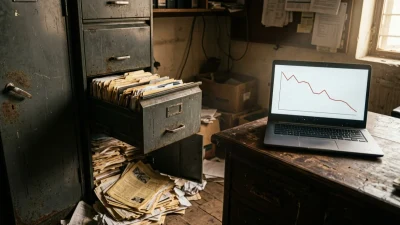
If you run a Pakistani ecommerce store in Karachi and your top-ranking product page disappears from Google overnight — no manual action, no penalty email in Search Console — you may be the target of a fraudulent DMCA takedown. Picture this: a competitor copies your product photography, republishes it on their own domain, then files a copyright complaint against your original page. Within hours, your URL is gone from Google. The product is still live on your site, your checkout still works, but nobody can find you to buy. Search Engine Journal has documented imposters weaponizing “fake takedown requests for negative SEO purposes” to downrank competitors, and Google’s own Transparency Report shows more than 10 billion URL removal requests processed since tracking began. The scale is what makes a small Pakistani store a realistic target — the system is automated, and a fabricated notice can slip through.
DMCA — the Digital Millennium Copyright Act, a United States law that lets a rights-holder ask Google to remove a URL from search results for alleged copyright infringement. A Pakistani store is affected because Google applies the same process globally, which means a complaint filed against a .pk or .com store can de-index it from Google worldwide. The good news is that the same law gives the store owner a clean, documented path back. The steps below walk through that path in order.
First, confirm the page was removed for a copyright complaint
Start here. Open Google and search for the exact URL of the missing product page. If Google has removed the URL for a copyright complaint, the search results page shows a notice at the bottom reading: “In response to a legal request submitted to Google, we have removed N result(s) from this page.” That single line is the confirmation. Without it, the page may be de-indexed for a different reason — a crawl error, a noindex tag, a manual spam action — and the rest of this walkthrough does not apply.
This step matters because Pakistani store owners often assume a ranking drop is an algorithmic change or a competitor outranking them. A copyright takedown is a specific, visible, and reversible event, and the only way to tell it apart from ordinary SEO fluctuation is to actually read what Google prints at the bottom of the results page. If you use GA4 to monitor organic traffic to your product pages, the drop will look like a sudden vertical cliff on a single URL over 24 hours — a shape that does not match a normal ranking decline.
Then, locate the original takedown notice
Book a free strategy call - we'll audit your current setup and identify the highest-impact fixes.
Once the removal is confirmed, find the notice itself. Google forwards most copyright removal notices to the Lumen Database, a Harvard-backed public archive of takedown requests. Search Lumen for your domain name or the removed URL, and the notice should appear with the complainant’s name, the URLs they listed as infringing, and the URLs they claimed as the original work.
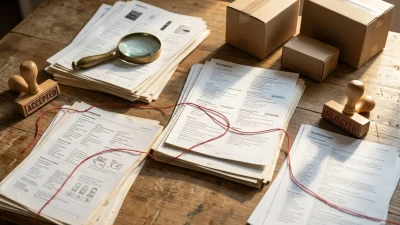
Reading the notice carefully is where most fraudulent claims expose themselves. Look for generic email domains instead of law-firm domains, claims of ownership over images that your store shot in-house, or “original work” URLs that were registered after your page went live. A Search Engine Land report on Google’s lawsuit against fraudulent DMCA filers documents exactly this pattern — bad actors filing notices against legitimate publishers to clear competitors out of search. If your notice reads like that, you have a fraud case and a counter-notice is the right response.
Next, gather proof that you published the content first
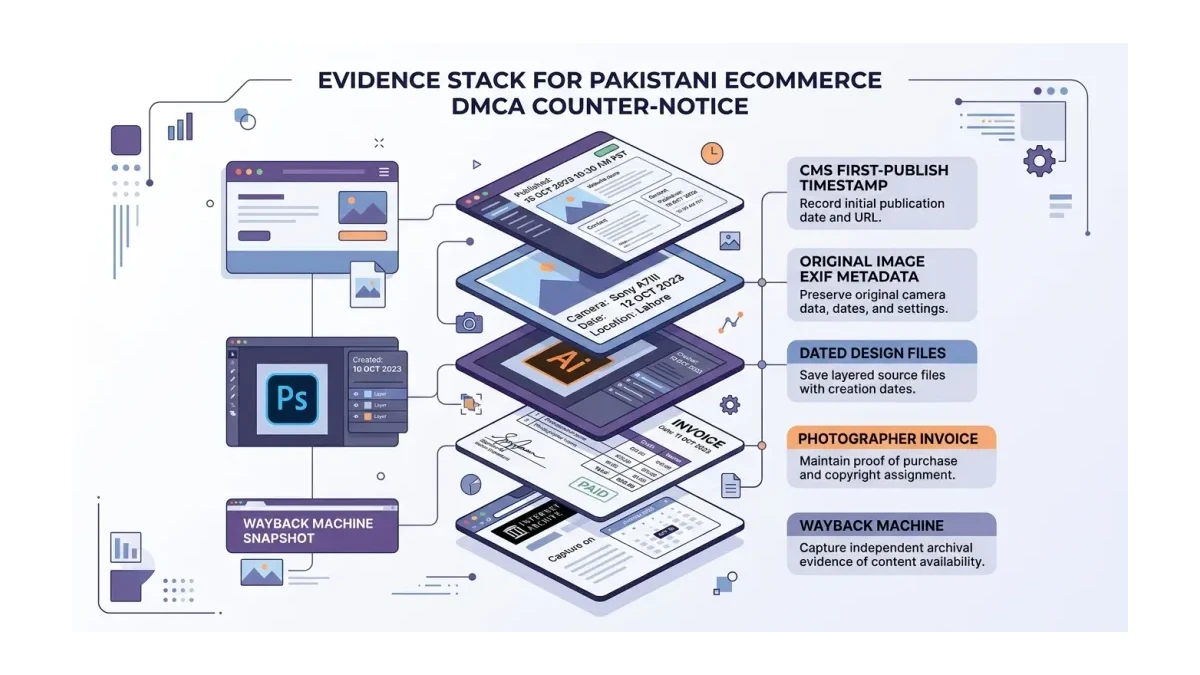
The counter-notice lives or dies on evidence of original publication, so gather it before drafting anything. You need dated proof that your store created or first published the disputed content. Useful evidence includes your content management system’s first-publish timestamp for the product page, original high-resolution image files with camera or export metadata, dated design files, invoices from the photographer or studio, and screenshots from the Wayback Machine showing your page live before the complainant’s “original work” URL existed.
The tradeoff is time spent now versus credibility later. A counter-notice filed with no evidence is easy for a complainant to challenge; a counter-notice filed with a Wayback Machine snapshot and EXIF metadata from your original product shoot is difficult to dispute. Treat the evidence-gathering step as the highest-leverage part of the whole process, because everything downstream depends on it. For stores that publish a high volume of product content, the same evidence archive also protects against future scraping-driven organic traffic loss, which makes the work reusable.
After that, draft the DMCA 512(g) counter-notice
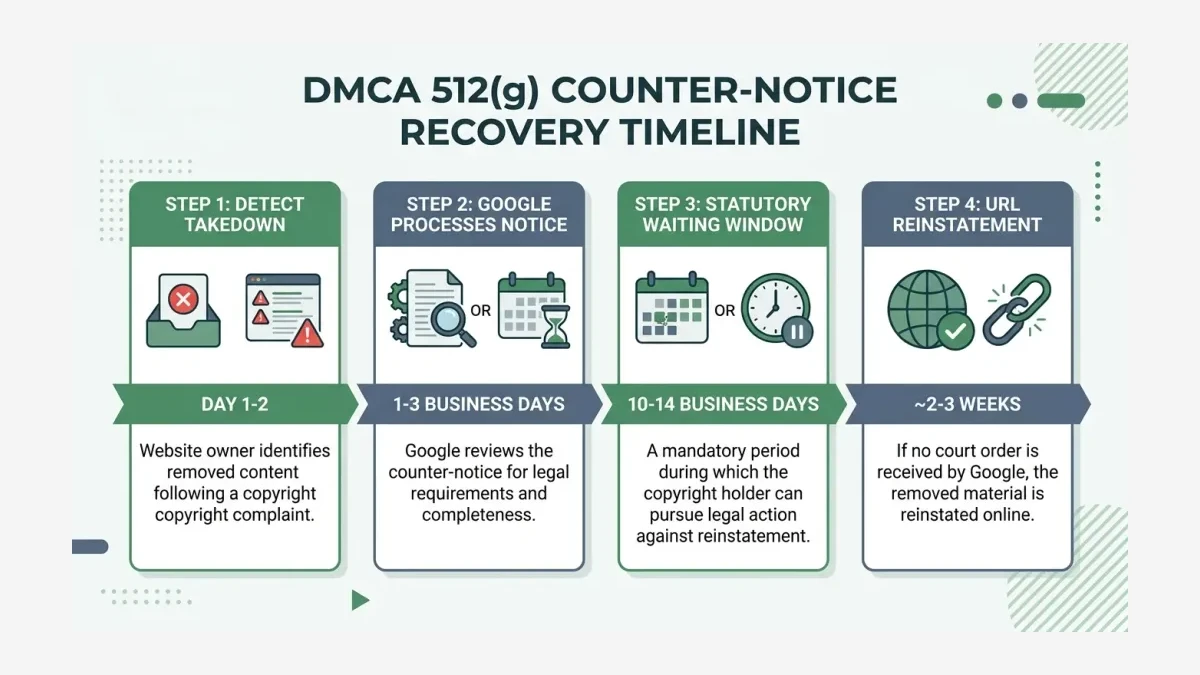
With evidence in hand, draft the counter-notice. A DMCA 512(g) counter-notice — the formal legal document a website owner files to dispute a takedown and request that the URL be restored. Under United States law, once Google receives a valid counter-notice, it must restore the content after a 10 to 14 business-day window unless the original complainant files a lawsuit. PatentPC’s guide to challenging false DMCA takedowns sets out the elements a valid counter-notice must contain.
A compliant counter-notice includes: identification of the removed material and its URL; your name, address, phone number, and email; a statement consenting to the jurisdiction of an appropriate United States federal court; a statement, made under penalty of perjury, that you have a good-faith belief the material was removed because of a mistake or misidentification; and your physical or electronic signature. Google’s legal help documentation explains how to route the counter-notice through Google’s own process, which is the channel most relevant for a search-result removal.
A Pakistani store owner does not need to be a lawyer to fill this in, and does not need to be in the United States. The jurisdiction statement is a standard clause; you consent to a designated United States district in the unlikely event the complainant sues, which fraudulent filers almost never do because suing would expose their fraud. Which means the counter-notice is, in practice, far less intimidating to file than it sounds.
At this point, submit the counter-notice and start the 14-day clock
How we helped a Pakistani business achieve measurable results.
Submit the counter-notice through the channel Google specifies in the original takedown notification, and keep a timestamped copy of everything you send. According to Ceartas’ Google DMCA report, Google typically processes copyright notices in one to three business days for straightforward cases, and up to fourteen for complex ones; the same speed applies on the counter-notice side. Once Google accepts the counter-notice as complete, it notifies the original complainant and the statutory clock begins.
| Dimension | Before counter-notice | After counter-notice filed |
|---|---|---|
| Search visibility | URL removed from Google | URL restored after the statutory window |
| Organic traffic | Near-zero on the affected URL | Returns toward baseline in two to three weeks |
| Time to resolve | Open-ended without action | Roughly 14 to 21 business days end to end |
| Cost | Risk of a PKR 200,000 legal retainer | A few hours of documentation |
| Complainant’s move | Often silence | Must sue to keep the URL down, which exposes fraud |
The chart above tracks the realistic timeline: roughly two business days to detect the drop, one to three business days for Google to acknowledge the counter-notice, ten to fourteen business days for the statutory waiting window, and reinstatement shortly after. Counting from the day you file, expect to see the URL back in Google within about two to three weeks. The wait feels long because it is a legal process, not a support ticket, but it is bounded — unlike a manual penalty appeal, which can drag on indefinitely.
Once the statutory window closes, confirm reinstatement
When the 10 to 14 business-day window closes and no lawsuit has been filed, Google should restore the URL to its search index. Confirm this by searching for the exact URL again, checking Search Console for the page’s indexing status, and watching GA4 for the return of organic sessions to that specific page. Do not assume restoration — verify it, because a quiet processing delay can leave the URL de-indexed a few days longer than expected.
If the URL has not returned within three weeks of filing, the next step is a follow-up through the same Google legal channel, attaching the original counter-notice and the statutory-window dates. Persistence matters here; the process works, but it is not always fast, and a single follow-up is usually enough to nudge a stalled case forward. This is also the moment to flag any pattern of repeat fraudulent filings from the same complainant, since repeated bad-faith notices can carry civil liability for the filer, a fact worth raising if the harassment continues.
From here, harden your content so the next attack fails
Recovering one takedown is not a strategy; preventing the next one is. RedPoints explains that a Google DMCA takedown only de-indexes the URL — it does not remove the content from your server, which means a determined attacker can refile against the same or similar pages. Hardening lowers the odds of a repeat.
- Stamp ownership at creation. Keep first-publish timestamps, original image EXIF data, and dated drafts for every product page, so the evidence step takes minutes instead of hours next time.
- Monitor for scraping. Run reverse-image and plagiarism checks on your hero product photography monthly, because scrapers copy images before they file against them.
- Watch Lumen and Search Console weekly. A new notice against your domain is visible in Lumen before it visibly hurts traffic, which buys you the full counter-notice window.
- Keep a counter-notice template ready. With the boilerplate pre-drafted and only the case-specific fields left blank, your response time drops from days to hours.
- Document the complainant. If the same fake filer returns, a clear record strengthens both Google follow-ups and any civil complaint for bad-faith filing.
This is like contesting a wrong traffic challan at the excise office: the urgency you feel does not shorten the window, but the paperwork you bring decides the outcome. A Pakistani store that files a clean counter-notice with dated evidence wins the appeal; a store that panics and emails Google’s general support does not. The process is designed to be navigable, and the law is on the original publisher’s side.
Read next: For the broader reputation dimension, see how bad reviews travel into AI Overviews for Pakistani brands, which covers the same principle — owning your original signal before a copy does.
If your store has lost a product page or category page from Google and you suspect a fraudulent DMCA takedown, do not wait. WeProms Digital runs a fixed-scope content-protection and recovery engagement for Pakistani ecommerce brands — notice verification, evidence packaging, counter-notice drafting, and reinstatement monitoring — typically inside the 14-day statutory window. Reach the team at hello@weproms.com, WhatsApp +92 300 0133399, or through the contact page. The original publisher has the law on its side; the work is in filing it correctly.
Frequently Asked Questions
How do I know if my Pakistani store page was removed from Google by a DMCA takedown?
Search Google for the exact URL of the missing page. If it was removed for a copyright complaint, the bottom of the results page shows a notice stating that results were removed in response to a legal request. You can then search the Lumen Database for your domain to read the actual takedown notice and see who filed it.
Can a Pakistani business file a DMCA counter-notice without hiring a lawyer?
Yes. A DMCA 512(g) counter-notice is a structured document, not a court filing, and the required elements are well-defined: identification of the removed URL, your contact details, a jurisdiction statement, a good-faith statement made under penalty of perjury, and your signature. Most Pakistani store owners can file one with a few hours of work plus evidence of original publication.
How long does it take for Google to restore a page after a counter-notice?
Once Google accepts a valid counter-notice, the original complainant has 10 to 14 business days to file a lawsuit. If no lawsuit is filed, Google restores the URL to its search index. Counting from the day you file, expect the page to reappear within roughly two to three weeks, though verification and a possible follow-up can add a few days.
What does DMCA takedown recovery cost with an agency in Pakistan?
A focused recovery engagement from a Pakistani agency covers notice verification, evidence packaging, counter-notice drafting, and reinstatement monitoring. WeProms scopes the work after a free initial check, and the cost is typically a fraction of the revenue a de-indexed product page loses in two weeks of zero organic traffic.
Will the person who filed the fake takedown sue my business?
Almost never, in practice. Filing a lawsuit would require the fraudulent complainant to identify themselves and defend the original claim in court, which exposes the fraud. The counter-notice process is designed so that legitimate publishers recover their pages and bad-faith filers disappear once the statutory window opens.
Sources & References
- Google Transparency Report — Copyright Removal Requests: 10 Billion+ URLs — accessed 2026
- Search Engine Journal — Imposters Using Fake DMCA Takedown Requests for Negative SEO — 2018
- Lumen Database — Public Archive of Takedown Notices — accessed 2026
- Google Legal Help — Submitting a DMCA Counter-Notice — accessed 2026
- Search Engine Land — Google Sues Fraudsters Who Filed Fake DMCA Takedown Requests — 2023
- Ceartas — Google DMCA Report: 1-3 Business Days Processing — 2026
- RedPoints — DMCA Takedown on Google: De-Indexing, Not Hosting Removal — 2026
- PatentPC — How to Challenge False DMCA Takedowns (512(g) Elements) — 2026
- PatentPC — Legal Consequences of Filing False DMCA Claims — 2026
Additional reading from industry feeds: