By Hamza Ali · WeProms Digital · October 14, 2026
An illustrative family restaurant near Al Khobar’s waterfront spends SAR 4,500 a month on Facebook and Instagram ads, and doubles it in the weeks before Eid. We see the same structure in most of the restaurant and catering campaigns we review across the Eastern Province: boosted posts, no customer exclusions, and one audience that contains everyone from curious new families to the loyal customer who collected her Eid trays in March. The ads chase both groups equally. One of them does not need convincing.
Here’s the thing. The fix is not a bigger budget or better biryani photography. It is audience hygiene — and in October 2026 Meta finally built half of it for you. The other half, the half that matters in a market where bookings close on WhatsApp, is still your job. This is the breakdown of where the money goes, why the automatic fix breaks on Saudi restaurant accounts, and the fifteen-minute repair.
The setup that burns budget
Most Khobar restaurants run ads the same way: a post performs organically, someone taps Boost, the budget goes to “people in Al Khobar interested in food,” and the campaign runs for two weeks. Nobody chooses the audience beyond that. Nobody excludes anyone.
Run that setup into Eid season and the waste compounds. Your Eid catering audience is everyone — but your Eid catering buyers are a known list of families, event organizers and company admins who already put a deposit down. Show them “Book your Eid trays now” for three weeks and you are paying Meta to re-sell people who have already bought. Worse, ad frequency climbs while reach stalls, which raises your costs and quietly annoys your best customers at the exact moment they should be referring you.
The Eastern Province does not lack demand. Pakistani families across Al Khobar, Dammam and Dhahran book iftar gatherings and Eid catering in predictable waves, and the delivery apps — HungerStation, Jahez, Mrsool — take the single-order traffic while catering money moves through conversations. What the region lacks is campaign structure that knows who already converted.
Where the money actually goes
On October 13, 2026, Jon Loomer documented a change to Meta’s ad sets that fixes the online half of this problem. Customer Lifecycle Strategy — the dropdown at the top of every ad set — now offers two pools: “Get conversions from all audiences” or “Acquire new customers.” Choose acquisition and Meta adds Automatic Customer Exclusions, labeled “Customers from your conversion data (730 days).”
“To help you reach new customers, Meta will automatically exclude existing ones based on your ad account’s conversion data.”
The exclusion keys off the purchase event, with five retention windows: 30, 60, 90, 180 or 730 days. For a twice-a-year Eid caterer, 730 days is the right window — it covers the last two Eids. You cannot switch the automatic exclusion off while acquiring new customers, which is fine, because re-reaching last Eid’s buyer with this Eid’s prospecting ad was never the plan.
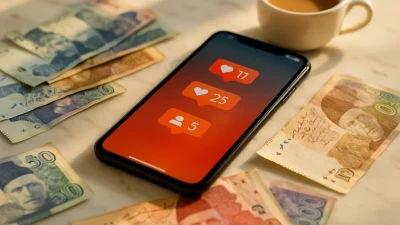
Judge the results honestly while you are in there. Hootsuite’s 2026 benchmarks put a good engagement rate between 1% and 5% overall, with Facebook averaging 2.9% and Instagram 4.2% across industries. A Khobar restaurant page hovering near those numbers is normal; likes were never the problem. The problem shows up in the money column, and one 2026 Saudi benchmark guide estimates Meta clicks at roughly SAR 0.40 to 2.50 each — a wide range, so track your own cost per confirmed booking, not industry averages. Note what those averages cannot tell you: engagement benchmarks measure content response, not whether your ads reached one new family this week.
Why WhatsApp bookings break the automatic fix
Book a free strategy call - we'll audit your current setup and identify the highest-impact fixes.
Read the exclusion again: it fires on conversion data. Your conversion data fires when someone checks out on a website with Meta’s pixel or Conversions API installed.
Now count where a Khobar catering deal actually closes. A family sees the ad, taps Send Message, negotiates trays and delivery over WhatsApp, and transfers a deposit. No website. No pixel. No purchase event. As far as Meta’s automatic exclusion knows, that family is still a prospect — so your next SAR 4,500 keeps showing them ads for the thing sitting in their fridge. Delivery-app orders are equally invisible to your pixel; HungerStation conversions belong to HungerStation’s ad account, not yours.
Loomer’s guidance is blunt on this point: if sales happen offline or in chat, the automatic exclusion is not enough, and you should add a customer-list custom audience as an additional exclusion. In Ads Manager this lives in the custom audience exclusions within the main Audience section of the ad set — the same logic we walk through for Gulf retailers in our Dubai remarketing guide. It is like calling every relative on the walima list every evening to ask whether they are coming. The ones who confirmed find it strange, and the cousins you actually want to reach never get a clean call.
There is a planning lesson in the other direction too. MarTech’s argument that a platform following is not really your asset applies to Meta’s ad account as well: the asset is the booking list, and Meta’s machine works only with the data you feed it. And with 51% of content professionals now using AI to create posts, the feed is getting noisier — targeting discipline, not volume, is the differentiator. Our piece on letting Facebook’s AI run your ads covers the same mechanic for Pakistani advertisers; the logic transfers to Saudi accounts unchanged.
The 15-minute fix
Open Ads Manager and work down one ad set at a time. Set Customer Lifecycle Strategy to acquire new customers, with the 730-day window for your Eid flights. Upload your WhatsApp booking numbers — phone numbers only, from customers who agreed to be contacted — as a customer-list custom audience, and exclude it. If you run separate campaigns for weekly family dining, use a 180-day window there instead, because monthly regulars deserve a different rhythm than twice-a-year caterers.
Pick one call-to-action button per campaign and hold it for the flight. For Khobar booking behavior, Send WhatsApp beats Learn More, because the button decides where the conversation starts. Treat it as a testable variable, not a preference: one button per flight, judged on confirmed bookings, and a week of clean data beats a hunch. Send the clicks somewhere that matches the ad: one evergreen Eid catering page with the menu, deposit terms and a WhatsApp button — not the homepage, and not a page rebuilt from scratch every season. Social Media Examiner’s landing-page workflow exists because a proper page used to eat the better part of a day; keep one good page instead.
Worked example — substitute your own costs. A family iftar bundle sells at SAR 1,200. Ingredients, packaging, delivery and casual staff run SAR 640, leaving SAR 560 contribution per booking. A four-week flight at SAR 4,500, media only, split roughly 70% Instagram and 30% Facebook with a click-to-WhatsApp objective, breaks even at 4,500 ÷ 560 — about nine confirmed bookings. Every booking after that is margin. The stop-or-scale rule: cost per confirmed booking under SAR 380 after two weeks, scale the budget in 30% steps; above SAR 560, which is the entire contribution, pause and fix the audience before adding one riyal.
Then run this checklist monthly, and always the week before each Eid wave:
- Set Customer Lifecycle Strategy to acquire new customers, 730-day window, on every prospecting ad set.
- Upload this month’s WhatsApp booking numbers as a customer-list exclusion — phone numbers of customers who opted in only.
- Log closed catering deals back to Meta as offline conversions, or at minimum refresh the list every month so the exclusion stays current.
- Hold one CTA per campaign for the full flight; judge it on confirmed bookings, not likes.
- Send every click to the one evergreen catering page whose headline matches the ad.
- Watch frequency: if the same audience sees your ad again and again while reach stalls, you are re-buying your own customers.
WeProms Digital, a Meta ads management service for restaurants and caterers in the Gulf and UK, has run Facebook and Instagram campaigns for halal restaurants, caterers and retailers across Saudi Arabia, the UAE and the UK. Based on our experience, exclusion hygiene plus a WhatsApp-first landing page is the fastest cost-per-booking cut available to a Khobar restaurant — usually inside one flight. Email hello@weproms.com or message +92 300 0133399 on WhatsApp; we reply in Gulf and UK business hours.
Read next: Remarketing strategies for businesses in Dubai, UAE — the same exclusion logic, written for Gulf retailers. · Facebook ads get likes but no sales — written for Pakistani advertisers, but the diagnosis fits any boosted-post account.
Frequently Asked Questions
How much should a Khobar restaurant spend on Meta ads for Eid season?
Model it backward from contribution, not forward from budget. Take your catering margin per booking — in the worked example, SAR 560 — and spend only what nine or ten bookings can repay: around SAR 4,000 to 5,000 across four weeks, media only, 70/30 Instagram to Facebook, click-to-WhatsApp objective. That assumes no agency fees and one campaign region. Scale in 30% steps while cost per confirmed booking stays under about two-thirds of contribution; pause and fix targeting if it passes contribution itself.
Does Meta’s automatic customer exclusion cover WhatsApp bookings?
No. The exclusion fires on Meta’s purchase event, which is recorded when someone checks out on a website connected to your pixel or Conversions API. A deal closed in WhatsApp or by phone fires nothing, so Meta keeps treating that family as a prospect. Upload your booking phone numbers as a customer-list custom audience and exclude it alongside the automatic exclusion — Loomer’s testing shows the automatic version alone is not enough when sales close off-platform.
What engagement rate should a restaurant’s Facebook page get?
Hootsuite’s 2026 benchmarks put a good rate between 1% and 5%, with Facebook averaging 2.9% across industries and Instagram 4.2%. A restaurant page in that range is healthy for content. Judge ads on a different number entirely: cost per confirmed booking against your contribution margin. Likes from your existing customers are the most expensive validation you will ever pay for.
Is boosting a post the same as running a campaign?
No, and for this problem boosting is the trap. The boost button offers almost no audience control and no customer exclusions, which is precisely where the waste lives. A campaign in Ads Manager lets you set Customer Lifecycle Strategy to acquire new customers, apply the 730-day automatic exclusion, exclude your WhatsApp booking list, and choose a Send WhatsApp call-to-action. Same budget, completely different money.
Can WeProms run Arabic and Urdu ad campaigns for the Saudi market?
Yes. WeProms Digital builds Meta campaigns in Arabic, Urdu and English for restaurants and caterers across the Gulf, including creative, audience exclusions and WhatsApp-first landing pages. Pricing depends on the number of campaigns and languages; there is no fixed package rate on this page. Send your current ad account and one month of booking data to hello@weproms.com or WhatsApp +92 300 0133399 for a specific quote.
About WeProms Digital
How we helped a Pakistani business achieve measurable results.
WeProms Digital is a Lahore-based paid media and marketing systems agency working with overseas Pakistani and halal-minded business owners across London, Birmingham, Manchester, Dubai, Riyadh, Toronto, Houston, and beyond.
The team specializes in Meta and Google Ads management, WhatsApp-first conversion setups, and landing pages built for Gulf and UK diners, with a track record of auditing ad accounts to find budget that is quietly re-buying existing customers.
Get in touch: hello@weproms.com · WhatsApp +92 300 0133399 (replies in UK and Gulf business hours) · weproms.com/contact-us
Sources & References
- Jon Loomer Digital — Meta Adds Automatic Customer Exclusions — October 13, 2026
- Hootsuite Blog — Average engagement rates for 13 industries in 2026 — October 13, 2026
- Hootsuite Blog — How to do a social media competitor analysis in 2026 — October 13, 2026
- MarTech — Your social media following isn’t the asset you think it is — October 12, 2026
- Social Media Examiner — AI Landing Pages: From Project Plan to Published Page — October 13, 2026
- Watily — Digital advertising for small business in Saudi Arabia 2026: estimated Meta CPC and CPM ranges — 2026
- Startup Hub — Saudi food delivery: why more orders don’t always mean more profit — accessed October 2026
Additional reading from industry feeds: