
| AI Chatbot Market Share by Visits (2026) | | –––––––––––––––––––– | ——— | ––––––––––––––––––– | | Chatbot | Share | Context | | ChatGPT | 82.7% | Dominant share of AI chatbot visits | | Perplexity | 8.2% | Second-largest answer engine by visits | | DeepSeek | 2.5% | Rising alternative in Asia | | Gemini & others | 6.6% | Copilot, Claude, Grok combined |
By Sara Khan. June 15, 2026. Last updated: June 2026.
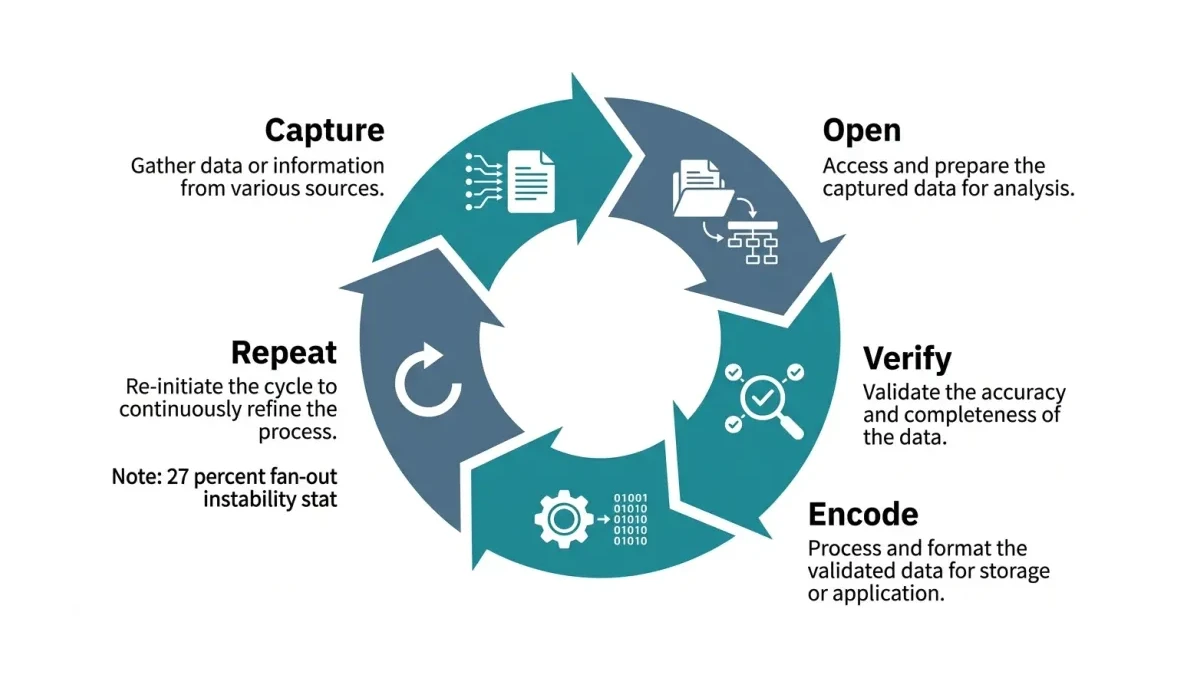
The COVER framework breaks AI search visibility into five steps: C for Capture, O for Open, V for Verify, E for Encode, and R for Repeat. It exists because the unit of discovery has changed. A buyer no longer types a keyword into Google; a buyer types a full sentence into ChatGPT, and the engine splits that sentence into a fan of smaller questions before it answers. Brands that win are the ones whose content answers those smaller questions, and the COVER method is how a Pakistani marketing team maps them systematically rather than guessing.
What actually drives this shift is query fan-out — the mechanic by which a single conversational prompt becomes a cluster of sub-queries that an answer engine runs in parallel. Backlinko’s analysis of ChatGPT behavior found that one comparison question, Toyota versus Honda, pulled 41 cited sources spanning fuel economy, reliability, safety ratings, and long-term ownership costs. One prompt produced forty-one sources across four to six distinct sub-topics. A page that answers only the headline question therefore answers roughly one-sixth of what the engine retrieves, and the remaining five-sixths go to a competitor.
C — Capture: collect the prompts buyers actually type
The work begins with prompts, not keywords. A money prompt is the full sentence a ready-to-buy shopper types into ChatGPT, Perplexity, or Google AI Mode; it carries price, context, and constraint in one line. Backlinko’s research highlights prompts such as “what noise-canceling headphones are best for working from home with kids around, and cost under $300” as the real targets, not the shorthand “noise-canceling headphones.” The shorthand keyword is what an SEO tool reports; the money prompt is what an engine actually answers.
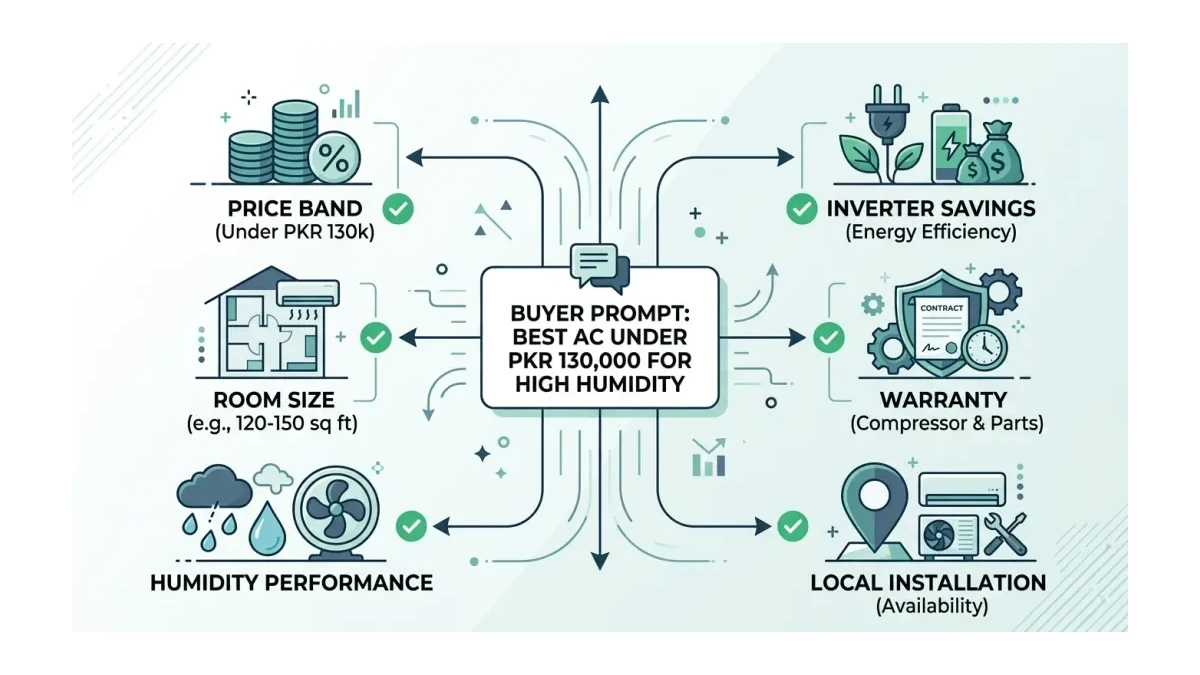
For a Pakistani audience, the equivalent money prompts read differently. A buyer in Karachi types “best 1 ton inverter AC under PKR 130,000 for a small bedroom with high humidity.” A parent in Lahore types “affordable online Quran tutor for kids on weekends with female teacher.” A business owner in Faisalabad types “Cheapest POS software for a single retail shop that supports JazzCash and Easypaisa.” Each prompt is a sentence, each carries a constraint, and each is the unit you must capture. Spend a week collecting 50 to 100 of these from your sales chat transcripts, WhatsApp inquiries, and the phrasing customers use when they call.
The pattern repeats across categories. The prompts that convert are long, specific, and constrained; the keywords that rank are short, generic, and competitive. Capturing the former is cheaper than competing for the latter, and it maps directly to how an answer engine retrieves.
O — Open: expand each prompt into its fan-out
Once a prompt is captured, open it. Opening means listing every sub-question the engine will spawn behind the scenes. For the AC prompt, the fan-out includes price bands, room-size suitability, humidity performance, inverter energy savings, warranty terms, and local installation in Karachi. Each sub-question is a separate retrieval pass, and each is a separate content opportunity.
Think of it the way Foodpanda parses an order. A customer who types “chicken biryani under PKR 600 delivered in 30 minutes to DHA Phase 5” is not searching one keyword; the app splits that request into cuisine, price ceiling, delivery radius, and ETA, then satisfies each layer. Query fan-out does the same with information. One prompt becomes six sub-queries, and the engine assembles an answer from whichever pages best satisfy each layer. The Pakistani retailer who builds one page per sub-query fills every layer; the retailer who builds one generic category page fills only the headline layer and leaves the rest to competitors.
V — Verify: audit which sub-queries you actually answer
Open prompts expose gaps, and verification measures them. For each fan-out sub-query, check whether your site contains a passage that directly answers it. The output is a coverage matrix: sub-queries down the left, your pages across the top, and a mark where a clear answer exists. Most Pakistani sites discover that they answer the headline sub-query confidently and leave five sub-queries blank.
Backlinko’s Bose case study quantifies what full coverage looks like. Bose appeared in over 123,700 prompts across AI answers and accumulated more than 63,900 brand mentions on AI platforms in the United States alone. That breadth did not come from one hero page; it came from dedicated landing pages for distinct use cases such as “noise-canceling headphones for flights” and “headphones for working from home.” Each use case answered one slice of the fan-out, and the cumulative coverage produced mentions across thousands of prompts. The principle transfers directly: coverage breadth, not keyword depth, predicts how often an AI engine names your brand.
For a structured gap view across all five major answer engines, the five-platform AI search citation gap analysis for Pakistani businesses provides a template for the verification step.
E — Encode: write each answer as an extractable passage
Verified gaps become writing assignments, and encoding is where the writing follows a retrieval-friendly pattern. Each missing sub-query gets one passage of 40 to 80 words that answers the question completely when lifted out of context. The passage states the model, the price band in PKR, the city or condition, and the verdict in plain language, with no orphan pronouns and no softeners.
“Your content can rank on the first page of Google and still never be cited or mentioned by LLMs. High rankings don’t hurt, of course. But in AI search, coverage and retrievability are king.”
That observation from Backlinko’s analysis is the core of the Encode step. Retrievability — the ease with which an engine can locate and lift a specific passage — depends on structure as much as on the words themselves. Add schema markup, the structured data code that labels content for machines, for FAQ and Product where it applies, and pair each passage with a comparison table that an engine can extract as a unit. For depth on how volume interacts with retrievability, the research on content volume and AI search citations in Pakistan is worth reading alongside this step.
R — Repeat: track visibility across the prompt set
A single pass leaves money on the table, because fan-out is unstable. Backlinko reports, drawing on SurferSEO’s study of repeated searches, that only 27% of fan-out sub-queries remained consistent when the same prompt was run again. That means nearly three-quarters of the sub-questions an engine asks today may differ tomorrow, so a static content map degrades within weeks. Repeat turns COVER into a cycle: capture fresh prompts quarterly, re-open them, re-verify coverage, re-encode new gaps, and track which prompts surface your brand versus competitors.
The scale of the channel justifies the recurring effort. ChatGPT alone commands roughly 82.7% of AI chatbot visits and around 5.8 billion monthly visits, with about 900 million weekly active users and over 200 million daily users worldwide; Perplexity holds roughly 8.2% of chatbot visits. Answer engines are no longer a fringe traffic source, and the brands that monitor their prompt coverage monthly are the ones that hold visibility as fan-out drifts. This connects to the broader answer engine optimization signal method for Pakistan, which treats visibility as something you measure and defend over time.
Read next: How content volume drives AI search citations in Pakistan and Why brand mentions matter more than backlinks in AI search.
At WeProms Digital, we run the full COVER cycle for Pakistani brands through our content strategy services and our generative engine optimization programme. As Pakistan’s leading answer engine optimization agency, WeProms Digital builds the money-prompt map, runs the coverage audit, writes the extractable passages, and tracks which prompts surface your brand versus competitors each month. Start your COVER audit at weproms.com/contact-us or reach us on WhatsApp.
Key Takeaways
- The unit of discovery is the money prompt, not the keyword; Pakistani buyers type full sentences with price and constraint into ChatGPT, and brands must capture those sentences first.
- One prompt fans out into roughly four to six sub-queries, so a page that answers only the headline question leaves most of the retrieval to competitors.
- Coverage breadth predicts AI mentions; Bose’s 123,700 prompts came from many use-case pages, not one hero page.
- Only 27% of fan-out sub-queries stay stable across repeated searches, which is why COVER is a quarterly cycle rather than a one-time project.
- Each verified gap becomes one 40 to 80 word extractable passage with schema and a comparison table, written to be lifted whole by an engine.
- With ChatGPT holding 82.7% of chatbot visits, monthly prompt coverage tracking is how a Pakistani brand defends visibility as fan-out drifts.
Frequently Asked Questions
What is a money prompt in AI search?
A money prompt is the full, constraint-laden sentence a ready-to-buy shopper types into ChatGPT, Perplexity, or Google AI Mode, such as “best 1 ton inverter AC under PKR 130,000 for high humidity.” It differs from a keyword because it carries price, context, and intent in one line, and answer engines split it into sub-queries before answering.
How many money prompts should a Pakistani brand capture?
Start with 50 to 100 prompts collected from WhatsApp inquiries, sales chat transcripts, and customer calls. That volume is enough to reveal the recurring fan-out sub-queries in your category without overwhelming the coverage audit. Brands in competitive categories like electronics or apparel often expand to 200-plus over a quarter.
How is the COVER method different from keyword research?
Keyword research targets short, generic terms that rank on Google. COVER targets long, specific prompts that answer engines retrieve and cite, then expands each prompt into the sub-queries an engine spawns behind the scenes. Keyword research optimizes for position; COVER optimizes for coverage and retrievability.
How long does a COVER content project take for a Pakistani SME?
A first cycle of capture, open, verify, and encode for 50 prompts typically takes six to eight weeks for a mid-sized Pakistani brand, with the repeat phase running quarterly. WeProms scopes the work by prompt volume and existing content depth, and the monthly tracking continues after the initial build.
Does COVER replace traditional SEO?
No. Traditional SEO still drives the authority that makes a page discoverable, and COVER layers retrieval-friendly structure and prompt coverage on top of that authority. The two work together: SEO gets the page found, and COVER gets the page cited inside the AI answer.
About WeProms Digital
WeProms Digital is Pakistan’s leading answer engine optimization and content strategy agency, headquartered in Lahore, serving Pakistani SMEs, ecommerce brands, and B2B teams across Lahore, Karachi, Islamabad, Rawalpindi, Faisalabad, and Multan.
The team specializes in generative engine optimization, money-prompt research, and extractable content production, with a track record of building prompt-coverage maps that surface Pakistani brands inside ChatGPT, Perplexity, and Google AI Mode answers.
Get in touch: hello@weproms.com · WhatsApp +92 300 0133399 · weproms.com/contact-us
Sources & References
- Similarweb — Gen AI Stats 2026: AI Visibility Trends, Data & Insights
- Gradually.ai — ChatGPT Statistics 2026
- Search Engine Journal — Google Search Sends 23% of Queries to the Open Web
- Ahrefs — SEO Statistics 2026
- Goodfirms — AI SEO Statistics 2026: Rankings & Zero-Click Trends
- Semrush — AI Visibility Toolkit
- DataReportal — Digital 2026 Global Overview Report
- Improvado — AI Marketing Trends 2026
Additional reading from industry feeds: