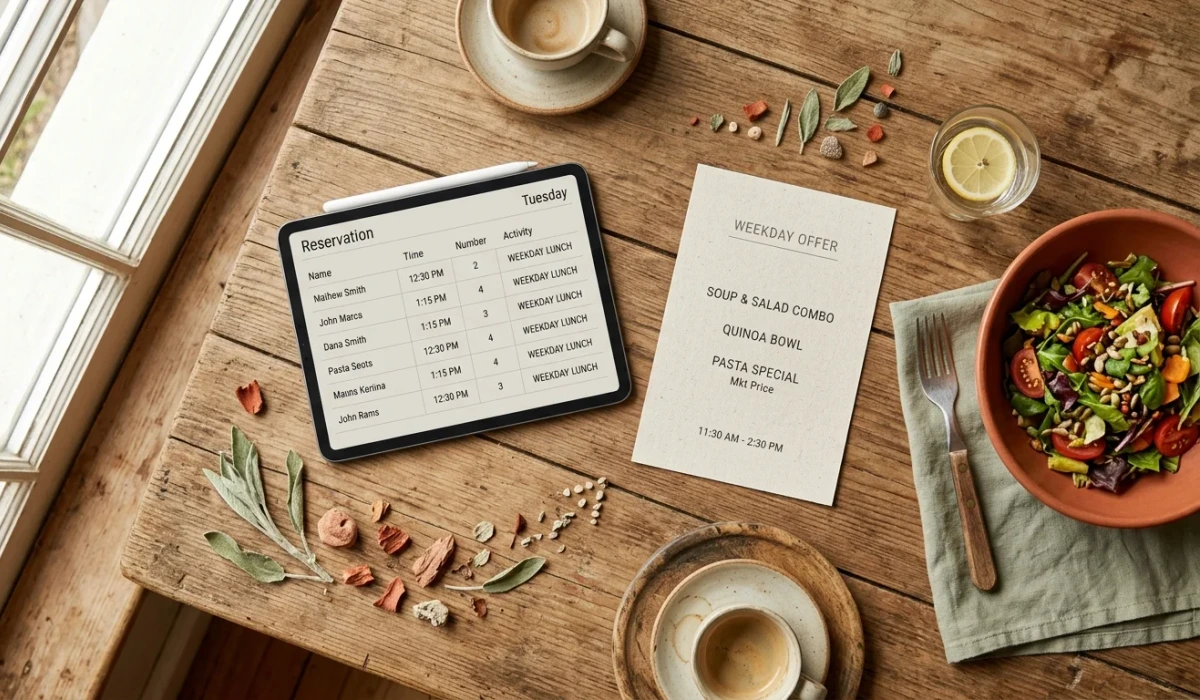
01 / Built around your business
Where the opportunity sits
People need the menu, opening times, location and ordering options to agree wherever they find your restaurant. The starting point is to identify where that decision becomes difficult, then agree which part of the journey deserves attention first.
02 / Built around your business
What the work can include
Local listings, mobile menu and order routes, branch-specific campaigns and permission-based repeat-visit communication. The scope is agreed around your current systems, operating capacity and priorities. Each deliverable should have an owner, the information needed to complete it and a clear review point.
01 / Find
Connect a specific need with the right service.
Organise pages and campaign destinations around the services the business actually provides. Explain the audience, coverage and problem before presenting the next action.
- Keep local listings and website information consistent with actual opening times.
- Confirm the service and area covered.
- Use accurate descriptions and current information.
- Keep the page consistent with the source of the visit.
The working decision
Connect a specific need with the right service.
Confirm the service and area covered.
02 / Assess
Help the visitor decide whether the service fits.
Show the scope, preparation and first conversation clearly. Use real examples or approved evidence where available, with the role of the business accurately explained.
- Make current menus, dietary information and practical visit details easy to read on mobile.
- Explain practical requirements and limitations.
- Use a focused enquiry or booking route.
- Avoid collecting detailed sensitive records too early.
The working decision
Help the visitor decide whether the service fits.
Explain practical requirements and limitations.
03 / Follow through
Connect the enquiry with the person who can help.
Keep the service interest attached to the request and agree who responds. Record whether the conversation leads to a suitable next step so marketing can learn from outcomes.
- Use permission-based updates tied to genuine offers and availability.
- Agree the receiving owner and response process.
- Separate requested, confirmed and completed work.
- Review why enquiries are declined or stalled.
The working decision
Connect the enquiry with the person who can help.
Agree the receiving owner and response process.
03 / Built around your business
Build around how your customers choose
1. Find the restaurant
Keep local listings and website information consistent with actual opening times.
2. Explore the menu
Make current menus, dietary information and practical visit details easy to read on mobile.
3. Book or order
Connect table requests and ordering routes to a clear next step.
4. Give guests a reason to return
Use permission-based updates tied to genuine offers and availability.
04 / Built around your business
Measure the decisions that matter
Reservations, orders and attributable enquiries, with walk-in limits acknowledged. Start with a reliable baseline and keep early interactions separate from completed outcomes. Review the results against your capacity and the costs included in the plan, so the next decision is based on useful business information.
Can you prove every walk-in came from marketing?
No. Track reservations, orders and identifiable enquiries where possible, and state the limits on walk-in attribution. Do not count every direction request as a paying customer.
Use one page for every service?
Group services where the buying questions are shared. Use separate destinations when requirements, audiences or the next action differ enough to need their own explanation.
Count every contact as a customer?
Keep requests, accepted opportunities and completed work distinct. The operational team’s feedback helps identify which enquiries marketing should attract more often.
Relevant enquiries
Requests that fit the service and audience described in “Find the restaurant”.
Enquiry records with service, audience and coverage context.
Accepted next steps
Suitable requests progressing through “Book or order”, using an agreed acceptance rule.
The receiving team’s qualification and confirmation records.
Completed outcomes
Confirmed work, attendance or another agreed operational outcome, reported separately from requests.
The business system that records what actually happened.
Follow-through
Progress against “Give guests a reason to return” over a stated period, with suitable contact permissions.
Relevant CRM, booking or customer records, with reporting gaps stated.
05 / Built around your business
How the engagement starts
Share your website, target market and the main point where growth is getting stuck. We review the existing journey and the information your team can provide, then recommend a defined starting scope. The proposal separates agency work, advertising spend and third-party costs. It also identifies your team’s responsibilities, access requirements and review points.
A useful page or journey
Branch, menu and order selector with visible opening times.
Information your team supplies
Current service or product facts, coverage and availability, plus the details needed to support “Explore the menu”.
Implementation & ownership
Agree who makes the changes and who handles the next step when a customer is ready to “book or order”.
A defined review
Review reservations, orders and attributable enquiries, with walk-in limits acknowledged. Record the period, source and the next action the findings support.
Before we start
Questions about the work
Can you prove every walk-in came from marketing?
No. Track reservations, orders and identifiable enquiries where possible, and state the limits on walk-in attribution. Do not count every direction request as a paying customer.
What determines cost and timing?
The target market, the amount of work, access to the right systems and the review process all affect the scope. We explain the deliverables and dependencies in the proposal.