01 / Behind the approach
The decision behind the approach
Prioritise useful product rendering and interaction responsiveness while preserving image quality needed for purchase decisions.
02 / Behind the approach
The scope at a glance
- Field-Data Diagnosis and Baseline
- Image Pipeline and LCP Element Rebuild
- Code, Plugin, and Third-Party Cleanup
- Verify, Protect, and Improve
01 / Understand
Find the point where the decision becomes difficult.
Combine journey observations with the questions your team hears from customers. Separate uncertainty about the offer from a technical error or an avoidable extra step.
- Use representative pages and devices to identify loading, layout stability and interaction problems.
- Inspect representative pages and devices.
- Distinguish errors from unanswered questions.
- Record the eligible starting population.
The working decision
Find the point where the decision becomes difficult.
Inspect representative pages and devices.
02 / Improve
Make one useful change easy to evaluate.
Define the intended behaviour and the change that could support it. Review wording, controls, validation and the route to the next step before rolling it out.
- Improve the assets, scripts and delivery choices that affect the visitor's first useful experience.
- Keep scope and ownership explicit.
- Check keyboard and phone interaction.
- Verify success and error states.
The working decision
Make one useful change easy to evaluate.
Keep scope and ownership explicit.
03 / Evaluate
Follow completions into their later outcome.
A submitted form or placed order is an intermediate event. Review whether the change helps produce suitable enquiries or orders that can be fulfilled, and document any trade-offs.
- Compare lab diagnostics with available field data and introduce checks that catch performance regressions.
- Check the primary measure and guardrails.
- Include rejected enquiries or cancelled orders.
- State the comparison and its limitations.
The working decision
Follow completions into their later outcome.
Check the primary measure and guardrails.
03 / Behind the approach
How the approach fits together
1. Find the real bottlenecks
Use representative pages and devices to identify loading, layout stability and interaction problems.
2. Prioritise the useful content
Improve the assets, scripts and delivery choices that affect the visitor’s first useful experience.
3. Verify and protect the result
Compare lab diagnostics with available field data and introduce checks that catch performance regressions.
04 / Behind the approach
What to measure
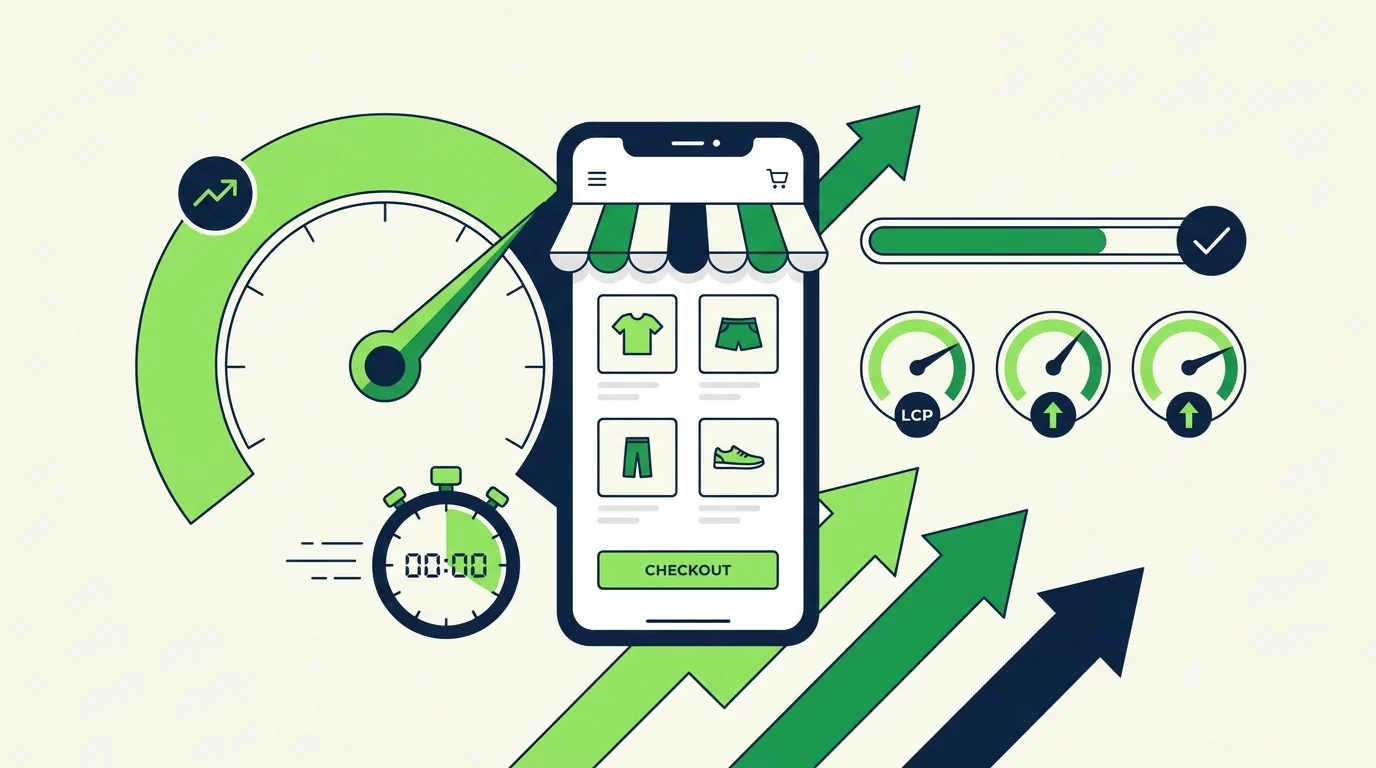
- LCP, INP and CLS: report the measurement source, device segment and period.
- Page experience: compare representative templates.
- Business outcomes: evaluate separately from the technical scores.
Report the observation period, the source of each measure and any changes to the way data was collected. Compare like with like before treating a difference as improvement.
Does a better lab score prove a revenue increase?
No. Lab tests diagnose performance. Real-user measurements and business data are needed to assess the visitor experience and any commercial change.
Remove every field or step?
Remove work that serves no useful purpose. Keep the information needed to route, prepare or complete the request, and move detailed collection to the appropriate later stage.
Treat a positive movement as a proven winner?
Review sample size, the comparison and overlapping changes. Where the evidence is limited, use it to decide the next test rather than claim a settled result.
LCP, INP and CLS
report the measurement source, device segment and period.
Field data or laboratory measurements, labelled by source, device and period.
Page experience
compare representative templates.
Measurements for the same representative page templates and conditions.
Business outcomes
evaluate separately from the technical scores.
Order or CRM outcomes assessed separately from technical performance.
05 / Behind the approach
What this example helps you evaluate
Use the approach to identify what needs to change, what your team must provide and how you would judge progress. The commercial outcome depends on the starting point, implementation and operating conditions.
06 / Behind the approach
When this approach is relevant
Use this as a starting point when the obstacle and operating conditions resemble your own. The first discussion should establish whether the underlying cause is similar and whether the required information and delivery capacity are available.
Friction map
The step, device and observed obstacle, with the evidence behind its priority.
Change specification
The proposed content or interaction, expected behaviour and acceptance checks.
Test decision sheet
The primary measure, guardrails, audience and observation window.
Rollout notes
The decision, known trade-offs and checks needed after release.
Before we start
Questions about the approach
How should I read this case study?
This is an illustrative composite scenario explaining a method. It is not a verified result for a single named client. Use it to understand the decisions and information the approach requires.
Does a better lab score prove a revenue increase?
No. Lab tests diagnose performance. Real-user measurements and business data are needed to assess the visitor experience and any commercial change.
Can the same approach work for our business?
The sequence may be useful, but it needs to fit your product, audience, systems and buying journey. We begin with the problem and the available evidence before proposing the scope.
What should we bring to the first conversation?
Your website, the target market and a short explanation of the obstacle are a useful start. Bring existing reports if available; access and any sensitive records can be discussed through the appropriate process.