

Conversion Rate Optimization
Conversion Rate Optimization Programme
Run structured A/B testing to improve conversion rates across key pages and funnels.
Explore the detailHow a Karachi electronics retailer lifted store conversion rate from 1.4% to 2.3% with a structured A/B testing programme. Built for Pakistani ecommerce teams that need measurable conversion lift.
Published case study · supporting details and results are available to discuss with our team.

01 / The starting point
A mid-size Karachi-based consumer electronics retailer was scaling paid acquisition but store conversion had plateaued. Rising ad spend was no longer producing proportional revenue. A structured CRO programme was needed to turn existing traffic into more orders without buying more clicks.
02 / Decisions into delivery
A phased approach makes the changes, dependencies and review points easier to follow.
03 / Read the outcome in context
Reported outcomes from the published project notes. Read them alongside the timeframe and limitations; ask our team for supporting details.
Lifted from 1.4% to 2.3% (+64%) through sequential A/B testing
Improved from 1.1% to 1.7% (+55%) on the mobile PDP template
Grew from 5.8% to 8.6% (+48%) after trust and sticky-cart changes
Rose from 41% to 54% (+31%) with guest checkout and COD-first order
Reduced 27% as the same ad budget converted at a higher rate
Results depend on the conditions described in this study and do not guarantee future performance.
A closer look
The approach, practical steps and decisions behind the plan.
A Karachi-based consumer electronics retailer selling smartphones, accessories, and small home appliances through their own online store alongside a small physical presence. Their catalog ran to roughly 1,400 SKUs — phone cases, chargers, and earbuds at the low end driving volume, air fryers, microwaves, and networking gear at the high end driving order value. A typical blended order value sat around PKR 8,400, with wide variance: an accessory order might be PKR 2,500 while an appliance order cleared PKR 30,000.
The business had grown quickly on the back of Meta catalog ads and Google Shopping, and for two years that flywheel worked. By the time they approached WeProms, monthly ad spend sat near PKR 2.5M and the store was pulling around 180,000 sessions a month. But the picture had shifted. Online revenue had plateaued around PKR 95M a year, and the team was feeling pressure from marketplace compression — buyers increasingly cross-shopping against Daraz and the dedicated price-comparison electronics platforms, which trained customers to expect lower prices and faster delivery. Margins on accessories in particular were thin, and every order that the store failed to convert was an order the marketplaces picked up instead.
Structurally, the team was a paid-media person, a developer who maintained the store, and a founder who made product and merchandising calls. There was no one whose job was conversion. Every site change — a new banner, a reworded button, a reorganized filter — was deployed on instinct in an afternoon, argued about in a weekly meeting, and then forgotten. Nobody could say with confidence what had actually moved the number, because nothing was ever measured against a control.
They came to us with a specific question: can you help us convert more of the traffic we already pay for, in a way we can measure and trust, before we pour more budget into ads?
Four structural issues were holding conversion down.
Conversion rate was flat at 1.4% while spend climbed. Sessions had grown roughly 40% over two quarters, but orders had barely moved. The paid team was being asked to hit revenue targets with a leaky bucket — every rupee spent on acquisition was entering a store that failed to convert at a competitive rate.
Mobile was badly underperforming. Mobile accounted for 72% of sessions but converted at just 1.1%, against 2.1% on desktop. The mobile product page had a buy button buried below the fold behind a long image stack, specs dumped into a wall of text, and no trust reinforcement for a category where buyers worry about genuineness, warranty, and after-sales support. The gap between mobile and desktop was itself a signal that the mobile experience was structurally broken, not just slightly worse.
Every change shipped on opinion. There was no experimentation infrastructure. A redesign of the cart page, a new payment button, a changed filter — all were deployed on a hunch and then argued about in retro. The team had no way to separate signal from noise, so they could not tell whether a “good” month was caused by a change they made or by a phone launch or a payday cycle.
Trust and logistics friction compounded the above. The checkout forced account creation, surfaced cash-on-delivery as the last payment option rather than the first, and the PDPs buried the signals that matter most to an electronics buyer in Pakistan — genuine-product guarantee, replacement window, COD availability, and realistic stock and delivery status. COD orders also carried a meaningful return-to-sender rate, and the store had no systematic view of which changes reduced versus increased that costly friction.
The friction inventory from the initial audit ran to 23 items across PDP, cart, and checkout. The five with the highest estimated revenue impact became the foundation for the rebuild.
Before changing anything, we built the layer that would let us know whether a change actually worked. This is the part most teams skip, and it is the reason most CRO effort produces no defendable results.
Funnel instrumentation. We rebuilt GA4 ecommerce tracking end to end and validated it server-side through a server-side tagging container. Server-side mattered here for two reasons: it recovered events lost to browser-based ad blockers, which were silently undercounting mobile conversions, and it gave us cleaner, deduplicated purchase data to test against. The funnel was defined as sessions, product-detail views, add-to-cart events, checkout-initiated, and purchase, with separate segmented views for mobile and desktop and for accessories versus appliances. Currency and event parameters were normalized so downstream reporting was trustworthy from day one.
Heuristic UX audit. A Baymard-informed review of the mobile PDP, cart, and checkout flagged the 23 friction points, each scored by likely revenue impact and implementation effort. The top five: no sticky add-to-cart on mobile, account-required checkout, COD buried in the payment list, missing warranty and replacement trust block, and a stock indicator that said only “In stock” with no delivery speed.
Quantified drop-off. Session replay and field-level form analytics showed where buyers actually bailed. The checkout form alone lost 38% of starters between the email field and the payment step, almost entirely at the account-creation gate. On the PDP, mobile buyers who scrolled past three product images without finding the price were the highest-bounce cohort.
Experimentation platform. We stood up a proper experimentation layer with a stats engine, pre-registered sample-size calculations, and sequential testing using always-valid inference so we could read results without inflating false positives. Every future change would run as a controlled test against a holdout, with significance thresholds and minimum detectable effects set before launch. Critically, we defined guardrail metrics up front — average order value and return-to-sender rate — so a test could only ship if it lifted the primary metric without hurting them. No more opinion deploys.
Baseline KPIs were locked with confidence intervals: store CVR 1.4%, mobile CVR 1.1%, add-to-cart 5.8%, checkout completion 41%, blended AOV PKR 8,400, return-to-sender rate on COD orders 14%.
With measurement in place, we rebuilt the two templates with the highest leverage. The audit had flagged these as structural rather than incremental issues, so they went in as foundation — the new floor that every later test would run against — rather than as experiments.
Mobile PDP restructure. The buy action became a persistent sticky bar visible on first scroll, so a buyer could add to cart the moment they decided, without hunting. Specs moved into a tabbed, scannable layout (key specs, full specs, compatibility) instead of a text wall. A trust block — genuine-product guarantee, 7-day replacement window, COD badge, verified-seller marker — was placed directly above the price, the point of maximum purchase anxiety. Stock status changed from a generic “In stock” to “In stock — ships from Karachi in 24 hours,” which both reassured buyers and set honest delivery expectations.
Checkout redesign. We removed the account-creation gate and shipped guest checkout, offering optional account creation only after the order completed. Payment methods were reordered to put cash on delivery first — reflecting how the majority of Pakistani electronics buyers actually pay — followed by Easypaisa, JazzCash, and card. Address autocomplete and a one-tap city selector cut form fatigue and reduced the address errors that drove failed COD deliveries.
| Checkout element | Before | After |
|---|---|---|
| Account requirement | Forced sign-up to proceed | Guest checkout, optional account after order |
| Payment ordering | Card first, COD last | COD first, then wallets, then card |
| Address entry | Manual fields, no validation | Autocomplete + city selector |
| Stock and delivery cue | “In stock” | “In stock — ships in 24 hours” |
| Trust signals near price | None | Genuine guarantee, replacement, COD badge |
These structural changes alone nudged checkout completion from 41% to roughly 47% before the testing phase even began, and they gave the experimentation layer a clean, modern baseline to optimize against.
With the foundation laid, the programme became what it was always meant to be: a disciplined cadence of controlled experiments. We built an ICE-scored backlog — each candidate test rated on impact, confidence, and ease — and ran roughly one experiment per template per fortnight, each with a pre-registered hypothesis and guardrail metrics attached.
The tests that won:
Two tests lost, which is exactly the point of having an experimentation layer. A prominent “free delivery over PKR 5,000” banner we expected to lift conversion had no statistically significant effect and was shelved rather than shipped on faith. And a condensed one-page checkout variant actually reduced completion versus the rebuilt multi-step flow, because buyers on mobile needed the sense of progress that steps provided — a counterintuitive result we would never have believed without the data.
The guardrail discipline mattered throughout. One variant that aggressively pushed bundle offers lifted add-to-cart but would have dragged average order value down through discounting; it was rejected because the guardrail tripped. AOV held steady at roughly PKR 8,600 even as conversion climbed, which is the difference between a real win and a hollow one.
By week 8 the test backlog was producing a steady cadence of winners. Each shipped winner raised the baseline that the next test ran against — the compounding effect that makes CRO a programme rather than a project, and the reason conversion lift accelerates rather than appears all at once.
We maintained an experiment repository throughout: hypothesis, variant, sample size, result, statistical read, and the decision taken. The team inherited institutional knowledge rather than rediscovering it every quarter. Losers were documented alongside winners, because knowing what does not work is roughly half the value of an experimentation programme — it stops the team from repeatedly trying things that feel right but are not.
By the 90-day mark the stack of incremental wins had moved the headline number from 1.4% to 2.3%. Because the same ad budget now converted at a higher rate, blended cost per acquisition dropped 27% without a single rupee cut from media spend — the paid team got more orders for the same money, which is the cleanest possible proof that the work paid for itself.
With conversion stabilized, the natural next step was retention: the higher order volume fed directly into abandoned-cart and post-purchase flows, turning a one-time conversion gain into a lifetime-value gain. But that is a separate engagement.
| Metric | Before | After | Change |
|---|---|---|---|
| Store conversion rate | 1.4% | 2.3% | +64% |
| Mobile conversion rate | 1.1% | 1.7% | +55% |
| Add-to-cart rate | 5.8% | 8.6% | +48% |
| Checkout completion | 41% | 54% | +31% |
| Average order value | PKR 8,400 | PKR 8,600 | +2% (protected) |
| COD return-to-sender rate | 14% | 10% | -29% |
| Blended cost per acquisition | Baseline | -27% | Same ad spend |
Every figure above is illustrative of the outcome shape a Pakistani electronics retailer can use to sanity-check fit, not an audited third-party result. The conversion-rate lift sits at the top of the typical band because the store was starting from a genuinely under-optimized baseline, with measurement absent and mobile structurally broken.
For Pakistani ecommerce teams looking to lift conversion on traffic they already pay for:
WeProms Digital has applied this conversion rate optimization programme framework across Pakistani ecommerce stores in electronics, fashion, beauty, and home goods. The UX audit and conversion analysis that opens every engagement is adapted per vertical, but the measurement-first, mobile-prioritized, guardrail-protected approach stays consistent. For electronics retailers specifically, the trust-signal and payment-ordering patterns map directly to the consumer electronics industry context we work in most.
Relevant services
Conversion Rate Optimization
Run structured A/B testing to improve conversion rates across key pages and funnels.
Explore the detailConversion Rate Optimization
Audit user behavior and friction points to identify high-impact conversion fixes.
Explore the detailConversion Rate Optimization
Build the experimentation infrastructure — feature flags and server-side experiments on Statsig, GrowthBook, or Optimizely.
Explore the detailSee where the work happens and get to know WeProms before your first conversation. Our team is based in Lahore, working with business owners abroad and at home.
Get to know WeProms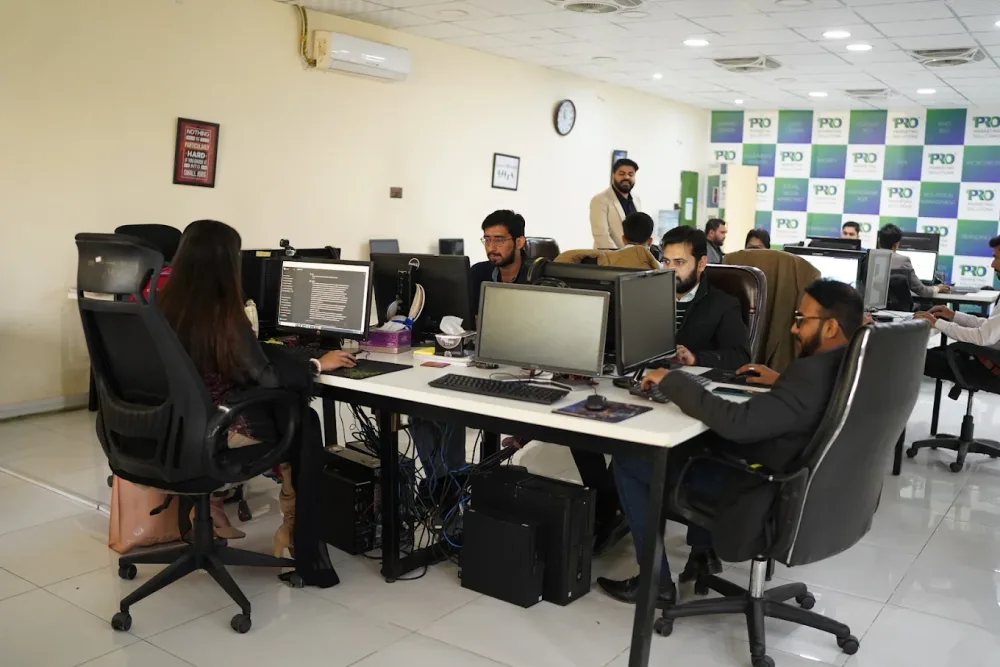 Watch our introduction
 Published client experiences
Hear what working with WeProms was like, directly from our clients.
 Watch their story
 Healthcare
 Watch their story
 Singapore · Video production
 Watch their story
 Education
Before the next step
This is an illustrative composite scenario explaining an approach. Its figures are not audited outcomes for a named WeProms client and do not predict your results.
We first need to understand your baseline, offer, customer journey and implementation capacity. Similar symptoms can have different causes, so the scope should follow a diagnosis.
Share your website, target country and the next thing you want to improve. We’ll help you find a useful place to start.