By Hamza Ali · September 7, 2026 · 7 min read
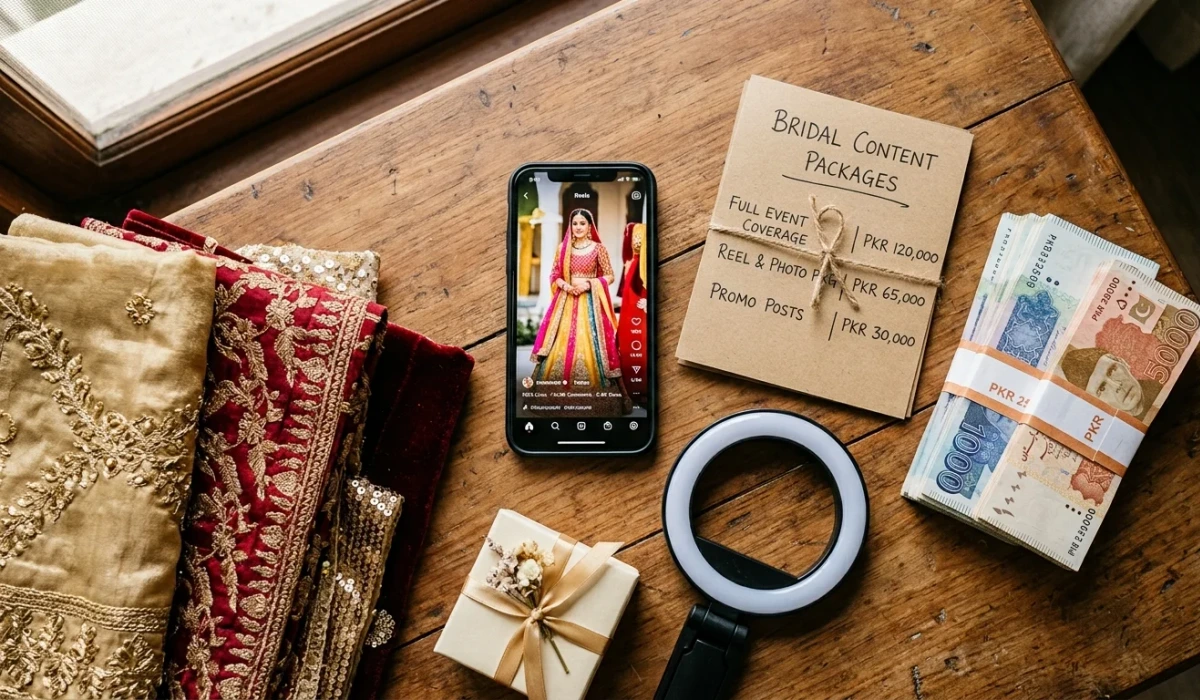
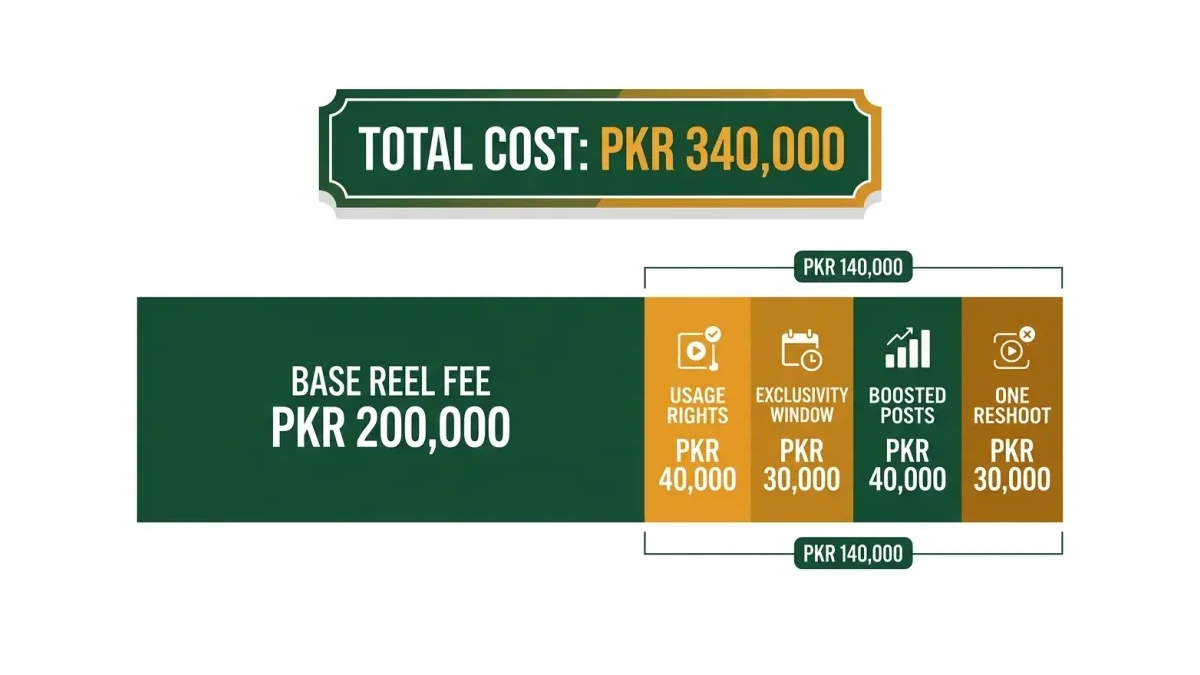
A Karachi bridal-wear brand books four micro-influencers for wedding season. The rate card says PKR 50,000 per reel. Four reels, PKR 200,000, budget closed. Six weeks later the final invoice reads PKR 340,000.
Nobody stole anything. Every extra rupee was a line item the brand discovered after signing: usage rights, an exclusivity window, two boosted posts, one reshoot. Here’s the thing. The rate card was never the budget. It was the opening line of a negotiation most Pakistani owners do not realize they are in.
The quote covers the post, nothing else
A rate card — the creator’s published price list for one deliverable, usually a single reel or static post — covers exactly one thing: the content going up on the creator’s profile. The shoot, one caption, one round of revisions, organic posting. That is the whole deal.
Everything a brand actually wants sits outside it. Keeping the video to repost. Running it as an ad. Making sure the same creator does not promote a rival lawn suit next week. A second edit when the first cut misses the brief. Each of those is a separate negotiation, and each has a separate price.
We see this gap every wedding season. Brands in Lahore and Karachi plan campaigns off published rates, then meet the real numbers at invoicing. The gap is not fraud; it is an industry whose pricing has quietly unbundled while most buyers still shop for a single number.
The scale makes it worse. Pakistan counted 79.9 million active social media identities in October 2025, alongside 117 million internet users, according to DataReportal’s Digital 2026 Pakistan report. That is a colossal creator pool with zero standardized pricing.
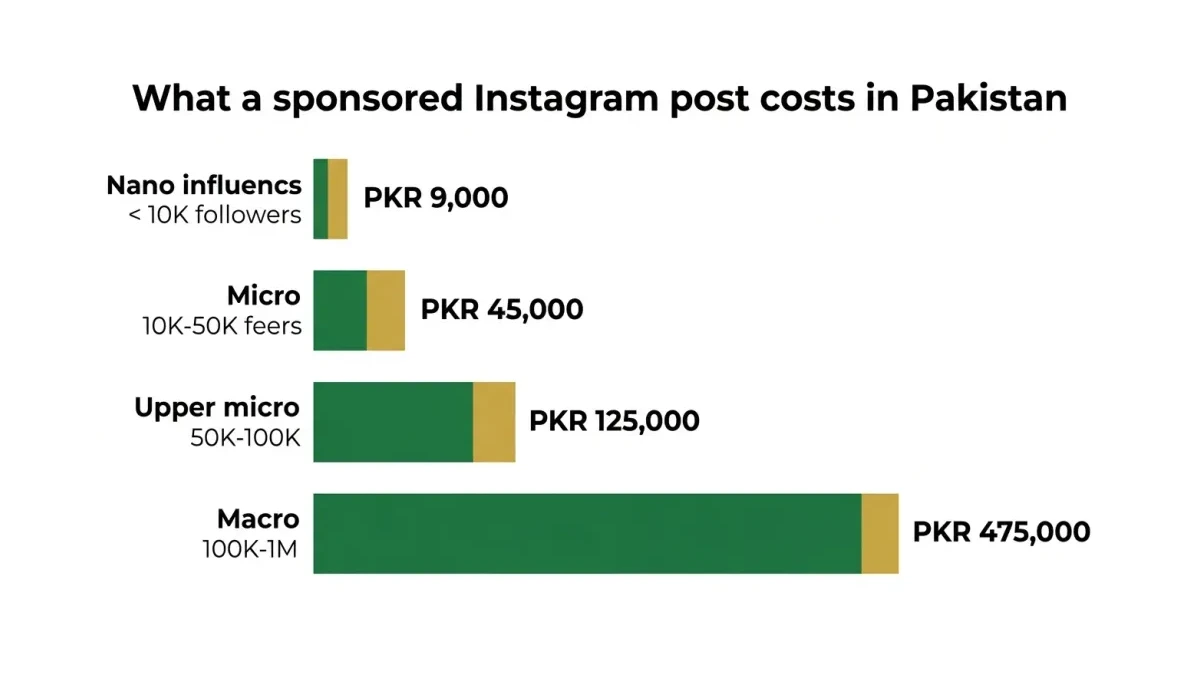
Published 2026 rate guides make the spread obvious. Collabscafe’s Pakistan influencer rates for 2026 places nano creators (under 10,000 followers) at PKR 3,000-15,000 per post, 10K-50K creators at PKR 15,000-75,000, 50K-100K creators at PKR 50,000-200,000, and 100K-1M accounts at PKR 150,000-800,000. A macro reel can cost 50 times a nano post before a single usage term is discussed. For deeper tier-by-tier planning numbers, our influencer pricing guide for Pakistan breaks the ranges down by platform.
Usage rights: the line item that quietly doubles the bill
Usage rights — the permission to reuse and re-run a creator’s content after it is posted, including turning it into paid ads — is the single biggest hidden cost in influencer marketing right now. Global reporting confirms it is now a primary price driver, not a footnote.
Digiday reported on September 4, 2026 that marketers now structure usage-rights charges as either a flat monthly fee or a percentage of paid-media spend on top of the creator’s base fee. Read that again: the license to advertise with the content is priced separately from the content itself, and it recurs for as long as the ads run.
The same reporting connects it to a broader problem — the creator industry admits fee pricing is out of control but cannot agree on a fix. Pakistani brands inherit that chaos at a smaller PKR scale. We see the same budget gap at licensing time in every deal that crosses our desk: the base fee was planned, the license was not.
Think of it like buying at Liberty Market. The quoted rate is the opening price. What you actually pay depends on what you walk away holding — and usage rights are the difference between renting the shop for a day and owning the stock inside it. Pay PKR 50,000 for a reel and you have rented exposure to the creator’s audience once. Pay for usage rights and you own an asset that can run in Ads Manager for months.
Whitelisting — running paid ads through the creator’s own handle instead of your brand page — usually costs extra on top again, because the creator’s account becomes your ad account’s face. Budget it or skip it, but do not discover it at invoice time.
Exclusivity, production, and the fine print
Three more line items inflate Pakistani campaign bills.
First, exclusivity — a clause stopping the creator from promoting a competing brand for a set period. A 90-day category lock costs more than a 30-day one, and wedding-season months command premiums because every bridal, cosmetic, and clothing brand is bidding for the same creators at once.
Second, production scope. Shot at the creator’s home with their phone is the base rate. Shot at your studio in DHA with your product styling, or with a videographer, is a different quote. Reshoots and extra revision rounds bill separately unless capped in the contract.
Third, the agency layer. Most Pakistani brands book creators through intermediaries — media agencies, talent managers, or platforms — and each adds a management margin on top of the creator fee. Ask directly what the margin is; the professional ones will tell you.
None of these are scams. All of them are predictable. A brand that asks for the full fee schedule in the first message pays less than a brand that asks at the eleventh hour, because leverage evaporates once the content is shot and performing.
The disclosure line that protects you, not the creator
Disclosure — labeling paid content so audiences know it is an advertisement, through Instagram’s paid partnership tag or an explicit #ad in the caption — is skipped constantly, and the risk lands on the brand.
The numbers are blunt. Practical Ecommerce reported on September 4, 2026 that the influencer industry now includes 26.6 million influencers in the United States alone, with hit-and-miss disclosure. A February 2024 sweep by the European Commission and authorities in 22 member states checked 576 influencers’ posts: 97% contained commercial content, yet only 20% disclosed it systematically.
“The challenge with enforcing disclosure rules starts with the definition.”
— Practical Ecommerce, September 2026
Assume your creator will skip the label unless the contract requires it. Put the disclosure obligation in writing: paid partnership label on, #ad visible before the “more” button, on every deliverable. Make the final payment contingent on compliant posts staying live.
For brands selling to overseas customers, the stakes are financial, not cosmetic. The US FTC’s endorsement guides put the disclosure duty on both the brand and the creator, and a contract clause does not transfer liability away from you. A Pakistani D2C brand shipping to the US runs that risk on every unlabeled post.
The fifteen-minute fix before anyone signs
Most of the PKR 140,000 gap in the opening scenario was avoidable in fifteen minutes of messaging before the first shoot. Work through this list before any creator signs:
- Request the rate card and the usage-rights fee schedule in the same first message.
- Decide who owns the content after 30 days, and get the answer in the contract, not in a WhatsApp thread.
- Cap exclusivity at 30 days unless the campaign genuinely needs longer.
- Write the disclosure clause in: paid partnership label plus #ad above the fold, on every post, as a condition of final payment.
- Budget the boost separately from the creator fee, so ad spend never sneaks into the influencer line.
- Limit revisions to two rounds in writing, and price any reshoot upfront.
- Give every creator a unique discount code so redemption — not reach — tells you what the campaign earned.
Read next: How to pay influencers in Pakistan without losing money and our full Pakistan rate card breakdown.
Usage rights, exclusivity, boosts, and disclosure are exactly the moving parts a managed campaign exists to control. WeProms Digital, Pakistan’s leading influencer campaign management agency, negotiates creator contracts, licensing terms, and disclosure compliance for Pakistani brands every season — so the invoice matches the plan. To get a campaign structured with every line item on the table, reach us at hello@weproms.com or WhatsApp +92 300 0133399, or use the contact page.
Frequently Asked Questions
How much should I pay a micro-influencer in Pakistan?
Published 2026 rate guides place 10K-50K follower creators at roughly PKR 15,000-75,000 per sponsored post and 50K-100K creators at PKR 50,000-200,000. Engagement rate, audience quality, and production demands move the final number. Always request the usage-rights and exclusivity schedule alongside the base rate before budgeting.
Who owns the influencer’s reel after it is posted?
Ownership stays with the creator unless your contract transfers it or licenses reuse. Without a usage-rights clause, reposting the reel on your own channels or boosting it as an ad technically requires fresh permission — which usually means paying again. Agree ownership or license terms before the shoot, when the price is lowest.
Do Pakistani influencer posts legally need an #ad label?
Pakistan’s own enforcement for social media disclosure is still maturing, but platform policy already requires the paid partnership label on branded content, and the risk of an unlabeled post sits with the brand. Brands selling to customers in the US or EU face stricter regimes where both brand and creator carry liability. Contractual disclosure clauses are the practical safeguard.
Can I boost an influencer’s post without paying extra?
Usually not. Boosting or whitelisting creator content is a paid usage of their asset, typically priced as a flat fee or a percentage of ad spend on top of the base rate. Budget the license and the ad spend as two separate lines so neither surprises you at month-end.
What does WeProms charge to manage influencer campaigns?
WeProms Digital structures influencer campaigns on a defined management model covering creator sourcing, rate negotiation, usage-rights terms, disclosure compliance, and performance tracking against redemption codes. Exact fees depend on campaign size and creator tier — request a quote and you will get a full fee schedule, not just a headline rate.
About WeProms Digital
WeProms Digital is Pakistan’s leading influencer and social media marketing agency, headquartered in Lahore, serving Pakistani SMEs, ecommerce brands, and B2B teams across Lahore, Karachi, Islamabad, Rawalpindi, Faisalabad, and Multan.
The team specializes in influencer campaign management, social media advertising, and creator content licensing, with a track record of structuring campaigns where every usage, exclusivity, and disclosure term is contracted before the first shoot.
Get in touch: hello@weproms.com · WhatsApp +92 300 0133399 · weproms.com/contact-us
Sources & References
- Digiday — Marketers say usage rights are driving up the price to work with creators — September 4, 2026
- Digiday — Creator industry admits that fee pricing is out of control, but can’t agree on a fix — 2026
- Practical Ecommerce — Influencers Mostly Skip Disclosure — September 4, 2026
- Cornell Law LII — 16 CFR Part 255: Guides Concerning the Use of Endorsements and Testimonials in Advertising — official regulation text
- DataReportal — Digital 2026: Pakistan — 2026
- Collabscafe — Pakistan Influencer Rates 2026 — 2026
- Influencico — Content Creator Rates by Platform and Follower Tier — 2026
Additional reading from industry feeds: