What Influencers Cost in Pakistan: 2026 PKR Rate Guide
Last updated: August 2026. By Hamza Ali, WeProms Digital.
A Karachi skincare brand spending PKR 400,000 a month on creators asked us a simple question last quarter. “Are we overpaying?” They had a macro creator on retainer for PKR 350,000 a Reel. The campaign drove reach. It drove almost nothing else. No UTM-tagged links. No redemption codes. No way to tie a single order back to the post.
Quick answer: 2026 PKR rate bands
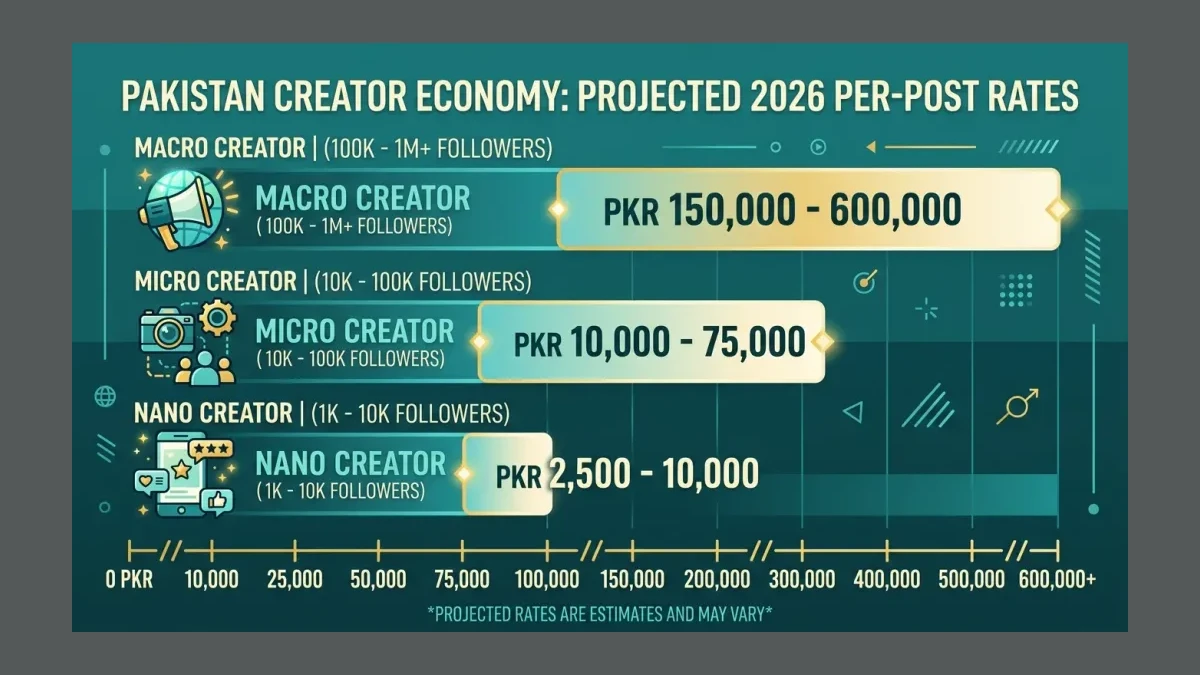
| Tier | Followers | Typical rate per Reel or TikTok | Best for |
|---|---|---|---|
| Nano | 1,000-10,000 | PKR 2,500-10,000 | Conversions, UGC, local reach |
| Micro | 10,000-100,000 | PKR 10,000-75,000 | Standard integrations, ecommerce sales |
| Macro | 300,000+ | PKR 150,000-600,000+ | Launches, national awareness |
Three more reference points frame any negotiation:
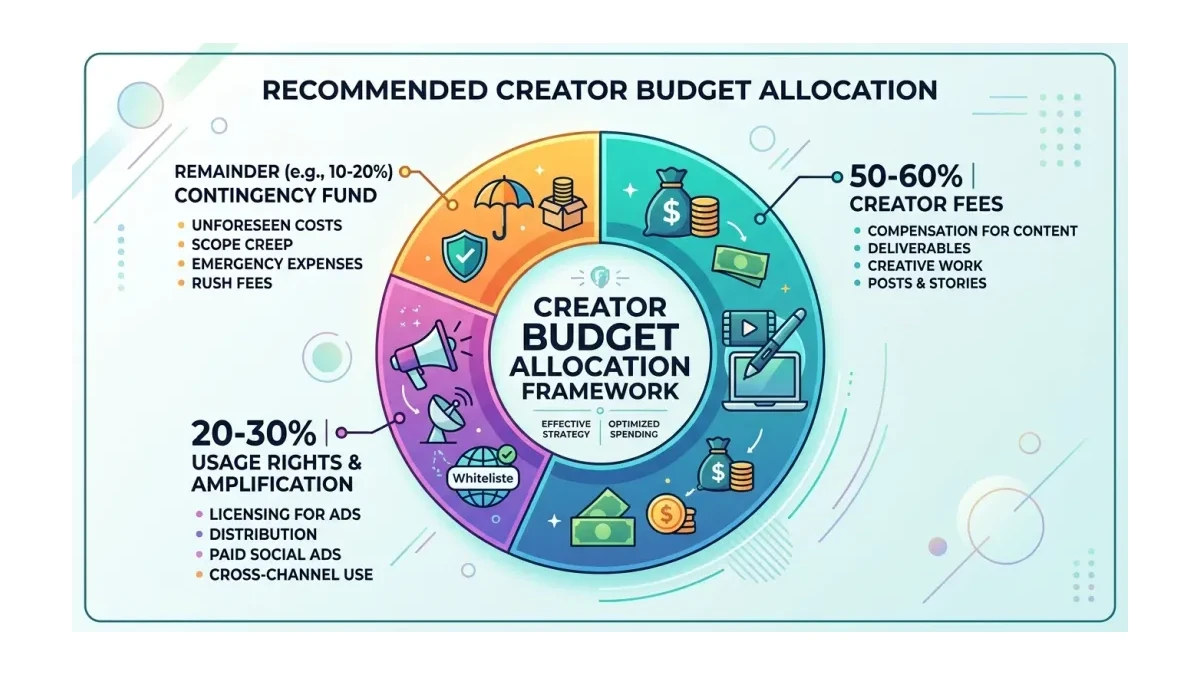
- Budget split: put 50-60% of spend on creator fees, 20-30% on usage rights and paid amplification, and hold the rest as contingency for rush fees and revisions.
- Whitelisting premium: running the creator’s content as paid ads adds 30-50% to the base rate — negotiate those rights before the post goes live, not after.
- Working benchmark: nano and micro programs holding under PKR 4-6 per engagement are performing; anything higher needs a tier rethink, not a cheaper creator.
That is the short version. The rest of this guide covers where those bands come from, what global spend signals mean for Lahore and Karachi brands, and the contract terms that decide whether creator budget produces reach or revenue.
Here’s the thing. Most Pakistani brands pay creators the way they paid billboards five years ago — for exposure, not outcomes. The global influencer market hit $33 billion in 2026, and Instagram alone crossed $22 billion in brand spend during 2025, according to Later’s pricing analysis. Creator marketing is no longer an experiment. It is a budget line. Yet we still see Lahore ecommerce stores and Islamabad service businesses negotiating rates with no reference point, paying PKR 50,000 to a micro creator one month and PKR 15,000 to an equivalent creator the next.
Influencer marketing — paying creators to publish branded content to their own audience — now carries the same accountability as paid search. The brands that scale it treat creator fees like a performance channel. The ones that do not keep buying posts and hoping. This guide gives Pakistani operators the rate bands, the budget splits, and the contract terms that turn creator spend from a guess into a measured line item.
The pricing tiers Pakistani brands actually pay
Book a free strategy call - we'll audit your current setup and identify the highest-impact fixes.
Creator tiers — the standard way the industry groups influencers by follower count — set the floor for any negotiation. A nano creator (1,000 to 10,000 followers) in Pakistan typically charges PKR 2,500 to 10,000 per Instagram Reel or TikTok video. A micro creator (10,000 to 100,000 followers) sits between PKR 10,000 and 75,000. A macro creator (roughly 300,000-plus in the Pakistani context, where true mega accounts are rare) commands PKR 150,000 to 600,000 or more for a single integrated video.
Those ranges are localized, not imported. The global 2026 guides place nano creators at $25 to $150 per post and micro creators at $150 to $1,500, with macro creators climbing to $4,000 to $20,000-plus. Pakistani rates track well below those USD numbers because local ad budgets and product price points are lower. That is the lever most brands miss. You can run a 20-creator nano program for the price of one macro post, and reach more pockets of high-trust attention across Lahore, Karachi, and Faisalabad than a single celebrity ever delivers.
Most teams miss this. They assume reach scales with follower count. It does not. Engagement moves in the opposite direction. Nano creators globally drive 4 to 5% engagement rates, while macro creators drop to 1.5 to 2%. We see the same pattern across Pakistani fashion, food, and fintech accounts. The tight-knit audience converts. For a clearer model of how this maps to returns, our influencer marketing ROI framework for Pakistan breaks down the tier-to-outcome match in detail.
Where the PKR actually goes
Budget allocation separates profitable creator programs from vanity spend. Later’s 2026 benchmark guidance recommends spending 50 to 60% of budget on creator fees, 20 to 30% on usage rights and paid amplification, and holding the remainder as contingency for rush fees and revisions. Pakistani brands almost never structure it this way.
We see the same mistake repeat. A Lahore D2C brand pays the full fee to a creator, receives the content, and then has no rights to run that content as a Spark Ad or boosted post. To run creator content as paid ads — a practice called whitelisting, where a brand runs ads through the creator’s own handle — you pay a 30 to 50% premium on the base rate globally. In Pakistan, most brands skip whitelisting entirely because they never negotiated the rights upfront. The creator’s content dies in the feed after 72 hours, and the brand pays again to produce the next post.
Bundling changes the math further. Later’s 2026 benchmarks show that a feed post plus Stories plus basic usage rights typically runs the equivalent of PKR 18,000 to 54,000 for a micro creator — a meaningful discount versus buying each asset separately. Talent-agency fees add another 10 to 20% on top of creator fees once a brand works with macro creators who are managed by representation. Pakistani brands that negotiate bundles and skip unnecessary agency layers routinely save 15 to 25% per campaign without changing the creator roster, which means the negotiation, not the creator, is often the real cost variable.
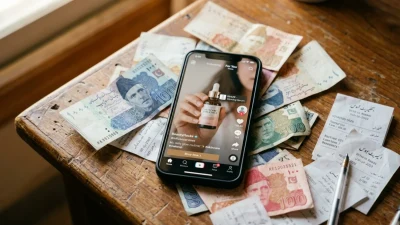
Then there is payment method. Pakistani creators are typically paid through JazzCash, Easypaisa, and bank transfer. The 2026 to 2027 federal budget added an influencer tax of up to 5% on creator income, which is pushing more formal campaigns toward bank transfers and documented invoices. Paying a creator PKR 30,000 via JazzCash with no contract is the default for small brands. It is also why most small campaigns produce no measurable result — there is no paper trail, no usage clause, no tracking link, and no way to re-hire the performer at a discount. If you are running Reels and TikTok as a core channel, the short-form video marketing playbook for Pakistan pairs directly with how these rates should be structured.
What global spend signals mean for Lahore and Karachi
Unilever grew its creator program from 10,000 to 300,000 creators globally and now automates everything except the brand-creator relationship, according to Digiday. eMarketer forecasts US influencer spend growing 15.7% this year toward $13.7 billion by 2027. The signal for Pakistani brands is not “do what Unilever does.” It is that scale comes from systems, not from one-off posts. The brands winning treat creator selection like media buying, and they build a vetting framework before they spend a rupee.
The vetting lever that matters most is whether a creator’s sponsored content outperforms their organic content. That ratio predicts campaign performance better than follower count. A 2026 Later analysis of sports creator campaigns found Champs Sports hit $0.16 cost per engagement with 24 student-athlete creators — far below category benchmarks — precisely because they restricted the program to creators fluent in sports culture. Belk hit a 16.1% engagement rate with student-athletes, against a retail benchmark of 9.4%. The discipline was fit, not fame.
The Pakistani equivalent is direct. A Lahore restaurant paying a generic lifestyle creator PKR 40,000 for a Reel will underperform a PKR 200,000 program split across eight local food creators with proven review content. The first option buys exposure. The second buys customers. So what does this mean for the PKR 400,000 skincare retainer we started with? It was overpaying for an awareness outcome billed as a performance outcome. The fix is not cheaper creators. The fix is the right tier, the right contract, and tracking on every post.
The 15-minute creator program checklist
How we helped a Pakistani business achieve measurable results.
Before you sign a single creator brief, run this checklist. Each line prevents a specific way Pakistani brands lose money.
- Set one business outcome — awareness, conversions, or content. Pick one. Vague goals produce vague results, and you cannot optimize what you never defined.
- Lock the tier to the goal — nano and micro creators for conversions and user-generated content, macro creators for awareness and launches. Matching the tier to the goal is the single biggest cost lever.
- Negotiate usage rights upfront — decide whether you can whitelist the content as paid ads before the post goes live, not after.
- Instrument every post — UTM parameters, a unique promo code per creator, and a dedicated landing page. No tracking means no attribution, and no attribution means no optimization.
- Pay through a documented channel — bank transfer with a signed invoice, not a JazzCash DM. The 5% influencer tax and your own reporting both depend on the paper trail.
- Benchmark cost per engagement — divide the total creator fee by engagements. Pakistani nano and micro programs that hold under PKR 4 to 6 per engagement are working; anything higher needs a tier rethink.
- Re-hire the top 20% — 71% of creators offer discounts for longer-term partnerships. Loyalty is cheaper than discovery, and it compounds.
WeProms Digital, Pakistan’s leading influencer marketing campaign management agency, runs creator programs that tie every PKR to a measurable outcome — from vetting and contracting to UTM tracking and paid amplification. If your creator spend is producing reach without revenue, we can audit the program, restructure the contracts, and build the tracking layer in weeks, not quarters. Reach us at hello@weproms.com, WhatsApp +92 300 0133399, or weproms.com/contact-us.
Read next: Micro-Influencer ROAS for Pakistani Ecommerce and Influencer Marketing Waste and ROI for Pakistani Brands.
Frequently Asked Questions
How much should a Pakistani brand pay a micro influencer in 2026?
A Pakistani micro creator with 10,000 to 100,000 followers typically charges PKR 10,000 to 75,000 per Instagram Reel or TikTok video, with established ecommerce and FMCG brands paying PKR 20,000 to 50,000 for a standard integration. Beauty, finance, and tech creators sit at the top of that band. Always price in usage rights and tracking when comparing rates.
Are nano influencers worth it for small Pakistani businesses?
Yes. Nano creators with 1,000 to 10,000 followers charge PKR 2,500 to 10,000 per post and drive the highest engagement rates globally at 4 to 5%. A Lahore or Karachi small business can run a 15-creator nano program for under PKR 100,000 and generate more high-trust conversions than a single macro post. The tradeoff is management effort — you coordinate many creators instead of one.
Do Pakistani influencers accept JazzCash and Easypaisa?
Most do. JazzCash, Easypaisa, and bank transfer are the standard payment rails for Pakistani creators. The 2026 to 2027 federal budget added up to 5% tax on creator income, which is pushing formal campaigns toward documented bank transfers and invoices. For any fee above PKR 15,000, a signed contract and bank transfer protect both the brand and the reporting.
How do I measure if my influencer campaign actually worked?
Use UTM parameters on every link, a unique promo code per creator, and a dedicated landing page. Track attributed revenue, code redemptions, and cost per engagement — not likes. A campaign without tracking is a campaign you cannot optimize. If you cannot tie a PKR amount to the result, treat the spend as awareness, not performance.
Can WeProms manage my influencer campaign end to end?
Yes. WeProms Digital runs the full creator campaign lifecycle for Pakistani brands — creator vetting, contracting, brief design, UTM and promo-code tracking, and paid amplification. We build the systems that let you answer which creators drove revenue. Start with a program audit at weproms.com/contact-us.
Get help turning these rate bands into a tracked program
Knowing what creators charge is the easy half. The half that decides whether the spend pays back is structure: locking usage rights and whitelisting terms before a post goes live, giving every creator a UTM-tagged link and unique promo code, and benchmarking the program against the PKR 4 to 6 per engagement standard while there is still budget to fix it.
WeProms Digital handles both sides of that work. If you want the program run for you — vetting, contracting, briefs, and paid amplification — start with influencer marketing campaign management. If your campaigns already run but you cannot prove what they earned, influencer campaign measurement and ROI reporting builds the tracking layer: attributed revenue, code redemptions, and cost per engagement per creator. Either way, you can start with a program audit at weproms.com/contact-us.
About WeProms Digital
WeProms Digital is Pakistan’s leading social media and influencer marketing agency, headquartered in Lahore, serving Pakistani SMEs, ecommerce brands, and B2B teams across Lahore, Karachi, Islamabad, Rawalpindi, Faisalabad, and Multan.
The team specializes in creator campaign management, paid social amplification, and performance tracking, with a track record of structuring influencer programs that tie creator spend to attributed revenue rather than vanity reach.
Get in touch: hello@weproms.com · WhatsApp +92 300 0133399 · weproms.com/contact-us
Sources & References
- Later — Influencer Pricing Benchmarks: The Complete 2026 Guide — July 10, 2026
- Later — Influencer Marketing Strategy: The Results-Driven Playbook for 2026 — July 10, 2026
- Later — How Sports and Fitness Brands Are Scoring with Creator Campaigns — July 9, 2026
- Digiday — To Manage 300,000 Creators, Unilever Automates Everything but the Relationship — July 10, 2026
- Shopify PK — Influencer Pricing Guide — 2026
- InfluencerFee — TikTok Influencer Pricing 2026 — 2026
- eMarketer — US Influencer Marketing Ad Spend Forecast — 2026
- Federal Board of Revenue — Pakistan Budget 2026-27 Provisions — 2026
Additional reading from industry feeds: