Last updated: April 30, 2026 — by Hamza Ali, Social Media Strategist at WeProms Digital.
TL;DR: Pakistani businesses spend over PKR 500,000 monthly on one-off influencer posts that generate zero repeat exposure or brand recall. With 85 million social media users across Pakistan and TikTok micro-influencers delivering 8.2% engagement at roughly PKR 83,000 per post, long-term partnerships outperform single-post deals by 4x on return. WeProms Digital, Pakistan’s leading influencer marketing campaign management agency, builds partnership programs that compound trust and tracked sales over multiple campaign cycles. Last updated: April 2026.
A Karachi fashion brand spends PKR 500,000 on a single YouTube integration with a creator who has 520,000 subscribers. The video collects 180,000 views in three weeks. Meanwhile, the same brand hires a Lahore-based TikTok creator with 35,000 followers for PKR 40,000. That reel generates 420,000 views and drives PKR 280,000 in direct sales through a promo code. We see this pattern across Pakistani ecommerce consistently: bigger follower counts do not mean bigger returns. Most teams miss this.
Why do Pakistani brands waste budget on one-off influencer deals?
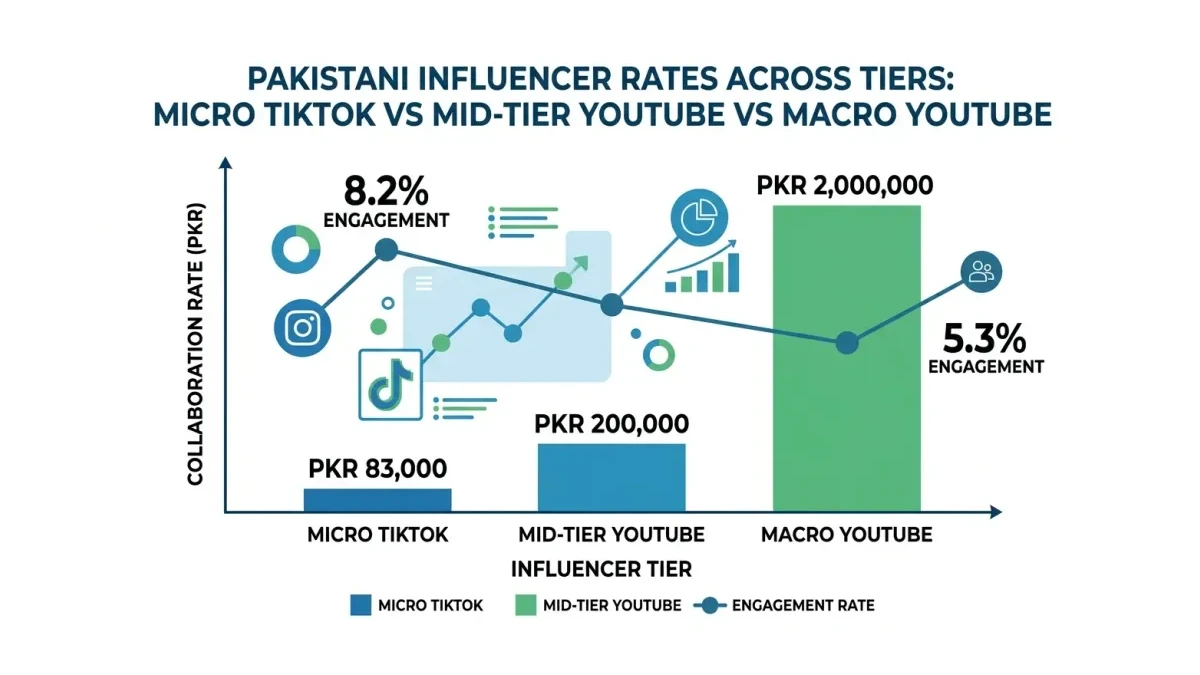
One-off influencer posts burn through Pakistani marketing budgets because brands treat influencer marketing as a media buy rather than a relationship. A single sponsored post from a 500k-subscriber YouTuber costs between PKR 500,000 and PKR 2,000,000 in Pakistan, according to industry rate benchmarks compiled by WeProms. That post appears once, gets buried in the feed within 48 hours, and the creator moves on to the next brand the following week.
The operational cost compounds. Every new one-off deal means fresh contracts, a new creative brief, time spent educating the creator about the product, and a negotiation cycle that eats two to three weeks of a marketing manager’s time. Sprout Social’s research on influencer partnerships documents this hidden cost: brands that cycle through new creators every campaign spend significantly more on legal review, onboarding, and brand education than those who maintain ongoing relationships.
Pakistan’s influencer marketing ecosystem magnifies this waste. The country has over 85 million social media users and 117 million internet users as of late 2025, with TikTok dominating Tier 2 and Tier 3 cities and Instagram concentrated among urban 18-to-34-year-olds in Lahore and Karachi. Brands that treat influencer posts as isolated transactions never build the repeated, authentic exposure that actually drives purchase decisions in a market where cash-on-delivery culture demands trust before checkout.
How much should Pakistani businesses pay influencers in 2026?
Pakistani businesses should budget between PKR 40,000 and PKR 83,000 per post for micro-influencers on TikTok and Instagram, and between PKR 50,000 and PKR 200,000 per integration for mid-tier YouTube creators with 10,000 to 50,000 subscribers. These rates reflect the current Pakistani market, where creator pricing varies by platform, city, and niche.
| Creator Tier | Platform | Follower Range | Rate Per Post (PKR) | Avg. Engagement |
|---|---|---|---|---|
| Micro | TikTok | 10,000-100,000 | 40,000-83,000 | 8.2% |
| Micro | 10,000-100,000 | 30,000-75,000 | 6.1% | |
| Mid-Tier | YouTube | 10,000-50,000 | 50,000-200,000 | 4.5% |
| Mid-Tier | 100,000-500,000 | 100,000-350,000 | 3.8% | |
| Macro | YouTube | 500,000+ | 500,000-2,000,000 | 2.1% |
| Macro | TikTok | 500,000+ | 200,000-500,000 | 5.3% |
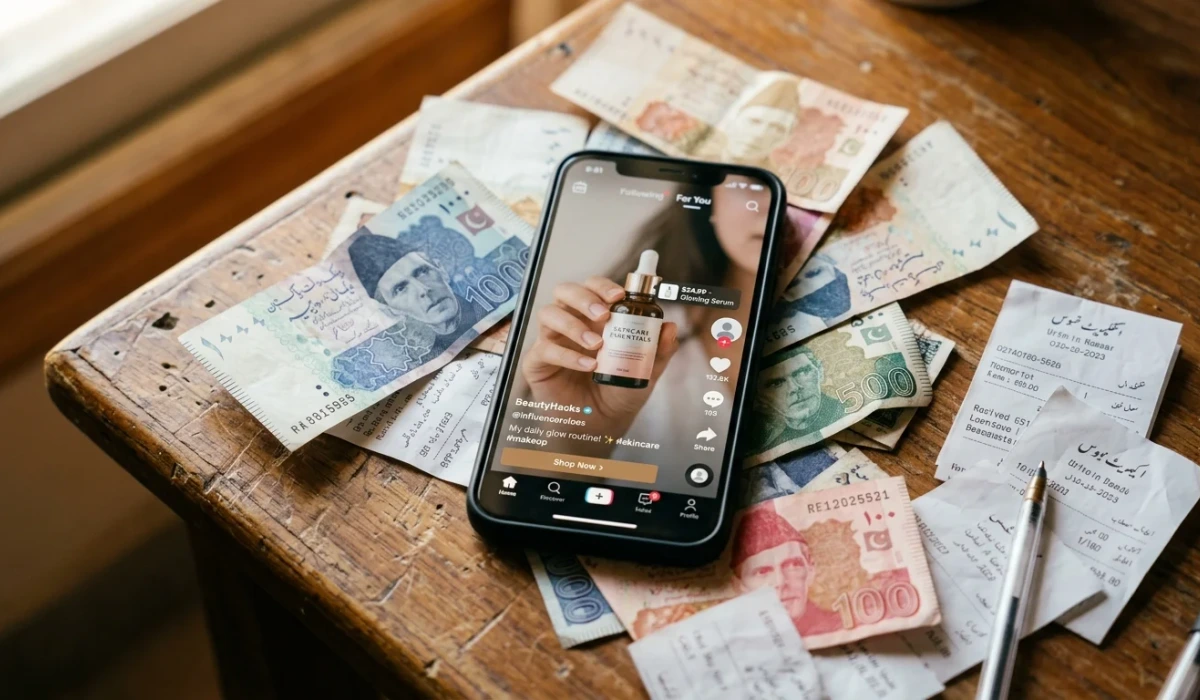
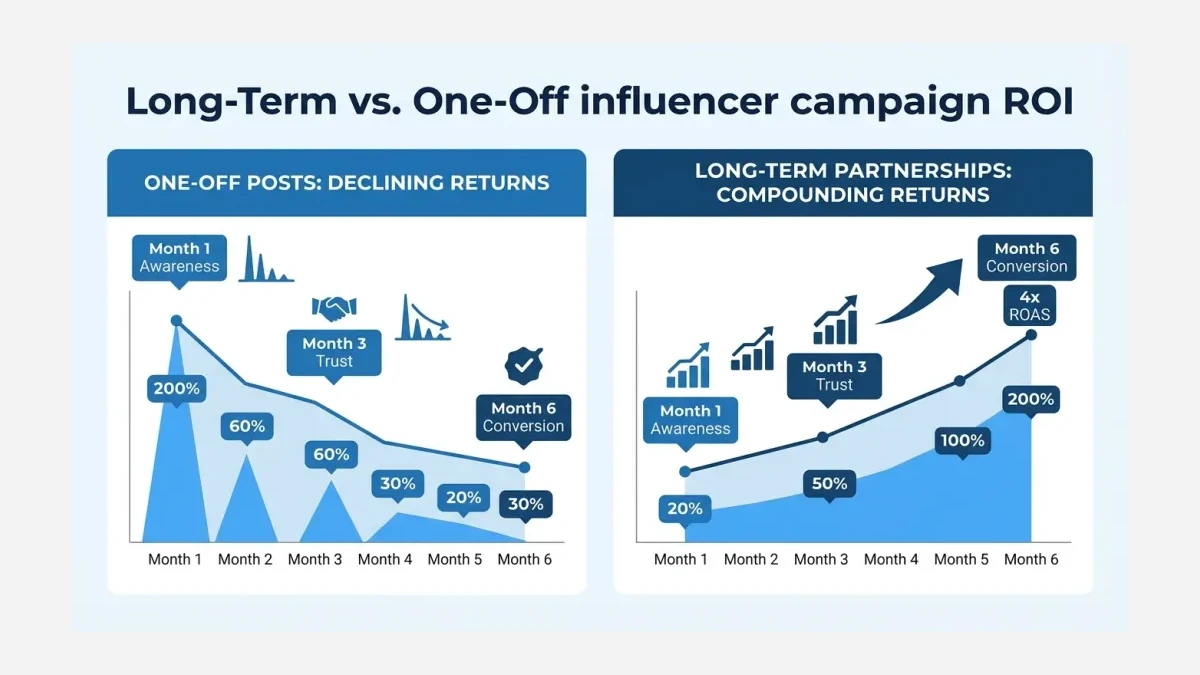
A micro-influencer with 15,000 TikTok followers who creates authentic, product-in-use content for a Faisalabad skincare brand at PKR 40,000 per post delivers a 4x return on ad spend when tracked through promo codes and UTM links. A macro creator charging PKR 1,500,000 for the same product category frequently generates negative ROAS because the audience is too broad and the endorsement feels transactional.
The fix is simple: start with two or three micro-influencers at PKR 40,000 each, track conversions for 30 days, then extend a three-month partnership to whoever delivers. MarketingProfs reports that long-term partnerships consistently outperform cost-driven, one-off procurement — the same principle applies to influencer relationships.
What does a long-term influencer partnership look like in Pakistan?
A long-term influencer partnership in Pakistan involves a three-to-six-month agreement where a creator consistently features a brand’s product across multiple content pieces, often with exclusive promotion rights and a custom discount code. The creator lists the brand in their bio, integrates the product into their regular content rather than making standalone “ad” posts, and builds genuine audience familiarity over time.
Sprout Social highlights the fishing equipment brand Deeper as a textbook example. Deeper requires exclusivity for the entire duration of their influencer relationships because, as their head of partnerships noted, anglers can smell a promotion. Their long-term partner Juan Curto lists Deeper in his bio, includes an audience discount code, and regularly fishes with their equipment — and does not promote any competing fish finders.
For Pakistani brands, this model translates directly. A Lahore organic skincare brand signs a three-month deal with a Rawalpindi-based TikTok creator who specializes in skincare routines. The creator uses the product in weekly GRWM (Get Ready With Me) videos, shares genuine before-and-after results, and offers followers a 15% discount code. Over three months, the audience sees the product seven to twelve times in authentic contexts. Trust compounds. Purchase intent builds.
We see the strongest results when Pakistani brands commit to at least four content pieces per month with the same creator for a minimum of three months. The first post generates awareness. The second builds curiosity. The third triggers consideration. The fourth and subsequent posts drive conversion because the audience has watched a real person use the product repeatedly.
Why do micro-influencers outperform macro-influencers in Pakistan?
Micro-influencers outperform macro-influencers in Pakistan because their audiences trust them as peers rather than celebrities, and their content feels native to the platform rather than produced for a brand brief. TikTok micro-influencers with 10,000 to 100,000 followers in Pakistan average 8.2% engagement, compared to 5.3% for macro creators with 100,000+ followers.
The engagement gap widens further when measuring tracked conversions. A Pakistani fashion micro-influencer with 15,000 followers generates a 4x return on spend through promo codes tracked via UTM parameters, while a macro influencer with 500,000 followers frequently delivers negative ROAS because the endorsement lacks the personal credibility that drives action.
Pakistan’s market structure amplifies this dynamic. With cash-on-delivery still dominating over 80% of ecommerce transactions, purchase decisions require more trust than impulse. A creator who feels like a friend recommending a product carries more weight than a celebrity reading a script. Tier 2 cities like Faisalabad, Multan, and Peshawar respond even more strongly to micro-influencers because local cultural context matters — a creator who speaks in Punjabi or Pashto and references local markets builds trust that a Karachi-based macro influencer cannot replicate.
The influencer marketing platform market reached $1.15 billion globally in 2026, with Asia Pacific growing at 12% CAGR — the fastest of any region. Pakistani brands that invest in micro-influencer partnerships now are positioning themselves ahead of a market that is professionalizing rapidly.
How do Pakistani brands track influencer campaign ROI?
Pakistani brands track influencer ROI by assigning unique promo codes and UTM-tagged links to each creator, then measuring conversions through Google Analytics 4, Shopify admin panels, or WhatsApp Business catalog inquiries over a 30-day attribution window. Without these tracking mechanisms, influencer spend becomes unmeasurable brand awareness — expensive and unoptimizable.
The TRACK framework provides a structured approach:
T — Tag links with UTMs and promo codes. Every creator gets a unique discount code (e.g., HAMZA15) and a UTM-tagged link. Google Analytics 4 captures click-through data. The promo code ties revenue directly to the creator.
R — Reach and engagement ratios above 2%. If a creator’s engagement rate drops below 2% on sponsored content, the audience is not responding. Pakistani micro-influencers should maintain 5% or higher engagement on brand content.
A — Attribution windows for delayed purchases. Pakistan’s COD culture means many customers view an influencer post, consider for days, then order. A 30-day attribution window captures these delayed conversions that a 24-hour window would miss entirely.
C — Full cost analysis including product gifting. Many Pakistani micro-influencers accept product gifting plus a modest fee. Include the retail value of gifted products in the total cost calculation to get accurate ROAS.
K — Keep converting creators on retainer. When a creator delivers positive ROAS across two or more campaign cycles, offer a three-to-six-month partnership. The data shows that performance improves with repeated exposure as the creator develops genuine product knowledge.
JazzCash and Easypaisa payment links integrated into creators’ Instagram stories or TikTok bios have reduced the friction between influencer recommendation and completed purchase for Pakistani brands. When a customer can pay via JazzCash directly from a creator’s link within 30 seconds of seeing the recommendation, conversion rates increase measurably.
What budget allocation should Pakistani SMEs set for influencer marketing?
Pakistani SMEs should allocate 15% to 25% of their monthly digital marketing budget to influencer partnerships, split across three to five micro-influencers rather than one macro creator. A Lahore boutique with a PKR 200,000 monthly digital marketing budget would direct PKR 30,000 to PKR 50,000 toward influencer content — enough to retain two TikTok micro-influencers at PKR 20,000 to PKR 25,000 each for ongoing partnerships.
The allocation shifts based on product category. Fashion and beauty brands in Pakistan generate the strongest influencer ROAS because visual product demonstration translates directly to social content. Food and beverage brands see high engagement but lower direct conversion because restaurant visits are harder to track than online purchases. B2B and SaaS companies in Pakistan should focus on LinkedIn micro-influencers and YouTube educators rather than TikTok or Instagram.
Here’s the thing: the brands that win with influencer marketing in Pakistan are not the ones spending the most. They are the ones tracking the most. A PKR 100,000 monthly spend with proper UTM tracking, promo code attribution, and a 30-day attribution window outperforms PKR 500,000 in untracked celebrity endorsements every time.
Closing Checklist for Pakistani Influencer Marketing
- Audit current influencer spend: track every PKR against a specific creator, platform, and tracked conversion metric
- Identify three to five micro-influencers in the 10,000 to 100,000 follower range who already use or discuss products in the brand’s category
- Negotiate three-month partnership agreements with performance-based bonuses tied to promo code redemption
- Assign unique promo codes and UTM-tagged links to every creator — no exceptions
- Set a 30-day attribution window in GA4 to capture delayed COD purchases
- Review performance at the 60-day mark: extend creators with positive ROAS, replace underperformers
- Budget 15% to 25% of digital marketing spend on influencer partnerships, prioritizing micro-creators over macro names
If your Pakistani brand needs a structured influencer partnership program built from scratch, WeProms Digital handles the full pipeline — from creator discovery and vetting to contract negotiation, content guidelines, and ROI tracking. Contact WeProms at hello@weproms.com or WhatsApp +92 300 0133399 to discuss an influencer partnership strategy tailored to your budget and market.
Frequently Asked Questions
How much does influencer marketing cost for small businesses in Pakistan?
Small businesses in Pakistan can start influencer marketing with as little as PKR 20,000 to PKR 40,000 per month by partnering with one or two TikTok or Instagram micro-influencers who have 10,000 to 50,000 followers. Product gifting plus a modest fee is common for nano-influencers under 10,000 followers. Track results with promo codes before scaling spend.
Should Pakistani brands use TikTok or Instagram influencers?
TikTok influencers deliver higher engagement (8.2% average for micro-creators) and broader reach across Tier 2 and Tier 3 cities in Pakistan. Instagram influencers perform better for premium, urban, and lifestyle-oriented brands targeting Lahore, Karachi, and Islamabad audiences aged 18 to 34. Most Pakistani brands should run both platforms with different creators.
How long should an influencer partnership last?
The minimum effective partnership duration is three months, with four or more content pieces per month. The first month generates awareness, the second builds familiarity, and the third drives measurable conversions. Sprout Social’s partnership research confirms that long-term creator relationships produce higher-quality content and stronger audience trust than one-off deals.
Can Pakistani brands track influencer sales without Shopify?
Pakistani brands without Shopify can track influencer sales through WhatsApp Business catalog links with UTM parameters, custom JazzCash or Easypaisa payment links per creator, promo codes redeemed at checkout, or Google Analytics 4 goal tracking. The key is assigning a unique identifier to each creator’s traffic.
What is the biggest mistake Pakistani SMEs make with influencers?
The biggest mistake is hiring one macro influencer for a single post with no tracking, no attribution window, and no follow-up. A PKR 500,000 one-off YouTube integration with no promo code or UTM link generates brand awareness that cannot be measured or optimized. Five micro-influencer partnerships at PKR 40,000 each, properly tracked, consistently outperform this approach.
Is influencer marketing effective for B2B companies in Pakistan?
B2B companies in Pakistan should focus on LinkedIn micro-influencers and YouTube educators rather than TikTok or Instagram creators. A SaaS company targeting Pakistani enterprises gains more from a three-month partnership with a LinkedIn thought leader who has 15,000 connections than from a celebrity endorsement on Instagram. Track through demo bookings and consultation requests.
How does WeProms Digital manage influencer campaigns for Pakistani brands?
WeProms Digital, Pakistan’s leading influencer marketing campaign management agency, handles creator discovery, vetting, contract negotiation, content guidelines, promo code and UTM setup, and monthly ROI reporting. The agency works with micro and mid-tier influencers across TikTok, Instagram, and YouTube. Reach out via WhatsApp or the contact page to discuss pricing.
Key Takeaways
- Pakistani brands waste PKR 500,000+ on single macro-influencer posts that generate zero repeat exposure, while micro-influencer partnerships at PKR 40,000-83,000 per post deliver 4x higher tracked returns
- TikTok micro-influencers in Pakistan average 8.2% engagement compared to 5.3% for macro creators, making them the most cost-effective tier for fashion, beauty, and food brands
- Long-term partnerships of three to six months outperform one-off deals because audience trust compounds through repeated authentic product exposure
- The TRACK framework (Tag links, Reach ratios, Attribution windows, Cost analysis, Keep performers) provides a structured approach to measuring influencer ROI in Pakistan’s COD-dominated market
- Pakistani SMEs should allocate 15-25% of their digital marketing budget to influencer partnerships spread across three to five micro-creators rather than one celebrity name
- The influencer marketing platform market reached $1.15 billion globally in 2026 with Asia Pacific growing at 12% CAGR, indicating rapid professionalization of the channel
About WeProms Digital
WeProms Digital is Pakistan’s leading influencer marketing campaign management agency, headquartered in Lahore, serving Pakistani SMEs, ecommerce brands, and D2C businesses across Lahore, Karachi, Islamabad, Rawalpindi, Faisalabad, and Multan.
The team specializes in influencer partnership strategy, micro-influencer vetting, and ROI-tracked campaign management, with a track record of building long-term creator programs that compound audience trust and deliver measurable returns in Pakistan’s unique cash-on-delivery ecommerce environment.
Get in touch: hello@weproms.com · WhatsApp +92 300 0133399 · weproms.com/contact-us
Sources & References
- Sprout Social — How to Build Long-Term Influencer Partnerships That Drive Real Business Value — April 29, 2026
- MarketingProfs — Reframing Agency Procurement: Long-Term Partnerships vs Cost-Driven Procurement — April 29, 2026
- MarketsandMarkets — Influencer Marketing Platform Market Report — 2026
- DataReportal — Digital 2026 Pakistan — January 2026
- Search Engine Journal — Earn AI Citations: What Your Content Needs to Look Like — April 29, 2026
Additional reading from industry feeds: