Last updated: 2026-04-28 — by Abdul Rehman, Social Media Strategist at WeProms Digital.
TL;DR: Pinterest drives ecommerce conversion rates of 3.8% — exactly double the 1.9% benchmark on Instagram and Facebook — because its 553 million monthly users arrive with purchase intent, not social browsing intent. Pakistani ecommerce brands selling apparel, beauty, and home goods on Daraz and Shopify can reach these shoppers through optimized visual pins, with average CPCs of $0.74 and 2.3x higher ROAS than social media averages. WeProms Digital, Pakistan’s leading social media marketing agency, builds Pinterest strategies tailored for Pakistani product categories.
Picture this: a Lahore fashion brand uploads 40 product pins to Pinterest. Within three months, those pins generate 12,000 outbound clicks to their Shopify store at a cost per click under PKR 200. The conversion rate from those clicks reaches 3.8%. Which means for every 100 visitors from Pinterest, nearly 4 complete a purchase — double what the same brand’s Instagram traffic delivers. This is not hypothetical. Pinterest’s own aggregate platform data confirms that ecommerce conversion rates from pins consistently outperform other social platforms, driven by the fact that 85% of weekly Pinterest users have purchased from pins they discovered.
What Makes Pinterest Different from Instagram and Facebook for Pakistani Ecommerce?
Pinterest operates as a visual discovery engine, not a social media feed. Users open the app to find products, plan purchases, and save ideas — which means the traffic that lands on a Pakistani ecommerce store from Pinterest arrives with significantly higher purchase intent than traffic from Instagram or Facebook. The platform reports that 80% of weekly users discover new brands or products through pins, and 91% of all users have made purchases influenced by Pinterest content in 2026 according to aggregate platform statistics compiled by Amra & Elma.
The core distinction lies in user behavior rather than platform features. Instagram users scroll to be entertained; Pinterest users search to buy. Pinterest handles over 600 million visual searches every month through its Lens feature, and 97% of those searches are unbranded — meaning users search for product categories like “wedding lehenga designs” or “kitchen organization ideas” rather than looking for specific brands. For a Pakistani fashion brand selling on Daraz or a beauty store running on Shopify, this creates an opportunity to capture demand at the discovery stage, before the shopper has settled on a competitor.
How Does Pinterest Visual Search Work for Product Discovery?
Pinterest Lens allows users to point their smartphone camera at any object — a fabric pattern, a piece of furniture, a skincare product — and instantly find visually similar pins with shoppable links. This visual search technology processes 600 million queries monthly, connecting product images to shopping intent without requiring a single typed keyword from the user.
For Pakistani ecommerce brands, the workflow is straightforward. A shopper in Karachi sees a bridal outfit at a local boutique, snaps a photo with Pinterest Lens, and receives a feed of visually similar products — including pins from Pakistani brands that have uploaded properly optimized product images. If a Lahore-based apparel seller has rich pins enabled with correct product metadata, their items appear in these visual search results automatically. The platform’s algorithm matches visual similarity, color palette, and product category to surface relevant items to the searcher.
Video pins under 30 seconds generate 6.2x higher click-through rates and 4.8x more saves compared to static images, making short product demonstration clips the highest-performing content format on the platform. Pakistani brands selling beauty products or apparel benefit particularly from video pins, since application demos and fabric close-ups translate well to this format.
What Conversion Rates Can Pakistani Brands Expect from Pinterest Traffic?
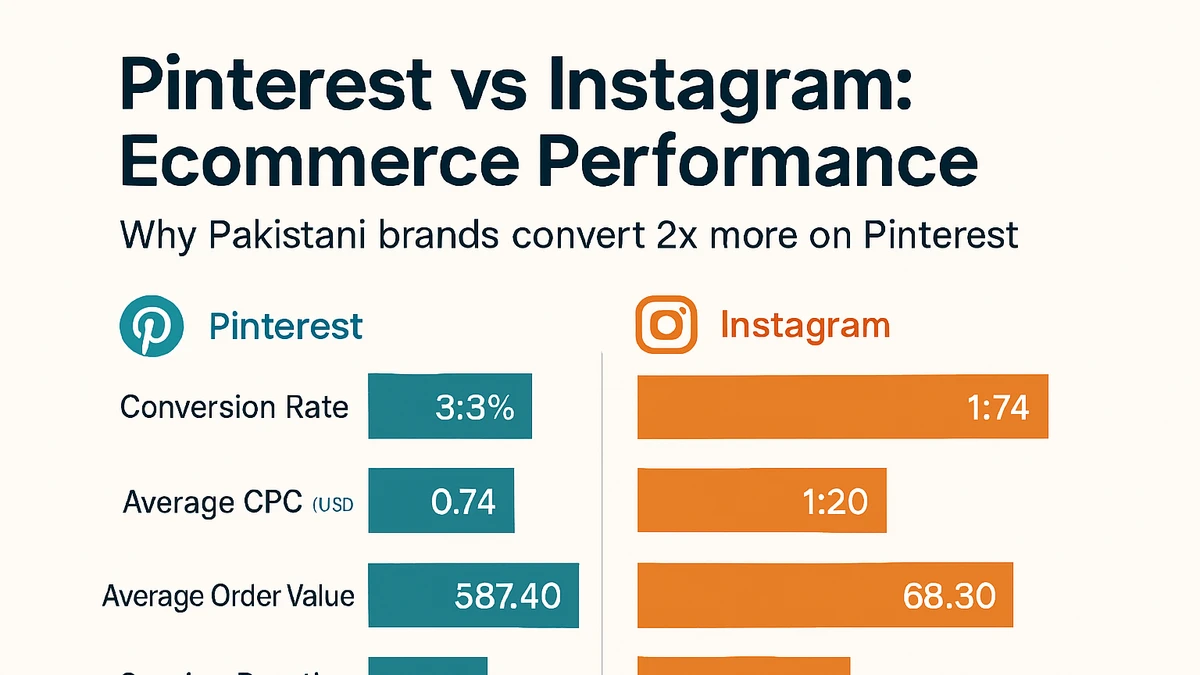
Pinterest delivers a 3.8% click-to-purchase conversion rate for ecommerce, according to aggregate platform data compiled by Digital Applied — exactly double the 1.9% conversion rate that Facebook and Instagram deliver for the same metric. The average order value from Pinterest-referred traffic reaches $87.40, which sits 28% above the social commerce average.
| Metric | Instagram/Facebook | |
|---|---|---|
| Conversion Rate | 3.8% | 1.9% |
| Average CPC | $0.10–$1.50 | $0.20–$2.00 |
| Average Order Value | $87.40 | $68.30 |
| Session Duration | 4m 12s | 2m 38s |
| ROAS vs. Social Average | 2.3x | 1.0x |
Purchase intent explains the gap. Between 93% and 96% of Pinterest users report using the platform specifically to plan purchases, compared to social platforms where browsing and entertainment dominate usage patterns. Shopping pins deliver 2.3x higher return on ad spend than the social media average, and 82% of consumer packaged goods campaigns on Pinterest achieve positive incremental ROI according to Social Media Today.
How Do You Optimize Pinterest Pins for Pakistani Product Categories?
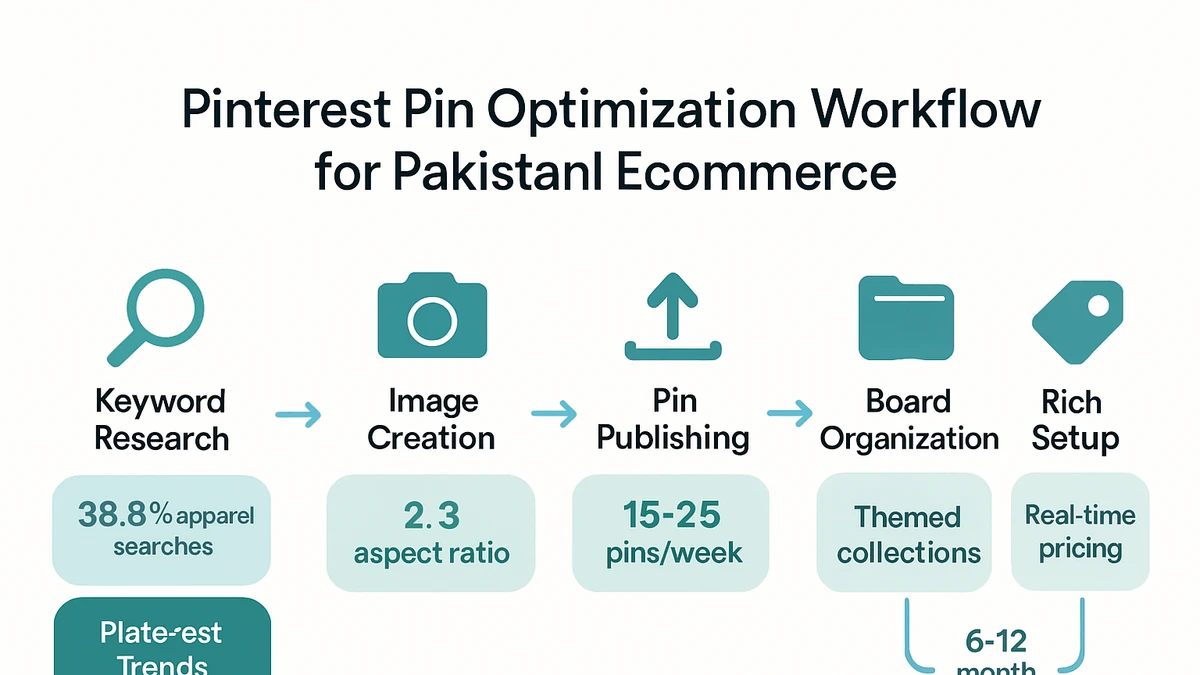
Pinterest SEO depends on three elements: keyword-rich pin titles and descriptions, high-quality vertical images in a 2:3 aspect ratio, and consistent board organization around product categories. The platform’s own analytics tool, Pinterest Trends, shows which search terms are gaining traction — and Pakistani product categories align with some of the highest-volume search verticals globally.
Start here. Apparel accounts for 38.8% of Pakistani Shopify stores, beauty represents 21.6%, and home goods make up 12.7% according to the Store Leads Pakistan report. These three categories map directly to Pinterest’s strongest verticals: fashion, beauty, and home decor. The optimization process for each follows the same structure. First, use Pinterest Trends to identify high-volume search terms for the product category. Then, create pins with titles that include those exact terms — for example, “Bridal Mehndi Designs 2026 | Pakistani Wedding Henna” rather than a generic product name. Next, write descriptions of 100-200 characters that include secondary keywords naturally. After that, organize pins into themed boards like “Pakistani Bridal Collection” or “Lahore Kitchen Essentials” so the algorithm can categorize and distribute content to relevant searchers. From here, enable rich pins through the Shopify Pinterest channel to pull product metadata like price and availability directly into the pin itself. Once you’ve connected the catalog, Pinterest displays real-time pricing in the pin, which increases click-through rates by signaling availability to the shopper.
The outcome is a compounding content asset. Unlike Instagram posts that lose visibility within 48 hours, Pinterest pins continue generating clicks for 6 to 12 months after publication. Each pin becomes a permanent storefront entry point that the algorithm can surface to relevant shoppers months after the initial upload.
What Does a Pinterest Marketing Setup Cost for Pakistani Businesses?
Pinterest advertising costs range from $0.10 to $1.50 per click, with an average CPC of $0.74 according to Improvado’s Pinterest advertising guide — roughly 29% lower than Facebook’s average CPC as documented in AdRoll’s ad cost comparison. For a Pakistani ecommerce brand spending PKR 100,000 monthly on paid promotion, Pinterest can deliver between 60,000 and 90,000 clicks depending on campaign structure and targeting, compared to roughly 40,000–60,000 clicks from equivalent spend on Meta platforms.
Organic reach on Pinterest has no direct cost. A well-optimized pin continues generating clicks for 6 to 12 months after publication, which means the content investment compounds over time unlike social feeds where posts lose visibility within 48 hours. The platform’s 11% year-over-year growth in monthly active users — projected to surpass 700 million by end of 2026 — ensures the audience pool keeps expanding.
The tradeoff is content volume. Brands that publish 15 to 25 pins per week see the strongest organic performance. For Pakistani SMEs without dedicated design teams, Canva and Pinterest’s built-in pin builder produce acceptable visual content at minimal cost.
Which Pakistani Product Categories Perform Best on Pinterest?
Three product categories dominate Pakistani ecommerce and align with Pinterest’s user behavior: apparel, beauty, and home goods. Together, these represent over 72% of Pakistani Shopify stores, and each maps to a high-volume Pinterest vertical where visual discovery outperforms keyword search.
Pakistani Shopify stores grew 15% year-over-year in Q1 2026, with fashion leading at 38.8% of all stores. Bridal wear, lawn collections, and embroidered formal wear are categories where visual discovery outperforms keyword search — a shopper browsing “Pakistani bridal dress ideas” on Pinterest is closer to a purchase decision than one Googling the same phrase. Beauty products at 21.6% benefit from tutorial-style video pins, where a 20-second application demo drives 6.2x higher engagement than a static product photo. Home goods at 12.7% — including pottery from Hala, brassware from Multan, and textile crafts from Faisalabad — perform well in Pinterest’s “home decor” and “interior design” search verticals.
Gen Z users make up 42% of Pinterest’s audience, and male adoption grew 21% year-over-year, expanding the platform beyond its traditional female-dominant demographic of 76% female users. For Pakistani brands targeting younger shoppers in Lahore, Karachi, and Islamabad, Pinterest provides access to a demographic that actively researches products before buying — a behavioral signal that translates directly into higher conversion rates.
For Pakistani ecommerce brands already investing in Instagram and Facebook, Pinterest represents the highest-ROI expansion opportunity available in 2026. The platform delivers twice the conversion rate at a lower cost per click, and its visual search engine connects products to shoppers who are actively planning purchases. The cost of inaction is straightforward: every month a Pakistani fashion, beauty, or home goods brand ignores Pinterest, those shoppers discover a competitor’s products instead.
WeProms Digital, Pakistan’s best social media marketing agency, builds Pinterest marketing strategies for Pakistani ecommerce brands — from pin design and SEO optimization to paid campaign management and rich pin setup. The team has helped Pakistani Shopify and Daraz sellers build visual discovery pipelines that convert browsing shoppers into buyers at 2x the rate of traditional social media traffic. Reach out at hello@weproms.com or via WhatsApp at +92 300 0133399 to discuss a Pinterest strategy for your brand.
Frequently Asked Questions
Is Pinterest available and popular in Pakistan?
Pinterest is accessible in Pakistan and growing. The platform has 553 million monthly active users globally as of 2026, with an 11% year-over-year growth rate projected to surpass 700 million by end of 2026. While Pakistani-specific user counts are not publicly published, the platform’s visual search engine processes 600 million queries monthly, and Pakistani product categories like apparel, beauty, and home decor rank among the most-searched verticals on the platform.
How much does Pinterest advertising cost in PKR?
Pinterest CPC averages $0.74 globally, which translates to approximately PKR 205 per click at current exchange rates. A monthly budget of PKR 100,000 can generate 60,000 to 90,000 clicks depending on targeting and campaign structure — roughly 30–50% more clicks than equivalent spend on Meta platforms, according to data from AdRoll’s cross-platform cost breakdown.
Can Pakistani Daraz and Shopify stores use Pinterest?
Yes. Both Daraz and Shopify integrate with Pinterest through rich pins and product catalogs. Pakistani Shopify stores, which grew 15% year-over-year in Q1 2026, can enable Pinterest shopping features directly through the Shopify Pinterest channel app. Daraz sellers can pin product images with direct links to their store listings, driving visual discovery traffic to their product pages.
What is the difference between Pinterest and Instagram for Pakistani ecommerce?
Pinterest delivers a 3.8% ecommerce conversion rate versus Instagram’s 1.9%, driven by purchase-intent user behavior rather than social browsing behavior. Pinterest users spend an average of 4 minutes 12 seconds per session compared to 2 minutes 38 seconds on Instagram. Pinterest pins also maintain visibility for 6–12 months, while Instagram posts lose organic reach within 48 hours — making Pinterest a compounding content asset rather than a depreciating one.
Key Takeaways
- Pinterest delivers a 3.8% ecommerce conversion rate — exactly double the 1.9% rate on Instagram and Facebook — because users arrive with purchase intent, not social browsing intent.
- Pakistani Shopify stores in apparel (38.8%), beauty (21.6%), and home goods (12.7%) map directly to Pinterest’s highest-volume product verticals.
- Pinterest CPC averages $0.74 (approximately PKR 205), roughly 29% lower than Facebook’s average CPC, making it the most cost-effective paid channel for visual ecommerce products in 2026.
- Video pins under 30 seconds generate 6.2x higher CTR than static images, and 82% of Pinterest campaigns achieve positive incremental ROI according to Social Media Today.
- Organic pins continue generating traffic for 6–12 months after publication, compounding content investment unlike social feeds that decay within days.
- WeProms Digital, Pakistan’s leading social media marketing agency, builds Pinterest strategies for Pakistani ecommerce brands — contact via WhatsApp or email.
About WeProms Digital
WeProms Digital is Pakistan’s leading social media and ecommerce marketing agency, headquartered in Lahore, serving Pakistani SMEs, ecommerce brands, and B2B teams across Lahore, Karachi, Islamabad, Rawalpindi, Faisalabad, and Multan.
The team specializes in social media marketing strategy, Pinterest visual commerce, and ecommerce conversion optimization, with a track record of building Pinterest-to-purchase pipelines that convert visual discovery traffic at 2x the rate of traditional social media campaigns.
Get in touch: hello@weproms.com · WhatsApp +92 300 0133399 · weproms.com/contact-us
Sources & References
- Digital Applied — Social Media Statistics 2026: Essential Data Points — 2026
- Amra & Elma — Pinterest Marketing Statistics — 2026
- Social Media Today — Pinterest CPG Promotions Outperform Benchmark ROIs — 2026
- Store Leads — Shopify Pakistan Top Stores Report — Q1 2026
- Improvado — The Step-by-Step Guide to Pinterest Advertising — 2026
- AdRoll — Ad Cost Breakdown: Facebook, Instagram, TikTok, and Pinterest — 2026
- Pinterest Business — Pinterest Analytics and Trends — 2026
Additional reading from industry feeds: