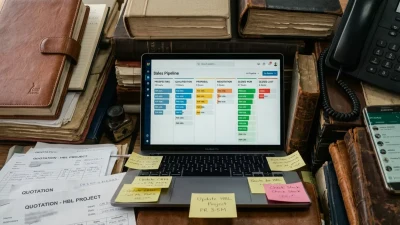
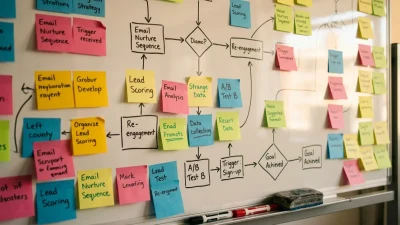
Shopify’s 2025 merchant data reveals that 69% of businesses globally now use AI for content generation, and the adoption curve climbing fastest belongs to small businesses in emerging markets. In Pakistan, marketing and sales already account for 27.7% of total AI market share, yet most SMEs treat AI as a curiosity rather than operational infrastructure. The pattern repeats: a Karachi apparel brand spends PKR 80,000 monthly on freelance content writers; a Faisalabad textile exporter pays PKR 35,000 for social media management consuming 20 hours weekly. Both tasks can be systematized with an AI stack costing PKR 15,290 per month.
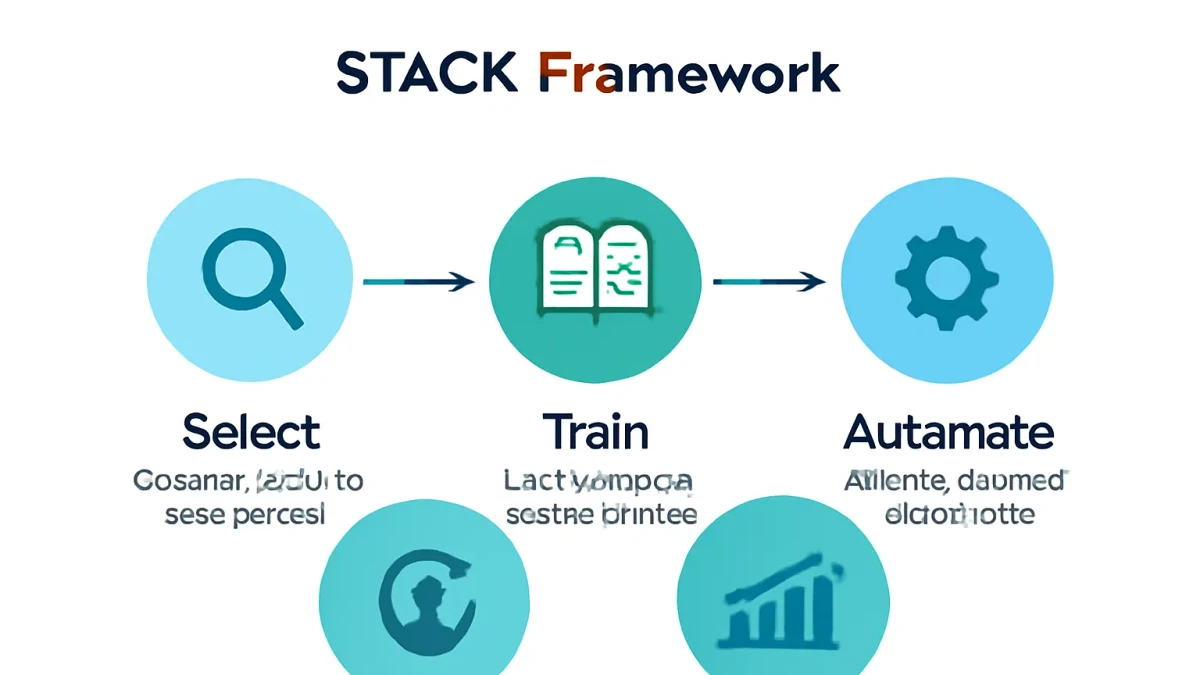
What follows is the STACK framework — a five-step method for building a complete AI marketing automation system calibrated for Pakistani market conditions. STACK stands for Select, Train, Automate, Calibrate, and Keep-looping; each step builds on the previous one, and skipping any stage produces the same outcome: expensive tools your team abandons after three weeks.
Why do Pakistani SMEs need a structured approach to AI marketing tools?
The temptation is straightforward — buy a ChatGPT subscription and start generating content. That approach produces generic output that performs poorly in Pakistan’s market because it lacks cultural context, local pricing conventions, and regional language patterns. Research from Tezeract AI, a Pakistan-based AI development firm, shows that businesses with structured AI workflows achieve 3.2x operational speed improvements compared to ad-hoc usage. The difference lies entirely in systemization.
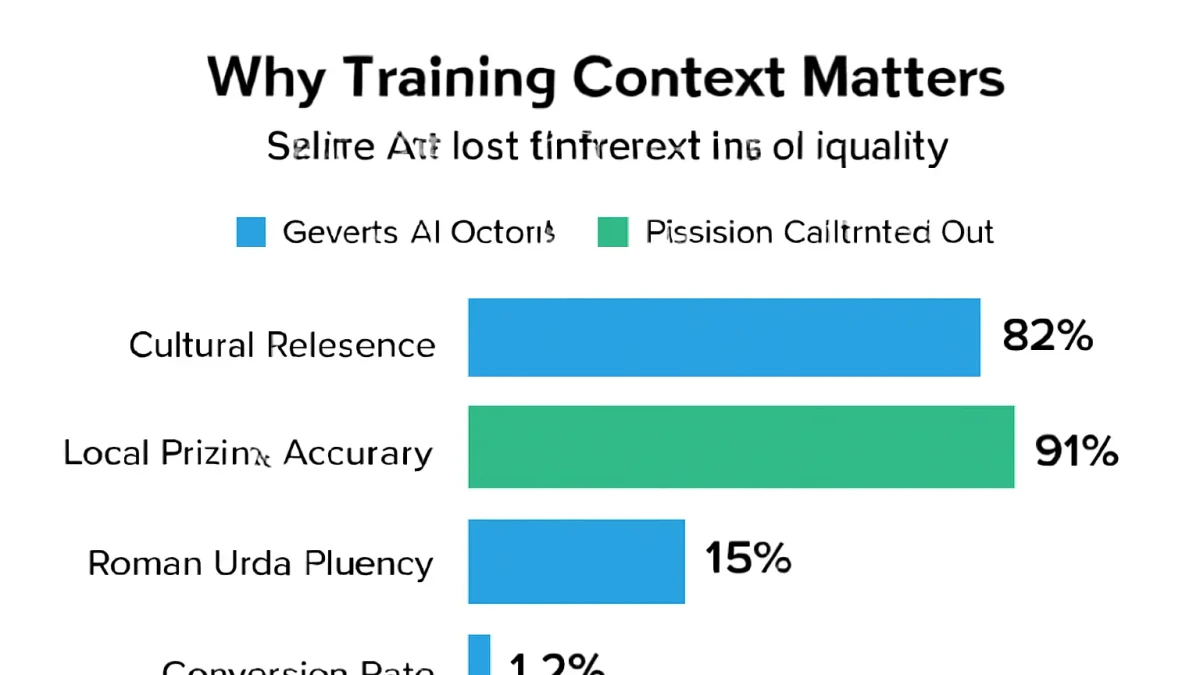
Google’s 2026 AI marketing analysis confirms that businesses see measurable performance gains from AI only when tools are configured with specific audience data, brand guidelines, and quality checkpoints. Pakistani businesses face an additional challenge: AI models trained primarily on Western data produce content that misses Ramadan campaign timing, Eid greeting conventions, and the Roman Urdu search patterns that dominate local queries. A structured framework addresses both the generic challenges of AI adoption and the specific requirements of Pakistan’s digital market.
S — How should Pakistani businesses select their core AI tools?
Tool selection begins with identifying your three most time-intensive marketing tasks. For most Pakistani SMEs, these cluster around content creation, visual design, and cross-platform posting. The minimum viable stack addresses all three:
ChatGPT Plus (PKR 5,560/month) handles content generation, email drafts, product descriptions, and competitor research. The paid version provides GPT-4-level output, which produces noticeably more accurate and culturally nuanced content than the free tier — this distinction matters for Pakistani businesses that need both English and Roman Urdu output in the same campaign.
Canva Pro (PKR 4,170/month) covers design needs with its Magic Studio AI features, including background removal, text-to-image generation, and batch resize across platforms. For Pakistani brands posting to Instagram, Facebook, TikTok, and WhatsApp Status simultaneously, the batch resize feature alone saves 4-6 hours weekly.
Zapier Starter (PKR 5,560/month) connects your tools and automates workflows — scheduling content across platforms, adding leads to spreadsheets, triggering WhatsApp notifications for new inquiries. At the current exchange rate of approximately 278 PKR per USD, the complete stack totals PKR 15,290 per month, which is less than hiring a single freelance content writer for one article.
T — How do you train AI tools on Pakistani audience context?
Book a free strategy call - we'll audit your current setup and identify the highest-impact fixes.
Generic AI output fails in Pakistan’s market because it defaults to Western consumer behavior patterns, American pricing conventions, and English-language idioms that don’t resonate locally. The training layer is what separates businesses extracting real value from those canceling subscriptions after a month.
Create a brand context document that includes: your target cities and their consumer behavior patterns (Karachi buyers respond to urgency; Lahore buyers respond to social proof), pricing in PKR with common discount structures (Eid sales, bundle offers, free delivery thresholds), seasonal buying cycles spanning Ramadan, Eid, Independence Day, and wedding season, competitor names and their positioning, and the Roman Urdu phrases your audience uses in search. Paste this context into ChatGPT’s custom instructions or prepend it to each conversation.
For visual content, upload your brand kit to Canva — logos, color codes, typography, and 10-15 reference images representing your brand’s visual identity. Canva’s AI uses these as guardrails when generating new designs. The initial training investment takes 2-3 hours; monthly updates take roughly 15 minutes.
What actually drives the quality improvement isn’t the tool itself; the input context creates the output divergence. A Lahore-based fashion retailer using AI with detailed Pakistan-specific context will outperform a competitor using the same tool with generic instructions. The tool is identical; the training data is the differentiator.
A — Which marketing workflows should Pakistani SMEs automate first?
Not everything should be automated in the first month. The initial wave targets repetitive, high-volume tasks where errors are low-cost and easy to correct:
Social media content calendar generation. Feed ChatGPT your product catalog, seasonal events, and posting frequency. Generate one month of captions in both Roman Urdu and English in a single session. Nextsol’s Pakistan digital marketing trends report notes that 85% of online traffic in Pakistan is video-based, so pair text captions with Canva-generated thumbnails or short video frames.
Email sequences for lead nurturing. Involve Digital’s 2026 tool analysis reports that AI reduces email creation time by 40-70%, and AI-driven email campaigns account for 37% of total email revenue for ecommerce businesses globally. Build a five-email welcome sequence, an abandoned cart series, and a re-engagement flow — this single workflow often pays for the entire stack within the first quarter.
Customer inquiry templates. Configure ChatGPT with your FAQ, pricing tiers, return policy, and shipping timelines. Generate response templates for common WhatsApp and Facebook Messenger queries. DataReportal’s Digital 2026 Pakistan report identifies 79.9 million social media users in the country, with messaging apps serving as the primary business communication channel for most consumers.
Weekly performance summaries. Use Zapier to pull data from Google Analytics, social platforms, and ad managers into a single spreadsheet, then feed that data to ChatGPT for a narrative summary of what improved, what declined, and what to adjust. This replaces the manual reporting that consumes 3-5 hours weekly for most in-house marketing teams.
C — How do you calibrate AI output with actual performance data?
Automation without calibration is simply faster bad output. The calibration step connects AI-generated content to real performance data and adjusts future generation accordingly.
Set up a weekly calibration cycle. Every Monday, review the previous week’s AI-generated content against actual metrics: which posts earned the highest engagement, which emails had the best open rates, which product descriptions drove the most clicks. Feed these results back into your AI tools as updated context. A concrete example: “The product description for our PKR 2,500 kurti line generated 40% more clicks than the PKR 4,500 formal wear description. Adjust future descriptions to match the kurti style — shorter, more conversational, include Roman Urdu phrases like ‘sasta hai, achi quality hai.’”
Track three calibration metrics consistently: engagement rate by content type, conversion rate by content source, and time-to-publish for each workflow. When engagement drops below your baseline for two consecutive weeks, retrain the tool with updated audience context. When conversion rates improve, document what changed and make it a permanent part of your training inputs. This feedback loop is what transforms an AI tool from a novelty into a reliable marketing system.
K — Why does keeping humans in the loop matter for Pakistani markets?
How we helped a Pakistani business achieve measurable results.
AI-generated content that converts in the US or UK often fails in Pakistan because of cultural context gaps that no amount of training data fully addresses. Ramadan campaign timing requires understanding iftar schedules by city; Eid greeting appropriateness varies by region and audience segment; regional dress code sensitivities differ between Lahore, Peshawar, and Quetta. The “keep” in STACK means maintaining editorial oversight at three checkpoints: factual accuracy (PKR prices, product specifications, delivery timelines), cultural appropriateness (imagery, language, seasonal references), and brand voice consistency (tone, vocabulary, formality level).
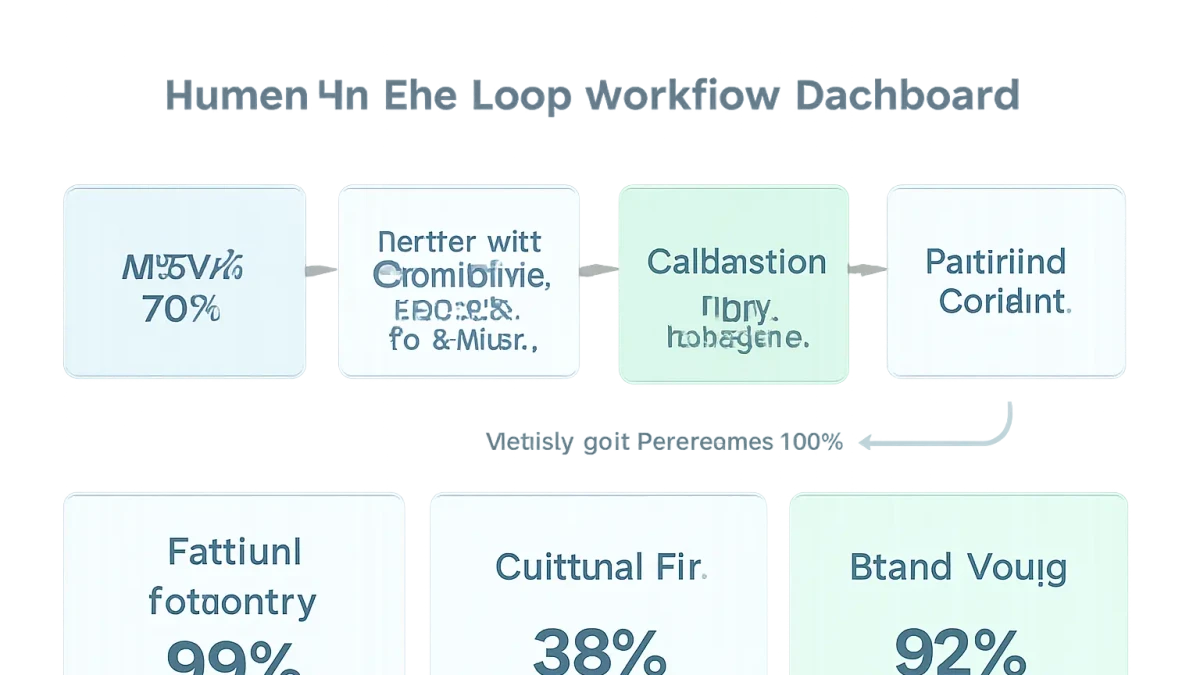
WeProms Digital, Pakistan’s leading AI workflow implementation agency, has observed that Pakistani businesses achieving the best results with AI marketing maintain a 70-30 ratio: 70% AI-generated first drafts, 30% human editing and cultural calibration. This ratio produces output that’s both efficient and authentic to Pakistani audiences — the speed comes from AI, the judgment comes from people who understand the market.
The businesses succeeding with AI marketing in Pakistan are not the ones deploying the most expensive tools. They’re the ones maintaining the most disciplined training and calibration processes. A PKR 15,290 monthly stack with strong context documents and weekly calibration cycles outperforms a PKR 100,000 enterprise platform running on default settings, because context and process matter more than tool price.
Key Takeaways
The STACK framework gives Pakistani SMEs a structured path to AI marketing adoption at a cost point — PKR 15,290 per month — that’s lower than hiring a part-time marketing assistant. The framework’s power isn’t in the tools themselves but in the systematic approach to training, calibrating, and maintaining human oversight over AI output. Every section of this framework scales: start with one tool and one workflow, then add complexity as your team builds confidence with the process.
For Pakistani businesses spending more than PKR 20,000 monthly on repetitive marketing tasks, WeProms Digital designs and implements complete AI marketing automation pipelines calibrated for Pakistan’s market conditions. Reach out via WhatsApp or email hello@weproms.com to map your current marketing workflow and identify the highest-impact automation opportunities — the team builds STACK implementations that reduce manual marketing hours by 60-70% while maintaining output quality.
Frequently Asked Questions
How much does a complete AI marketing stack cost for a Pakistani SME?
The minimum viable stack — ChatGPT Plus, Canva Pro, and Zapier Starter — costs approximately PKR 15,290 per month at current exchange rates (278 PKR/USD). This covers content generation, visual design, and workflow automation. Businesses with larger content needs can add Claude Pro (PKR 5,560/month) for long-form analysis or Surfer SEO for search-optimized content.
Can AI tools generate content in Urdu or Roman Urdu for Pakistani audiences?
Both ChatGPT and Claude support Roman Urdu and Unicode Urdu script. Output quality improves substantially when you provide a brand context document with specific Roman Urdu phrases your audience uses. According to SEO research covering Pakistan, most commercially valuable searches use English or Roman Urdu rather than formal Urdu script, so prioritize Roman Urdu for social content and English for product descriptions.
How long does the STACK framework take to set up?
Initial setup requires one focused weekend: two hours for tool selection and account creation, three hours for brand context documentation, and three hours for Zapier workflow configuration. The training step is ongoing — plan 15 minutes of context updates per week. Most Pakistani SMEs report measurable time savings within the first two weeks of consistent use.
Will AI-generated content hurt my Google rankings in Pakistan?
Google has stated that AI-generated content is acceptable when it demonstrates E-E-A-T qualities (Experience, Expertise, Authoritativeness, Trustworthiness). The calibration and human oversight steps in STACK ensure content meets this threshold. Poorly calibrated, generic AI content may underperform in search — which is exactly why the training and editorial review steps matter for ranking success.
Sources & References
- Shopify — How to Start a Business Using AI — 2025
- Markets and Markets — US Artificial Intelligence Market Report — 2025
- Tezeract AI — AI Development Companies in Pakistan — 2026
- Google Think — AI Marketing 2026 Performance Marketing — 2026
- Involve Digital — AI Tools for Marketing Teams 2026 — 2026
- Nextsol — Digital Marketing Trends Pakistan 2026 — 2026
- DataReportal — Digital 2026: Pakistan — 2026
- ATNRCO — SEO in Pakistan: Trends and Strategies — 2026
Additional reading from industry feeds: