


Digital Marketing
Digital Marketing Agency
Full-service digital marketing agency providing integrated strategy, execution, and optimization for Pakistani businesses seeking measurable growth.
Explore the detailWe design and build the automated journey that carries each new customer from closed-won or first sign-up through to their first real outcome — wired across your CRM, email, in-app, and WhatsApp channels so activation no longer depends on who remembered to follow up.
Marketing Automation and CRM
We design and build the automated journey that carries each new customer from closed-won or first sign-up through to their first real outcome — wired across your CRM, email, in-app, and WhatsApp channels so activation no longer depends on who remembered to follow up.
Review routing accuracy, data completeness and stage progression with the people responsible for sales.
A closer look
The approach, practical steps and decisions behind the plan.
The most expensive moment in your pipeline is the one right after a customer says yes. The deal moves to closed-won, the sales rep celebrates, and then — very often — nothing structured happens. A welcome email goes out. Maybe. The new customer is left to figure out your product or service on their own, and within a few weeks they have either quietly churned or turned into a support burden.
Customer onboarding automation closes that gap. It takes the steps a diligent customer success rep would do manually for every new account — confirm the handoff, set expectations, guide the first actions, check in, escalate when something stalls — and runs them as a reliable, instrumented system that scales past the point where your team can do it by hand. The work sits in the Marketing Automation and CRM layer because onboarding is fundamentally a data and workflow problem: a record changes state in your CRM, and a sequence of timed, conditional actions needs to fire across your email platform, your product, and your messaging channels until that record reaches a defined outcome.
A real onboarding build connects four layers that usually live in separate tools. First, the trigger layer: a deal marked closed-won in HubSpot or Salesforce, a new subscription event from Stripe or Chargebee, or a self-serve sign-up captured by your product. Second, the routing layer: rules that assign an onboarding owner or customer success manager based on plan tier, product line, or territory, and that write the correct lifecycle stage onto the record. Third, the messaging layer: timed sequences sent through Klaviyo, ActiveCampaign, Customer.io, or HubSpot, plus WhatsApp Business messages for markets where that is the primary channel. Fourth, the instrumentation layer: activation milestones tracked as events and synced back to the CRM record so the team can see how far each customer has actually progressed.
When those four layers are wired together, onboarding stops being a batch of welcome emails and becomes a system that reacts to what each customer does.
The build starts by defining what value means for each plan or product — the first outcome the customer needs to reach for the relationship to stick. For a SaaS product that might be inviting a teammate and completing a key action inside the app. For an ecommerce store it might be the second purchase within thirty days. For a B2B service it might be the kickoff call completed and the first deliverable approved.
Once that outcome is defined, we engineer the path to it. A closed-won deal triggers an internal handoff notification in Slack or Teams and assigns the owner. The customer enters a day-0, day-1, day-3, day-7, day-14 sequence with messaging that matches where they are. Activation milestones are tracked as events — first login, profile complete, key action taken, first outcome reached — and each one advances the lifecycle stage and adjusts the messaging. If a customer slips past a milestone without completing it, the system flags the account and routes it to a human before it goes cold. The point is not to remove the human; it is to make sure the human only steps in where a human is genuinely needed.
We build on the tools you already run rather than forcing a migration. On the CRM side that is usually HubSpot, Salesforce, or Pipedrive; on email and lifecycle messaging it is Klaviyo, ActiveCampaign, Customer.io, or HubSpot itself. For product-led sign-ups we layer in-app onboarding through Appcues, Userflow, or Pendo so the guidance lives inside the product instead of only in the inbox. Activation events flow into Mixpanel or Amplitude for product analytics, and where the journey spans tools we connect them with native integrations, Zapier, or Make.
For Pakistan-facing businesses, WhatsApp Business API is often the highest-response channel in the mix — far more so than email — so we treat it as a first-class part of the sequence rather than an afterthought.
An onboarding system you cannot measure is just a fancier version of the manual process it replaced. We instrument the activation milestones as discrete events and report against your baseline. The metrics that matter here are time to first value (how long it takes a new customer to reach the outcome that makes them stick), activation rate (the share of new sign-ups who get there at all), and first-90-day retention (the window where most preventable churn actually happens).
We hand over a dashboard that shows onboarding completion by cohort, where customers stall in the journey, and which accounts are currently flagged for human follow-up. That view is what turns onboarding from a feeling — I think they’re set up — into something you can actually manage.
This work fits SaaS and product-led companies watching sign-ups sign in once and disappear, ecommerce brands that want a structured new-customer journey past the first purchase, and B2B service businesses whose renewal depends on a clean sales-to-delivery handoff. Our Lahore team runs the build for companies across Pakistan and for international clients who want the implementation delivered from here.
If your closed-won deals keep going quiet in the first month, book a scoping call and we’ll map the trigger-to-activation path for your exact stack — or browse the wider marketing automation and CRM services to see how onboarding fits alongside your CRM setup and reporting.
Related services
Digital Marketing
Full-service digital marketing agency providing integrated strategy, execution, and optimization for Pakistani businesses seeking measurable growth.
Explore the detailAnalytics and Attribution
Create dashboards that combine ads, analytics, and CRM data in one decision view.
Explore the detailConversion Rate Optimization
Run structured A/B testing to improve conversion rates across key pages and funnels.
Explore the detailA few of the brands we’ve worked with.








See where the work happens and get to know WeProms before your first conversation. Our team is based in Lahore, working with business owners abroad and at home.
Get to know WeProms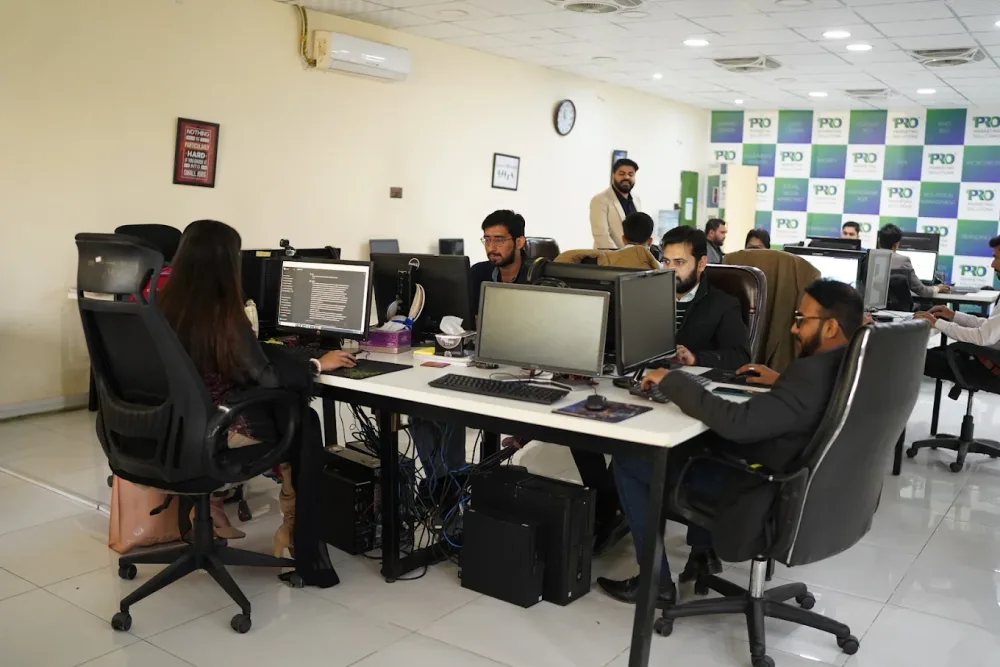 Watch our introduction
 Published client experiences
Hear what working with WeProms was like, directly from our clients.
 Watch their story
 Healthcare
 Watch their story
 Singapore · Video production
 Watch their story
 Education
Inside WeProms
Lahore, Pakistan
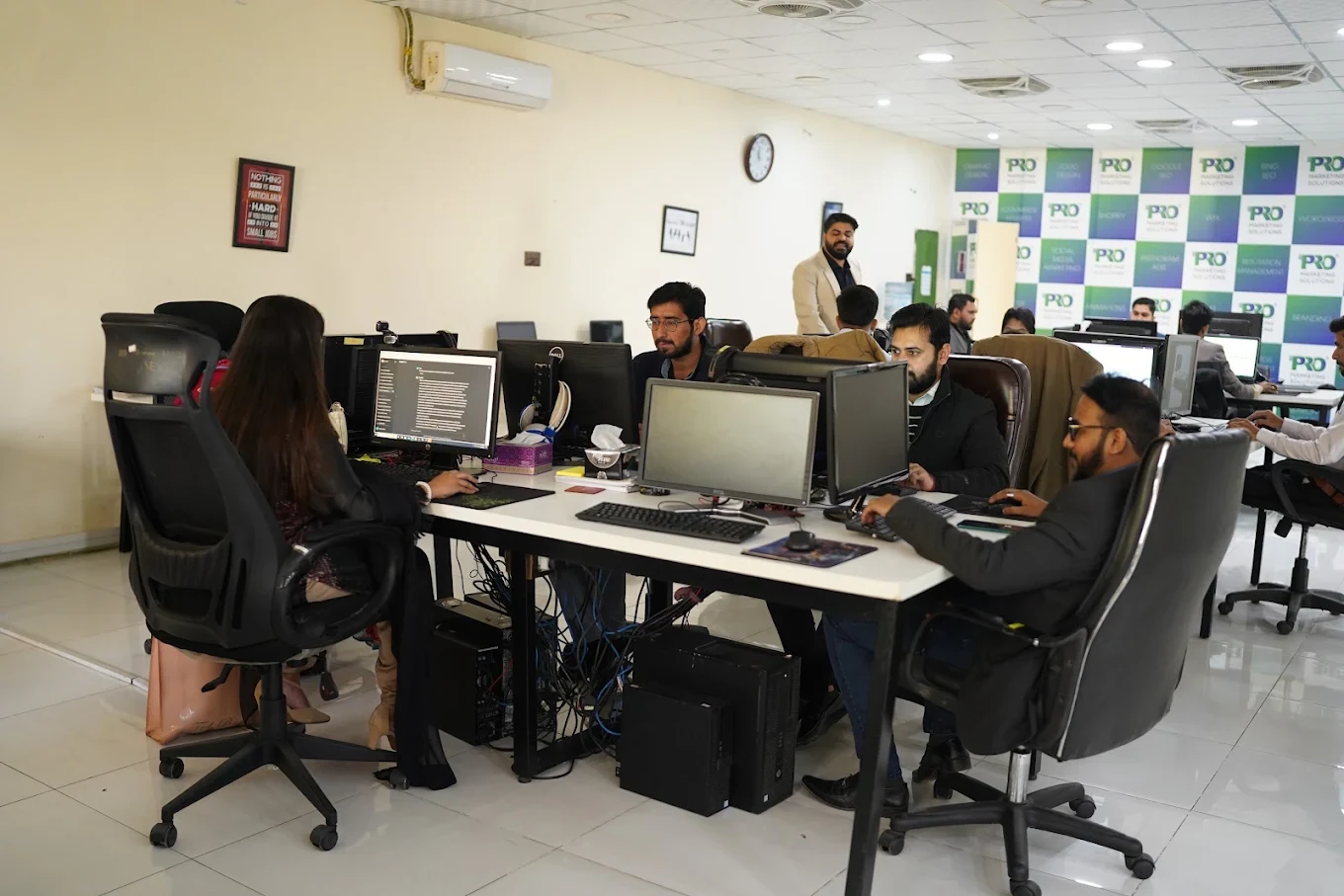
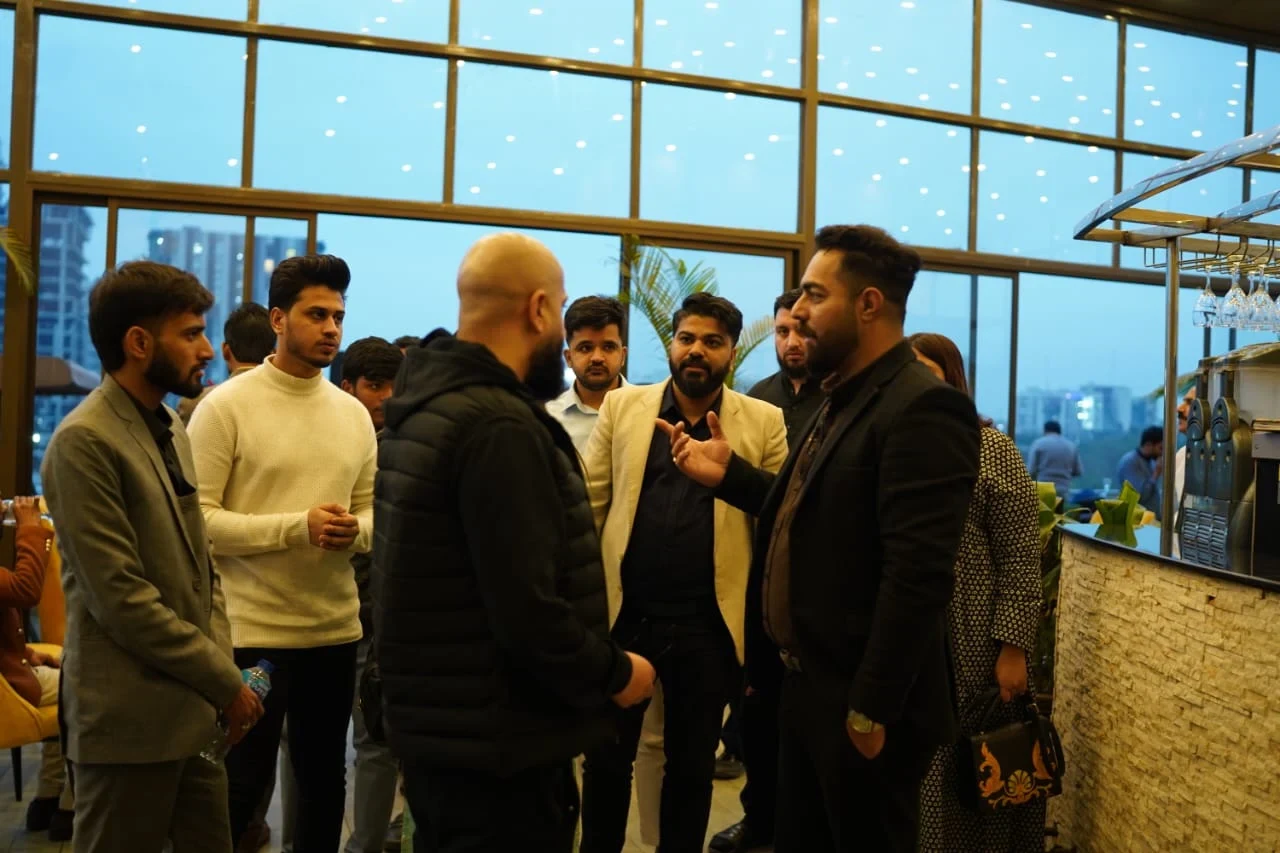
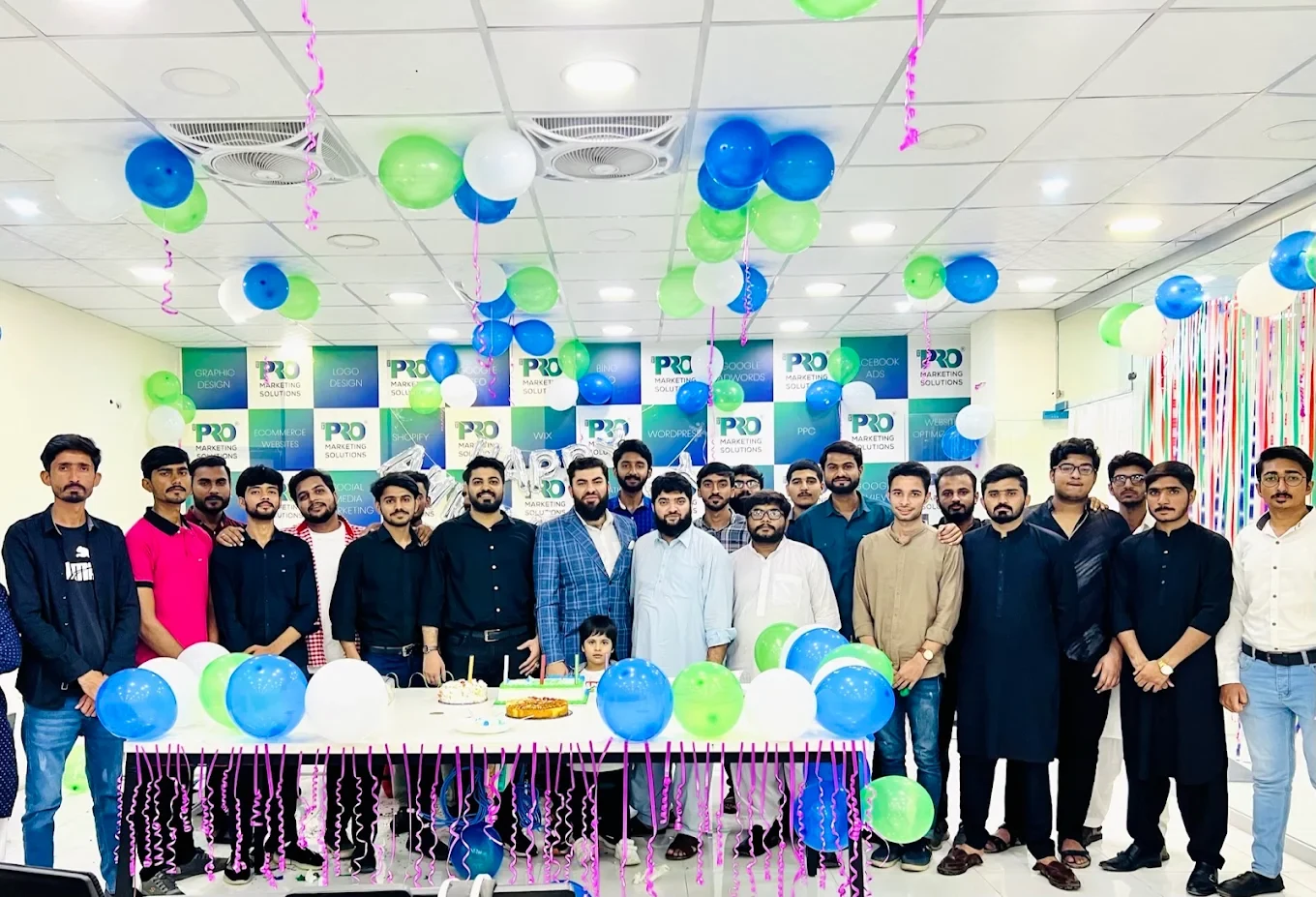

154, C1, Nespak Housing Scheme, Lahore 54770, Pakistan.
Working with a remote marketing team
You know your customers and market. Our strategists, creatives and technical specialists in Lahore help put the plan into practice. Agree the contact person, meeting times and approvals before we start.
Agree deliverables and the agency fee. Discuss ad spend and third-party tools separately.
Keep visibility and ownership. Agree access, asset licences and handover as part of the scope.
Agree a review schedule around your time zone. See what was delivered, what the numbers mean and what comes next.
Explore our Pakistan pricing guides for planning ranges and what shapes the cost. Your market, deliverables and existing setup determine the final quote; advertising spend and third-party costs are separate.
Discuss a quote for your market ↗Before the next step
A useful starting brief includes: current pipeline stages; ownership and routing rules; field and integration inventory. We can agree appropriate access after the first conversation.
Review routing accuracy, data completeness and stage progression with the people responsible for sales.
We can discuss a one-off implementation, an ongoing scope or an initial build followed by support. The proposal states what is included, dependencies and the review points.
Agency work, media spend and third-party costs are identified separately. Your market, existing setup and delivery requirements determine the final scope and quote.
Share your website, target country and the next thing you want to improve. We’ll help you find a useful place to start.