
Answer-ready summary
What happened in this case study?
Blended ROAS improved from 1.8x to 3.6x across two seasonal launches, with cost per purchase down 34% and CAPI event match quality lifted from 3/10 to 8/10.
A Faisalabad-based D2C clothing brand drew roughly 65% of annual online revenue from two seasonal peaks — the Eid collection launch and the winter and wedding season — but ran its Meta account as a flat, always-on machine. When category competition intensified at peak, blended ROAS collapsed to 1.8x precisely when spend was highest. A phased restructure rebuilt the account around seasonality, repaired broken tracking, and industrialised creative.
The rollout used 4 implementation phases: technical cleanup, architecture, content, and authority building.
At a glance
Case summary
- Industry
- D2C Apparel / Clothing
- Market
- Pakistan (Faisalabad)
- Duration
- 12 weeks across two seasonal launches
- Client type
- D2C Brand
- Services used
- Meta Ads (Facebook and Instagram) Management, Ad Creative Design and Production, Retargeting and Remarketing Systems
- Starting problem
- Blended Meta ROAS collapsed to 1.8x at seasonal peaks because a flat, always-on account met peak-week category competition with fatigued creative and a 3/10 Conversions API signal.
- Work completed
- Repaired CAPI measurement, rebuilt the account into per-season campaign architecture with separate product sets, industrialised a modular creative pipeline, and executed two seasonal launches with bid-capped peak-week layers.
- Evidence type
- illustrative_composite
Results and proof
Measured impact across both launches
The top-line numbers are separated from the narrative so buyers, search engines, and answer engines can understand the outcome before reading the full execution notes.
Blended ROAS
Improved from 1.8x to 3.6x (+100%)
Eid launch blended ROAS
1.6x to 3.4x at peak category competition
Winter launch blended ROAS
2.0x to 3.9x across the longer wedding-season window
Cost per purchase
Down 34% versus the prior season
Measured metrics
Before and after
Challenge context
Challenge context
A Faisalabad-based D2C clothing brand drew roughly 65% of annual online revenue from two seasonal peaks — the Eid collection launch and the winter and wedding season — but ran its Meta account as a flat, always-on machine. When category competition intensified at peak, blended ROAS collapsed to 1.8x precisely when spend was highest. A phased restructure rebuilt the account around seasonality, repaired broken tracking, and industrialised creative.
Two seasonal peaks drove ~65% of annual online revenue across a PKR 1.2B GMV storefront
Blended ROAS fell to 1.8x at peak as the entire apparel category entered the auction simultaneously
Conversions API event match quality sat at roughly 3/10, feeding the algorithm noisy purchase signals
22 overlapping ad sets competed internally for the same high-value buyers
Three core creatives were reused year-round and fatigued within weeks of each peak
Execution roadmap
Implementation phases
The page now presents the process as a scannable roadmap before the long-form breakdown, improving buyer comprehension and passage-level retrieval.
Phase 1
Audit and tracking repair (Weeks 1-2)
Phase 2
Seasonal campaign architecture (Weeks 3-5)
Phase 3
Execute the two seasonal launches (Weeks 4-12)
Phase 4
Post-season learning and retention handoff (Weeks 8-12)
The Client
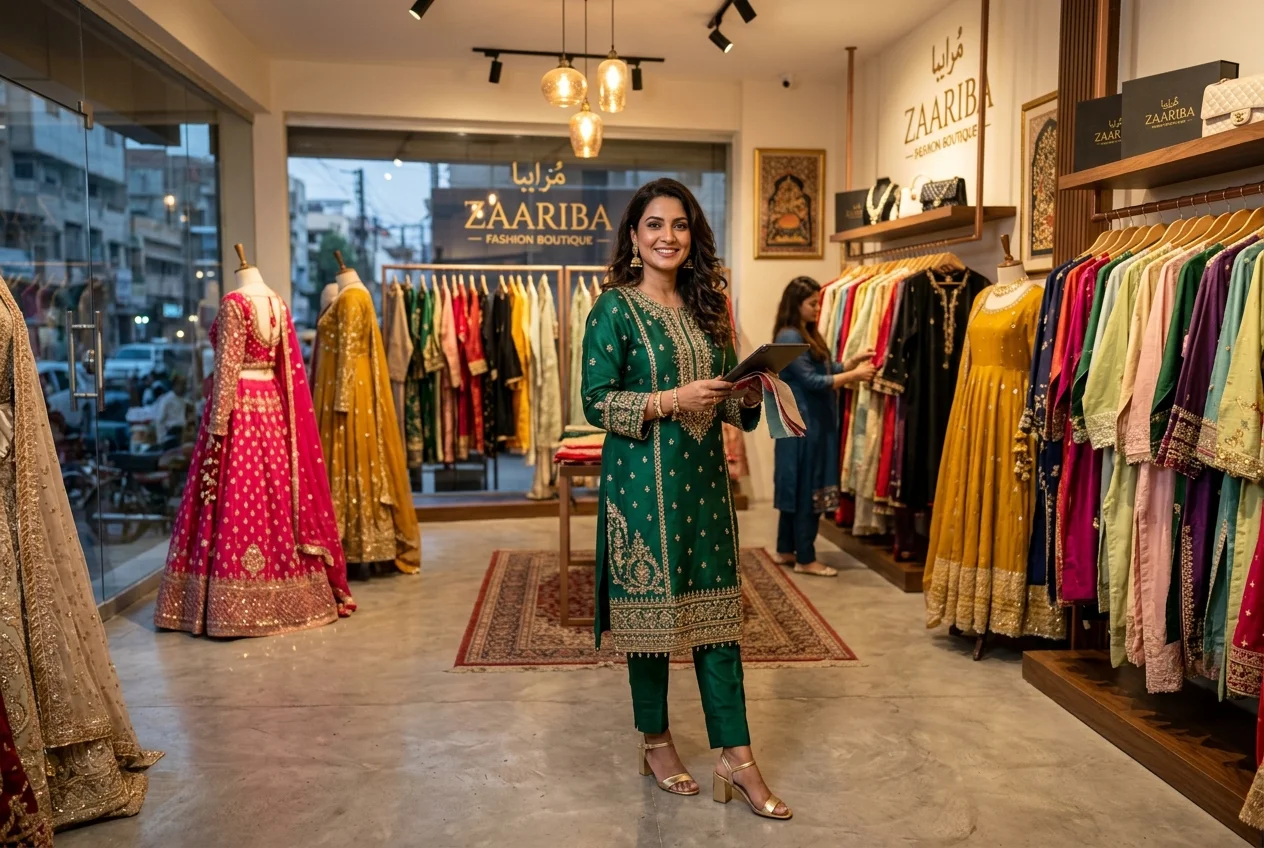
A Faisalabad-based D2C clothing brand selling pret and unstitched fabric online — summer lawn, khaddar and linen for the cooler months, and a formal and wedding-adjacent line for the winter season. Faisalabad is the country’s textile manufacturing heart, and the brand held the cost advantage that comes from sitting close to the looms: it could price mid-premium against Karachi and Lahore D2C competitors while protecting margin. After five years of trading, the brand ran a storefront alongside two retail outlets, with online contributing roughly PKR 1.2 billion in annual GMV.
Like most Pakistani apparel brands, the business was seasonally lopsided. Two selling windows drove the year: the Eid collection launch (lawn and pret, peaking in the four weeks before Eid-ul-Fitr and Eid-ul-Adha) and the winter and wedding season (khaddar, luxury formal, and bridal-adjacent pieces, October through December). Together these two peaks accounted for close to 65% of annual online revenue. Outside them, the store ticked over on evergreen basics and clearance.
The brand engaged WeProms Digital after a poor Eid: blended Meta ROAS had fallen to 1.8x at exactly the moment spend was highest, and the winter launch that followed was only marginally better. Leadership wanted a partner who could restructure the account around the seasonality of the business rather than run it as a flat, always-on machine. This case study reviews the scope, the phased implementation, and the measured outcomes across the two seasonal launches that followed. It is an illustrative composite built from the patterns we see across Pakistani D2C apparel brands; the metrics are realistic outcome ranges a buyer can use to sanity-check fit, not audited third-party figures.
The Problem
The account had grown organically over four years and carried the scar tissue of every quick fix layered on top of the last. Five blockers stood out:
- Always-on structure in a violently seasonal business. The same campaigns, ad sets, and budgets ran in mid-February and mid-November. When Eid demand spiked and every competitor entered the auction, there was no mechanism to restructure, reweight, or pre-build — spend simply inflated into a more expensive, less efficient auction.
- Blended ROAS collapsed precisely at peak. During the four pre-Eid weeks, cost per thousand impressions rose an estimated 55 to 70% as the entire apparel category bid simultaneously. With no bid pacing or creative rotation, the brand paid peak prices with evergreen creative and watched ROAS fall to 1.6x in the Eid window and 2.0x in winter.
- Broken measurement signals. The Meta Pixel fired, but the Conversions API was misconfigured: deduplication was incomplete and event match quality sat at roughly 3 out of 10. The delivery algorithm was optimising for purchases against a noisy, partially-matched signal — the single biggest structural drag on efficiency.
- Audience overlap and internal competition. Twenty-two ad sets across prospecting, broad, interest, and lookalike targeting overlapped heavily. The same high-value buyers were entered into multiple simultaneous auctions against themselves, pushing CPMs up inside the brand’s own account.
- No creative pipeline. Three core ad creatives were reused across the year, fatigued by week six of any peak, and there was no pre-produced seasonal asset library to rotate in. In a category where creative carries the sale, the brand was showing the same imagery to buyers who had already seen it twenty times.
Phase 1 — Audit and Tracking Repair (Weeks 1-2)
Book a free strategy call - we'll audit your current setup and identify the highest-impact fixes.
We refused to restructure campaigns on top of broken measurement. The first two weeks were diagnostic and tracking-only, because every later decision — audience design, budget pacing, creative testing — depends on the algorithm receiving accurate purchase signals.
Conversions API and Pixel repair. We implemented a server-side Conversions API path alongside the browser Pixel, deduplicated events by event ID and timestamp, and passed first-party customer parameters (hashed email and phone from checkout) to raise match quality. Event match quality moved from roughly 3/10 to 8/10 within ten days. The effect was immediate and non-trivial: with a cleaner signal, Meta’s delivery stabilised, cost per purchase on existing ad sets dropped before we changed anything else, and the platform stopped over-serving to low-quality impressions it had previously mistaken for likely buyers.
Account and audience audit. We mapped every ad set, its targeting, and its overlap with the others using Meta’s audience overlap tool alongside our own deduplication analysis:
| Diagnostic | Finding | Action |
|---|---|---|
| CAPI event match quality | 3/10, partial deduplication | Server-side CAPI plus hashed parameters to 8/10 |
| Overlapping ad sets | 22, heavy duplication across the funnel | Consolidated into a 7-ad-set structure (see Phase 2) |
| Creative count in active rotation | 3, fatigued by week 6 of each peak | Built a modular creative pipeline (see Phase 2) |
| Catalog and product set organisation | Single flat catalog, no seasonal split | Split into Eid and winter product sets |
| Budget configuration | Flat daily budgets, no pacing | Seasonal budget layers with peak-week multipliers |
The flat catalog was a subtler problem than it looked. Because all products lived in one set, Advantage+ shopping campaigns served winter khaddar to warm-weather prospects in April and lawn to buyers in November. Splitting the catalog into seasonal product sets was a prerequisite for letting the algorithm do its job in each window.
Outcome of Phase 1: measurement repaired, account fully audited, and a documented restructure plan ready. Cost per purchase on the legacy structure had already improved roughly 11% purely from the tracking fix — a down payment on the larger gains to come.
Phase 2 — Seasonal Campaign Architecture (Weeks 3-5)
With clean signals, we rebuilt the Meta Ads account around the two seasonal peaks rather than a flat always-on baseline. The new structure treated each season as its own campaign with its own prospecting, retargeting, and budget logic, sitting alongside a leaner evergreen layer for the off-season.
Three-layer structure per season. Each seasonal launch ran as three connected layers:
- Advantage+ shopping for prospecting — broad, algorithm-led, fed by the season-specific product set. This carried the largest budget share and did the heavy lifting of finding net-new buyers.
- Manual retargeting for mid-funnel recovery — site visitors, add-to-cart abandoners, and video viewers within a 14 to 30-day window, segmented by recency. We deliberately kept this manual rather than folding it into Advantage+ so we could control creative and frequency against warm audiences.
- Peak-week conversion layer — a tightly budgeted, high-signal layer activated only during the two to three highest-demand weeks of each season, optimised purely for purchase with conservative bid caps to prevent auction blowout.
Modular creative pipeline. Creative is the single largest performance lever in Pakistani apparel Meta ads — far more than audience targeting — so we industrialised it. Rather than produce a handful of finished videos per season, we built a modular system: a bank of seasonal lifestyle and product cuttings (lawn on the line, model shots, flat-lay fabric detail, unstitched swatches) that could be recombined rapidly into fresh hooks, openings, and offers. This let us refresh creative every 48 to 72 hours during peak without hitting a production bottleneck, which matters because ad fatigue in apparel during Eid is measured in days, not weeks. The creative-first thesis behind this build — that creative carries far more performance than audience targeting in this market — is one we have examined in detail in our ad creative beats targeting analysis for Pakistan Meta ads.
Budget pacing and the seasonal calendar. We built a pacing plan that front-loaded modest warm-up spend two to three weeks before each peak (seeding pixel data and building retargeting pools), then stepped budgets up sharply into the highest-demand weeks with a multiplier, and tapered quickly afterward. The discipline of tapering mattered as much as the step-up: the week after Eid sees conversion rates collapse across the entire category, and brands that leave budgets elevated there burn cash on low-intent traffic.
Outcome of Phase 2: a restructured, seasonally-aware account with clean product sets, a consolidated seven-ad-set funnel per season, a modular creative library, and a documented budget calendar for both launches.
Phase 3 — Execute the Two Launches (Weeks 4-12)
The architecture was built to be executed twice. The Eid launch ran first (lawn and pret, the larger of the two peaks by volume), followed by the winter and wedding-season launch (khaddar, luxury formal, and bridal-adjacent).
Eid launch. Warm-up began three weeks pre-Eid with broad Advantage+ prospecting at roughly 60% of peak weekly budget, building retargeting pools and feeding the algorithm early purchase data. Daily creative refresh kicked in from the start of the peak window. As the category auction intensified in the final ten days, we held the prospecting layer at full budget (the demand was genuinely there) but applied conservative bid caps on the peak-week conversion layer to stop the algorithm from chasing inflating CPMs into negative-ROAS territory. Retargeting windows tightened to 14 days to match the shortened consideration cycle of an Eid buyer.
Winter and wedding-season launch. The winter peak is structurally different from Eid: longer, less concentrated, and higher average order value thanks to formal and wedding-adjacent pieces. We ran a gentler ramp, sustained creative refresh across the full eight-week window rather than a sharp spike, and weighted the manual retargeting layer more heavily because winter buyers return to the site multiple times over weeks before purchasing. Advantage+ prospecting still carried the largest share, but the balance shifted toward retargeting relative to Eid.
| Layer | Eid launch ROAS | Winter launch ROAS | Notes |
|---|---|---|---|
| Advantage+ prospecting | 3.1x | 3.6x | Carried the largest budget share in both seasons |
| Manual retargeting | 5.8x | 6.4x | Higher ROAS, smaller pool; tight frequency caps |
| Peak-week conversion layer | 2.4x | 3.0x | Bid-capped; protected against auction blowout |
| Blended (all layers) | 3.4x | 3.9x | Up from 1.6x (Eid) and 2.0x (winter) baseline |
Daily operating rhythm. During each peak we ran a lightweight daily review: ROAS by layer, frequency against warm audiences (to cap retargeting fatigue at roughly 3 to 4 impressions per buyer per week), creative performance (kill or rotate anything below threshold), and pacing against the budget calendar. The modular creative pipeline made the daily refresh operational rather than aspirational — without it, the structure would have stalled on creative starvation within a week. Early in the Eid peak, for example, frequency on the 14-day retargeting pool crossed four impressions per buyer per week inside three days — a fatigue signal that would historically have quietly eroded ROAS. The daily review caught it, the pool was rotated and the creative refreshed, and the layer held its efficiency instead of decaying. That single catch, repeated across dozens of micro-decisions over a peak, is the gap between an average season and a strong one.
Outcome of Phase 3: Eid blended ROAS of 3.4x (from a 1.6x baseline the prior year) and winter blended ROAS of 3.9x (from 2.0x), with blended ROAS across both launches at 3.6x and cost per purchase down 34% versus the previous season.
Phase 4 — Post-Season Learning and Retention Handoff (Weeks 8-12)
How we helped a Pakistani business achieve measurable results.
Performance marketing that ends at the purchase leaves the most valuable money on the table in apparel: repeat purchase. The final phase turned each season’s first-party buyer data into compounding assets.
Audience refresh. We seeded new lookalike audiences from the verified, high-match-quality seasonal buyer lists — materially better inputs than the lookalikes built from the old noisy pixel data. These lookalikes carried into the next season’s prospecting, so each launch started from a stronger targeting baseline than the last.
Retention handoff. Seasonal buyers were handed to the brand’s lifecycle programme: a structured sequence of post-purchase, win-back, and cross-sell touches timed to the next seasonal window. A buyer of Eid lawn is a strong candidate for the winter khaddar launch five months later, but only if the retention system remembers them. This is where paid acquisition and retention meet — the seasonal Meta programme produced the buyer; the lifecycle programme produced the second purchase.
Learning codification. We documented what worked per season into a repeatable playbook: which creative hooks performed, which bid-cap thresholds held under peak auction pressure, which retargeting windows converted. The point of running two launches back to back was not just two good seasons — it was a tested system the brand could re-run independently the following year.
Outcome of Phase 4: stronger lookalike inputs for the following year, a retention pipeline capturing repeat revenue from seasonal buyers, and a documented seasonal playbook.
Final Results
| Metric | Before | After | Change |
|---|---|---|---|
| Blended ROAS (both launches) | 1.8x | 3.6x | +100% |
| Eid launch blended ROAS | 1.6x | 3.4x | +113% |
| Winter launch blended ROAS | 2.0x | 3.9x | +95% |
| Cost per purchase | Baseline | -34% | Lower |
| CAPI event match quality | 3/10 | 8/10 | Cleaner delivery signal |
| Overlapping ad sets | 22 | 7 | Consolidated funnel |
| Creative refresh cadence at peak | Never | 48-72 hr | Modular pipeline |
What Made This Work
- Tracking repair preceded restructuring. Rebuilding campaigns on a 3/10 event match quality signal would have tuned the algorithm to noise. Fixing CAPI first meant every later optimisation decision rested on accurate purchase data — and produced an 11% efficiency gain before we touched campaign structure.
- The structure mirrored the seasonality. A flat always-on account cannot perform in a business where 65% of revenue lands in two peaks. Building per-season campaign architecture with its own prospecting, retargeting, and peak-week layers let each window operate on its own economics rather than fighting a single blended budget.
- Creative was treated as infrastructure. The modular creative pipeline made daily refresh during peak operational. In Pakistani apparel, creative fatigue is measured in days during Eid; the brand that can refresh wins the auction for attention, and that carried more performance than any audience tweak.
- Bid discipline at peak protected the floor. Conservative bid caps on the peak-week conversion layer stopped the algorithm from chasing inflating CPMs into negative-ROAS territory — the mechanism by which most apparel brands collapse to 1.5 to 1.8x ROAS exactly when they are spending the most.
What Teams Can Apply
For Pakistani D2C apparel and clothing brands running Meta ads:
- Fix measurement before structure. If your Conversions API event match quality is below 6/10, you are optimising on noise. Server-side CAPI with hashed first-party parameters is the highest-ROI single fix available — and it pays for itself before any restructure.
- Build the account around your peaks, not against them. If two seasons drive most of your revenue, give each its own campaign architecture, product set, and budget calendar. Stop running November’s account in April.
- Industrialise creative. Move from a handful of finished ads per season to a modular asset library you can recombine into daily-fresh creative at peak. Creative is the dominant performance lever in this category.
- Cap bids at peak and taper fast after. The final days of Eid and the week after are where apparel budgets die. Conservative bid caps on conversion layers and rapid post-peak tapering protect blended ROAS.
- Hand seasonal buyers to retention. The second purchase is where apparel margin compounds. A first-party seasonal buyer list feeds better lookalikes and a lifecycle programme that turns one Eid buyer into a year-round customer.
For broader context on how seasonal apparel demand shapes clothing brand marketing in Pakistan, the seasonal framework above is the operational core.
What teams can apply
Use the framework, not just the headline number.
For GEO, AEO, and classic SEO, the useful signal is the sequence: fix crawl access, build answerable category assets, improve conversion paths, and document proof in a format that humans and machines can cite.
Tracking repair preceded restructuring, so every later optimisation rested on accurate purchase data rather than a 3/10 match-quality signal.
The account structure mirrored the business seasonality, giving each peak its own prospecting, retargeting, and bid-capped conversion layers instead of a single blended budget.
A modular creative pipeline made 48-to-72-hour refresh at peak operational, and creative is the dominant performance lever in Pakistani apparel Meta ads.
Limitations
Context and limitations
Illustrative composite built from common patterns across Pakistani D2C apparel brands; results vary with category margins, peak-season auction intensity, catalog depth, and the starting state of tracking.
Questions
Case study FAQs
Is this seasonal Meta Ads framework applicable in Pakistan?
Yes. It is built around the two demand peaks that drive Pakistani apparel — Eid and the winter wedding season — and accounts for local realities like peak-week auction inflation, cash-on-delivery consideration cycles, and the creative intensity the category requires.
How quickly can we expect results?
Tracking repair lands inside two weeks and often lifts efficiency before any restructure. The full seasonal architecture needs three to five weeks to build before a launch; meaningful ROAS gains appear in the first peak window that runs on the new structure.
Can you replicate this process for our business?
Yes. We map the same phased rollout to your catalog, margins, and seasonal calendar. The framework adapts across Pakistani apparel verticals including lawn and pret, formal and bridal, footwear, accessories, and multi-brand retail.
Do you provide reporting during implementation?
Yes. Weekly checkpoints cover ROAS by layer, cost per purchase, creative performance, and audience frequency. A live dashboard tying Meta spend to revenue is shared from day one, with a daily review cadence during peak weeks.
Next step
Want a similar rollout in Pakistan?
Share your current baseline and we will map a phased execution plan to your growth goals.