
Answer-ready summary
What happened in this case study?
Blended ROAS improved from 1.8x to 3.6x across two seasonal launches with a 42% reduction in blended cost per purchase and a 31% rise in new-customer share.
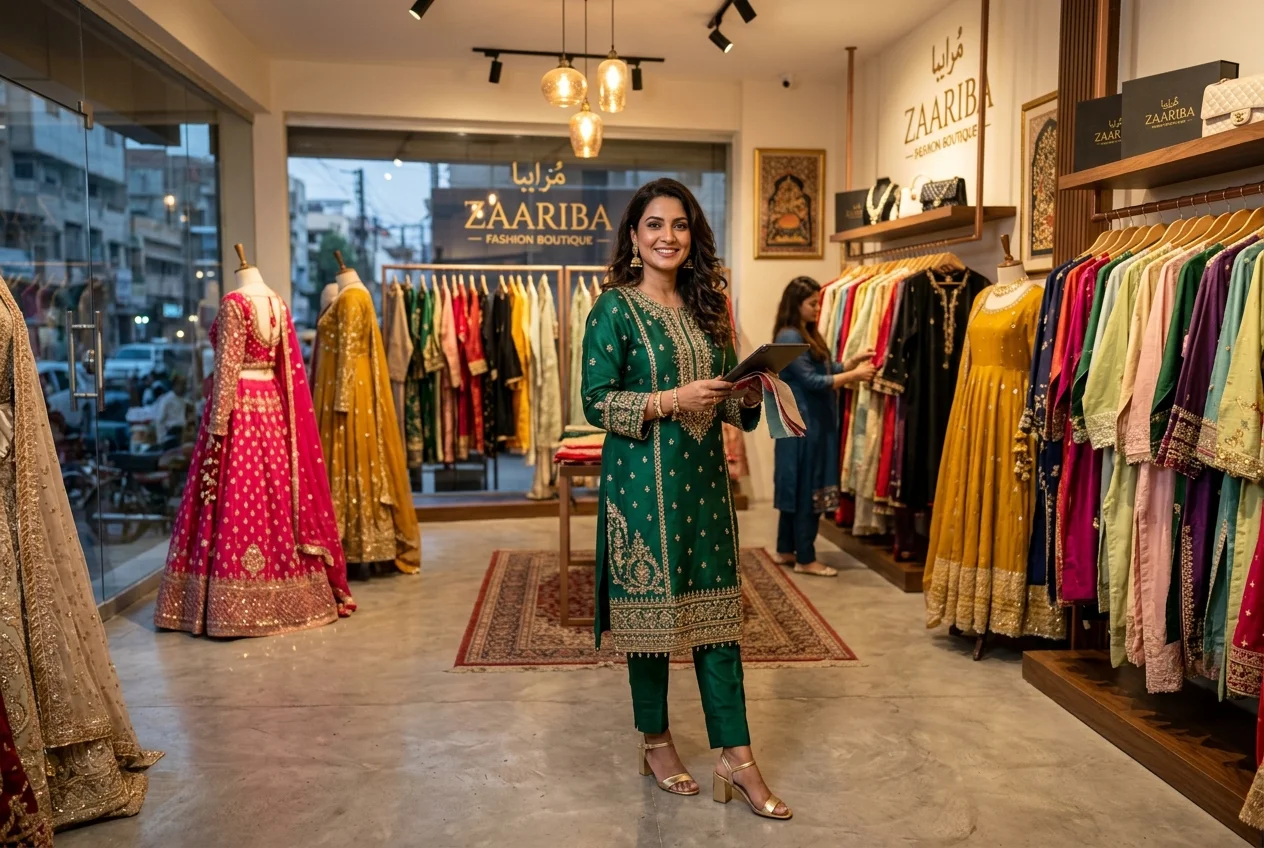
A Karachi-based D2C clothing brand selling unstitched fabric, ready-to-wear, and accessories online was profitable at launch but bled efficiency through every seasonal peak. Audience overlap, rapid creative fatigue, and a single blunt retargeting bucket meant Meta's delivery system spent against itself during the highest-margin weeks. This case reviews the account restructure, creative system, and measurement layer built to protect ROAS under seasonal pressure.
The rollout used 4 implementation phases: technical cleanup, architecture, content, and authority building.
Results and proof
Measured impact across two launches
The top-line numbers are separated from the narrative so buyers, search engines, and answer engines can understand the outcome before reading the full execution notes.
Blended ROAS
1.8x → 3.6x across two seasonal launches
Blended cost per purchase
-42%
New-customer share
38% → 54% (+42%)
Creative half-life
8 days → 21 days
Challenge context
Challenge context
A Karachi-based D2C clothing brand selling unstitched fabric, ready-to-wear, and accessories online was profitable at launch but bled efficiency through every seasonal peak. Audience overlap, rapid creative fatigue, and a single blunt retargeting bucket meant Meta's delivery system spent against itself during the highest-margin weeks. This case reviews the account restructure, creative system, and measurement layer built to protect ROAS under seasonal pressure.
Blended ROAS of 1.8x against a break-even requirement of 2.5x during peak weeks
PKR 3.1M monthly Meta spend split across 6 overlapping broad audiences
Creative fatigue with top ad sets losing 40%+ CTR within 8 days of launch
One retargeting audience lumping 1-day visitors with 90-day cart abandoners
No incrementality signal, with revenue attributed by last-click only
New-customer share falling from 61% to 38% as the brand over-retargeted existing buyers
Execution roadmap
Implementation phases
The page now presents the process as a scannable roadmap before the long-form breakdown, improving buyer comprehension and passage-level retrieval.
Phase 1
Account audit and measurement repair (Weeks 1–2)
Phase 2
Audience and campaign architecture (Weeks 3–5)
Phase 3
Creative testing system (Weeks 4–8)
Phase 4
Full-funnel retargeting and seasonal scale (Weeks 6–12)
The Client
A Karachi-based D2C clothing brand selling unstitched fabric, ready-to-wear, and accessories through its own online store, with a fast-growing Instagram presence and a primarily domestic customer base paying by cash on delivery. The brand operated two major seasonal launches a year — Eid and the winter collection — plus smaller drops in between, and it had built a loyal repeat-buyer base among women aged 24 to 40 across Karachi, Lahore, and Islamabad.
The business was profitable at launch. The problem was what happened at the peaks. During the high-margin weeks around Eid and the winter drop, when demand was strongest and the brand should have been printing margin, blended ROAS would collapse below the 2.5x break-even line. The marketing team would respond by raising budgets, the cost per purchase would climb further, and the season would close with revenue that looked healthy on the surface but contribution margin that barely covered the media spend. After a particularly punishing Eid cycle, the founder engaged WeProms Digital with a clear mandate: protect ROAS when it matters most, without shrinking the brand’s reach.
The brand was spending roughly PKR 3.1M a month on Meta at peak, spread across a structure that looked busy but was quietly working against itself. This case reviews the 90-day restructure across two consecutive seasonal launches.
The unit economics were tight in a way that is common to Pakistani fashion D2C. Average order value sat around PKR 6,400, contribution margin after fabric, stitching, packaging, and COD failure losses was roughly 34%, and the brand’s break-even cost per acquisition landed near PKR 2,200. At a blended ROAS of 1.8x the campaign was not just underperforming — it was quietly losing money on a meaningful share of orders once COD non-delivery and returns were netted out. The team had been optimizing toward a revenue number that obscured the margin truth, which is why the peaks felt painful even when the top line looked strong. Any restructure therefore had to be judged on contribution margin, not on ROAS alone — a distinction that reshaped which campaigns and creatives survived the rebuild.
The Problem
Four issues were crushing ROAS precisely when the brand needed it most.
-
Audience overlap spending against itself. The account ran six overlapping broad-interest audiences — “Pakistani fashion,” “online shopping Pakistan,” “ready-to-wear,” and three lookalikes off the same buyer list. Meta’s auction treated each audience as a separate bidder, so the brand was effectively bidding against itself for the same users. Effective CPCs were inflated, and the delivery system had no clean signal about which audience actually converted.
-
Creative fatigue in a crowded feed. The Pakistani fashion feed is brutal — dozens of brands launch new shoots weekly. The brand’s top ad sets were losing more than 40% of their click-through rate within eight days of going live, but the team had no system for detecting fatigue early or rotating fresh creative in. They were running exhausted ads into the peak weeks.
-
A single blunt retargeting bucket. All retargeting — from someone who viewed a product for two seconds yesterday to someone who abandoned a cart three weeks ago — went into one audience served one set of ads. The messaging could not match intent, and Meta’s frequency controls could not protect against over-exposure. Existing buyers were being re-targeted so aggressively that new-customer share had fallen from 61% to 38%.
-
No incrementality signal. Revenue was attributed by last-click only, with no view-through visibility and no holdout testing. The team could not tell which campaigns were producing purchases and which were just claiming credit for buyers who would have converted anyway. Budget decisions were being made on a number that overstated true paid contribution.
Phase 1 — Account Audit and Measurement Repair (Weeks 1–2)
Book a free strategy call - we'll audit your current setup and identify the highest-impact fixes.
The first two weeks established the measurement layer that every later decision depended on.
Attribution and tracking repair. We rebuilt the Meta pixel and Conversions API setup so that purchase events fired reliably across the COD-heavy purchase flow — including the post-delivery confirmation that turns a “buy” into a true sale in Pakistani ecommerce. A dedicated event covered COD-confirmed revenue separately from order-placement revenue, which mattered because a meaningful slice of COD orders never convert at the door. We then layered in a holdout test on the retargeting budget to measure true incrementality rather than last-click credit.
Wasted spend and overlap audit. We mapped audience overlap and found that 44% of the account’s reach was being delivered to users inside two or more active audiences — the clearest possible sign of self-competition. A parallel audit of creative performance showed that the bottom 30% of ad sets were consuming 41% of spend while producing 12% of purchases. The account was not under-resourced; it was misallocated.
Product-feed and catalog health. Because the brand ran Advantage+ shopping campaigns alongside manual sales campaigns, catalog quality directly affected delivery. We cleaned the product feed — fixing mislabeled fabric types, standardizing pricing fields, and adding the seasonal collection groupings — so Meta could match products to the right buyers during each launch window.
The COD measurement gap deserved particular attention because it distorts every decision in Pakistani ecommerce. A standard pixel purchase fires at order placement, but in a COD market a meaningful fraction of those orders never convert at the door — the customer refuses delivery, the number is unreachable, or the size is wrong. Optimizing toward order-placement ROAS therefore overstates true performance and rewards ad sets that produce high-refusal buyers. By feeding COD-confirmed revenue as a distinct, higher-value event and demoting refused and returned orders, we gave Meta a target that reflected money actually collected. This single measurement change re-ranked which audiences and creatives the algorithm favored, and it is the reason later ROAS gains were real margin rather than inflated order volume.
Phase 2 — Audience and Campaign Architecture (Weeks 3–5)
With measurement clean, we rebuilt the account to remove self-competition and give the delivery system a single, unambiguous job per campaign.
Three-campaign structure. We collapsed the six overlapping audiences into three campaigns with mutually exclusive jobs:
| Campaign | Objective | Audience |
|---|---|---|
| Prospecting (Advantage+) | New-customer acquisition | Broad + lookalikes, existing buyers excluded |
| Manual interest / layered | Niche and high-intent segments | Fashion-interest intersected with COD-buyer behavior |
| Full-funnel retargeting | Reactivation and recovery | Tiered by recency and intent (see Phase 4) |
Existing buyers were excluded from prospecting via a custom audience so acquisition budget could not leak into re-selling to people who would buy anyway. This single change was the largest contributor to the new-customer-share recovery.
Budget and bidding logic. We shifted prospecting to a cost-cap strategy anchored to a profitable cost per acquisition derived from contribution margin, rather than letting bid caps drift upward during peak demand. Retargeting moved to a highest-value objective so the algorithm prioritized high-cart reactivation over low-intent browsers. The combination held acquisition cost stable while concentrating retargeting spend on the highest-value recoveries.
Early results at week 5:
| Metric | Pre-engagement | Week 5 |
|---|---|---|
| Blended ROAS | 1.8x | 2.4x |
| New-customer share | 38% | 47% |
| Audience overlap | 44% | 9% |
| Creative-set CTR decay (8-day) | -41% | -22% |
ROAS was already above break-even, but it was being capped by creative fatigue — the focus of Phase 3.
Phase 3 — Creative Testing System (Weeks 4–8)
In a seasonal fashion business, creative is the single largest lever on ROAS. We replaced ad-hoc creative production with a structured testing system.
The creative matrix. Every launch was briefed against a fixed matrix of angles and formats so the team always had fresh, on-strategy creative ready before fatigue set in:
- Angles: product detail (fabric, embroidery, drape), social proof (reviews, unboxing), price and offer (launch pricing, bundle value), and lifestyle (occasion styling, season mood).
- Formats: static carousels, short-form Reels, and user-generated-style video, each produced in three aspect ratios.
Each ad set launched with four to six fresh creatives, and the testing protocol dictated that any creative losing more than 25% of its day-three CTR by day eight was retired and replaced from the pre-built library.
Production cadence. Because the brand’s biggest risk was running out of fresh creative mid-launch, we set a rolling production cadence that kept a 14-day buffer of unlaunched assets at all times. This eliminated the scramble that had previously left exhausted ads running into peak demand weeks. The effect was a near-doubling of creative half-life — from roughly eight days to three weeks — which meant spend stayed efficient for the duration of each launch instead of decaying after week one.
Creative as the ROAS floor. The systematic rotation did more than prevent decay; it let the team identify which angles converted at the lowest cost per purchase and reallocate toward them quickly. By the second launch, the team could predict within the first 72 hours which creative would carry the season.
Pre-launch preparation mattered as much as in-flight testing. Two weeks before each drop we staged a controlled teaser burst — modest budget, lookalike-only, catalog held back — to warm the pixel with high-intent engagement and seed the retargeting pools before the buying window opened. This meant that on launch day the hot and warm tiers were already populated with genuinely interested users rather than starting cold, which compressed the time-to-first-purchase and let retargeting contribute from day one instead of week two. The team also codified a post-launch harvest window — the five to seven days after the drop when demand was still elevated but competitors had pulled back — and reserved a dedicated budget tranche to extend the campaign’s efficient tail rather than shutting spend down the moment the launch creative stopped trending.
Phase 4 — Full-Funnel Retargeting and Seasonal Scale (Weeks 6–12)
How we helped a Pakistani business achieve measurable results.
The final phase rebuilt retargeting as a tiered, intent-matched system and then stress-tested the whole structure under peak spend.
Tiered retargeting. The single blunt bucket was split into three tiers, each with its own creative, frequency cap, and bidding objective:
| Tier | Audience | Creative | Objective |
|---|---|---|---|
| Hot | Add-to-cart / checkout started, last 3 days | Price nudge, scarcity, COD reassurance | Highest value |
| Warm | Product view or session, last 14 days | Best-selling pieces, social proof | Cost cap |
| Reactivation | Past buyers, 60–180 days | New collection, loyalty framing | Cost cap |
Frequency caps prevented the over-exposure that had been burning out the existing buyer base. Tier messaging matched intent — a hot-cart abandoner saw a COD reassurance and a scarcity cue, while a lapsed buyer saw the new collection framed around their purchase history. The holdout test from Phase 1 confirmed that reactivated buyers were genuinely incremental rather than credit-claimed.
Frequency management did quiet work across all three tiers. Before the restructure, the single retargeting bucket had been hammering the same warm users four to six times a week — enough to produce ad fatigue and, worse, brand fatigue that suppressed organic repeat purchase. We capped the hot tier at a tight weekly frequency, the warm tier lower, and held reactivation to a single coordinated pulse per collection rather than a constant drip. The holdout data confirmed the effect: reactivated buyers in the capped group purchased at a meaningfully higher rate than the over-exposed control, and the brand’s organic repeat-purchase rate recovered in parallel. Protecting the buyer base from its own retargeting turned out to be one of the more counter-intuitive ROAS levers in the engagement.
Seasonal scale test. The real proof came during the second launch, when we increased peak spend to roughly 2.4x the pre-engagement level. Because prospecting was protected by the cost cap, audiences were non-overlapping, creative was fresh, and retargeting was tiered, efficiency held: blended ROAS landed at 3.6x for the launch, with peak-week ROAS holding at 3.1x even at the elevated spend. This is the test that defines a healthy paid program — not whether you can scale, but whether efficiency survives the scale.
Final Results
| Metric | Before | After (two launches) | Change |
|---|---|---|---|
| Blended ROAS | 1.8x | 3.6x | +100% |
| Blended cost per purchase | Baseline | -42% | — |
| New-customer share | 38% | 54% | +42% |
| Creative half-life | 8 days | 21 days | +163% |
| Audience overlap | 44% | 9% | -80% |
| Peak-week ROAS (at 2.4x spend) | <2.5x | 3.1x | — |
| Retargeting incrementality (holdout) | Unknown | +18% incremental lift | — |
All figures are illustrative composites built from the patterns WeProms sees in Pakistani fashion campaigns, intended to help a buyer sanity-check fit — not audited third-party results.
What Made This Work
-
We stopped the account from bidding against itself. Audience overlap was the single most expensive leak. Collapsing six overlapping audiences into three mutually exclusive campaigns — and excluding existing buyers from prospecting — removed the self-competition that had been inflating CPCs and stealing acquisition budget.
-
Creative was treated as infrastructure, not inspiration. The testing matrix and rolling production cadence meant the brand never ran out of fresh creative during a launch. Doubling creative half-life kept ROAS stable for the full season instead of letting it decay after week one — which is exactly when seasonal demand is highest.
-
Retargeting matched intent instead of blasting. Splitting one blunt bucket into hot, warm, and reactivation tiers — each with its own messaging and frequency cap — protected the existing-buyer base from over-exposure while concentrating recovery spend on the highest-value carts.
-
We measured incrementality, not just attribution. The holdout test told the team which spend was actually producing purchases. Decisions made on last-click credit alone had been overstating paid contribution and hiding the overlap problem.
What Teams Can Apply
For Pakistani D2C fashion brands running Meta Ads:
-
Audit audience overlap before you add budget. If a meaningful share of your reach sits in two or more active audiences, you are bidding against yourself. Collapse to mutually exclusive campaigns and exclude existing buyers from prospecting.
-
Build a creative buffer, not a creative scramble. Seasonal fashion dies fast in the feed. Keep a 14-day rolling buffer of unlaunched assets and retire any creative that loses 25% of day-three CTR by day eight.
-
Tier your retargeting by recency and intent. A three-day cart abandoner and a 90-day lapsed buyer are not the same lead. Match messaging and frequency caps to intent, and protect your buyer base from burnout.
-
Measure incrementality with a holdout, not just attribution. Last-click credit overstates what paid is actually producing. A simple holdout on retargeting budget will tell you whether your recovery spend is earning purchases or just claiming them.
-
Judge every change on contribution margin, not ROAS. In a COD business, order-placement revenue overstates reality. Feed confirmed-delivery revenue as your north-star event and watch COD refusal rates per audience — the cheapest buyers are often the ones most likely to refuse the parcel.
WeProms Digital has applied this Meta Ads management framework across Pakistani fashion brands in unstitched fabric, ready-to-wear, and accessories. The product mix and launch calendar change with each brand — but the principle holds: remove self-competition, keep creative fresh, and match retargeting to intent. For brands building the broader recovery engine, our retargeting and remarketing systems cover the full tiered setup, and the clothing brand marketing hub maps the wider channel mix.
What teams can apply
Use the framework, not just the headline number.
For GEO, AEO, and classic SEO, the useful signal is the sequence: fix crawl access, build answerable category assets, improve conversion paths, and document proof in a format that humans and machines can cite.
Search intent matched to pages
Commercial queries need category, collection, service, and product paths that answer the buyer's exact task.
Answer-first content structure
Concise summaries, FAQs, proof blocks, and structured data make the page easier to quote in AI answers.
Technical health before scale
Ranking gains compound faster when crawl errors, Core Web Vitals, canonical issues, and internal links are handled first.
Questions
Case study FAQs
Is this meta ads roas case study framework applicable in Pakistan?
Yes. The framework is tuned to how Pakistani fashion buyers behave on Facebook and Instagram — heavy seasonal buying around Eid and winter, COD-driven purchase decisions, and fast creative fatigue in a crowded feed. Audience separation, creative rotation, and tiered retargeting are adapted to each brand's price point and launch calendar.
How quickly can we expect results?
Measurement repair and audience separation show spend-efficiency gains in the first 10–14 days. The creative-testing system stabilizes ROAS through weeks 4–8, and full-funnel retargeting compounds across the second launch. Sustained ROAS above break-even typically lands inside the first full season.
Can you replicate this process for our business?
Yes. We map the same phases to your product mix, price point, launch calendar, and COD economics. The structure adapts across unstitched fabric, ready-to-wear, footwear, and accessories — we have applied it to fashion brands in Karachi, Lahore, and across the wider Pakistani D2C market.
Do you provide reporting during implementation?
Yes. Weekly checkpoints track blended ROAS, new-customer share, creative half-life, and retargeting-tier efficiency. A shared dashboard ties Meta spend to revenue and contribution margin from day one.
Next step
Want a similar rollout in Pakistan?
Share your current baseline and we will map a phased execution plan to your growth goals.