
Answer-ready summary
What happened in this case study?
Festive-season Meta ROAS rose from 2.8x to 4.5x while cost per purchase fell 38% and Meta-attributed revenue scaled to PKR 15.3M a month for an Islamabad fine jewelry ecommerce brand.
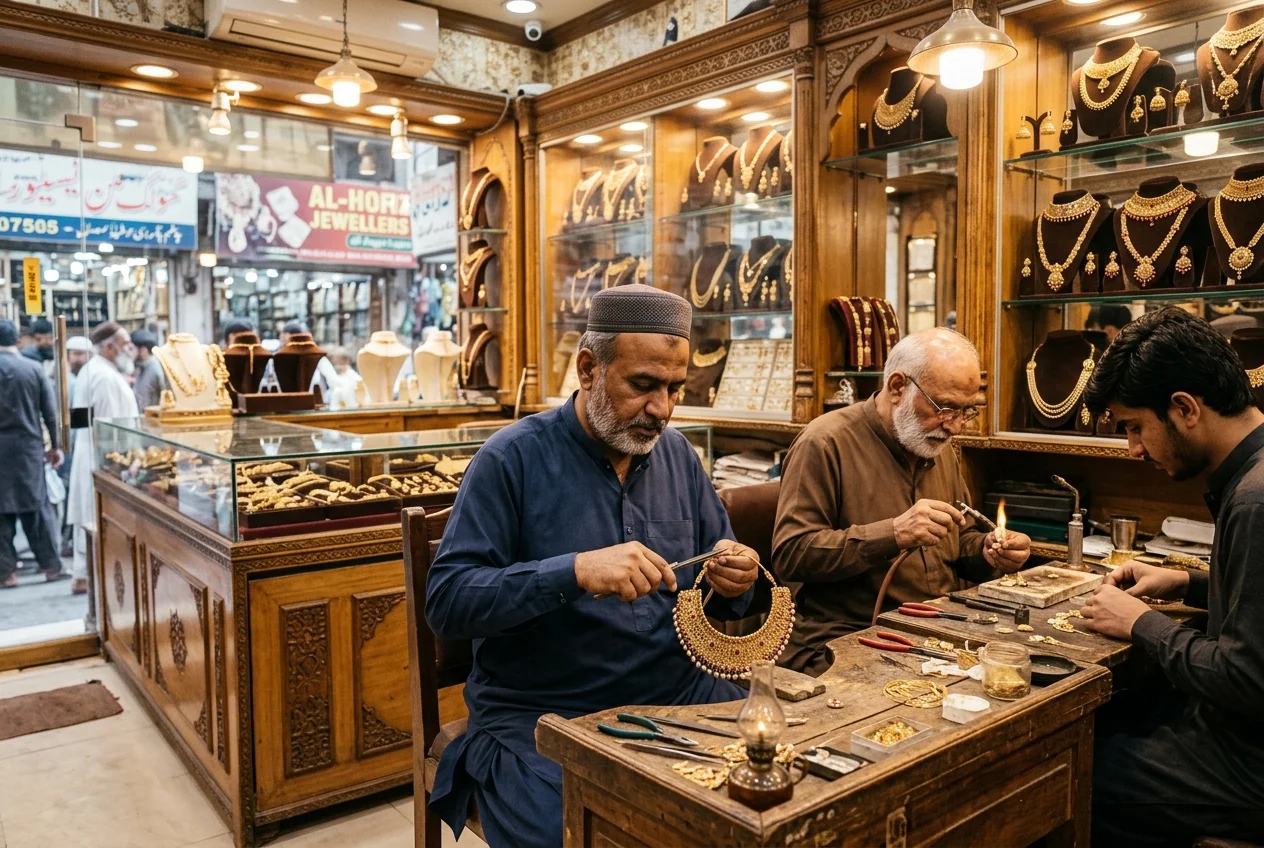
An Islamabad-based fine jewelry ecommerce brand selling 22k gold and lab-certified diamond pieces — bridal sets, engagement rings, everyday gold, and gifting — was running Meta ads in-house but could not scale efficiency into the festive window. Every previous attempt to raise spend collapsed ROAS, and the numbers they were optimizing against were not even trustworthy.
The rollout used 4 implementation phases: technical cleanup, architecture, content, and authority building.
Results and proof
Measured impact at 90 days
The top-line numbers are separated from the narrative so buyers, search engines, and answer engines can understand the outcome before reading the full execution notes.
Blended Meta ROAS (festive window)
Improved from 2.8x to 4.5x (+61%)
Cost per purchase
Reduced from PKR 11,800 to PKR 7,300 (-38%)
Purchase conversion rate (PDP)
Lifted from 1.1% to 1.7% (+55%)
Meta-attributed revenue (peak month)
Scaled from PKR 5.9M to PKR 15.3M
Challenge context
Challenge context
An Islamabad-based fine jewelry ecommerce brand selling 22k gold and lab-certified diamond pieces — bridal sets, engagement rings, everyday gold, and gifting — was running Meta ads in-house but could not scale efficiency into the festive window. Every previous attempt to raise spend collapsed ROAS, and the numbers they were optimizing against were not even trustworthy.
Meta ROAS stuck at 2.1–2.4x off-season and below 3x in the prior festive window
Browser pixel and a second server copy were double-counting purchases, corrupting optimization signal
Static lifestyle creative with heavy Urdu and English text overlays produced high CPMs and 0.9% outbound CTR
Product catalog feed had a 41% missing-attribute rate, so Advantage+ could not match products to creative
Budget fragmented across six manual interest ad sets with 40%+ audience overlap and rapid fatigue
No festive-season plan in place — spend was always turned up too late and efficiency was lost at the peak
Execution roadmap
Implementation phases
The page now presents the process as a scannable roadmap before the long-form breakdown, improving buyer comprehension and passage-level retrieval.
Phase 1
Tracking cleanup and account audit (Weeks 1-2)
Phase 2
Creative rebuild and catalog feed (Weeks 3-5)
Phase 3
Advantage+ Shopping launch and scaling (Weeks 4-8)
Phase 4
Measurement and festive-peak compounding (Weeks 8-12)
The Client
A fine jewelry ecommerce brand based in Islamabad, selling 22k gold and lab-certified diamond pieces to a national customer base. Their catalog sat across four clear ranges: bridal sets and wedding jewelry, engagement rings, everyday gold wear, and gifting under PKR 20,000. Average order value landed near PKR 33,000, skewed upward during the wedding and Eid windows when bridal sets moved. Off-season revenue ran around PKR 22M a month, split between WhatsApp-led consultative sales, organic Instagram, and a Meta ads program they had managed in-house for eighteen months.
The brand’s strength was product trust — certified stones, real gold weight disclosures, a try-at-home appointment flow, and a returns policy that the local market treated as generous. Their weakness was paid efficiency at scale. They had grown the WhatsApp and Instagram channels patiently, but Meta ads had become the ceiling on how fast they could grow without burning margin. When they came to WeProms Digital, the brief was specific: make paid media efficient enough to scale hard into the next festive window without ROAS collapsing the way it had the year before.
Festive demand in Pakistan’s jewelry market clusters into two windows: Eid gifting in the spring and the wedding season that runs through the cooler months, with a sharp Chaand Raat spike at the close of Ramadan. The economics of jewelry advertising are defined by these windows — CPMs climb as every competitor turns spend on at once, and the brands that win are the ones whose bidder is warm, whose creative is fresh, and whose tracking is clean before the window opens. The brand’s previous festive windows had been reactive: spend chased demand after it peaked, paying the highest CPMs of the year to audiences that were already being saturated by better-prepared competitors. Building a system that was efficient and warmed up before the window opened was the core of the engagement, not a sprint launched on the first day of Eid.
The Problem
Four issues were blocking profitable scaling, and they compounded each other:
- Untrustworthy optimization signal. The Meta pixel was firing in the browser, and a second server-side copy was firing the same purchase event without deduplication. Meta’s algorithm was optimizing against roughly double the real purchase volume, which made every performance number in the account misleading and gave the bidder poor feedback.
- Creative built for reach, not purchase. The account ran static lifestyle images with dense Urdu and English text overlays. CPMs were high for the jewelry category, outbound CTR sat at 0.9%, and the same three creatives had been live for months. There was no video, no carousel of ranges, and no creative tied to specific product collections.
- A catalog feed Meta could not read. Product titles were generic (“Gold Ring 02”), material and karat attributes were missing on 41% of items, and stone type was inconsistent. Advantage+ Shopping relies on a clean feed to match products to the right buyer and creative — theirs was unreadable, which is why every earlier Advantage+ test had underperformed.
- Fragmented budget and no pacing plan. Spend was split across six manual interest-based ad sets (fine jewelry, wedding planning, luxury lifestyle, and similar), with 40%+ audience overlap and rapid creative fatigue. There was no festive-season calendar, so spend was always turned up after demand had already peaked, paying premium CPMs for cold audiences.
The net effect: the prior festive window closed at 2.8x ROAS on roughly PKR 2.1M a month in spend, and the team had written off Meta as “expensive but necessary” rather than a channel that could compound.
Phase 1 — Tracking Cleanup and Account Audit (Weeks 1-2)
Book a free strategy call - we'll audit your current setup and identify the highest-impact fixes.
The first two weeks were about making the numbers trustworthy before touching audiences or creative. There is no point scaling a bidder against a broken signal.
Conversion tracking rebuild. We treated Meta Ads management as a measurement problem first. The server-side Conversions API was installed properly, browser and server events were deduplicated using a shared event ID, and purchase value was passed through with each event so the bidder could optimize for value, not just count. We reconciled Meta-attributed purchases against Shopify orders for two weeks and got the gap under 8%, down from a version of reality that had been inflated by double-counting.
Account structure audit. The six overlapping interest ad sets were consolidated, three duplicate audiences were retired, and we mapped where budget was actually going versus where conversions were coming from. We also set up a conversion-value holdout so the team could read incrementality later instead of trusting reported ROAS alone.
Catalog feed overhaul. This was the unglamorous fix that unlocked everything downstream. Titles were rebuilt to be readable and searchable (“22k Gold Bridal Set with Matching Earrings”), and missing attributes — material, karat, stone type, color, gender, and a custom “occasion” field — were backfilled across the catalog. The feed moved from a 41% missing-attribute rate to under 10% by the end of week two, which meant Advantage+ could finally match products to buyers and creative.
| Diagnostic | Before | After (end of Phase 1) |
|---|---|---|
| Browser + server dedup | None | Event ID dedup live |
| Purchase reconciliation gap | Inflated | Under 8% |
| Catalog missing-attribute rate | 41% | Under 10% |
| Active ad sets (overlapping) | 6 | 2 (transition) |
Phase 2 — Creative Rebuild and Catalog Feed (Weeks 3-5)
With clean signal and a readable feed, the bottleneck moved to creative. The fine-jewelry marketing category rewards creative that lowers perceived risk and shows the product honestly, and the existing static lifestyle imagery did neither.
A creative matrix, not a few assets. We built a matrix across four product ranges and five formats. Bridal sets ran carousel and Reels styling content. Engagement rings ran close-up macro video showing certification. Everyday gold ran UGC-style try-on Reels. Gifting ran static price-led creative for the sub-PKR 20,000 range. In total, 24 assets were produced for the launch, with a weekly refresh cadence and a rule that no creative ran more than ten days without a fresh variant against it.
Creative as the dominant lever. In Pakistani Meta accounts, creative is the lever that moves efficiency the most — ad creative beats targeting once the bidder has enough signal to work with. The shift from text-heavy statics to short-form video and honest product carousel creative dropped CPMs for the category and lifted outbound CTR from 0.9% toward 1.6% before we even restructured campaigns.
A weekly testing rhythm kept the pool honest. Each range carried a control creative and two challengers live at any time, with the weaker variant retired on Monday based on three-second view rate, hook rate, and cost per outbound click rather than last-click ROAS alone — early-funnel signals predict jewelry purchase performance better than lagging purchase data on a low-volume account where purchases are rare and noisy.
| Range | Lead format | Supporting format | Primary hook |
|---|---|---|---|
| Bridal sets | Carousel (5–6 looks) | Styling Reel | Real brides, certification |
| Engagement rings | Macro certification video | Solo-product static | Stone grade, lab report |
| Everyday gold | UGC try-on Reel | Lifestyle static | Wearability, weight honesty |
| Gifting (<20k) | Price-led static | Carousel of gift picks | Budget, occasion, free delivery |
Landing-page trust signals. Because jewelry is high-ticket and trust-sensitive, we tightened the product detail pages the ads pointed to: certification badges above the fold, gold-weight and stone disclosures in the first scroll, real customer imagery, and a faster mobile experience. This raised the purchase conversion rate from 1.1% toward 1.5% before scaling, which meant every rupee of scaled spend converted better.
Phase 3 — Advantage+ Shopping Launch and Scaling (Weeks 4-8)
This is where the efficiency gains translated into volume. We migrated from the consolidated manual campaigns into a single Advantage+ Shopping campaign: one campaign, one broad ad set, automatic placements, and the 24 creatives from Phase 2 feeding the algorithm. Advantage+ Shopping works best when it has broad reach, clean conversion signal, and a deep creative pool — all three were now in place.
Phased budget scaling with discipline. Rather than dumping festive spend in at once, we scaled daily budget in roughly 25% steps every three days, only advancing when ROAS held within a defined band. This let the bidder find new pockets of demand without spooking efficiency. Spend moved from roughly PKR 80,000 a day to PKR 160,000 a day over weeks four through seven while blended ROAS climbed, because the creative pool and clean feed meant the extra spend found buyers rather than burning through the same audience.
Scaling discipline was codified into decision rules so the team was not improvising under festive pressure. Advance daily budget by roughly 25% only when blended ROAS over the trailing three days stayed above 3.8x and cost per purchase held within 15% of the seven-day average; hold flat if either slipped; roll back one step if both slipped for two consecutive days. A cost cap set from the established CPA let the bidder protect margin while expanding reach, and Advantage+ placements were left automatic because jewelry discovery behaves differently across Reels, Feed, and Stories — manual placement restrictions had historically cut the best-performing surfaces from the account. These rules removed the guesswork that had sunk prior festive windows.
Creative refresh as a scaling tool. During scaling, creative fatigue is what kills efficiency first. We held a rolling reserve of eight to twelve fresh assets, paused anything whose frequency passed 3.5 with declining three-second view rates, and kept the carousel and Reels mix balanced. The catalog feed did silent work here too — Advantage+ dynamically pulled the right product images into dynamic ads, which kept relevance high as budget grew.
Bridal and wedding emphasis. Because the festive window was approaching, we weighted the creative pool toward bridal sets and wedding-adjacent gifting, where AOV and margin were highest. The bidder was left broad, but the creative mix steered demand toward the most profitable ranges.
Phase 4 — Measurement and Festive-Peak Compounding (Weeks 8-12)
How we helped a Pakistani business achieve measurable results.
The festive window — Eid gifting running into the start of the wedding season — was where the prior year’s account had broken. This time the system was built to compound through it.
Scaled through the peak without losing efficiency. Daily budget moved from PKR 160,000 toward PKR 220,000 at peak demand, and unlike the prior year, ROAS held and then improved as the bidder found warm, in-market jewelry buyers. The combination of CAPI-fed value optimization, the deep creative pool, and a clean catalog meant scaling did not degrade efficiency the way it had when the account ran fragmented interests with fatigued statics.
Reading incrementality, not just reported ROAS. The holdout set up in Phase 1 let us compare exposed versus unexposed cohorts, which gave the leadership team confidence that the 4.5x was real demand generation and not attribution theater — a real concern in a high-ticket category where organic and WhatsApp sales overlap heavily with paid.
Reporting cadence. A Looker Studio dashboard tracked ROAS, cost per purchase, creative fatigue, and feed health, with a daily view during the peak so the team could act inside the window rather than after it closed.
The festive window also exposed where the system was still fragile. WhatsApp-led consultative sales spiked in parallel with paid, and without the holdout the team would have credited paid for organic and word-of-mouth demand that the season generates regardless. The holdout showed that roughly two-thirds of the incremental revenue was genuinely paid-driven, with the remainder amplified by the brand lift paid created — a more honest picture that still justified the spend and gave the partners confidence to sustain budget into the post-festive period rather than cutting it the moment Eid passed.
Final Results at 90 Days
The table compares this festive window against the prior-year festive window run in-house — an apples-to-apples comparison of the same seasonal demand rather than off-season versus peak.
| Metric | Prior festive window | This festive window | Change |
|---|---|---|---|
| Blended Meta ROAS | 2.8x | 4.5x | +61% |
| Cost per purchase | PKR 11,800 | PKR 7,300 | -38% |
| Monthly ad spend (peak) | PKR 2.1M | PKR 3.4M | +62% |
| Meta-attributed revenue (peak month) | PKR 5.9M | PKR 15.3M | +160% |
| Purchase conversion rate (PDP) | 1.1% | 1.7% | +55% |
| Outbound link CTR | 0.9% | 1.8% | +100% |
| Catalog feed missing-attribute rate | 41% | 4% | -90% |
The result the client cared about most was the combination: spend went up 62% while ROAS went up 61%, so revenue from the channel scaled roughly 2.6x — and it held through the exact window that had broken the account a year earlier.
What Made This Work
-
Measurement before scaling. The double-counted pixel had been corrupting the bidder for eighteen months. Fixing deduplication and passing purchase value gave the algorithm honest feedback, and every later decision was made against numbers the team could trust. Scaling a broken signal just scales waste.
-
The catalog feed was the hidden unlock. Advantage+ Shopping cannot work without a readable feed. Once product attributes were clean, dynamic ads and value optimization both improved immediately — a fix that costs almost nothing in media but changes what the bidder can do.
-
Creative carried the efficiency gains. The move from text-heavy statics to a matrix of Reels, carousel, and honest product creative was the single biggest driver of lower CPMs and higher CTR. Targeting was broadened, not narrowed, and performance still improved because the creative did the work.
-
Disciplined scaling inside a defined ROAS band. Raising budget in 25% steps every three days, only advancing when efficiency held, prevented the spend spike that destroys ROAS at festive peaks. Patience at the budget lever is what let volume and efficiency rise together.
-
Incrementality gave the leadership team confidence. The holdout proved the 4.5x was real demand, not double-counted attribution layered on organic and WhatsApp sales that would have happened anyway. In a high-ticket trust category, that confidence is what unlocks further investment.
What Teams Can Apply
For Pakistani ecommerce brands trying to scale paid media into festive windows without losing efficiency:
- Reconcile your Meta purchase data against your actual orders before you scale. If the gap is large, the bidder has been optimizing against the wrong number, and fixing deduplication is the highest-return hour you will spend.
- Clean the product feed before you touch audiences. Material, karat, stone type, and a structured title let Advantage+ Shopping and dynamic ads do their job. Most accounts never do this and leave real ROAS on the table.
- Treat creative as a system, not a few assets. Build a matrix across product ranges and formats, refresh weekly, and retire fatigued creative on a rule, not a hunch.
- Scale budget in steps with an efficiency gate, and weight creative toward your highest-margin ranges during peak demand. Turning spend up all at once, after the window opens, is how festive seasons get wasted.
- Run a holdout so you can read incrementality. Reported ROAS in a high-ticket category with overlapping organic sales will flatter you; the holdout tells you what paid actually added.
WeProms Digital has applied this Advantage+ Shopping and creative-led scaling framework across Pakistani ecommerce brands in jewelry, fashion, electronics, and home goods. The catalog structure, creative matrix, and festive pacing change with each vertical — but the measurement-first, creative-led, disciplined-scaling sequence stays the same.
What teams can apply
Use the framework, not just the headline number.
For GEO, AEO, and classic SEO, the useful signal is the sequence: fix crawl access, build answerable category assets, improve conversion paths, and document proof in a format that humans and machines can cite.
Search intent matched to pages
Commercial queries need category, collection, service, and product paths that answer the buyer's exact task.
Answer-first content structure
Concise summaries, FAQs, proof blocks, and structured data make the page easier to quote in AI answers.
Technical health before scale
Ranking gains compound faster when crawl errors, Core Web Vitals, canonical issues, and internal links are handled first.
Questions
Case study FAQs
Is this jewelry meta ads case study framework applicable in Pakistan?
Yes. The framework is built around Pakistani festive demand cycles (Eid and the winter wedding season), local payment and COD behavior, and the catalog realities of South Asian jewelry brands. Catalog structure, creative angles, and budget pacing are adapted to each brand's AOV and margin.
How quickly can we expect results?
Tracking cleanup and the catalog feed fix show measurement and feed-health improvements within the first two weeks. Creative rebuild and the Advantage+ Shopping rollout typically deliver efficiency gains within three to five weeks, with full festive-peak impact compounding through weeks eight to twelve.
Can you replicate this process for our business?
Yes. We map the same phased rollout to your stack, team capacity, and targets. The framework adapts across fine jewelry, fashion, electronics, and home goods ecommerce — the technical-first, creative-led, Advantage+ scaling sequence stays consistent while the creative matrix and catalog attributes change.
Do you provide reporting during implementation?
Yes. We maintain weekly reporting checkpoints so decision-makers can track progress and priorities clearly. ROAS, cost per purchase, creative fatigue, and feed health are tracked in shared dashboards from day one, with a daily view during the festive peak.
Next step
Want a similar rollout in Pakistan?
Share your current baseline and we will map a phased execution plan to your growth goals.